


Choose durable, washable workwear that covers your arms and legs when applying specialty texture coatings. The right clothing should handle a demanding application without becoming precious: opt for pieces you can clean easily or set aside for coating work, and follow the coating manufacturer’s instructions for the product you’re using.
Texture work can be messy and physically demanding. Comfortable workwear should allow repeated movement and stand up to contact with tools and inevitable splashes.
This guide explains what to wear when applying specialty texture coatings, including how to choose hard-wearing clothing and consider footwear and task-specific protective equipment. The coating and application method affect your choices, so prepare with practical workwear and keep everyday clothes away from the job.
Key Takeaways
- Match your clothing and protective gear to the application method, and follow the coating manufacturer’s instructions.
- Understand how texture can add visual depth while helping conceal surface imperfections.
- Learn what influences a textured finish’s resistance to wear and how routine care can help preserve its appearance.
- Explore painters’ workwear from White Wear as a practical option for coating work.
Visual and protective benefits
Choose workwear to suit the coating, application method and location. Trowel-applied render can create a dramatic finish, while suitable clothing helps protect your skin and everyday garments from splashes.
-
Identify Coating Hazards
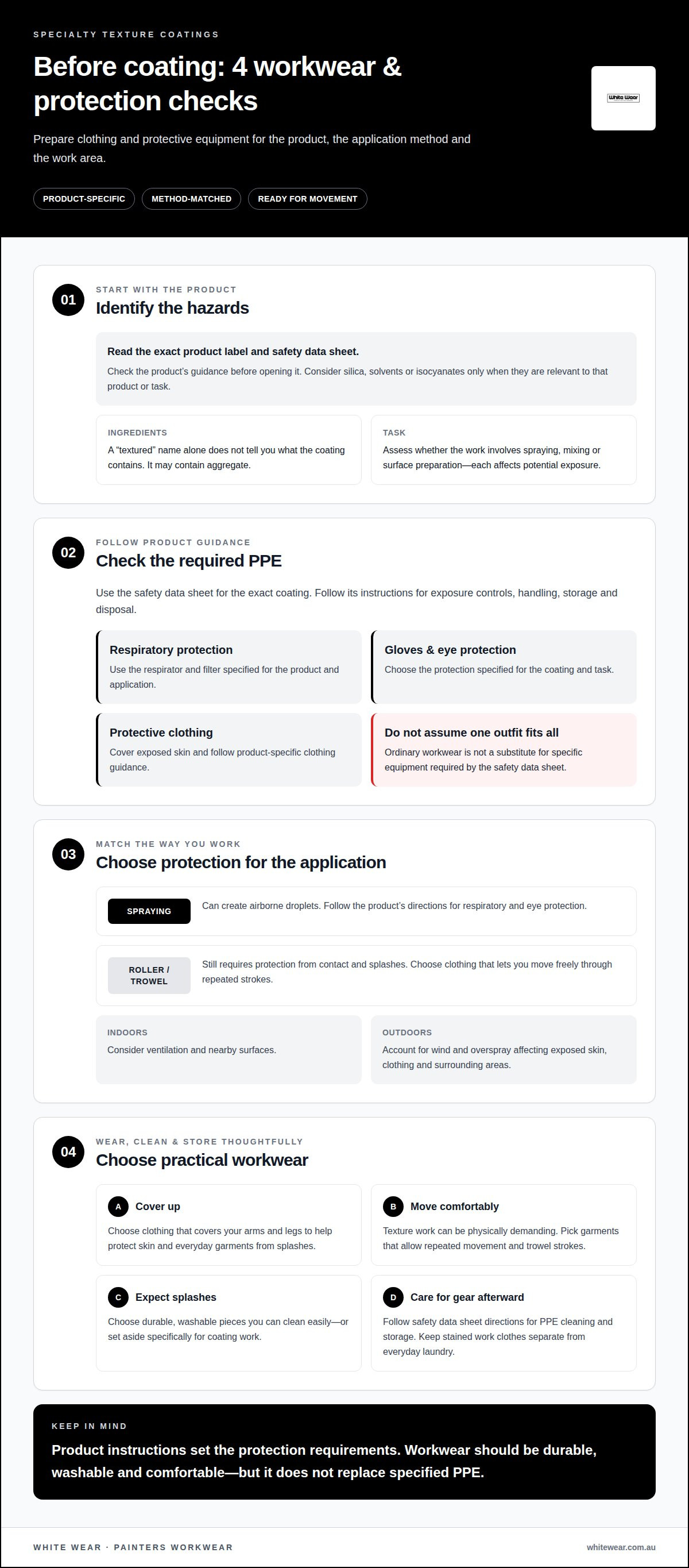
Before opening the coating, read its product label and safety data sheet. Assess hazards such as silica, solvents or isocyanates only when they’re relevant to the product or task. A textured finish may contain aggregate, but its name alone doesn’t reveal its ingredients. Consider whether the work involves spraying, mixing or surface preparation, since the task affects potential exposure.
-
Check Product PPE Requirements
Find the safety data sheet for the exact coating and follow its guidance on exposure controls and personal protection. Use the specified instructions for respiratory protection, gloves, eye protection and clothing rather than assuming one outfit suits every product. Follow its directions for handling, storage and disposal, too. If the sheet calls for specific equipment, ordinary workwear is not a substitute.
-
Choose PPE for the Application
Match protection to the application method. Spraying can create airborne droplets, so follow the product’s directions for respiratory and eye protection. Roller or trowel work still requires protection from contact and splashes. For indoor work, consider ventilation and nearby surfaces. Outdoors, account for wind and overspray, which can affect exposed skin, clothing and surrounding areas.
-
Select Respiratory and Skin Protection
Use the respirator and filter specified for the product and application, ensuring the equipment fits and is used as directed. Wear suitable gloves, eye protection and clothing that covers exposed skin. After work, follow the safety data sheet’s directions for cleaning and storage. Keep reusable PPE clean and stored as instructed, and dispose of contaminated items according to product guidance and workplace procedures.
Texture coatings can visually soften imperfections such as cracks, dents and uneven surfaces. Consider them when planning a finish for a surface with these irregularities, but choose a product that suits the coating, application method and location. A textured finish is not a substitute for assessing the surface or preparing it as the product requires.
Durability and resistance to wear
Texture coatings can last many years and may outlast regular paint, but performance depends on product quality, application and exposure. Choose workwear for the physical demands of applying the coating and caring for the finish.
- Assess the surface and setting before dressing for the job. An exterior concrete wall may mean working close to a rough surface, while an interior feature wall may have finished floors or furnishings nearby. Choose clothing that covers exposed skin and lets you move comfortably. For trowel work, make sure your sleeves allow repeated strokes across the wall.
- Consider the conditions the coating will face. Sun, weather and contact with the surface influence how a finish wears, along with product quality and application. These factors affect coating durability, not whether your clothing can withstand splashes or repeated movement.
- Consider the visual effect you want when planning the application. Subtle texture can soften a smooth wall, while a coarser finish can make an exterior more defined. Trowel application creates variation in depth and pattern. Choose workwear that lets you reach and turn freely as you follow the pattern across the surface.
- Plan for care after application. Periodic cleaning can help extend the life of texture coatings, while proper garment care keeps your work clothes ready for future painting. Follow the coating manufacturer’s instructions for cleaning the finished surface. Keep stained clothing separate from everyday laundry, and choose painters’ clothing suited to hands-on application.
Quality texture coatings in the Northern Territory typically maintain their appearance for 15 to 25 years, depending on product quality, application standard, and exposure severity. That range is a guide rather than a guarantee, so consider the conditions the wall will face when setting expectations for the finish. Northern Territory UV intensity may reduce the lifespan of texture coatings compared with less demanding environments. Assess expected performance in the context of local exposure, alongside product quality and application standard. Keep these factors in mind when planning care and evaluating wear over time.
What respirator and filter are required for texture coating application in Australia?
There isn’t one respirator and filter suitable for every texture coating. Select protection for the product’s hazards and application method instead of relying on a generic mask.
- Start with the safety data sheet for the exact coating and identify its respiratory protection instructions. Note whether the product presents dust, mist, vapour or a combination of hazards. Spraying, for example, can produce airborne droplets that rolling does not create in the same way. The application method affects the exposure to assess, but product-specific guidance still applies.
- Match the respirator and filter to the hazards identified for the product and task. A particulate filter alone may not address vapours, and vapour protection alone may not address airborne particles. Combined hazards can require different protection. Don’t choose a filter by colour, appearance or the coating’s name; follow the safety data sheet and workplace risk assessment.
- Assess the work area before application. Spraying texture coating indoors can keep airborne material in the work zone, while outdoor wind can carry spray beyond the immediate surface. Ventilation, application method and nearby workers all affect exposure. Consider these conditions alongside the product information when selecting respiratory protection.
- Use the selected respirator as its manufacturer directs, including following fitting, inspection and maintenance instructions. Facial hair or a damaged seal can interfere with a close-fitting respirator. Replace filters according to the respirator and filter instructions, not a guessed schedule. Keep equipment clean and store it as directed between coating tasks.
For products involving silica, solvents or isocyanates, don’t assume a general-purpose respirator is adequate. Use the coating’s safety data sheet and task-specific hazard assessment to determine the required controls before work begins. Resolve any uncertainty about respirator and filter selection before applying the coating.
What gloves, eye protection and protective clothing are recommended for specialty coatings?
Choose hand, eye and clothing protection for the specific coating and task. Start with its safety data sheet, then consider whether you’ll spray, roll or trowel, as each method creates different opportunities for contact or splashes.
- Match gloves to the product instructions. Check the safety data sheet for the glove material and handling precautions instead of assuming all coatings require the same protection. A product containing solvents, for example, may have different handling requirements from a water-based coating. Replace damaged or contaminated gloves as directed, and avoid touching your face with coated hands.
- Select eye protection according to the application and splash risk. Spraying can send droplets into the air, while mixing or loading a roller can cause splashes close to your face. Use the eye protection specified by the product guidance and task assessment. Keep it in place while handling coating, cleaning tools or working overhead, when material could fall towards your eyes.
- Choose protective clothing that covers exposed skin and suits the work. Long sleeves and full-length trousers provide a practical barrier against accidental contact; close-fitting cuffs help keep splashes from reaching underneath. For a trowel-applied wall, choose clothes that allow comfortable arm movement without loose fabric catching on tools. Keep clean everyday clothes away from the application zone.
- Plan what happens after the coating task. Follow the product guidance for removing contaminated clothing, cleaning reusable items and disposing of anything that can’t be safely reused. Don’t carry coating residue into your vehicle or home on garments. For painters’ clothing suited to hands-on application, choose workwear for painting that’s ready for a demanding day.
Follow the safety data sheet’s guidance on glove material and handling precautions, and the product instructions for suitable eye protection. Use its directions for removing contaminated clothing and cleaning or disposing of reusable items.
White Wear
White Wear offers painters’ clothing designed for professionals and the demands of painting work. Once you’ve considered the product guidance, application method and likely exposure, choose workwear made for painters. White Wear’s range includes painters’ pants and shorts designed for movement and practical use on the job. Think about the movements your task requires, such as reaching overhead, rolling a wall or using a trowel. Choose clothing that suits the work, and keep product-specific protective equipment separate from workwear. Explore White Wear’s painters’ clothing to find workwear for your texture-coating jobs.
Make your next coating job feel better prepared
Before the next project begins, make workwear part of your preparation. Decide what you’ll be doing, how you’ll move around the surface and which garments you can keep for coating work. The right answer to what to wear when applying specialty texture coatings is clothing suited to the task that lets you work comfortably. Choose task-specific protective equipment separately, using the coating’s safety information to guide your decisions.
For painters, dependable clothing can make a demanding workday feel more considered, from the first setup through the final clean-up. Choose pieces that support the way you work and help keep everyday clothes out of the application zone. When you’re ready to find workwear for your next job, contact White Wear about painters’ workwear. A thoughtful selection is a confident start to the work ahead.
Frequently Asked Questions
What PPE should you wear when applying specialty texture coatings?
Wear the respiratory, hand, eye and skin protection specified for the exact coating and task. When deciding what to wear when applying specialty texture coatings, treat protective clothing as one part of your setup, not a substitute for task-specific PPE. Before starting, check that each item fits and is undamaged. After work, separate contaminated garments from clean clothing and follow the product’s directions for handling them. This helps you prepare for the next workday.
What does the coating product safety data sheet say about PPE requirements?
It provides product-specific guidance on respiratory protection, gloves, eye protection and clothing. Follow its instructions for handling, storage, cleaning and disposal, and use the specified equipment instead of substituting ordinary workwear.


