


A uniform is more than something a team wears. Understanding how a team uniform can reduce client complaints starts with its practical role: it helps customers identify staff, signals professional standards and creates a consistent first impression. It cannot replace capable work or clear communication, but it can make expertise easier to recognise.
Clients notice the details surrounding a service, especially when they are unsure whom to approach or what to expect. A polished, role-appropriate appearance can provide reassurance before a conversation begins, while shared standards help employees feel accountable for representing the business.
This article explores how uniforms support accountability and brand recognition, communicate expertise, and clarify expectations for different roles. It also explains why clean, well-maintained clothing matters to a professional appearance. The aim is to show how thoughtful uniform choices can support a smoother client experience, without treating clothing as a cure-all for complaints.
Key Takeaways
- Set clear appearance standards so clients can recognise your team and understand who to approach.
- Match uniform choices to each role’s practical demands to help staff present themselves with confidence.
- Keep garments clean and well maintained to reinforce care, professionalism and attention to detail.
- Use consistent uniform expectations to support accountability, while making room for reasonable role-specific needs.
Employee accountability and brand representation
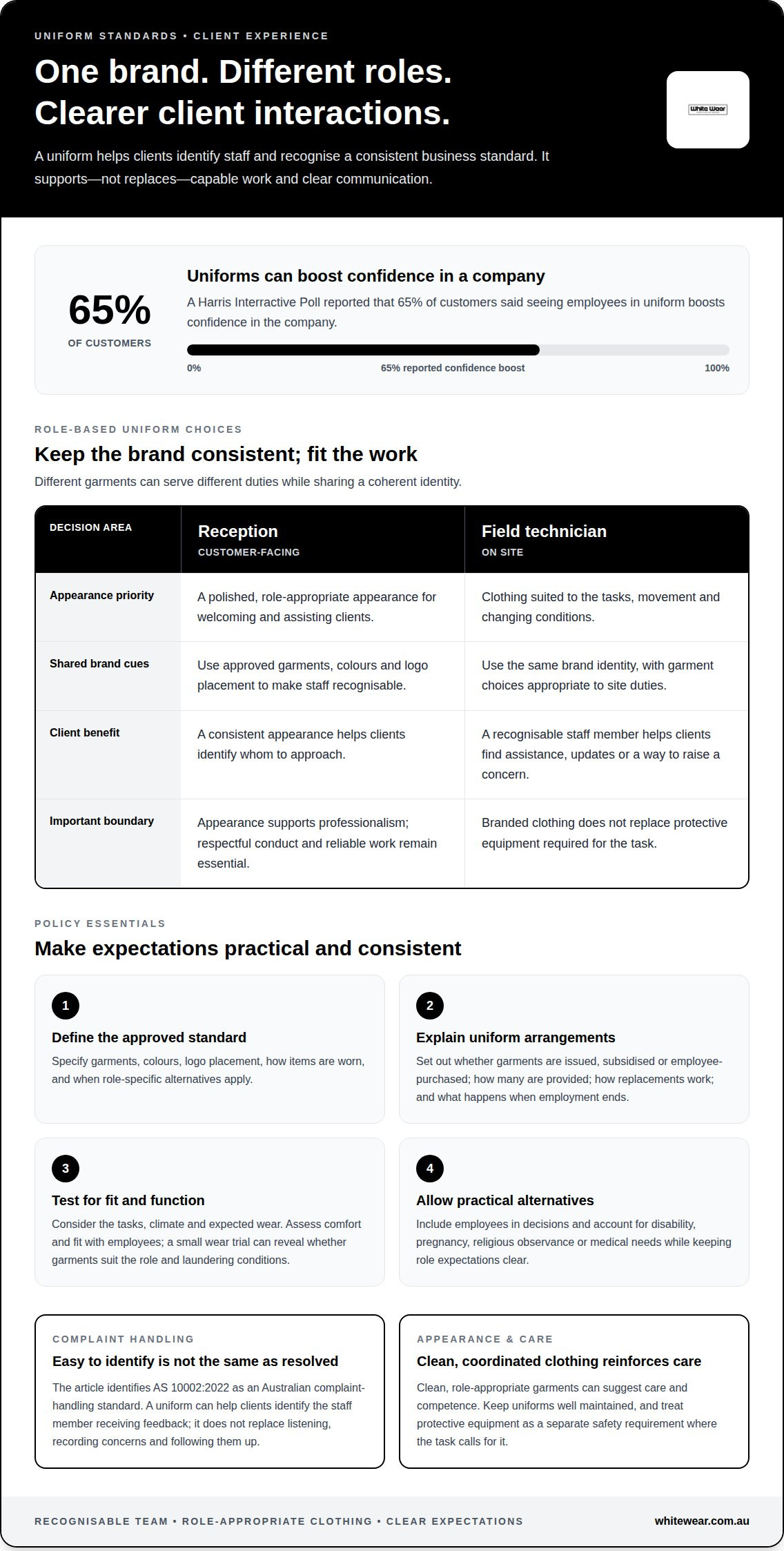
An approved uniform range gives employees a shared standard for representing the business. Define which garments, colours and logo placements suit each customer-facing role. For example, a receptionist and a field technician may need different items while using the same brand colours. Clear choices help people feel part of one team without making every role identical.
Consistency matters at every customer touchpoint. A recognisable logo on clean, coordinated clothing helps clients identify employees and associate their appearance with the business. When staff wear approved items, customers encounter a coherent brand identity, whether they meet someone at reception or on site. For trade professionals connecting with homeowners through platforms like TradieLink, arriving in clean, branded gear sets a reassuring first impression at the doorstep. That visibility can also encourage employees to represent the organisation with care. A uniform can support morale and belonging, but respectful conduct and reliable work remain essential to resolving complaints.
For complaint handling, Standards Australia identifies AS 10002:2022 as an Australian complaint-handling standard. A uniform can make the staff member responsible for receiving feedback easier to identify; it doesn’t replace a clear process for listening, recording concerns and following them up.
Australian workplace health and safety requirements for uniforms depend on the hazards involved and the protective equipment required. Branded clothing cannot replace the appropriate personal protective equipment in industrial or logistics settings, so appearance and safety need separate consideration.
Uniform costs depend on design, garment choices, quantities and replacement needs. Consider the full purchasing cycle, including initial design, issuing garments and replacing worn items. A single price would not represent every business’s requirements.
Choose clothing around the tasks, climate and expected wear, then assess comfort and fit with employees. A small wear trial can show whether garments suit the role and laundering conditions. Where a task requires protective equipment, branding must not take its place.
Uniform programs can create problems if garments restrict movement, fit poorly or disregard individual needs. Include employees in decisions and provide practical alternatives for disability, pregnancy, religious observance or medical needs. This helps protect dignity while keeping role expectations clear.
Signalling expertise and professionalism to customers
A coordinated appearance helps clients recognise professional roles and understand who can assist. It also shapes the first impression before employees explain their work.
Employee Identification and Customer Assurance
A uniform is a visual cue that helps customers distinguish employees from visitors or others nearby. In a busy reception area, a consistent colour or garment makes the right person easier to approach. That clarity matters when clients need directions, an update or help raising a concern. It reduces uncertainty at the point of contact and supports a more assured interaction.
First Impressions and Professional Perception
Clients form an impression before a service conversation begins, and clothing contributes to that early judgement. Clean, role-appropriate garments can suggest care and competence, while a dishevelled appearance may distract from the work itself. Princeton researchers Janine Willis and Alexander Todorov found that people can form impressions of trustworthiness, competence and likeability from faces within a fraction of a second. A uniform adds another visible cue, but it should suit the task and the business’s standards.
Trust, Confidence, and Customer Satisfaction
Uniforms can support customer satisfaction by making employees identifiable and signalling professionalism. Those cues may help clients feel confident approaching staff, but complaint outcomes also depend on the quality of the work and the response to concerns. Clothing that suits the role can help employees feel prepared to represent the business. A positive interaction still relies on listening, giving accurate information and following through.
For a consistent appearance during demanding work, explore a coordinated workwear approach suited to the job.
Uniforms signal expertise, professionalism and competence. A Harris Interractive Poll reported 65% of customers said seeing employees in uniform boosts confidence in the company. Retail uniforms aid identification. Fresh uniforms can improve perception, satisfaction and trust. The seven-second rule for first impressions is backed by decades of psychological research.
Clear, role-specific uniform policies
A corporate uniform policy turns appearance expectations into practical guidance. In Australia, it should distinguish garments by role, so customer-facing staff and field employees can dress appropriately for their duties. State which items are approved, how to wear them, and when alternatives apply. Clear examples reduce guesswork and help managers apply expectations consistently across individuals and teams.
Set out the practical arrangements in writing. Explain whether uniforms are issued, subsidised or purchased by employees, how many items are provided, how replacements are obtained, and what happens when employment ends. For example, a policy might identify the approved garment for a site visit and explain how to replace it when it becomes unsuitable. Direct instructions prevent inconsistent interpretations.
Role-specific standards should account for the work itself. A reception role may prioritise a polished appearance, while an outdoor role needs clothing suited to movement and changing conditions. Where a task requires protective equipment, a corporate uniform must not replace the appropriate equipment. Employee input can reveal fit or comfort concerns before a new range becomes routine.
How can a business introduce a uniform policy and measure its effect on client complaints? Explain the policy, its purpose and role-based expectations to employees before rollout, then record complaint themes before and after introduction. Compare issues such as difficulty identifying staff or concerns about presentation, alongside employee feedback and policy compliance. This helps show whether the change supports client satisfaction without treating clothing as the only cause of complaints.
Keep the policy useful after launch. Assign a manager to handle questions, clarify replacement steps and review recurring concerns. If employees repeatedly misunderstand an item or requirement, revise the wording rather than relying on reminders alone. A clear process makes expectations easier to follow and helps employees represent the business with confidence. It also gives managers a consistent basis for discussing appearance, rather than relying on personal preference or uneven enforcement.
Professional appearance and attention to detail
A uniform’s condition communicates standards before a conversation begins. Clean, well-maintained garments can signal professionalism and care, while visible marks may distract clients from the service. For teams working around paint, dust or open-flame cooking—such as catering operations sourcing fuel from Charcoal Kings—a clothing check before meeting customers helps catch noticeable spills or ash and keep presentation intentional.
Maintenance needs a clear routine. Set laundering expectations, inspect garments for stains or damage, and replace items that no longer present well. Regular cleaning and replacement help prevent employees from wearing uniforms with previous spills or contaminants. A tidy appearance does not guarantee complaint-free work, but it removes avoidable distractions from client interactions.
Fit matters as much as cleanliness. A garment that pulls, restricts movement or needs constant adjustment can leave an employee uncomfortable and self-conscious, distracting them from the task. A sizing grid with sample garments in common sizes gives staff a practical way to assess fit before garments are issued. Include different body shapes and job demands in that assessment.
Comfort supports a more composed presence throughout the workday. Employees who can move naturally are better placed to engage clients, listen carefully and explain the next step without distraction. Consider the work involved, expected movement and laundering conditions when reviewing garment suitability. A uniform should look professional while remaining practical for the role.
Review standards as work changes. Reassess whether garments remain relevant every few years, and sooner when sustained employee feedback points to fit or function concerns. Check whether the appearance standard is achievable during daily duties, not just at launch or for a photo opportunity. Replace worn pieces through a consistent process, so team presentation does not depend on individual access to suitable clothing.
To establish a polished standard for painting work, explore painters clothing options suited to the demands of the job.
White Wear
White Wear offers painters workwear and painters clothing for teams seeking practical apparel suited to painting work. When setting a consistent dress standard, choose clothing that reflects the demands of the role as well as the professional appearance clients encounter. A considered uniform can support a recognisable team identity, while policy, garment care and employee conduct shape the experience behind that impression.
White Wear is a natural next step when you are refining what your painting team wears throughout the workday. Explore its painters clothing and workwear as part of a broader approach to presentation, comfort and role-appropriate expectations. For help choosing clothing for your team, contact White Wear.
Make Your Next Uniform Decision Count
Let the next decision begin with the experience you want clients and employees to have. A uniform is most useful when it remains appropriate throughout the workday, not simply polished at the start. This practical approach shows how a team uniform can reduce client complaints: it supports a consistent, professional experience without asking clothing to do the work of good service.
Consider how your team’s appearance fits its daily tasks and whether your clothing choices help employees feel ready to represent the business. White Wear offers painters workwear and painters clothing for businesses choosing what their teams wear on the job. The right choice should serve the people wearing it as well as the impression clients receive.
If you’re ready to explore clothing for your painting team, contact White Wear to discuss uniforms. A thoughtful next step can help you shape a standard that feels professional, practical and right for your team.
Frequently Asked Questions
How can a team uniform reduce client complaints?
A team uniform can reduce client complaints by helping customers identify the right person and understand who represents the business. For example, a client seeking a job update can approach a recognisable team member instead of asking several people. This can prevent avoidable confusion, while careful listening, accurate updates and follow-through address the underlying concern.
What uniform features help staff appear professional and trustworthy?
Clean, intact, well-fitting garments in consistent colours help create a professional appearance. Company branding can make the connection to the business clear, provided it remains neat and easy to recognise. Practical details matter too: clothing that allows comfortable movement helps employees focus on the conversation rather than adjusting their outfit. Set care expectations that staff can follow during ordinary work routines.
How do uniforms make staff easier for clients to identify?
Uniforms give customers a visual cue that distinguishes employees from visitors, contractors or members of the public. In a shared workspace, consistent colours or a recognisable logo can make it easier to find the right person without knowing their name. This is especially useful when a client arrives for an appointment and needs to locate the employee handling their enquiry.
How can uniforms reduce misunderstandings about staff roles and responsibilities?
Role-specific clothing can indicate which employees handle different parts of a customer interaction. For example, a business might use clear garment variations to distinguish reception staff from technical team members. Pair those visual cues with a brief introduction, such as explaining who can provide a service update. Clothing guides the first approach, while direct communication clarifies responsibility.


