


A uniform is more than clothing; it shapes the first impression a client forms. The psychological impact of a professional uniform on client trust comes from signals of competence, consistency and care. A neat, cohesive appearance can make a professional easier to recognise and approach.
People naturally notice appearance before they know someone’s work. That first impression isn’t proof of skill, but it can affect how confident and comfortable clients feel. Clothing can also influence the wearer: a clear professional identity may help people feel prepared to step into their role.
This article explains how uniforms can shape client confidence, loyalty and brand identity, and why fit, cleanliness and appearance matter. It also looks at how workwear can support focus and a shared sense of purpose across a team. These details may seem small, but over a workday they contribute to a polished, dependable experience.
Key Takeaways
- Use a consistent uniform to make staff easier to recognise and reinforce a clear, dependable brand identity.
- Choose professional clothing that supports comfort and confidence, helping employees feel prepared to step into their roles.
- Keep appearance neat and cohesive; clients may read these visual cues as signs of organisation and professionalism.
- For painting work, consider how dedicated painters workwear and clothing can support a polished, work-ready appearance throughout the day.
Brand identity and consistent client experience
A uniform gives clients a visible cue about who is working and what role they hold. At a corporate reception, for example, coordinated clothing can distinguish staff from visitors before anyone speaks.
Clothing as Professional Identification
Professional identification through clothing means using a consistent visual signal to make a person’s role recognisable. A receptionist in coordinated attire is easier to identify than someone whose clothing blends into the general office dress code. That clarity helps when clients need assistance. Consistent appearance can also connect an employee’s presentation with the organisation’s identity, rather than leaving it to individual clothing choices.
Uniforms and Role-Based Identity
A uniform can mark the transition from personal life to professional responsibilities. Putting on work clothing before a shift may help an employee move into work mode and focus on the tasks ahead. Shared clothing also makes team membership visible to clients: each person belongs to the same working group. That shared identity can support morale and collaboration throughout the day.
Uniforms and Business-Casual Clothing
Uniforms create a consistent, recognisable appearance, while business-casual clothing allows more individual choice. Either can look professional and approachable when suited to the setting. A coordinated uniform may help clients identify a worker at a busy site; business-casual clothing may feel less formal in a small office. The psychological impact of a professional uniform on client trust depends partly on whether the clothing suits the role and makes the wearer easy to recognise.
In Australia, workplace clothing expectations depend on the role and worksite. When clothing is used for protection, it should suit the tasks and hazards identified for the work, rather than serve only as a corporate style choice.
A cohesive appearance can make an organisation’s values visible in everyday interactions. When staff share a clear visual identity, clients encounter a more consistent experience, and employees can focus on work instead of daily clothing decisions. This connects appearance with belonging and productivity.
Customer confidence and loyalty
A uniform can influence how employees feel before a client interaction. For example, well-fitting clothing suited to the role may help someone feel composed during a busy shift. That confidence can affect tone, posture and attention. Clothing alone doesn’t demonstrate expertise, but it can help employees present their skills with assurance rather than self-consciousness.
Shared workwear can also support a sense of belonging. A new team member wearing the same professional clothing as experienced colleagues has a visible connection to the group. That inclusion can strengthen morale and make collaboration feel more natural. To clients, a coordinated team may look assured and prepared, shaping their perception before the conversation turns to the work.
In healthcare, clean uniforms can help patients feel more comfortable with a facility and the procedures they may undergo. Clothing that identifies a worker’s role can also help patients understand who is involved in their care. These cues don’t replace clear explanations or professional conduct; they support confidence by making the setting feel organised and the people within it easier to understand.
Loyalty grows through repeated experiences, not a single visual impression. When a client sees the same tidy, recognisable team at each appointment, that consistency can reinforce reliability. If employees feel confident and interactions remain attentive, clients have a clearer reason to return. Uniforms influence trust as one part of the wider experience, alongside capable work and respectful communication.
For painting teams, clothing for demanding workdays can bring professional appearance and daily comfort into the same decision.
Professional appearance and brand image
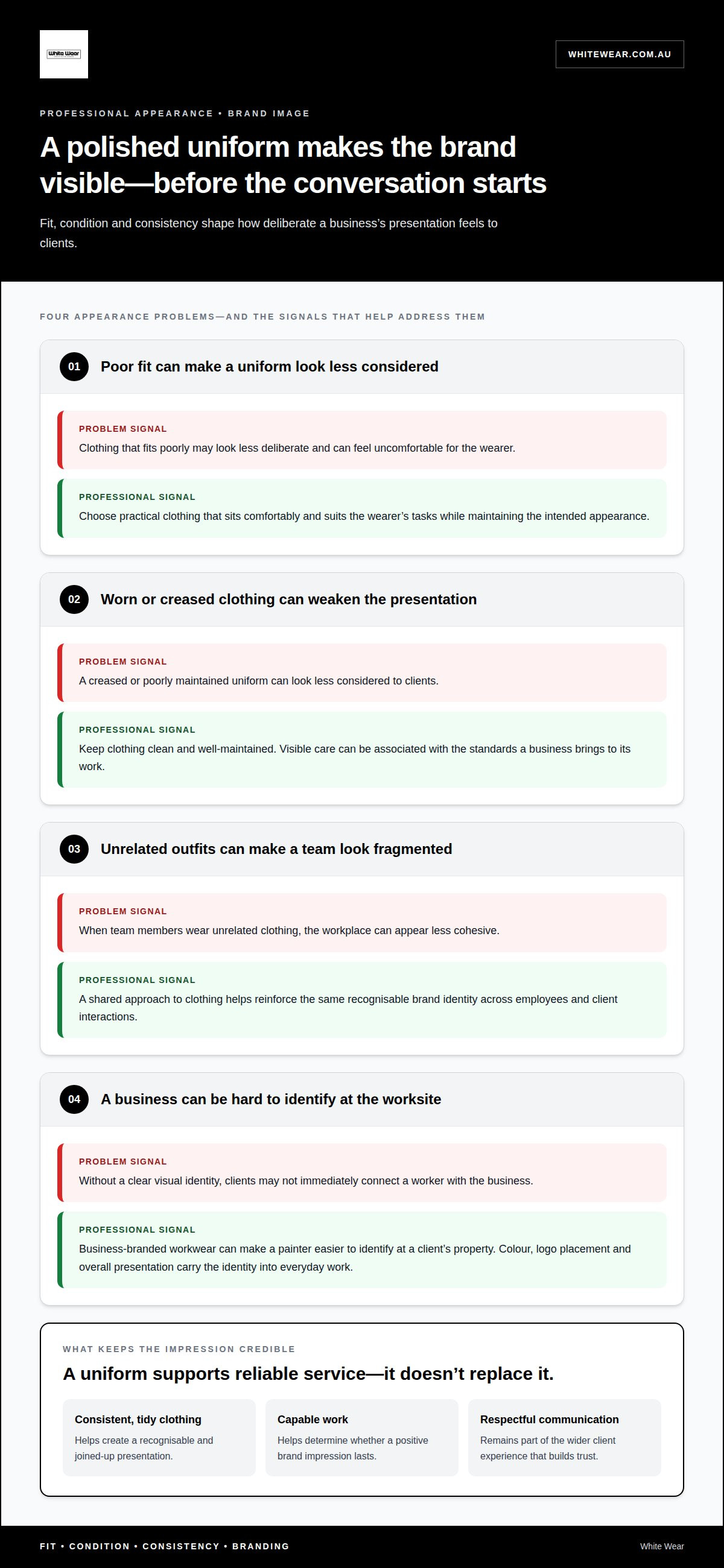
Clients see workplace clothing as part of a business’s visual presentation. Fit, condition and consistency help make that presentation look deliberate.
Fit, Condition, and Branding
A uniform’s fit, condition and branding shape its professional appearance. A clean shirt that sits comfortably and displays a clear logo, for example, looks more considered than one that is creased or poorly fitted. Clients may associate visible care with the standards a business brings to its work. Choose practical clothing that suits the wearer’s tasks while maintaining the intended appearance.
Consistency in Brand Presentation
Consistency means presenting the same recognisable clothing choices across employees and client interactions. If one team member wears a branded shirt while another wears unrelated casual clothing, the workplace can look fragmented. A shared approach helps each interaction reinforce the same brand identity, whether clients meet staff on site or in an office. Clear expectations for clean, well-maintained clothing make consistency easier to sustain.
Uniforms as Visual Branding
A uniform carries an organisation’s identity into everyday work. A painter wearing business-branded clothing at a client’s property, for example, makes the company easier to identify during the job. Colour, logo placement and overall presentation can build recognition without a spoken introduction. These choices work best when they suit both the business and the practical demands of the workplace.
Brand Image and Customer Loyalty
Brand image is the impression customers build through repeated interactions with a business. Consistent, tidy clothing can contribute to a positive impression, while work quality and communication determine whether it lasts. A customer who sees a team arrive in coordinated attire and complete the work professionally experiences a joined-up presentation. Uniforms can help make a business memorable, but they support reliable service rather than replace it.
Customer trust and professional appearance
Attire shapes the first impression, but clients judge trust through the full interaction. A uniform works best when its visual message matches the service.
Service Quality Perceptions
Professional appearance can influence how customers perceive service quality before they see the finished work. A neatly dressed technician arriving for a home repair, for example, may appear organised and prepared. That impression can frame the conversation, but it isn’t proof of expertise. Clear explanations, careful work and respectful interactions need to support the visual signal. Together, these cues help customers assess whether the service feels dependable.
Recognition and Trust
Uniforms make staff easier to recognise and give customers a clear person to approach. At a busy medical centre, role-identifying attire can help patients distinguish staff from other visitors. Cultural expectations, age and past experiences also shape how people interpret uniforms. One client may find formal clothing reassuring, while another may prefer a less authoritative appearance. There’s no single interpretation that suits every customer, so approachable conduct matters.
Research Measuring Uniform-Related Trust
Research can measure uniform-related trust by asking customers to rate credibility, expertise and comfort after viewing different staff presentations. A business could compare feedback on interactions where clothing is consistent, then consider those responses alongside service quality. In 2006, Princeton University researchers Janine Willis and Alexander Todorov published findings that people form impressions of trustworthiness, competence and likeability within a fraction of a second of seeing a face. Those findings concern faces, not a measured uniform effect.
Stereotypes, Discomfort, and Authority
A uniform can undermine trust if it feels uncomfortable to the wearer or signals authority without warmth. Stiff clothing may distract an employee during a long customer visit, while overly formal attire can feel distant in a relaxed setting. Stereotypes linked to particular roles or styles can also shape perceptions. Choose clothing that suits the work and allows natural movement; attentive conversation helps balance the visual impression.
For a professional look suited to hands-on work, explore painters workwear.
White Wear
White Wear offers painters workwear and clothing for professionals who want a considered, practical appearance on the job. For painters meeting clients on site, suitable clothing can support a consistent professional image and comfort during demanding work. It’s one part of building trust: clear communication, capable work and respectful interactions remain essential.
Choose workwear with the role in mind. Clothing designed for painting connects professional presentation with the realities of the job, rather than treating appearance as a separate concern. A cohesive look can also help clients recognise the team representing their business.
If you’re considering how painters clothing can support your team’s professional presentation, contact White Wear.
Make Your Workwear Part of the Experience
Choose clothing as one considered part of the experience you want clients to have. The psychological impact of a professional uniform on client trust doesn’t replace skill or respectful communication; it’s a visual cue that gains meaning through the work itself. Let your team’s clothing reflect the demands of the job and the standard of care you want associated with your business.
For painting professionals, White Wear offers painters workwear and painters clothing. Consider what will help your team feel prepared and present a professional image throughout the workday. A thoughtful choice can support how your business shows up, while your people and their work remain at the heart of every client interaction.
Contact White Wear about professional uniforms to take the next step for your team.
Frequently Asked Questions
What Is the Psychology Behind Uniforms?
Uniforms act as visual cues that help people interpret a person’s role and place in a group. A customer entering a workplace can use clothing to distinguish staff from visitors and know whom to approach. For employees, dressing for a role can mark a mental shift into work. These effects come from shared expectations, not from clothing proving someone’s ability.
Why are uniforms beneficial for customer interactions?
Uniforms can make the start of an interaction clearer by helping customers identify who is working. At a busy service counter, for example, customers can approach a staff member in recognisable workwear rather than interrupting another visitor. This makes the first exchange easier and helps staff represent a consistent organisation. A friendly greeting and attentive response still shape how the interaction feels.
How do professional uniforms affect client trust and perceived competence?
Professional uniforms can support trust by giving clients an immediate visual cue about a person’s role and workplace standards. Clothing suited to the task, combined with clear communication, may strengthen perceptions of competence. For example, a technician who explains the next step in plain language connects appearance with useful action. Clients should also assess the work itself, since attire alone can’t demonstrate skill.
What psychological theories explain why uniforms influence first impressions?
The halo effect helps explain how one positive impression can influence other judgements. Psychologist Edward Thorndike first described the halo effect in 1920. Applied to workwear, a polished appearance may colour a customer’s initial impression of an employee’s reliability or competence. That mental shortcut is not an assessment of actual performance, so clear answers and consistent conduct remain important evidence during the interaction.
Which uniform features, fit, cleanliness, colour and style, most affect client confidence?
Fit, cleanliness, colour and style all shape the impression a uniform creates. Comfortable, well-fitting clothing helps the wearer move naturally, while visible dirt or damage can distract from a professional presentation. Blue is associated with trust and tranquillity, and white with cleanliness. Treat colour as one design cue, then choose a style suited to the role and setting.
Do professional uniforms increase client trust across healthcare, hospitality and other industries?
Uniforms can support client trust across industries, but their role depends on the setting. In healthcare, clothing can help patients recognise a worker’s profession and understand the service they’re receiving. In hospitality, a recognisable uniform can help guests identify staff when they need assistance. Elsewhere, role-appropriate attire can clarify who represents the business. Trust still depends on conduct and service.


