


Worn uniforms can undermine a company’s image before anyone notices the small details. For painting crews in demanding work conditions, a useful replacement window is 6–12 months; a 1–3-year cycle is a reasonable starting point for many businesses overall. The practical answer to how often a painting company should replace uniforms depends on how frequently garments are worn, how they’re cared for and whether they still look presentable.
It makes sense to want uniforms to last, especially when the workday brings paint, movement and repeated washing. But age alone isn’t the best test: fading, thinning fabric, permanent stains or damaged seams can signal that a garment needs replacing sooner, while a minor fault may be repairable. This article explains how to set a sensible replacement rhythm, which wear factors matter most and how uniform condition can affect team presentation, morale and spending. You’ll also learn what to look for when deciding whether to repair, retain or replace a garment.
Key Takeaways
- Set a planned review rhythm, then adjust garment replacement around actual use, wear and care rather than relying on one date for every uniform.
- Consider how fit, fabric choice and laundry routines affect comfort and how long uniforms remain presentable.
- Use staff feedback and visual consistency to spot when uniforms no longer support the team’s confidence or brand image.
- Look for persistent damage and appearance changes to decide whether a garment can be repaired, retained or should be replaced.
1. How Often Should Businesses Replace Staff Uniforms?
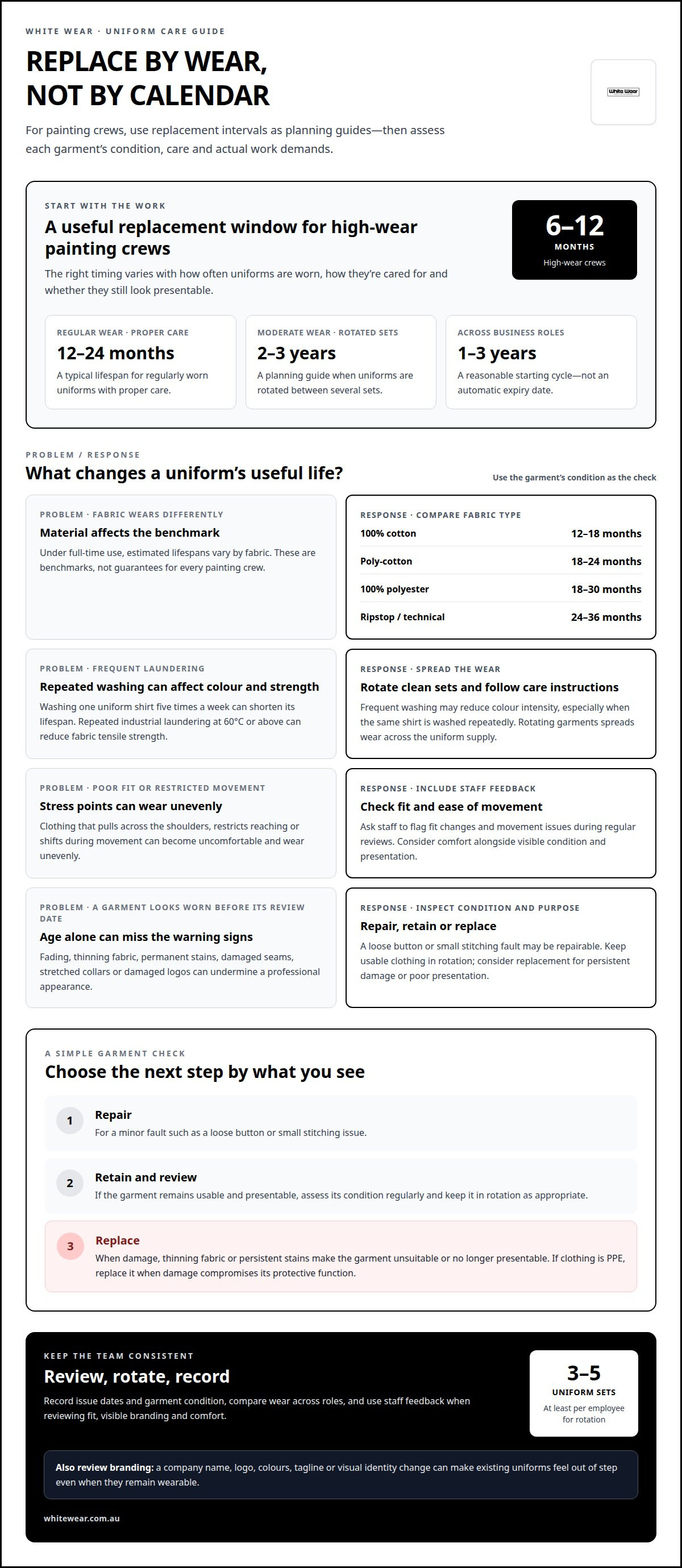
How often should a painting company replace uniforms? For high-wear painting crews, a 6–12-month replacement window is a practical benchmark. Moderate-wear uniforms rotated between several sets can last 2–3 years. These are planning guides, not automatic expiry dates: assess each garment’s condition and work demands before replacing it.
For regularly worn uniforms with proper care, a typical lifespan is 12–24 months. A 1–3-year cycle is a reasonable starting point across different business roles. Uniforms worn five days a week naturally experience more daily use. Fabric quality, laundering frequency and exposure to paint, dirt and physical activity all affect how long workwear remains presentable and comfortable.
At review time, ask: how often should a painting company replace uniforms? Compare wear across roles and garments instead of setting one date for everything. Record when garments are issued, rotate available sets and check their condition regularly. A loose button or small stitching fault may be repairable; damaged seams, thinning fabric or persistent stains may call for replacement. This approach helps you avoid discarding usable clothing too soon or keeping worn garments in circulation.
Australian workplace health and safety requirements depend on the hazards and whether clothing is used as PPE. Protective clothing must remain suitable for its purpose; replace it if damage compromises its protective function.
There is no single replacement interval for all Australian employee uniforms. Whether an employer must provide clothing depends on the employment arrangements and whether it is required protective equipment.
A tax deduction cannot be assumed simply because clothing is worn at work. Tax treatment depends on the garment’s purpose and applicable rules, so keep purchase and replacement records for assessment.
2. What Factors Affect How Long a Work Uniform Lasts?
Fabric composition gives a useful starting point for estimating a garment’s working life. With full-time use, 100% cotton workwear is estimated to last 12–18 months. Poly-cotton is estimated at 18–24 months, while 100% polyester is estimated at 18–30 months. Ripstop or technical workwear has an estimated lifespan of 24–36 months under full-time use. These are benchmarks, not guarantees for every painting crew.
Washing can change both appearance and strength. Frequent laundering may reduce colour intensity, especially when one shirt is washed repeatedly instead of rotating between garments. Washing one uniform shirt five times a week can shorten its lifespan. Repeated industrial laundering at 60°C or above can also reduce fabric tensile strength. Follow garment care instructions and rotate clean sets to spread wear across the uniform supply.
Fit affects how a uniform performs throughout a shift. Clothing that pulls across the shoulders, restricts reaching or shifts during movement can become uncomfortable and wear unevenly at stress points. Ask staff to flag changes in fit and ease of movement during regular reviews. Well-fitting workwear supports active tasks, and comfort matters in painting as much as in other customer-facing trades.
Fabric quality and design also shape how long uniforms remain useful. A soft cotton polo may not last six months in a hot kitchen, illustrating how heat and demanding conditions can accelerate wear. Separately, a style that looks current now may feel dated six months later. Choose practical, enduring designs, then assess fading, thinning and seam wear alongside appearance. For painting crews considering a fresh uniform, explore painters workwear suited to the trade.
3. Brand perception, employee morale and replacement costs
A uniform represents the business in homes, offices and other customer-facing settings. Faded colours, a peeling logo or inconsistent garments can undermine the professional appearance a painting company wants to present. Check each uniform’s condition, fit and branding together. A garment may be intact but uncomfortable, or comfortable but too worn to represent the company well.
Staff feedback can reveal problems a visual check misses. Ask whether uniforms still fit, allow easy movement and feel comfortable throughout a shift. If one team member’s garment is noticeably more faded than others, the difference can disrupt a consistent appearance. Record each garment’s condition and replacement date so decisions respond to wear rather than an arbitrary schedule.
A company rebrand is another reason to review uniforms, even when garments remain wearable. Changes to the business name, logo, colours, tagline or visual identity can leave existing clothing out of step. Uniforms that once looked current may now feel dated. Aligning staff clothing with updated branding helps maintain a consistent impression at job sites and customer visits.
Repair, rotation and replacement suit different situations. A loose button or small stitching fault may be repairable; rotating garments spreads wear, while persistent damage or poor presentation can justify replacement. The most economical choice depends on condition, repair needs and remaining useful life. There is no single price for durable painters’ uniforms in Australia: material, construction, quantity and garment type affect the cost.
For rotation, businesses can issue each employee at least 3–5 uniform sets. This gives garments more time between wears and helps maintain a clean, consistent appearance across the working week. Review fit, visible branding and staff feedback together, then plan repairs or replacement around the team’s actual needs.
4. Signs uniforms no longer look professional
A uniform can reach the end of its useful life before a planned replacement date. For a painting crew, permanent paint stains, fading, thinning fabric, stretched collars and damaged logos can make clothing look tired. The key test is whether the garment remains practical and presentable, not whether it has reached 12 months of wear.
Inspect each garment in good light. Check high-friction areas such as knees, elbows, cuffs and pockets for thinning, tears or holes. Look closely at seams and fastenings, too. A small stitching fault or loose button may be repairable; a tear that exposes skin or keeps spreading is a stronger reason to take the garment out of use.
Brand details matter. A cracked or peeling logo, faded business colours or a barely visible name can make a uniform harder to recognise. Compare garments worn by the same crew: obvious differences between a new garment and a heavily faded one can disrupt a cohesive appearance. Replace a garment if its condition no longer reflects the standard the company wants clients to see.
For hi-vis garments, inspect reflective tape every six months. Replace the garment immediately if the tape is peeling, cracking or no longer securely bonded. A clean appearance does not prove that reflective material remains in good condition.
Use a simple decision process at each uniform review: retain garments that remain presentable and functional, repair minor faults, and remove items with significant damage or permanent staining. Record the reason for each replacement, such as a torn knee or damaged logo. This creates a practical pattern for future reviews without forcing every garment onto the same timetable.
If a crew’s clothing no longer looks consistent or fit for painting work, choose painters workwear suited to a polished, professional appearance.
White Wear
White Wear offers painters workwear and clothing for teams reviewing worn or outdated uniforms. If garments no longer feel comfortable, look presentable or suit the demands of a painting shift, dedicated trade clothing can be a practical next step. Choose replacements based on how your crew works, how often uniforms are worn and the appearance you want to maintain on site.
Use your uniform review to identify what needs replacing and what matters most in the next set of clothing. White Wear focuses on functional apparel designed for the painting industry, helping businesses choose workwear suited to the trade’s daily demands. Contact White Wear to discuss painters workwear and clothing for your team.
Build a Uniform Plan That Works on Site
“How often should a painting company replace uniforms?” is worth revisiting as your team, tasks and workwear needs change. Make uniform condition part of routine team planning rather than waiting until a garment is no longer suitable for a shift. Staff feedback can help identify practical needs before the next clothing decision.
Ask, “How often should a painting company replace uniforms?” alongside what the crew needs from its clothing: comfort through a full shift, a consistent appearance or garments suited to particular tasks. Use those priorities to guide the next update. The goal is clothing that helps staff feel prepared to represent the business with confidence.
For a considered next step, contact White Wear about work uniforms. A thoughtful uniform plan can support the people behind every finished job.
Frequently Asked Questions
How Often Should Businesses Replace Staff Uniforms?
A practical replacement plan sets review dates, then bases decisions on actual wear. For a painting crew, track how often each item is worn and whether staff have spare sets to rotate. A uniform used for paint-heavy jobs may need attention sooner than one reserved for occasional duties. Treat the calendar as a prompt to assess condition, not an automatic discard date.
How Do You Know When It’s Time to Update Your Uniform?
Update uniforms when they no longer suit the team’s work or represent the business consistently. For example, a company changing its name or visual identity may need coordinated clothing, even if existing garments remain wearable. Staff feedback can also reveal when a uniform restricts movement or has become uncomfortable. Consider whether repair, reassignment or replacement best addresses the issue.
Does washing workwear more often mean it needs replacing sooner?
Often, yes: repeated washing can fade colour and gradually weaken fabric, especially when one garment carries most of the laundry load. Follow the care label, use the recommended wash settings and avoid treating every uniform as if it needs the same cleaning routine. A simple laundry record can help show whether a garment’s decline is linked to frequent washing or demanding daily use.
What Factors Affect How Long a Work Uniform Lasts?
Uniform lifespan reflects the combined effects of fabric, fit, washing and the tasks performed. A well-fitting garment is less likely to pull at seams during reaching or bending. Frequent kneeling can put extra strain on trouser knees, while repeated laundering affects colour and fabric. Review these factors together rather than judging durability by fabric type alone.
What factors determine how long painter uniforms last?
For painters, daily movement, paint contact, laundering and garment rotation all affect useful life. Trousers worn for tasks involving frequent kneeling may show wear differently from a shirt used mainly for lighter duties. Fit matters, too: clothing that restricts reaching can strain seams. Compare garments by role and use so replacements reflect how each item performs on the job.
Is it cheaper to repair, replace, or rotate painter uniforms?
The most economical choice depends on each garment’s condition, repair needs and remaining useful life. Repair minor faults such as a loose button, rotate garments to spread wear, and replace items with persistent damage or poor presentation.


