


The distinction between a novice and a seasoned professional isn't just in the precision of the brushstroke; it's in the silhouette you project the moment you step onto the job site. You likely understand the weight of that first impression and the quiet anxiety of appearing "green" because your apparel doesn't match your ambition. It's a common hurdle for every newcomer, but your workwear should be a source of clinical confidence rather than a cause for physical discomfort. This ultimate apprentice painter clothing checklist is designed to help you master your professional image from day one, ensuring you transition from an outsider to a trusted peer with ease.
We'll bridge the gap between generic utility and high-performance apparel. You will discover why the industry's traditional "whites" remain a mark of precision and how the 2025 OSHA PPE Fit Rule mandates that your protective gear provides genuine safety through a proper fit. From moisture-wicking base layers to specialized trousers that respect the physical demands of a grueling shift, this guide provides the clarity you need to invest wisely. Prepare to step onto your next project with the dignity, comfort, and authority that your new career deserves.
Key Takeaways
- Understand how the tradition of painter's whites serves as a functional tool for precision while establishing immediate authority with clients and site managers.
- Prioritize high-performance drill cotton to ensure your core wardrobe withstands the physical rigors of the trade without sacrificing a polished appearance.
- Utilize our comprehensive apprentice painter clothing checklist to master the art of layering, ensuring comfort from the crisp Australian dawn through the peak midday heat.
- Adopt a refined post-shift maintenance routine to preserve the integrity of your garments and master the rapid paint removal techniques that keep your whites pristine.
- Learn why investing in premium, peer-led workwear is a strategic career move that offers superior long-term value compared to disposable, generic alternatives.
The Apprentice Painter's First Impression: Why the Uniform Matters
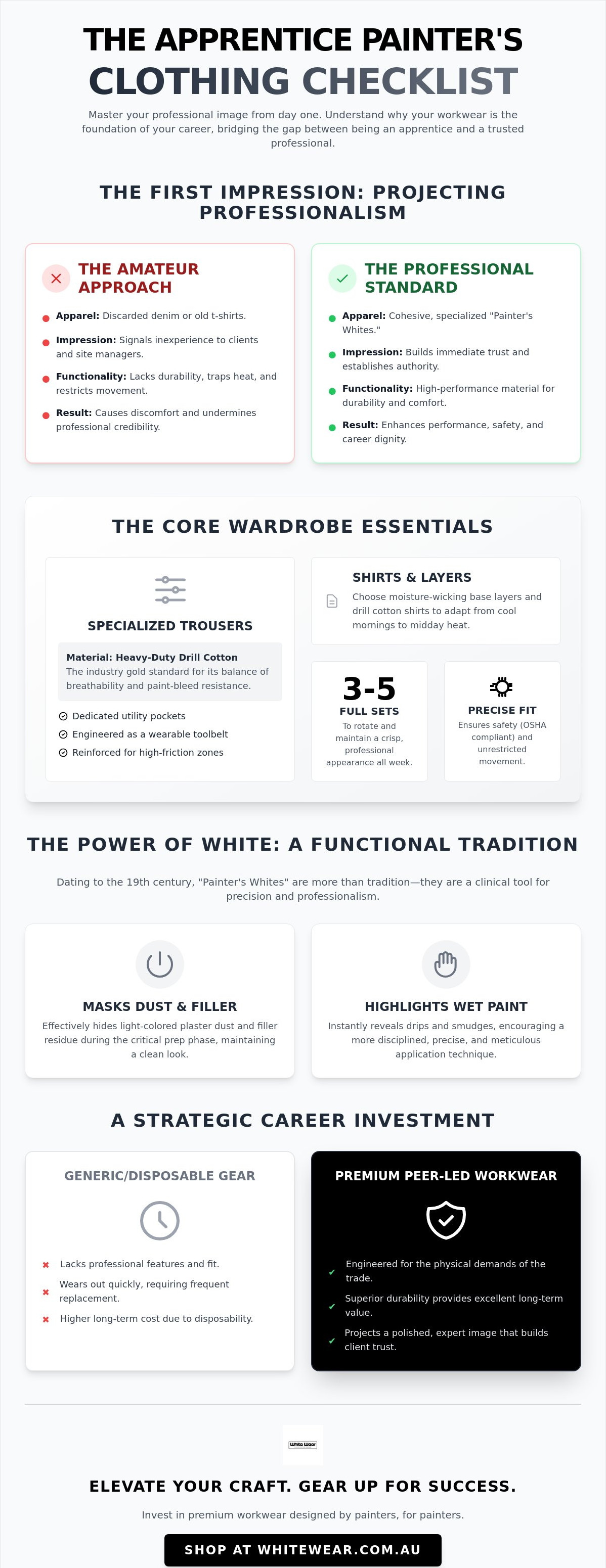
Your presence on a job site is your first silent communication. It speaks before you even pick up a brush. For a new recruit, the right attire isn't just about utility; it's the foundation of your professional identity. Many beginners make the mistake of reaching for discarded denim or worn-out t-shirts, assuming the job is merely about getting dirty. This is a fundamental misunderstanding of the trade. Old clothes lack the structural integrity and technical features required to sustain you through a grueling 10-hour shift. They trap heat, restrict movement, and, most importantly, they signal to builders and clients that you are an amateur. Establishing your career starts with an apprentice painter clothing checklist that prioritizes precision over convenience.
When you step out in a refined, cohesive uniform, you experience a psychological shift. You are no longer just a student; you are a technician. This transition is essential for building immediate trust with site managers who expect a certain standard of excellence. A professional appearance suggests a professional result. By investing in specialized apparel, you demonstrate respect for the craft and for the clients who invite you into their homes. It's about dignity. It's about comfort. Most of all, it's about preparing your body for the physical toll of repetitive motion and environmental exposure.
Defining 'Painter's Whites'
Painter's whites are a tradition dating back to the 19th century designed to signal a high standard of cleanliness and professionalism to the public. As a house painter and decorator, wearing white serves a clinical function by effectively masking plaster dust and filler residue during the preparation phase. Because white garments highlight wet paint spills, they encourage a more disciplined and precise application technique. This remains the industry standard for both interior and exterior residential work because it conveys a clean finish that reassures the homeowner of your meticulous nature.
The Dignity of the Trade
We believe that your workwear should provide the same level of sophistication as the high-end finishes you apply to a client's walls. Elevating the trade starts with recognizing that you deserve gear that offers both dignity and high-performance protection. Our peer-led development ensures that every pocket and seam is positioned for the physical endurance required during long hours of labor. A professional uniform also cements your place within a crew, fostering a sense of collective purpose and reliability. By following a structured apprentice painter clothing checklist, you ensure that your appearance reflects the high-quality construction and precision that defines the modern painting professional.
The Core Wardrobe: Essential Trousers and Shirts
Building your professional kit starts with the foundation of your daily attire. For any serious apprentice painter clothing checklist, generic cargo pants or denim simply won't suffice. You need the structural resilience of heavy-duty drill cotton. This material remains the industry gold standard because it offers a unique balance of breathability and density, providing a reliable barrier against paint bleed while withstanding the constant friction of a job site. It is a technical requirement for the modern trade, not a mere suggestion.
Consistency is vital to maintaining your career authority. We recommend owning at least three to five full sets of whites. This allows you to rotate through your week with a crisp, laundered appearance, even when a project involves heavy sanding or high-volume spraying. When selecting your fit, pay close attention to Australian sizing standards such as the 92R (92cm Regular). A precise fit ensures your movement remains unrestricted during complex maneuvers on ladders or scaffolding. Proper sizing is also a safety necessity. As detailed in the OSHA Protective Clothing Requirements, garments must be appropriate for the specific task to prevent workplace hazards and ensure maximum protection.
Specialized Painters Trousers
True painter's trousers are engineered as a wearable tool belt. They feature dedicated utility pockets positioned specifically for scrapers, brushes, and multi-tools, ensuring your essentials are always within reach. Reinforced knees are a non-negotiable feature for any apprentice. They provide the necessary cushioning and durability for floor-level work and the meticulous painting of skirting boards. For a deeper analysis of technical specifications, consult The Professional Guide to Choosing the Best Painters Pants in 2026.
Professional Work Shirts
The Australian climate demands a strategic approach to your upper-body layers. While short-sleeve options offer maximum mobility for interior detailing, long-sleeve shirts provide essential sun protection for exterior residential projects. Opt for moisture-wicking fabrics that actively move perspiration away from the skin to keep you cool during the midday heat. A collared work shirt is a simple yet powerful way to elevate your image from a general laborer to a skilled tradesman. It reflects the pride you take in your craft and your respect for the client's environment. Investing in premium painters clothing ensures you remain comfortable and protected through every stage of your apprenticeship.
Beyond the Basics: Overalls, Bibs, and Protective Layers
While trousers and shirts form your daily foundation, true mastery of the trade requires a more nuanced approach to your kit. The resurgence of the bib and brace is not merely a nostalgic nod to the past; it is a calculated choice for the modern professional seeking superior comfort. By distributing the weight of your tools across your shoulders rather than your waist, this configuration eliminates the persistent discomfort of a belt digging in during deep squats or overhead reaches. It is a refined solution for the grueling hours spent on a job site, providing a seamless silhouette that remains in place regardless of your physical exertion. When finalizing your apprentice painter clothing checklist, consider how these advanced layers support your mobility and professional presence.
Movement is life on a project. Your outer layers must facilitate a full range of motion without the bulk that often plagues generic workwear. We prioritize high-performance textiles that offer a clinical level of protection against paint splatter while maintaining the breathability needed for the Australian climate. The goal is to find jackets and vests that resist liquid penetration without the rigid, plastic feel of traditional rain gear. This ensures you remain dry and clean during high-pressure spray applications while retaining the agility required to navigate complex scaffolding or tight interior spaces.
The Case for Painters Overalls
Coverage is paramount during messy ceiling work or high-volume spraying. Overalls provide a comprehensive barrier, protecting your skin and base layers from the fine mist of an airless sprayer. The modern 'boiler suit' aesthetic combines a sophisticated, clinical look with practical innovation, ensuring you appear as a technician rather than a laborer. For a deeper dive into how this gear elevates your professional kit, explore Painters Overalls: The Professional Guide to Elevated Protection and Style. These garments are essential for any apprentice painter clothing checklist focused on long-term career durability.
Seasonal Layering Strategies
The temporal reality of the Australian workday involves significant temperature shifts. A tactical layering strategy allows you to adapt from a crisp 6:00 AM start to the intense midday heat without compromising your professional image. Lightweight vests are an excellent intermediate option, providing additional tool storage and core warmth without the restrictive bulk of a full jacket. During winter site work, opt for breathable hoodies and beanies in brand-aligned whites or neutrals. Maintaining a cohesive color palette across your layers reinforces your identity as a dedicated professional who respects the visual standards of the trade. Proper layering ensures you remain focused on the precision of your work, rather than the distraction of environmental discomfort.
The Daily Maintenance Checklist: Caring for Your Professional Image
Ownership of your image doesn't end when you leave the site. It begins with the discipline of your post-shift routine. A comprehensive apprentice painter clothing checklist must include the specific steps required to protect and extend the life of your premium gear. By establishing a dedicated maintenance protocol, you ensure your apparel remains a tool of authority rather than a sign of neglect. Rotating through your 3-5 sets of uniforms is a strategic move. It prevents excessive wear and tear on a single garment; this allows each piece the necessary time to be properly laundered and the fibers to rest between shifts.
Washing heavy-duty drill cotton requires a balanced approach. Use cold to lukewarm water settings to prevent the shrinking that often plagues lower-quality workwear. High-heat drying should be avoided, as it can make the fabric brittle over time. Instead, air-dry your whites whenever possible. This preserves the structural integrity of the cotton and ensures your trousers maintain their precise fit for years rather than months. Consistency in your laundry routine is the most effective way to signal to your crew that you respect the tools of your trade.
Removing Paint Splatters
The secret to keeping whites white is decisive action. Water-based splatters are managed with warm water and a mild detergent if addressed immediately. Oil-based stains require a more clinical approach, utilizing small amounts of mineral spirits and a clean rag. You should never reach for harsh bleach. While it might seem like a shortcut to brightness, bleach aggressively degrades high-quality drill cotton fibers. This leads to premature fraying and a yellowed, unprofessional hue. We recommend carrying a compact "on-site" cleaning kit in your bag; include a small scraper, a microfiber cloth, and a travel-sized solvent to address spills before they have a chance to cure into the fabric.
Storing and Organizing Your Gear
Precision in the field requires organization at home. Keep your "sanding" gear separate from your finishing whites. Sanding gear often harbors fine dust that is difficult to remove completely; keeping these items in a dedicated bag prevents cross-contamination. This ensures you always present a pristine image during the final, high-stakes stages of a project. Inspect your garments weekly for loose threads or minor snags. These small defects can easily catch on ladders or scaffolding, posing a safety risk. The professional habit of preparing your uniform the night before is a hallmark of the successful tradesman. It removes morning friction and ensures you arrive on-site focused and composed. To maintain this standard of excellence, you can shop premium painters workwear to refresh your rotation when your current kit begins to show signs of terminal wear.
Investing in Your Career: The White Wear Difference
Choosing your gear is the first executive decision of your career. While some might suggest settling for a minimum standard or seeking out the cheapest possible options, this approach is a false economy for a serious professional. Cheap workwear fails at the most critical moments; it tears during a deep stretch, it allows paint to seep through to your skin, and it loses its shape after a handful of washes. By contrast, investing in high-performance apparel from the start of your apprentice painter clothing checklist ensures that you aren't just dressed for the job, but equipped for the career. High-quality construction provides the structural reliability needed to maintain your dignity through grueling shifts, allowing you to focus on mastering your craft rather than managing your discomfort.
The transition from an apprentice to a master is marked by consistent professional standards. When you wear gear that's been meticulously engineered for the trade, your on-site confidence increases. You move with a clinical precision that's only possible when your clothing respects your body's range of motion. This is the hallmark of a peer-led approach to design. We don't just create utility items; we craft refined essentials that provide the comfort and protection required for the long-term physical demands of the industry. Professionalism isn't just for the business owner; it's the path you take to become one.
Engineered for the Modern Painter
Our design philosophy is anchored in the temporal reality of the workday. We recognize that a standard shift often extends into a 12-hour commitment, requiring gear that performs as well in the final hour as it did in the first. This is where technical innovation meets a premium aesthetic. By blending functional jargon with high-end construction, we've developed apparel that addresses the specific science of the task while satisfying the human desire for style. For a comprehensive look at how we are redefining trade standards, read The Professional Painter’s Guide to Elevated Workwear in 2026.
Your First Professional Kit
Building your starter kit is a rite of passage. Focus on the core essentials: a few pairs of heavy-duty trousers, moisture-wicking shirts, and a reliable bib that distributes weight across your shoulders. There is a palpable sense of pride in wearing a brand that understands the grueling nature of your labor. Treat your apparel as a career investment rather than a recurring expense. When you prioritize quality, you signal to your peers and your clients that you're a protagonist who deserves better than the status quo. Start your journey today and invest in professional painters clothing that matches your ambition.
Mastering Your Career from the First Shift
You've seen how the right attire transforms more than just your appearance; it recalibrates your mindset for the rigors of the trade. By moving beyond the minimum standard and following a comprehensive apprentice painter clothing checklist, you secure both your physical well-being and your reputation on-site. From the clinical precision of traditional whites to the technical necessity of reinforced knees and moisture-wicking fabrics, every choice you make is an investment in your future mastery. Proper maintenance and a focus on quality over a false economy ensure that your professional image remains as sharp as your cutting-in skills.
We believe you deserve gear that respects the intensity of your labor. Our refined essentials are designed by industry professionals with firsthand experience, ensuring they provide the 12-hour professional durability required for the modern job site. With Australia-wide shipping for all apprentice essentials, there's no reason to settle for anything less than excellence. Elevate your professional image with White Wear's specialized painters clothing and step into your career with the confidence of a protagonist who knows their value.
Your journey to becoming a master painter starts with the pride you take in your tools and your presentation. Trust your training, respect the craft, and let your uniform reflect the high standard of work you're prepared to deliver.
Frequently Asked Questions
Do I really need to wear white as a painting apprentice?
Yes, wearing white is essential for establishing your professional identity. This tradition serves a clinical purpose by concealing plaster dust while highlighting wet paint to encourage precision. It reassures clients of your meticulous nature. Including white garments in your apprentice painter clothing checklist ensures you meet the aesthetic and functional standards expected on high-end residential and commercial sites.
How many sets of work clothes should a new apprentice start with?
You should ideally start with three to five full sets of workwear. This volume ensures you always have a crisp, laundered uniform ready for the next shift. It also allows the fabric fibers to rest between wears, which extends the lifespan of your investment. Having a rotation prevents the unprofessional appearance of wearing stained or dusty gear from a previous day's preparation work.
What is the best fabric for painters trousers to prevent paint bleed?
Heavy-duty drill cotton is the superior choice for preventing paint bleed. This fabric is engineered with a dense weave that acts as a reliable barrier against liquid penetration while maintaining necessary breathability. It provides the structural integrity required for long shifts. Unlike generic synthetics, premium drill cotton offers a refined texture that feels comfortable against the skin during grueling physical labor.
Can I wear denim jeans on a professional painting site?
Denim jeans are generally unsuitable for professional painting environments. They lack the specialized utility pockets required for your scrapers and brushes. Denim also absorbs moisture and becomes heavy when wet, which can cause significant discomfort during long shifts. Most importantly, denim fails to project the clinical authority that a dedicated set of painter's whites provides to builders and homeowners.
How do I get dried paint out of my white workwear?
Removing dried paint requires a decisive, two-step approach. First, gently scrape away the excess with a blunt tool. For water-based stains, treat with warm water and mild detergent; for oil-based spills, use a small amount of mineral spirits. Never use harsh bleach, as it degrades the cotton fibers. Acting quickly is the secret to maintaining the pristine appearance of your professional kit.
Are steel cap boots required for all painting apprenticeships?
Steel cap boots are a mandatory safety requirement on most Australian construction sites. Even if you are working in a residential setting, your employer is obligated to ensure you have proper protective footwear to prevent crush injuries. Always verify the specific site rules with your supervisor. Investing in high-quality, comfortable safety boots is as vital as any item on your apprentice painter clothing checklist.
Is it better to wear painters shorts or long trousers in summer?
Long trousers are the preferred option for maximum protection. They provide a barrier against chemical splashes, sun exposure, and abrasive surfaces like ladders or scaffolding. While shorts offer relief in extreme heat, they leave your skin vulnerable to irritants and injury. If you choose shorts, ensure they are constructed from the same heavy-duty drill cotton to maintain a professional silhouette.
Should I buy a bib and brace or standard painters pants?
The choice between a bib and brace or standard pants often comes down to personal comfort. Many professionals prefer the bib and brace because it distributes the weight of tools across the shoulders, reducing pressure on the waist. Standard trousers offer a simpler, modern aesthetic. Both options provide the necessary utility pockets; the decision should reflect which style allows you to move with the most confidence.


