


Your professional silhouette is your most valuable business card, yet a single stray splatter of oil-based gloss can instantly compromise your authority in front of high-end clients. With the 2026 EPA ban on methylene chloride now in full effect, the traditional methods of stripping stains have become both illegal and obsolete. You likely feel the frustration of watching premium trousers degrade under harsh chemicals or seeing your investment in high-quality painters clothing slowly fade. We believe that maintaining a pristine appearance isn't about vanity; it's about the dignity of the trade. Mastering how to remove paint from workwear without compromising fabric integrity is now a critical technical skill for the modern professional.
This guide provides a clinical protocol for garment restoration that fits seamlessly into your demanding schedule. You'll learn to neutralize stubborn pigments while extending the functional lifespan of your essential kit. We will preview the latest bio-based solvents, time-sensitive removal techniques, and a maintenance routine designed to keep your whites brilliant and your professional presence commanding.
Key Takeaways
- Act within the critical 30-minute window to prevent pigments from wicking into the weave and setting permanently.
- Master the "Inside-Out" technique to learn how to remove paint from workwear by forcing splatters out of the fabric rather than deeper into the fibers.
- Select clinical-grade solvents that neutralize stubborn oil-based stains while preventing the unsightly "halo effect" on your professional trousers.
- Safely restore garments with dried paint using controlled thermal intervention and precise mechanical removal that respects the fabric's structural integrity.
- Invest in high-performance fabric blends that act as a defensive barrier, making routine maintenance more efficient and preserving your professional silhouette.
The Professional's Protocol: Why Immediate Action is Essential
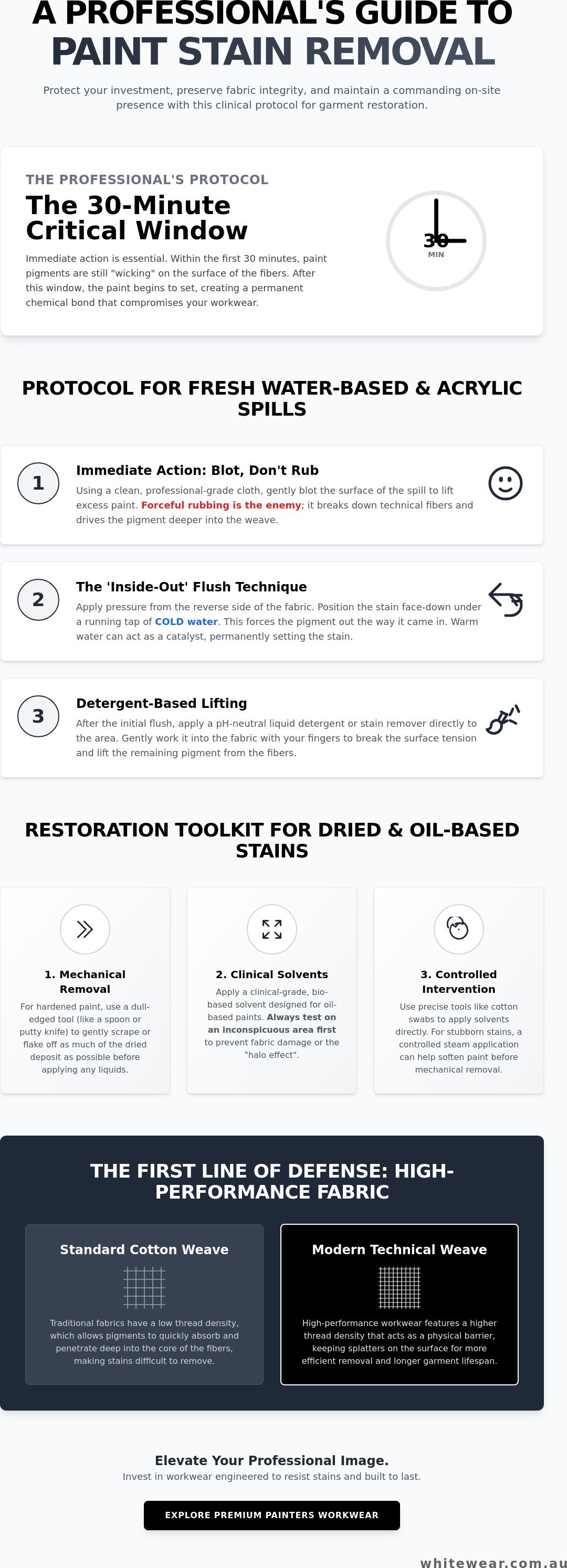
In the Australian trade, the "Painter’s White" is more than a tradition; it represents a standard of clinical authority. When you arrive on-site in crisp, immaculate whites, you're signaling a mastery of your craft before you even open a tin. Maintaining that standard requires a deep understanding of garment science. The first 30 minutes after a spill are the most critical for garment survival. During this window, pigments are in a state of "wicking," where they travel along the surface of the fibers. Once the carrier liquid evaporates, the paint begins "setting," bonding chemically to the thread. Mastering how to remove paint from workwear starts with intercepting this process before that bond becomes permanent.
There is a profound psychological shift when you step into high-performance apparel. It’s the difference between feeling like a laborer and feeling like a specialist. When your gear is pristine, your professional output reflects that same level of precision. You move with more confidence, handle materials with more care, and present yourself as the protagonist of your professional story. This sense of pride is what separates the elite tradesperson from the status quo. Your uniform is not just a utility item; it is a refined essential that provides dignity throughout a grueling workday.
The Cost of Neglect: Professionalism and Branding
Stained workwear does more than look messy. It subconsciously signals a lack of attention to detail to premium clients who are paying for perfection. If you can’t maintain your own equipment, they may wonder how you’ll treat their expensive finishes. There is a clear financial logic here; extending the life of your wardrobe through proper care is more cost-effective than constant replacement. This is especially true when painters uniforms for company branding are involved. These garments are assets, and a dedicated care schedule ensures they continue to perform as silent marketing tools for your business.
Understanding Your Fabric's Defensive Layer
Modern technical weaves are engineered differently than the heavy, absorbent cotton of the past. High-performance painters clothing features a higher thread density that acts as a physical barrier. This density prevents pigments from reaching the core of the fiber immediately. A fundamental rule in understanding stain removal is that rubbing is the enemy. Forceful rubbing breaks down these technical fibers and drives the paint deeper into the weave. Instead, a professional protocol focuses on lifting and flushing. By respecting the fabric's integrity, you ensure that your gear remains a refined essential rather than a disposable rag.
Removing Water-Based and Acrylic Splatters: A Step-by-Step Guide
Water-based emulsions are the functional standard of the modern painting industry. They are versatile and efficient, but their rapid drying time presents a unique challenge to your professional silhouette. To master how to remove paint from workwear, you must first identify the saturation point of the spill. If the paint is still wet and sits on the surface, blotting with a clean, professional-grade cloth is your best defense. Once the pigment begins to penetrate the technical fibers, you must transition immediately to a full-scale flush. This decisive action prevents the binder from anchoring itself within the weave.
The 'Inside-Out' technique is the gold standard for garment restoration. Instead of pushing the paint through the fabric, you apply pressure from the reverse side. This mechanical action uses the water to carry the pigment out the way it came in. It’s a purposeful, technical approach that respects the integrity of your gear. Using cold water is non-negotiable. Warmth acts as a catalyst for the curing process of latex-based binders, turning a temporary splatter into a permanent blemish. Choosing high-performance painters clothing makes this process significantly easier, as these garments are engineered for rapid release rather than absorption.
Many elite tradespeople rely on university-tested stain solutions to guide their maintenance routines. These research-backed methods emphasize that once the initial flush is complete, you should transition to detergent-based lifting. A pH-neutral surfactant breaks the surface tension of the remaining residue, allowing microscopic pigment particles to float away from the fibers. This tiered approach ensures that your whites remain brilliant without the need for aggressive, fabric-thinning chemicals.
The Cold Water Flush Protocol
- Step 1: Turn the garment inside out and apply a high-pressure stream of cold water directly to the back of the stain to force pigments out of the weave.
- Step 2: Use a soft-bristled brush or a professional-grade microfiber cloth to gently agitate the area, working from the outside of the splatter toward the center.
- Step 3: Apply a concentrated solution of mild, pH-neutral laundry detergent directly to the damp fibers to lift any remaining shadowed residue.
Acrylic-Specific Interventions
Acrylic paints require an even faster response than standard latex due to their plastic-forming nature. As the water evaporates, acrylic resins cross-link to form a durable, water-resistant film that is notoriously difficult to break. For stubborn acrylic bonds that have already begun to skin over, isopropyl alcohol is a highly effective targeted solvent. Isopropyl alcohol functions as a polar solvent that effectively disrupts the polymer chains within the acrylic resin to liquefy the hardened film. This intervention allows you to return the paint to a liquid state for a secondary flush, preserving the dignity of your professional kit.
Combatting Oil-Based and Stubborn Industrial Stains
Oil-based enamels and primers pose a higher risk to your professional silhouette than their water-based counterparts. These stains don't just sit on the surface; they bond with the fiber using a resilient oil carrier. To master how to remove paint from workwear in these instances, you must adopt a clinical mindset. This isn't about brute force. It's about chemical precision. You need to select agents that dissolve the oil binder without compromising the structural integrity of your high-performance apparel. A refined approach ensures that your kit remains a professional asset rather than a liability.
Managing the "Halo Effect" is the hallmark of a true maintenance expert. This occurs when a solvent carries diluted pigment outward, creating a permanent ring on your professional whites. To prevent this, you must control the saturation. Always work from the outer edges of the splatter toward the center, keeping the surrounding fabric slightly damp with water to act as a barrier. This disciplined sequence keeps the intervention localized and preserves the aesthetic finish of the garment.
Selecting the Right Solvent for High-End Apparel
Choosing between mineral spirits and turpentine is a decision that directly impacts the longevity of your painters workwear. While turpentine is a powerful traditional solvent, its high acidity can be aggressive on modern synthetic blends. Odorless mineral spirits are generally the more sophisticated choice, offering effective dissolution with a lower risk of fabric degradation. With the 2026 EPA restrictions on methylene chloride now in full effect, professionals are increasingly turning to safer, bio-based alternatives that provide lifting power without the toxic profile. Following an expert guide to removing paint stains can help you navigate these chemical interactions with confidence.
Always perform a "Spot Test" on an inconspicuous area, such as an inside hem or pocket lining. This ensures the solvent won't lift the garment's brightness or damage technical coatings. Safety is paramount; ensure you're working in a well-ventilated space and using appropriate gloves to protect your skin from chemical exposure during the restoration process.
The Blotting Methodology
Scrubbing is the primary cause of permanent garment damage. When you scrub an oil-based stain, you're grinding the enamel into the core of the thread. Instead, use an absorbent backing material, like a thick stack of white paper towels, placed directly behind the stain to "pull" the oil out of the garment. This technical approach respects the weave and prevents the pigment from spreading.
- Blot and Lift: Apply the solvent to a clean cloth, then use a repetitive dabbing motion to transfer the liquefied paint into the absorbent backing.
- Pigment Treatment: Once the oil carrier is removed, apply a concentrated surfactant to lift any remaining pigment shadows from the fibers.
- Neutralization: Flush the area with cold water and mild detergent to ensure no chemical residue remains, which could otherwise weaken the fabric over time.
The Restoration Toolkit: Advanced Techniques for Dried Paint
Sometimes the relentless pace of a high-end project means a splatter goes unnoticed until the end of your shift. By the time you return to the van, the paint has cured into a rigid, unsightly crust. While the initial "wicking" window has closed, the garment is far from lost. Recovering your silhouette from dried dabs requires a different technical discipline. Learning how to remove paint from workwear once it's fully cured is a process of re-hydration and careful mechanical separation. It's about restoring the dignity of your professional kit through patience and precision.
Thermal intervention is a sophisticated first step in this restoration protocol. Using controlled heat from a handheld steamer or a professional-grade hair dryer can soften the resins within the dried paint film. This doesn't liquefy the paint, but it restores a degree of flexibility to the "dab," making it less likely to snap and take fabric fibers with it. This method respects the high-quality construction of your gear, ensuring that the recovery process doesn't become the cause of further degradation.
Mechanical Scraping Without Damage
The tools of the trade matter. While many suggest using household items like spoons, a professional painter knows that a dull, stainless steel edge or a dedicated plastic scraper provides better control. Before applying any force, you must inspect the area for "fibre-lock." This occurs when the paint has completely encapsulated the individual threads of the weave. If you detect fibre-lock, aggressive scraping will tear the fabric. For droplets sitting on high-density weaves, use the "Flick" technique. Apply horizontal pressure to the edge of the dried droplet to pop it off the surface without disturbing the underlying structure. This keeps your professional kit looking sharp and avoids the fuzzy, pilled appearance caused by improper tool use.
Chemical Re-hydration and Lifting
Glycerin is the secret weapon in the professional's restoration toolkit. As a powerful humectant, glycerin works to "open" the dried paint matrix by drawing moisture back into the cured film. Apply a generous layer of glycerin to the dried area and allow it to sit. Dwell time is a professional virtue here; letting the agent work for several hours, or even overnight, significantly reduces the mechanical force required later. This re-hydration phase turns a permanent blemish back into a treatable stain.
Once the paint has softened, you can transition to specialized "paint out" softeners or a high-performance laundry cycle. For the final laundering, use a cool temperature setting to prevent any remaining micro-pigments from heat-setting into the fibers. To ensure your gear remains in peak condition, always source your painters workwear from brands that prioritize technical fabric durability, making these advanced restoration techniques more effective and extending the life of your professional wardrobe.
Investing in Durability: Why Quality Workwear Resists Stains
The efficacy of any restoration protocol is fundamentally limited by the quality of the garment's substrate. While previous sections detailed the technical steps of pigment extraction, the success of these methods relies on how the fabric interacts with the spill. Cheap, low-density cotton acts like a sponge. It draws pigment deep into the core of the fiber where it becomes virtually impossible to extract without destroying the material. High-performance apparel is engineered with "stain release" capabilities. These fabrics are designed to keep the paint on the surface, providing you with a larger window for successful intervention. By understanding how to remove paint from workwear, you quickly realize that the battle is won or lost at the point of purchase.
The White Wear philosophy is grounded in the reality of the Australian job site. We recognize that your day is grueling and your environment is unforgiving. Our apparel isn't just a utility item; it’s a refined essential designed to provide dignity through durability. By utilizing premium blends that offer a defensive barrier, we ensure that a stray splatter doesn't signal the end of your garment's professional life. This investment in quality translates directly to an extended garment lifespan and a more commanding professional presence.
The Science of High-Performance Painting Apparel
Success in the trade requires an understanding of what do painters wear for maximum protection. Technical workwear utilizes specific weave patterns and high thread counts to minimize the gaps where paint can settle. These tight weaves prevent "fibre-lock," making the mechanical and chemical removal techniques discussed earlier far more effective. Reinforced zones are strategically placed to handle the repeated stress of cleaning and the application of solvents. This clinical approach to design ensures that your gear maintains its structural integrity even after multiple restoration cycles.
Building Your Professional Wardrobe
Maintaining a pristine appearance requires a strategic rotation of your kit. We recommend the "Three-Pair Rule" for every serious professional. This involves having one pair of painters pants in active use, one pair in the wash undergoing your restoration protocol, and a spare pair ready for immediate deployment. This rotation ensures you never have to compromise your standards because of a stubborn stain or a busy laundry schedule.
An "elevated" look is about more than just being clean; it's about knowing when a garment has fulfilled its mission. Even with the best care, technical fibers eventually fatigue. Retiring a pair of trousers before they look ragged is a sign of professional maturity. It shows you value your image as much as your craft. When it's time to refresh your kit, choose gear that supports your expertise. Upgrade your professional arsenal with White Wear's premium collection and ensure your first impression is always one of clinical authority.
Master the Art of Professional Presentation
Maintaining a clinical standard of appearance is a technical discipline that distinguishes the elite tradesperson from the status quo. You've mastered the science of the 30-minute wicking window and the precision required for solvent-based restoration. Understanding how to remove paint from workwear is no longer just about cleaning; it’s about protecting your professional silhouette and the investment you've made in your career. By moving away from aggressive chemicals and toward refined, technical fabrics, you ensure your gear remains a testament to your expertise rather than a record of past spills.
True dignity in the workplace begins with gear that's engineered for the rigors of the Australian job site. At White Wear, we provide a clinical authority in trade apparel through premium high-density fabrics that act as a defensive barrier against the daily demands of the trade. Our products are designed by painters for painters, ensuring every stitch serves a purpose. Elevate your professional image with White Wear’s sophisticated painters workwear and benefit from nationwide Australian shipping. Step onto your next project with the confidence of a professional who settles for nothing less than excellence.
Frequently Asked Questions
Can I use bleach to get paint out of my white painters trousers?
Bleach is generally discouraged for high-performance apparel because it weakens technical fibers and often causes professional whites to take on a yellowed, aged cast. Instead of chlorine bleach, opt for an oxygen-based brightening agent. These provide a clinical level of cleanliness without the caustic side effects that lead to premature fabric fatigue. Maintaining your silhouette requires agents that respect the material's integrity while lifting deep-seated grime.
What is the best way to remove dried acrylic paint from work clothes?
The most effective professional method involves re-hydrating the plasticized resin using a targeted solvent like isopropyl alcohol. This breaks the polymer chains that have bonded to the weave. Once the paint softens, you can carefully lift it from the fibers. This technical approach is a key part of learning how to remove paint from workwear after a project has concluded and the pigments have fully cured.
Does vinegar actually help remove paint stains from fabric?
Vinegar serves better as a fabric softener or odor neutralizer than a primary paint remover. While its acidity can help break down some water-based pigments in a pinch, it lacks the technical surfactant power needed for industrial-grade enamels. Professional results require clinical-grade detergents. Use vinegar during the final rinse cycle to remove soap residue and keep your whites feeling crisp and refined.
How do I get oil-based paint out of my clothes without using harsh thinners?
High-quality dish soap with strong degreasing properties is a surprisingly effective alternative to harsh thinners for wet oil-based splatters. Apply the soap directly to the stain and let it dwell to emulsify the oil. For dried oil-based stains, rubbing a small amount of vegetable oil into the spot can sometimes soften the binder enough for extraction. This preserves your dignity by avoiding the toxic fumes associated with traditional solvents.
Is it better to wash painters workwear in hot or cold water?
Always initiate the cleaning process with cold water to prevent pigments from heat-setting into the weave. Hot water acts as a catalyst for the bonding process in both latex and acrylic binders. Once you have successfully removed the paint, you may transition to a warm cycle for general sanitization. This tiered temperature approach ensures your professional kit remains brilliant and free from permanent shadows.
Can I save my workwear if the paint has already gone through the dryer?
Saving a garment after a high-heat dryer cycle is a significant challenge because the heat has likely forged a permanent chemical bond between the paint and the thread. Your only recourse is the advanced re-hydration protocol using glycerin. While it is not a guaranteed fix for every fabric, a long soak in glycerin can sometimes loosen the baked-on resins enough for a secondary mechanical removal attempt.
What household items are safe for cleaning professional-grade painting apparel?
Isopropyl alcohol, glycerin, and pH-neutral dish soaps are the safest household essentials for maintaining professional-grade gear. These items offer a sophisticated balance of lifting power and fabric safety. Avoid using abrasive tools like steel wool or folk remedies like baking soda pastes, which can abrade the technical weave. Sticking to these verified items ensures you are following the best practices for how to remove paint from workwear.
How often should I wash my professional painters whites to maintain their brightness?
You should launder your professional whites after every shift to prevent atmospheric dust and microscopic pigment particles from embedding in the fibers. Daily maintenance is the secret to a consistently elevated appearance. Allowing soiled garments to sit for several days allows stains to oxidize and bond, making them much harder to lift. A disciplined daily routine is the foundation of a commanding professional presence.


