


Your workwear is far more than a simple utility; it is your business card and your reputation condensed into a single, stark white ensemble. Every professional understands the frustration of watching a premium garment succumb to yellowing sweat stains or the permanent shadow of an oil-based splatter. It often feels like a losing battle against the grit of the job site, where dust and chemicals conspire to dull your professional image.
Learning how to keep painters whites white is a tactical discipline that separates industry leaders from the rest of the pack. You deserve apparel that reflects your commitment to excellence, not your last three months of grueling labor. We are moving beyond the harsh, fiber-destroying cycles of traditional bleach to embrace a more sophisticated approach. This guide provides a repeatable laundry protocol designed to maintain brightness and remove stubborn stains effectively. You will discover how to project a clinical authority that commands higher rates and earns the trust of your most discerning clients by maintaining a polished, high-performance appearance every single day.
Key Takeaways
- Understand how a flawless appearance serves as a silent signal of mastery, instantly reducing client anxiety and reinforcing your professional authority.
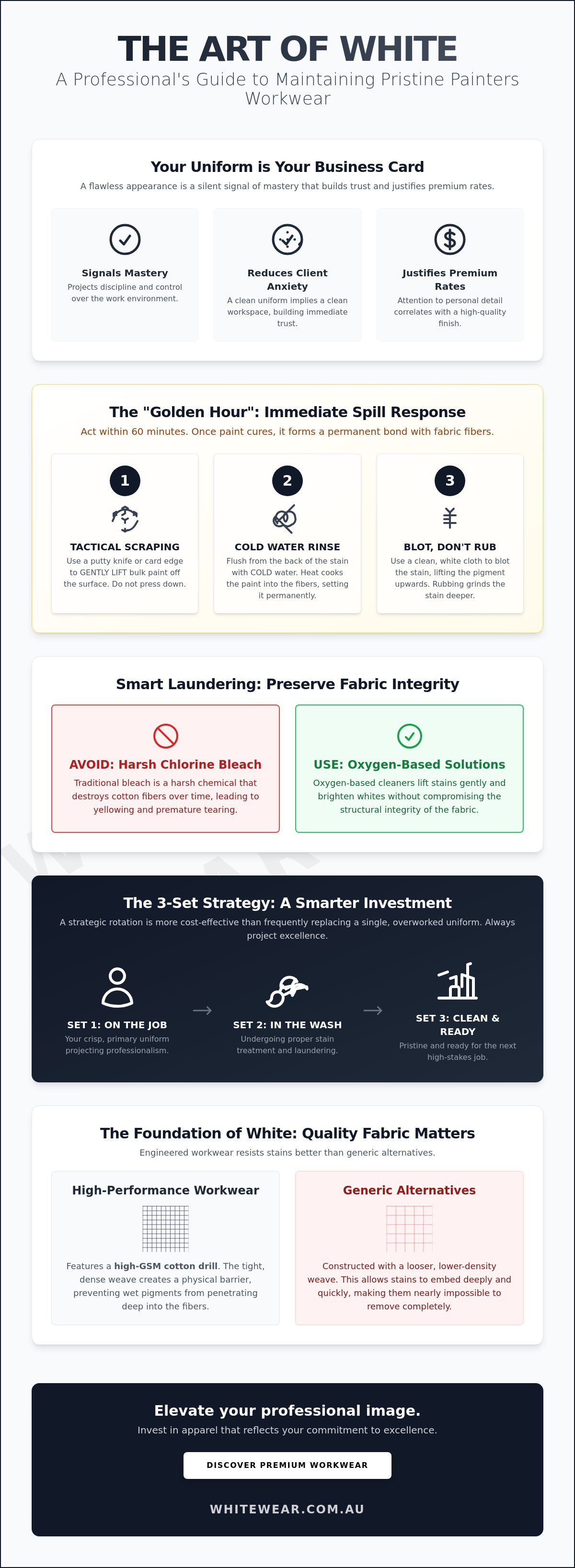
- Master the "Golden Hour" of stain management by using tactical scraping techniques to prevent wet paint from embedding deep into the textile weave.
- Implement a sophisticated laundering protocol that explains exactly how to keep painters whites white using oxygen-based solutions to preserve fabric integrity.
- Discover why a strategic rotation of three professional sets is a more cost-effective investment for your business than frequent replacements of a single uniform.
- Identify the technical specifications, including high-GSM cotton drill, that allow engineered workwear to resist pigment penetration better than generic alternatives.
The Professional Significance of Pristine Painters Whites
A pristine uniform directly correlates to a clean workspace in the mind of the client. It reduces their anxiety regarding their property, furniture, and flooring. If you can keep your own clothes spotless while working with five-gallon buckets of paint, they trust you to keep their hardwood floors equally safe. This level of trust is the foundation of a premium service. Understanding the science of stain removal techniques and the psychology of presentation is essential for anyone learning how to keep painters whites white. It's not just about laundry; it's about maintaining a professional mindset. Wearing bright gear affects your own discipline, encouraging a more meticulous approach to every brushstroke and every drop sheet placement.
The Evolution of the Painters Uniform
The tradition of the white uniform dates back to 18th-century guilds, where it served as a badge of honor and a mark of a specialized trade. Historically, white was the most practical choice for spotting dust, plaster, and lead imperfections. Today, the industry has shifted from "utility rags" to sophisticated, engineered painters workwear designed for the modern professional. These garments aren't just clothes; they are high-performance tools. Modern textiles are built to resist the deep penetration of pigments, making it easier to maintain that "White Wear" standard even after a long week of grueling labor. This evolution reflects a broader move toward dignity and refinement in the trades.
Branding Through Cleanliness
A spotless painters uniform justifies premium project rates. There is a direct correlation between the attention to detail you show in your dress and the attention to detail the client expects in your finish. If your gear looks neglected, the client may assume your prep work is equally rushed. Establishing a company-wide standard for garment maintenance ensures that every member of your team projects the same level of clinical authority. This consistency builds a brand that commands respect. Mastering how to keep painters whites white is the first step in moving your business from a generic service to an aspirational, high-end label that clients are proud to hire.
The Immediate Response: Managing Wet Paint and Spills
The first 60 minutes after a spill occur are known as the "Golden Hour." During this window, your chances of a successful recovery are at their peak. Once the paint begins to cure, the resins form a permanent bond with the textile fibers, making extraction nearly impossible without damaging the garment. Professionals who understand the science of removing different paint types know that the clock is always ticking. The secret of how to keep painters whites white lies in your ability to act with decisive, tactical precision the moment a drop hits your sleeve.
Start with tactical scraping. Use a clean putty knife or the edge of a plastic card to lift the bulk of the wet paint away from the surface. Do not press down. Pushing the paint drives the pigment deeper into the weave of your painters clothing, effectively locking it in. After scraping, remember the cold water rule. Heat is the enemy of a fresh spill. Hot water can "cook" the proteins in certain paints or accelerate the drying process of acrylics. Always use cold water to keep the paint in a liquid state while you work to extract it.
Your movement must be limited to blotting. Never rub a fresh stain. Rubbing creates friction that frays the textile surface and grinds the pigment into the core of the fibers, resulting in a permanent shadow. Instead, use a clean white cloth to lift the moisture upward. This disciplined approach ensures you maintain the integrity of the fabric surface while preserving its original brightness.
Water-Based Paint Protocols
For acrylics and latex, use a steady stream of cold water to flush the area. Direct the water from the back of the fabric to push the pigments out the way they came in. A mild dish soap serves as an effective surfactant for these spills. It breaks the surface tension of the paint, allowing the water to carry the particles away. Never allow water-based paint to dry before treatment. Once it loses its moisture, it becomes a flexible plastic that is almost impossible to dissolve without harsh chemicals.
Oil-Based and Enamel Emergencies
Oil-based spills require a more technical intervention. You must use a safe solvent, but exercise caution with modern synthetic blends. Some aggressive thinners can melt the fibers of high-performance workwear. Use the "sandwich method" for these emergencies:
- Place a thick, absorbent towel directly beneath the stained area.
- Dampen a clean rag with a small amount of mineral spirits or specialized solvent.
- Dab the stain from the top, forcing the oil and pigment through the fabric and into the towel below.
- Replace the bottom towel frequently to prevent the stain from spreading laterally.
Every professional should maintain an emergency field kit in their van. This kit should include a blunt scraper, mild surfactant soap, and a stack of clean white rags. Investing in high-quality painters workwear ensures your garments are engineered to handle these emergency treatments without losing their structural integrity or professional finish.
Advanced Laundering Techniques for Trade-Specific Fabrics
Maintaining the clinical brightness of your gear requires more than a standard domestic wash. It is a technical process. While the immediate response discussed previously handles the "Golden Hour" of spills, your long-term success depends on a rigorous "Deep White" protocol. This isn't about simply removing dirt; it's about preserving the structural integrity and aesthetic purity of the textile. Precision matters. Every choice you make in the laundry room either extends the life of your kit or accelerates its journey toward the rag bag.
The choice of chemistry is your first critical decision. Many professionals reach for chlorine bleach, but this is a tactical error that destroys cotton drill and elasticated fibers over time. Instead, opt for oxygen-based solutions. Oxygen bleach is a sodium percarbonate-based cleaner that lifts stains without weakening fibers. It provides the heavy-duty lifting power required for trade work while respecting the high-quality construction of your painters workwear. For the best results, set your machine to the 40-60 degree "sweet spot." This temperature range is warm enough to activate surfactants and dissolve oils without causing the heat-induced shrinkage or fiber stress associated with boiling cycles.
An extra rinse cycle is non-negotiable. Trade work introduces abrasive pigments and fine dust that can settle back into the fabric during a standard cycle. A secondary rinse ensures these particles are fully flushed away, preventing the "grey" cast that plagues neglected uniforms. This is a fundamental step in mastering how to keep painters whites white over months of heavy use.
The Science of Brightening Agents
Optical brighteners are the secret weapon of high-end laundering. These compounds don't just clean; they stay on the fabric and reflect blue light, tricking the eye into seeing a whiter, more vibrant surface. However, you must avoid the "yellowing" trap. This often occurs when residual detergent is left in the fibers or when garments are exposed to excessive heat during drying. If you are dealing with heavy grime or ground-in dust, introduce laundry boosters like Borax or Soda Ash to your cycle. These alkaline additives soften the water and enhance the effectiveness of your primary detergent, ensuring a deeper level of purification.
Drying for Durability
How you dry your gear is just as important as how you wash it. Sunlight is a natural bleaching agent and a powerful ally for trade whites, but it can make natural fibers feel stiff if left out too long. When using a machine, pay close attention to your painters pants and their specific tumble drying settings. Over-drying is a common mistake that leads to brittle fibers and a dull appearance. Use a medium heat setting and remove the garments while they still hold a hint of moisture. This practice prevents the permanent setting of wrinkles and maintains the supple, professional drape of your apparel.
Strategic Maintenance: Protecting Your Professional Image
Maintaining a pristine image is a long-game strategy. It requires more than a reactive wash cycle; it demands a proactive management of your entire wardrobe. A primary pillar of this discipline is the rotation strategy. Owning at least three sets of whites is significantly more cost-effective than relying on a single uniform. By rotating your gear, you allow fibers to rest and recover their structural integrity between shifts. This reduces the frequency of aggressive laundering for any single garment, effectively doubling the lifespan of your professional ensemble.
High-friction zones like knees, pockets, and cuffs are usually the first to show signs of grey. Pre-treating these areas before every wash is a mandatory habit for those mastering how to keep painters whites white. Use a specialized surfactant or a concentrated oxygen-based paste to lift the ground-in grit that standard cycles might miss. This targeted attention prevents soil from becoming a permanent part of the fabric weave.
Adopt a "Clean Kit" discipline to avoid cross-contamination. Never mix your trade whites with domestic loads, gym clothes, or dark colors. Micro-fibers and loose dyes from other garments will quickly dull the brightness of your gear. Storage is equally vital. Avoid damp environments or direct sunlight in your vehicle, as these conditions invite "closet yellowing" and fiber degradation during the off-season. Your gear should be stored in a cool, dry space, ideally in breathable garment bags to maintain that out-of-the-box crispness.
Managing Non-Paint Stains
Paint isn't the only adversary on the job site. Caulk and silicone require a specific freeze-and-scrape method; apply ice to harden the residue before gently lifting it with a blunt edge. For rust or metal oxidation from tools, use an acidic treatment like lemon juice or a dedicated rust remover. Sweat and biological stains demand enzyme-based cleaners. These specialized formulas break down the proteins that cause yellowing around the collar and underarms, ensuring your painters clothing stays clinically fresh even after a grueling day in the heat.
The Apprentice’s Guide to Gear Care
True professionalism starts with a daily inspection of your painters overalls. Look for loose threads, failing seams, or small snags. A small stitch today prevents a costly replacement tomorrow. This habit instills a sense of pride and respect for your tools. There is a profound psychological impact in dressing for the job you want. When you step onto a site in well-maintained gear, you aren't just a laborer; you are a protagonist in your own professional success. Elevate your presence by investing in premium painters workwear that is designed to withstand the rigors of the trade while maintaining its refined aesthetic.
Elevating Your Kit: Why Quality Apparel Stays Whiter Longer
Your technical proficiency in laundering is only as effective as the canvas you are working on. While we have detailed the tactical protocols for extraction and maintenance, the ultimate secret of how to keep painters whites white begins at the point of purchase. High-performance apparel is engineered with specific fabric density in mind. High-GSM (Grams per Square Meter) cotton drill provides a tighter, more resilient weave that physically resists pigment penetration. In contrast, low-quality alternatives feature loose fibers that act like a sponge, trapping dust and paint deep within the textile core where even the most advanced surfactants cannot reach.
Engineered workwear often includes specialized coatings and finishes that distinguish it from generic white garments. These treatments are designed to repel liquids during those critical first minutes of a spill, buying you time to execute the "Golden Hour" protocols discussed earlier. This is the White Wear advantage. Our apparel is peer-led and developed by professionals who understand that a twelve-hour shift requires more than just a utility item. It requires a refined essential that maintains its structural integrity and clinical aesthetic under pressure. Investing in high-tier gear is a commitment to your long-term professional success, ensuring you remain the protagonist of your own career story.
Choosing the Right Materials
100% cotton drill remains the gold standard for the modern painter. It offers a unique duality of breathability for grueling summer days and a robust response to oxygen-based cleaning agents. While some modern synthetics are introduced to provide necessary stretch and comfort, they must be engineered carefully to avoid losing their "whiteness" over time. Be wary of "cheap" whites found in big-box retailers. These garments often use low-quality optical brighteners that wash out quickly, leaving the fabric with a permanent grey or yellow cast after only three or four washes. True quality is found in textiles that hold their pigment and their shape, wash after wash.
The Logical Conclusion of Professionalism
The link between garment care and your career trajectory is undeniable. Your uniform is a visual representation of your standards. By mastering how to keep painters whites white, you are signaling to your clients and your peers that you are a master of detail. This discipline translates directly into the quality of your finishes and the premium rates you can command. To maintain this standard, follow this final checklist for a pristine professional wardrobe:
- Execute immediate extraction during the "Golden Hour."
- Utilize oxygen-based chemistry and 40-60 degree wash cycles.
- Maintain a three-set rotation to allow fiber recovery.
- Perform daily inspections for minor repairs and high-friction grime.
- Invest in high-GSM, peer-led apparel designed for the trade.
Your journey toward textile longevity and professional authority starts with the right foundation. Elevate your professional presence and project the dignity your labor deserves with the White Wear collection.
Mastering the Standard of Clinical Excellence
Your professional image is a direct reflection of your commitment to the craft. Mastering how to keep painters whites white is not merely a domestic chore; it's a tactical investment in your brand's authority. By embracing the discipline of the "Golden Hour" for stain extraction and utilizing sophisticated oxygen-based chemistry, you preserve the life of your apparel while maintaining a clinical-standard aesthetic. Remember that the foundation of a pristine kit starts with superior materials. Choosing high-density fabrics and maintaining a strategic rotation ensures your gear remains as sharp as your technical skills.
You deserve workwear that works as hard as you do. Our Australian peer-led development ensures every garment is engineered for maximum durability and refined for the modern workplace. Don't settle for generic whites that fail under the pressure of a demanding job site. It's time to project the dignity and mastery your labor deserves. Upgrade to professional-grade whites at White Wear and command the respect your expertise has earned. Your future clients are watching; make sure you look the part.
Frequently Asked Questions
Can I use bleach on my painters trousers every time I wash them?
Avoid using chlorine bleach for every cycle. While it offers an immediate brightening effect, the harsh chemicals compromise the structural integrity of your painters workwear, leading to premature thinning and tears. Instead, opt for oxygen-based sodium percarbonate cleaners. These lift stains effectively without the corrosive side effects, ensuring your gear remains durable and clinically white for the long term.
What is the best way to get dried gloss paint off my white overalls?
Removing dried gloss paint requires a delicate balance of solvent application and mechanical removal. Apply a small amount of mineral spirits to a clean white rag and dab the area to soften the resin. Once the bond loosens, use a blunt scraper to lift the pigment away from the surface. Always test solvents on an inconspicuous area first to ensure you don't damage the specialized fibers often found in modern trade apparel.
Why do my white work clothes turn yellow after a few months?
Yellowing is typically caused by a combination of biological proteins from sweat and residual detergent trapped in the fabric. When exposed to the high heat of a tumble dryer, these residues "cook" into the fibers, creating a stubborn yellow cast. To prevent this, ensure you use an extra rinse cycle and an enzyme-based cleaner. This is a vital component of how to keep painters whites white and maintaining a professional image.
How do I remove heavy grease or oil stains without ruining the white fabric?
Treat heavy grease or mechanical oil using a high-performance surfactant like concentrated liquid dish soap. Apply it directly to the dry stain and massage it into the fibers to emulsify the oil before adding water. For deeper saturation, use the "sandwich method" with mineral spirits and absorbent towels to pull the grease out vertically. This prevents the stain from spreading laterally across the pristine white surface.
Is it better to wash painters whites in hot or cold water?
Use cold water for the initial flush of fresh spills to prevent setting the pigment. For your regular "Deep White" wash cycle, the 40 to 60 degree range is the professional standard. This temperature is warm enough to activate oxygen-based brightening agents and dissolve body oils without causing the excessive shrinkage or fiber degradation associated with boiling hot water cycles.
How often should I replace my professional painting whites to maintain a sharp image?
Replace your gear every 6 to 12 months if you follow a three-set rotation strategy. While high-quality painters clothing is built for durability, the abrasive nature of the job site eventually takes its toll on the fabric's luster. When the whites begin to hold a permanent grey cast or show visible fraying at the cuffs and knees, it is time to invest in a fresh kit to preserve your professional authority.


