


A professional uniform policy isn't a list of restrictions; it's a commitment to providing your crew with the dignity of high-performance gear that reflects their expert status. You've likely felt the sting of a client's hesitation when a team member arrives in worn-out, mismatched clothing. It's a common pain point that erodes the premium brand you've worked hard to build. Setting up a uniform policy for a painting company solves this by replacing confusion with clinical precision, ensuring every worker looks as sharp as the lines they cut. We understand that your team deserves better than the status quo, and your business requires a look that commands respect from the first interaction.
We agree that the logistics of workwear can feel overwhelming, especially when balancing Australian legal requirements with the need for style. This article will help you master the art of professionalising your crew with a comprehensive policy that covers everything from tax-deductible laundry expenses to the latest safety standards. You'll learn how to navigate the 2026 landscape of AS/NZS 1906.4:2023 compliance while selecting high-performance fabrics that offer both UV protection and moisture-wicking comfort. From clarifying who covers the costs to defining maintenance standards, we provide the blueprint for a polished, aspirational workplace culture that prioritises both form and function.
Key Takeaways
- Define your professional identity by using a cohesive uniform as a strategic brand blueprint that builds instant rapport with high-end clients.
- Master the legalities of the Fair Work Act and tax deductibility to ensure setting up a uniform policy for a painting company is compliant and financially sound.
- Select high-performance painters workwear based on fabric innovation, ensuring your crew stays comfortable through the most demanding shifts.
- Transition your team to new standards seamlessly by positioning premium gear as a refined essential that elevates their daily professional experience.
- Implement specific care and maintenance clauses to uphold a polished appearance and ensure the longevity of your technical workwear.
The Strategic Importance of a Painting Company Uniform Policy
A uniform policy is the foundational blueprint for your company’s professional identity. It’s the difference between a crew that looks like an afterthought and a team that represents a high-end brand. When you're understanding dress codes in a trade context, you realize the standard is about more than just clothes; it’s about perception. Setting up a uniform policy for a painting company establishes a standard of excellence before a single drop of paint is poured. High-end clients don't just pay for the final finish. They pay for the peace of mind that comes with hiring elite professionals. A cohesive look builds immediate trust, signaling that your business is organized, disciplined, and attentive to every detail.
There’s a profound psychological shift that occurs when a crew dons a coordinated, high-performance uniform. It fosters a sense of elite membership. They aren't just workers; they're specialists. This pride translates directly into the quality of their labor during grueling hours on site. When a team feels like they belong to a premium organization, they perform at a premium level. This professional appearance is inextricably linked to your ability to command higher project rates. Clients are far more willing to invest in a company that presents itself with clinical authority and modern elegance than one that appears haphazard; to see an example of a company that prioritises this level of professional branding, you can visit Brush Hour LLC.
Beyond Compliance: Building a Premium Brand
The traditional "Professional White" look does more than hide dust; it signals expertise and cleanliness to the observer. Moving from the "just a painter" aesthetic to that of a refined trade professional requires a deliberate choice in apparel. A well-executed policy ensures your team becomes a walking advertisement for your brand’s commitment to quality. For a deeper dive into how your crew’s appearance drives business growth, explore our guide on Painters Uniforms for Company Branding: The Professional’s Guide to Elevated Workwear. It’s about transforming utility items into refined essentials that provide dignity to the trade.
The Role of Uniforms in Team Safety and Performance
Specialized painters workwear is technically superior to generic "old clothes" in every measurable way. While a standard uniform provides brand consistency, it must also function as the first line of defense. In Australia, 80% of serious workplace injury claims are due to body strain, slips, trips, or falls. High-performance painters clothing is designed with non-restrictive, stretchable fabrics that mitigate these risks by allowing for a full range of motion. It’s vital to distinguish between your daily uniform and mandatory PPE, such as respiratory protection for spray painting. Durability is non-negotiable in a fast-paced environment; your gear must withstand the physical demands of the workday while maintaining a polished, professional silhouette.
Navigating Legal Obligations and Financial Responsibility in Australia
Understanding the legal landscape is non-negotiable for a modern painting business. The Fair Work Act dictates that if you mandate a specific look, you often bear the financial weight. Setting up a uniform policy for a painting company requires a clear distinction between providing the gear directly or offering a reimbursement allowance. In the 2025-2026 financial year, the ATO remains strict: conventional clothing isn't deductible. Even if you require white trousers, they must be part of a registered uniform or serve as protective gear to qualify for tax relief. We believe your team deserves better than the status quo, which means your policy should be as refined as your craft.
We know that paint-spattered clothing is a badge of a productive day. However, it’s also a potential liability for your brand’s clinical authority. Your policy must address this reality with empathy and precision. High-performance garments are refined essentials, not disposable rags. By sourcing premium painters workwear, you ensure that the cost of replacement is offset by the durability of the fabric, maintaining a polished appearance even during grueling hours of labor. This investment in quality speaks directly to the shared experience of the trade, where durability meets style.
Compulsory vs. Non-Compulsory Uniforms
A compulsory uniform is a requirement of employment. It must be distinctive, often featuring your logo to separate it from everyday attire. For non-compulsory uniforms to be tax-deductible for your crew, the design must be listed on the Register of Approved Occupational Clothing. This registration with AusIndustry is a sophisticated move. It protects your staff’s bottom line while reinforcing your brand’s mission. Distinctive branding isn't just about marketing; it’s the legal anchor that allows your team to claim their gear as a professional necessity when setting up a uniform policy for a painting company.
Managing Uniform Allowances and Replacements
Use a clear replacement schedule to avoid friction. Don't leave it to chance. A standard policy might include a laundry allowance; currently, the ATO allows a claim of $1 per load for work-only washes without written evidence for claims under $150. Ensure your policy includes "lawful and reasonable" directions regarding the wear and return of these assets. When staff leave, a pre-defined process for returning uniforms ensures your brand identity remains protected. This brisk, purposeful approach to management reflects the decisive nature of a successful business owner.
Defining Your Standard: Selecting High-Performance Apparel
When setting up a uniform policy for a painting company, the choices you make regarding fabric and fit are as critical as the brushes your crew uses. Your uniform is a technical tool. It should perform under pressure, supporting the worker through every reach, squat, and climb. We view painters workwear as refined essentials that must balance aesthetic elegance with the harsh realities of the job site. The foundation of this standard is the fabric weight. For the Australian climate, a weight of 300-320 GSM (grams per square metre) is the industry benchmark. This specific density provides a necessary barrier against paint bleed-through while remaining breathable enough for grueling hours of labor in the sun.
A "White Only" policy remains the gold standard for professional painters. It’s a tradition rooted in clinical authority. White signals to the client that your team is disciplined enough to work cleanly, and it provides a neutral backdrop that doesn't clash with the interior palettes they've carefully selected. Beyond the color, ergonomics must take center stage. High-performance painters clothing should feature articulated joints and moisture-wicking properties. If your gear doesn't support the physical duration of the workday, it isn't fit for purpose. Your policy should mandate gear that moves with the body, reducing strain and enhancing focus on the craft.
Painters Pants vs. Overalls: Choosing the Right Silhouette
Selecting the right silhouette is about matching the garment to the specific task. Some specialists prefer the streamlined mobility of trousers, while others require the comprehensive coverage of a bib and brace. For a detailed breakdown of these options, consult The Professional Guide to Choosing the Best Painters Pants in 2026 or explore the benefits of traditional protection in our guide to Painters Overalls: The Professional Guide to Elevated Protection and Style. Your policy should ideally allow for both, provided they meet your brand's quality standards. Key features to look for include:
- Integrated knee pad pockets to protect against long-term joint strain.
- Dedicated tool loops and reinforced brush pockets for efficiency.
- Stretch panels in high-stress areas like the crotch and waist.
Durability and Paint Resistance
High-quality construction is a long-term cost-saving measure, not an unnecessary expense. When setting up a uniform policy for a painting company, prioritize garments with triple-stitched seams and reinforced stress points. Modern painters clothing in 2026 often incorporates technologically enhanced fabrics with stain-resistant coatings. These treatments ensure that your crew maintains a refined aesthetic even after multiple washes. By investing in apparel that resists the "worn-out" look, you preserve your brand’s reputation for excellence and provide your team with the dignity they deserve during their daily grind.
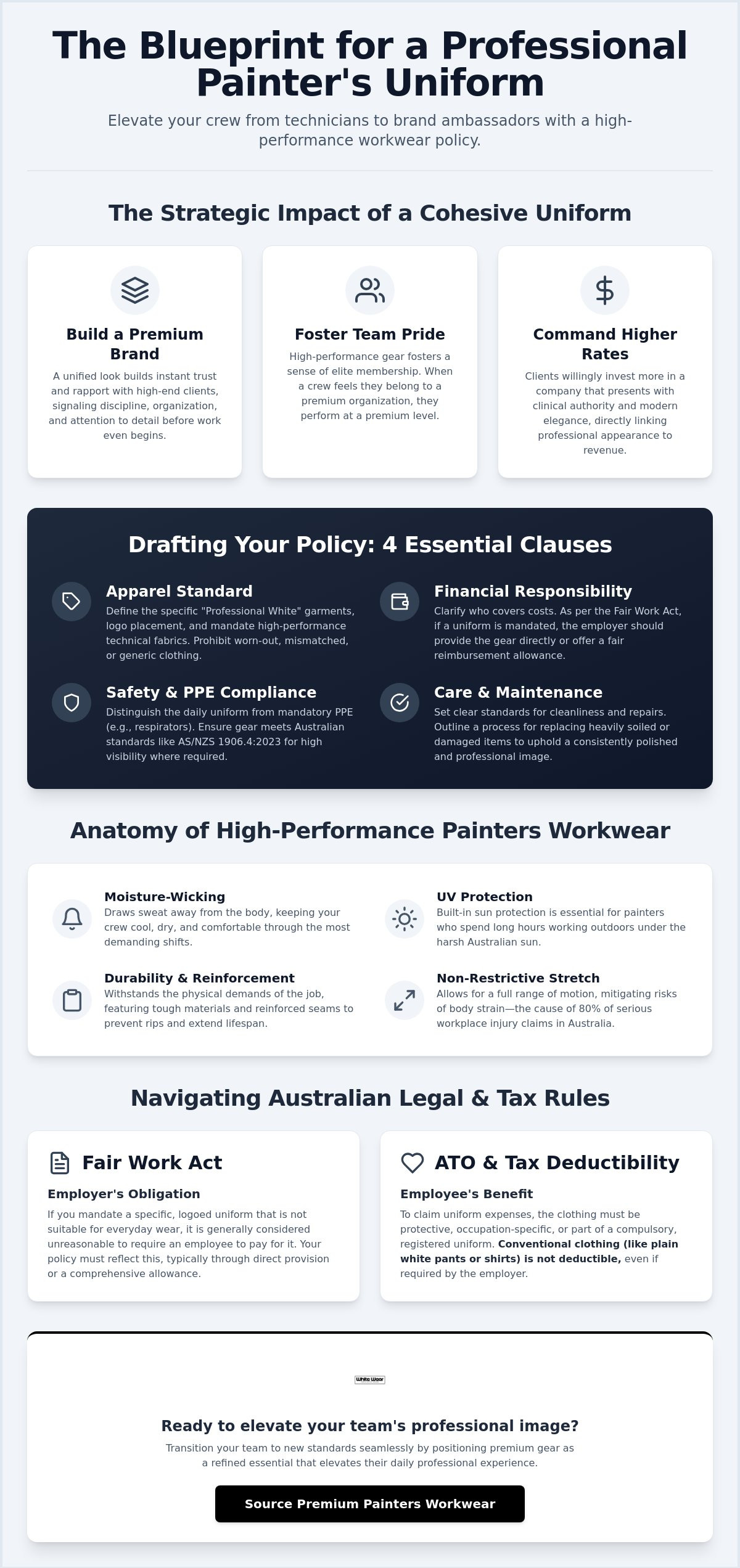
Drafting Your Policy: Essential Clauses for the Modern Painting Business
Setting up a uniform policy for a painting company begins with a clear statement of purpose. This clause shouldn't read like a list of demands. Instead, it should frame your brand’s mission as a commitment to excellence. By establishing an aspirational tone, you signal to your crew that they are elite specialists deserving of high-performance gear. The "Purpose and Scope" section of your document defines who is covered and why these standards exist, grounding the policy in the physical reality of providing dignity and comfort during grueling hours of labor. It transforms a utility item into a refined essential that every team member can take pride in wearing.
Defining a "Standard of Care" is the most challenging aspect of a painting policy. We know that paint is part of the job, but there's a clinical authority in a well-maintained uniform that cannot be ignored. Your policy must establish a clear protocol for when a garment is considered retired. A heavily soiled or shredded pair of trousers damages your brand reputation and erodes client trust. When you are ready to implement these standards, sourcing premium painters clothing ensures your team starts with a foundation of durability that makes maintaining this standard achievable. Consistency across the team creates a sense of reliability that high-end clients demand.
Care and Maintenance Requirements
Explicit laundering instructions are vital to preserve the technical integrity of the fabric. Your policy should mandate cold water washes and air drying to prevent the breakdown of fibers and the shrinkage of reinforced stress points. If you choose to outsource, 2026 commercial laundry rates average around $0.75 to $1.10 per pound, which can be a strategic investment for larger crews. Providing your team with the knowledge to care for their gear empowers them to maintain their own professional image. It ensures the apparel maintains its refined aesthetic after months of heavy use.
Grooming and Presentation on the Job Site
Professionalism extends beyond the fabric. Setting realistic standards for grooming ensures your team presents a polished silhouette from the moment they step onto a site. This includes:
- Tied-back hair for safety and a clean appearance.
- Minimal jewelry to prevent snagging or safety hazards.
- Basic hygiene standards that respect the client’s personal space.
Enforcing these standards consistently is key to avoiding friction. Your policy should also address "Casual Friday" or training days, ensuring that even in less formal settings, the crew represents the company’s upwardly mobile and refined approach to the trade. This brisk, purposeful management style reflects the decisive nature of a leading painting business.
Implementation and Maintenance: Elevating the Daily Grind
Implementing your new standards is where the theory of professionalisation meets the reality of the job site. When setting up a uniform policy for a painting company, the transition phase is your most critical opportunity to secure team buy-in. We believe that a policy shouldn't feel like a restriction. It should feel like an upgrade. Frame the rollout as a commitment to providing your crew with the dignity of high-performance gear that supports them through grueling hours of labor. By focusing on the benefit to the employee, you transform a set of rules into a premium perk. High-quality painters workwear is a refined essential that many tradespeople would otherwise have to source themselves—much like how a connoisseur might source iconic art from Galerie Prints to capture a sense of timeless, professional style.
A firm "Go-Live" date is essential for a clean transition. Vague timelines lead to inconsistent adoption and a diluted brand image. Choose a date that allows for the full distribution of gear and stick to it. Management must lead this change with clinical authority. If the business owner and supervisors aren't wearing the gear, the crew won't see the standard as non-negotiable. Leading by example reinforces the brand’s mission and proves that the apparel is functional for every level of the organization. It's about creating a unified front that commands respect from every client you encounter.
Consultation and Rollout
Success lies in the details of the delivery. Before the official launch, gather feedback from your senior painters on the fit and functionality of the selected painters clothing. Their firsthand experience is invaluable for identifying potential issues before they become widespread frustrations. This peer-led development approach builds immediate rapport and trust. Use the rollout as a moment of "re-branding" for the entire company. We recommend providing each team member with a "Welcome Pack" that includes the written policy, their new gear, and clear care instructions. This high-end approach makes the arrival of new uniforms feel like a significant professional milestone.
Ongoing Review and Quality Control
A uniform policy is a living document that must adapt as your business grows. Scheduling bi-annual audits ensures that every team member continues to look their best and that gear is replaced before it becomes a liability. For a deeper look at maintaining these standards, consult The Professional Painter’s Guide to Elevated Workwear in 2026. Regular reviews allow you to adjust the policy as you shift into new sectors, such as high-end commercial or specialized restoration. Continuous refinement ensures that setting up a uniform policy for a painting company isn't just a one-time task, but a steady foundation for long-term brand excellence.
Future-Proofing Your Trade Brand
Mastering your company's presentation is the definitive step in transitioning from a standard service provider to an elite trade specialist. By setting up a uniform policy for a painting company, you align your brand with clinical authority and ensure your team enjoys the dignity of high-performance gear. We've explored how navigating legal obligations and selecting technically superior fabrics creates a foundation for long-term growth. This isn't just about clothes; it's about a commitment to excellence that high-end clients recognize immediately. Your policy is the blueprint for a workplace culture that values both form and function.
Your team deserves gear that was developed in the trenches. Our refined essentials are designed by painters for painters, using durable, high-performance fabrics that withstand the physical duration of the workday. With national shipping across Australia, professionalising your crew has never been more accessible. Elevate your crew with professional painters workwear from White Wear and transform your daily grind into a statement of professional pride. You've built the reputation; now give it the uniform it deserves.
Frequently Asked Questions
Do I have to pay for my employees’ painters workwear in Australia?
Generally, yes, if the uniform is compulsory. Under the Fair Work Act and the Building and Construction General On-site Award, employers are typically required to provide or pay for specific uniforms. If you mandate setting up a uniform policy for a painting company that includes a unique logo or protective features, the financial responsibility falls on the business. This investment ensures your team represents your brand’s clinical authority with precision and pride.
Can I deduct the cost of uniforms from an employee’s final paycheck?
You cannot deduct these costs unless the employee has given written authorization for a deduction that is principally for their benefit. Even with a written agreement, the Fair Work Act prohibits "unreasonable" deductions. It’s more effective to include a clause in your policy regarding the return of gear upon termination. This protects your investment in premium painters workwear without risking legal friction or damaging the rapport you’ve built with your crew.
What is the difference between a protective uniform and a branded uniform?
A protective uniform is designed to mitigate specific workplace hazards, such as high-visibility materials compliant with AS/NZS 1906.4:2023. A branded uniform is a refined essential designed for corporate identity, featuring logos or specific colors. While a branded uniform builds immediate trust, protective gear is a legal WHS requirement. Many modern painters workwear options successfully blend both, providing necessary safety and a polished, professional silhouette that commands respect on any site.
How many sets of painters clothing should I provide to each new hire?
We recommend providing a minimum of three to five sets of painters clothing for a full-time hire. This allows for a clean rotation, ensuring the worker has a fresh set while others are being laundered. Providing an adequate supply prevents the use of worn-out or paint-spattered garments. It maintains your brand's clinical authority and ensures your team feels supported during the grueling hours of a fast-paced work week.
Can I require staff to wear specific brands of work boots or accessories?
You can mandate specific safety standards, such as AS/NZS 2210.3 compliance for footwear, but requiring a specific brand is only reasonable if you provide them. If a particular brand is essential for your brand's aesthetic or safety protocol, it’s best to supply the items directly. This ensures consistency across the team and avoids placing an unreasonable financial burden on your employees, treating them as professionals who deserve the best tools.
What happens if a painter refuses to wear the compulsory company uniform?
Failure to wear a compulsory uniform is a breach of a lawful and reasonable direction. You should address this through your standard disciplinary process, starting with a supportive conversation to understand underlying issues like fit or comfort. Consistent enforcement is vital for setting up a uniform policy for a painting company that actually sticks. It ensures your business maintains its elite professional status and that no individual compromises the team’s cohesive brand image.
Are painters trousers tax-deductible for my business in 2026?
Yes, the cost of providing uniforms is a deductible business expense for your company. In 2026, for employees to claim their own laundry or purchase costs, the uniform must be either protective or registered with AusIndustry. As a business owner, providing these refined essentials is a smart investment. It reduces your taxable income while elevating the dignity and performance of your entire crew through high-quality, professional apparel.
How do I handle uniform requirements for subcontractors?
Subcontractors are generally responsible for their own gear, but you can set a minimum standard of appearance in your subcontractor agreement. You might require them to wear plain white painters workwear or even offer to sell them branded gear at cost. This ensures that even temporary team members align with your brand’s sophisticated aesthetic without complicating the legal distinction of their employment status or their responsibility for their own professional tools.


