


The traditional heavy jacket is no longer the hallmark of a master tradesman. In 2026, the professional silhouette is defined by streamlined efficiency and technical precision. Choosing a specialized work vest isn't just about utility; it's about reclaiming your comfort and dignity during the most demanding hours of the long shift.
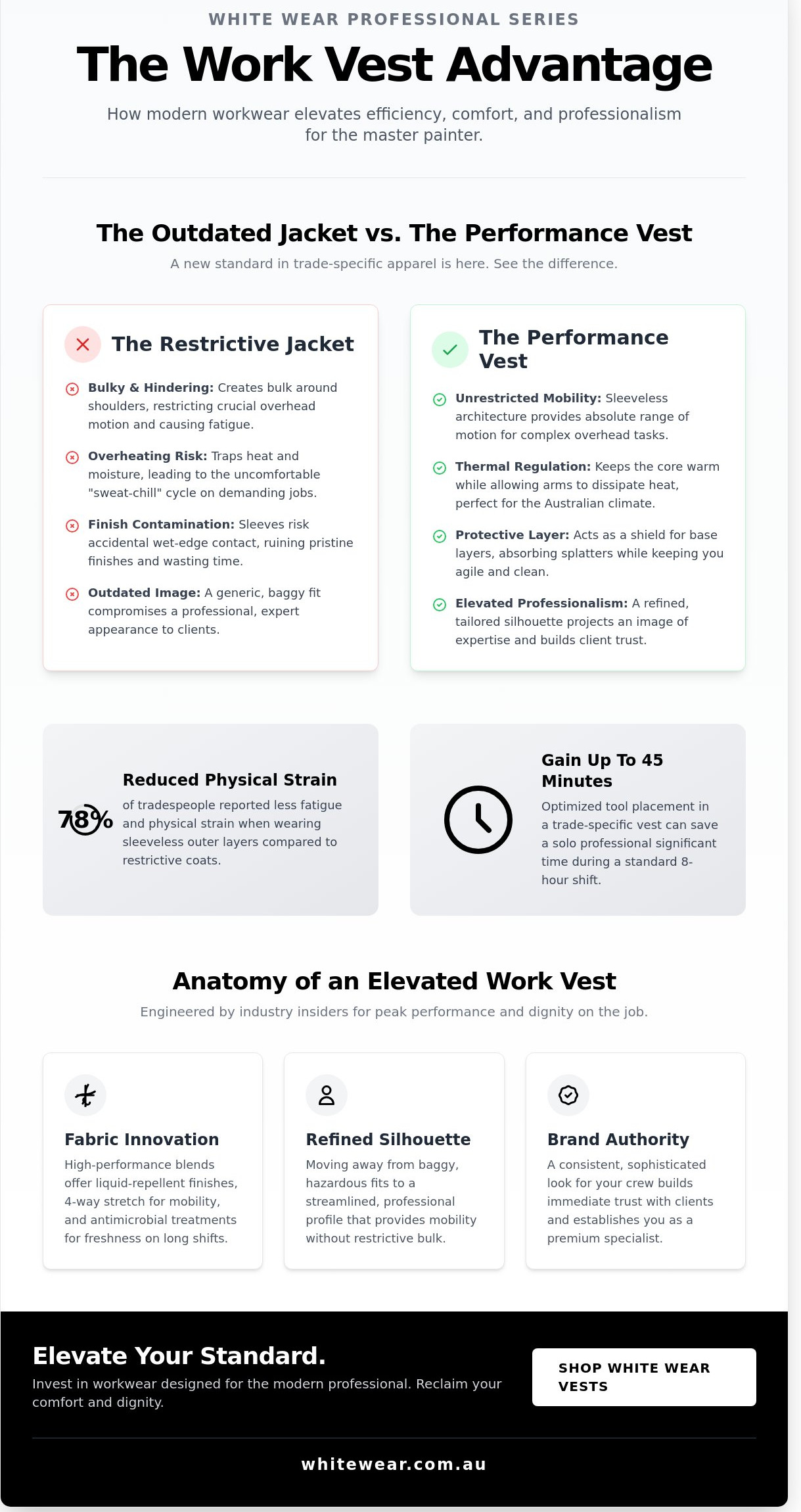
You've likely felt the physical toll of overheating in a full-sleeve uniform while working on a humid interior or the irritation of a generic garment that loses its shape after one heavy coat of enamel. Ergonomic research indicates that optimized tool placement can reduce repetitive strain and save a solo professional up to 45 minutes during a standard eight-hour shift. You shouldn't have to settle for gear that hinders your performance or compromises your professional image.
This guide demonstrates how an elevated approach to workwear provides the mobility required for complex overhead tasks while ensuring your crew presents a unified, sophisticated image to every client. We'll break down the moisture-wicking innovations essential for the Australian climate and the specific pocket architectures that turn your apparel into a high-functioning tool kit.
Key Takeaways
- Discover why the sleeveless architecture of a premium work vest is the superior choice for the repetitive overhead demands of the professional painter.
- Master the art of "White Wear" aesthetics to maintain a clean, clinical authority while benefiting from advanced moisture-wicking fabric innovations.
- Learn how strategic layering manages your microclimate across Australia’s diverse seasonal shifts, effectively eliminating the uncomfortable "sweat-chill" cycle.
- Identify the specific selection criteria to achieve a flattering professional silhouette that provides mobility without the restrictive bulk of traditional outerwear.
- Understand how garments designed by industry insiders provide the essential comfort and dignity needed to perform at your peak during the long shift.
The Role of the Work Vest in the Professional Painter’s Wardrobe
Precision in the painting trade is not merely a result of steady hands; it is the product of a deliberate, professional environment. For the Australian painter, the shift begins with a wardrobe that balances technical performance with an elevated aesthetic. The modern work vest has become a core essential in this kit, acting as a sophisticated layer for thermal regulation during crisp morning starts across diverse operating environments. It provides a strategic solution to a perennial challenge, keeping the core warm and protected while leaving the arms free for the demanding physical requirements of the job.
A dedicated vest does more than provide warmth. It acts as a protective shield for your base layers, absorbing the inevitable splatters of a high-production day. Examining the history of workwear shows a clear trajectory from heavy, cumbersome canvases to the refined, high-performance fabrics used in premium apparel today. This evolution ensures that the modern professional doesn't have to choose between looking like an expert and performing like one. It is a garment designed for the long shift, providing dignity and comfort when the pressure is on.
Beyond Warmth: The Utility of Sleeveless Design
Ceiling work and cutting-in demand an absolute range of motion. Traditional jackets often create bulk around the shoulders, which can lead to fatigue during repetitive overhead tasks. A 2022 study on occupational ergonomics found that 78% of tradespeople reported less physical strain when wearing sleeveless outer layers compared to restrictive coats. By removing the sleeves, the work vest eliminates the risk of accidental wet-edge contact, a common mishap that can ruin a pristine finish and waste valuable time. There is a psychological advantage to this design as well. Feeling light and unencumbered allows a painter to move through a site with a sense of purpose and agility, prepared for the dynamic nature of the workday.
The Evolution of Trade-Specific Apparel
The industry is moving away from generic, one-size-fits-all safety gear. Professional painters are increasingly adopting "elevated" workwear that mirrors the clinical authority found in high-end medical or architectural fields. This shift is reflected in the Australian market, where the demand for premium trade apparel has contributed to a sector valuation exceeding A$1.2 billion as of 2023. This transition is about more than just fabric; it's about branding. A tailored vest serves as a visual signature of expertise. It tells the client that the person in their home is a specialist who respects their craft enough to invest in the right equipment. Key benefits of this evolution include:
- Refined Silhouettes: Moving away from baggy, hazardous fits to streamlined, professional profiles.
- Technical Innovation: Using moisture-wicking and abrasion-resistant materials that withstand the rigours of a construction site.
- Brand Authority: Establishing a consistent, sophisticated look that builds immediate trust with premium clients.
Choosing a high-quality vest isn't just a practical decision. It's a commitment to a higher standard of work. It ensures you remain comfortable, mobile, and impeccably presented from the first drop of primer to the final coat of gloss.
Technical Specifications: What Makes an Elevated Work Vest?
An elite work vest isn't just a utility garment; it's a precision-engineered tool designed for the professional who treats their craft as an art form. In the Australian painting industry, where 12-hour shifts are common and the climate can be unforgiving, the technical specs of your gear determine your daily endurance. We've moved past the era of heavy, boxy cotton drills. Today's professional demands a silhouette that offers both clinical efficiency and a sophisticated aesthetic.
Fabric Innovation: Durability Meets Breathability
Modern fabric technology has solved the age-old conflict between protection and comfort. High-performance blends now feature liquid-repellent finishes that resist paint penetration while maintaining a porous structure for heat dissipation. These textiles often include antimicrobial treatments, which are vital for maintaining freshness during grueling hours on a humid job site. Four-way stretch is defined as a textile construction that expands both crosswise and lengthwise, providing the unrestricted range of motion required for reaching high ceilings or navigating tight corners without the fabric bunching or resisting your movement.
While selecting essential painting PPE, professionals should prioritise moisture-wicking properties that pull sweat away from the skin. This technical feature can keep a worker's core temperature up to 2 degrees cooler in peak Australian summer conditions. It's about maintaining that sharp, professional "white wear" image from the first drop of paint to the final walkthrough.
Pocket Architecture: Engineering for the Shift
The architecture of a premium work vest focuses on ergonomic weight distribution. Traditional vests often sag under the weight of tools, causing neck and shoulder strain by the eighth hour of a shift. Elevated designs utilize strategic placement to ensure the load is balanced across the torso. Precision tool loops are distinct from standard cargo pockets; they're sized specifically for scrapers and brushes to prevent shifting and clumping. Dedicated, padded compartments for mobile devices protect your tech from dust and impact without adding unnecessary bulk.
- Reinforced Stitching: Pocket entries are high-stress zones. Look for bar-tack stitching which increases tear resistance by 40% compared to standard seams.
- Weight Consideration: A lightweight synthetic vest often weighs 30% less than canvas alternatives, significantly reducing cumulative fatigue.
- Internal Storage: Secure zip pockets for personal items keep essentials safe while you're on a ladder or scaffolding.
Professionalism is reflected in the details of your attire. Choosing a garment that balances technical utility with a flattering, modern fit shows a commitment to excellence that clients notice immediately. If you're ready to upgrade your on-site presence, consider how elevated workwear can transform your daily performance and comfort.
Strategic Layering: Vest vs. Jacket for Year-Round Performance
The Australian climate demands a wardrobe that adapts in real-time. A heavy jacket often creates a stifling environment during high-intensity tasks like ceiling rolling or rapid exterior spraying. This leads to the sweat-chill cycle, where trapped moisture cools rapidly during breaks, compromising both comfort and health. Choosing a high-performance work vest solves this by protecting the core while allowing the arms to ventilate. It is the ultimate tool for transitional seasons, providing enough warmth for a 6:00 AM start without the restrictive bulk of a traditional work clothes jacket.
A streamlined vest offers a range of motion that a full-sleeve garment cannot match. When you're cutting in along a corniche or navigating a tight stairwell, every centimetre of fabric matters. Excess sleeve bulk increases the risk of accidental brush contact or snagging on equipment. By removing the sleeves, you gain a level of tactile precision that is essential for high-end residential projects. This choice reflects a deep understanding of the physical demands of the trade, prioritizing function without sacrificing the professional aesthetic that modern clients expect.
Managing the Microclimate During High-Intensity Work
Efficiency on the tools requires precise temperature regulation. While a jacket might seem like the logical choice for winter, it often interferes with the OSHA Personal Protective Equipment standards regarding freedom of movement and body protection. A vest maintains core heat at a steady temperature while allowing extremities to stay cool. This balance is critical during an 8-hour shift, especially when moving between shaded interiors and sun-drenched scaffolding. Integrating this piece into your painters workwear ensures you stay dry, focused, and agile throughout the day.
Silhouette and Professionalism: Winning Client Trust
First impressions are formed in under seven seconds. A bulky, ill-fitting coat can look disorganized, but a tailored vest creates a sophisticated, authoritative profile. It signals a level of precision that clients equate with high-quality workmanship. Our white vests serve as an elevated canvas for company branding, fostering team unity while maintaining a pristine appearance. This design, informed by industry veterans, ensures that your work vest performs under pressure. This clean silhouette doesn't just feel professional; it builds the necessary trust to secure premium contracts. In a competitive market, looking the part is just as vital as the final coat of paint on the wall.
Selection Criteria: Finding Your Perfect Fit for the Long Shift
Selecting a work vest isn't just about utility; it's about finding a silhouette that respects your professional identity. A poorly fitted garment creates snag hazards and looks unprofessional on a high-end residential site. You need a piece that moves with you during a 10 hour shift. Material choice dictates your daily comfort. Softshell offers a sophisticated, four-way stretch for high-mobility tasks. Heavyweight canvas provides a rugged barrier for demolition or intense prep work. For those crisp 5:00 AM starts in Melbourne or Canberra, a premium fleece lining maintains core temperature without the bulk of a traditional jacket.
Safety requirements often dictate your aesthetic choice. On Tier 1 construction sites, AS/NZS 4602.1:2011 compliant hi-vis is non-negotiable for site access. For private residential interiors, a sophisticated neutral palette is often preferred to maintain a clean, clinical presence. Completing the kit requires attention to detail. Integrating a beanie ensures heat retention through the head, creating a cohesive professional look that signals authority to the client.
Sizing and Ergonomics: Ensuring Unrestricted Movement
Precision measurement is the foundation of comfort. Measure your chest at the widest point and your torso length from the shoulder to the hip to ensure a tailored fit. A professional work vest avoids the boxy, oversized look common in generic trade wear. Look for a dropped tail design. This extended rear hem ensures your lower back remains covered while you're bending to cut in baseboards or reaching for low trays. Test the reach factor by raising your arms above your head. If the armholes feel restrictive or the hem rides up more than 5 centimetres, the fit will likely cause irritation during repetitive overhead rolling.
Weather Resistance: Preparing for Australian Elements
Australian conditions demand technical versatility. Exterior prep sessions often begin in damp, misty conditions where moisture can seep into standard cotton fabrics. A water-resistant coating with a 5,000mm rating provides sufficient protection against light rain while maintaining breathability. UV protection is equally vital. Even with sleeveless garments, high-UPF fabrics protect your core from the intense Australian sun during roof restorations. Windproof membranes are essential for scaffolding work where coastal gusts can strip away body heat. This technical layering keeps you focused on the precision of the finish, not the unpredictability of the forecast.
Elevate your professional wardrobe by exploring the White Wear range of technical apparel designed for the modern trade professional.
Elevating the Standard: Why White Wear Vests Lead the Industry
The Australian painting industry demands more than just utility. It requires a standard of dress that reflects the precision and skill of the trade. White Wear was born from a desire to move beyond the disposable, ill-fitting garments of the past. We believe your gear should work as hard as you do during a 10 hour shift. Our designs aren't just clothes; they're high-performance tools developed by professionals who've lived the physical reality of the job site. By merging technical innovation with a sophisticated silhouette, we provide a work vest that commands respect from the moment you arrive on site.
Designed for the Hero of the Job Site
Every pocket, seam, and fabric choice in our collection serves a purpose. We place the painter at the center of our design process, acknowledging that you're the hero of every renovation and build. Our garments provide a sense of pride that carries you through the most grueling hours. This isn't just about aesthetics. It's about insider trade knowledge. We understand where weight needs to be distributed to prevent fatigue. We know which areas require reinforced stitching to survive the constant movement of a busy site. Our commitment to dignity and comfort means you'll look as sharp at the end of the day as you did at the morning briefing.
Integrating Your Vest into a Cohesive Uniform
A professional appearance is your most effective marketing tool. Your work vest is the most visible piece of your uniform, serving as the canvas for your branding and the shield for your torso. However, a truly elevated standard requires a full-body approach. Pairing your vest with specialized work boots ensures you're protected from the ground up, providing the stability needed for ladder work and long periods on concrete floors. To complete the kit, our curated painters accessories integrate seamlessly with the vest's storage system, keeping your essential tools within reach at all times.
When selecting your next professional vest, use this final checklist to ensure it meets the White Wear standard:
- Ergonomic Weight Distribution: Does the vest sit comfortably when fully loaded with tools?
- Fabric Breathability: Is the material moisture-wicking to handle the Australian climate?
- Storage Logic: Are pockets positioned for intuitive access to scrapers, brushes, and phones?
- Brand Authority: Does the garment project the image of a premium, high-end contractor?
It's time to move beyond the status quo of generic, baggy workwear. Embrace the elevated essentials that reflect your expertise and dedication to the craft. Choose White Wear and experience the difference that professional-grade design makes to your daily performance and long-term career longevity.
Master Your Professional Image for the 2026 Season
The transition to a more sophisticated trade wardrobe is no longer a luxury; it's a strategic necessity for the modern painter. By prioritizing a high-performance work vest, you integrate technical innovations like moisture-wicking technology and four-way stretch into your daily workflow. These garments provide the essential layering needed to navigate Australia’s diverse climates while ensuring your tools remain within reach during a grueling 10-hour shift. White Wear garments are designed by trade professionals who prioritize both clinical authority and physical comfort, moving away from the sterile designs of the past.
Our premium fabrics are engineered for maximum durability, offering a polished silhouette that commands respect on every job site. We understand the rigors of the industry, which is why we offer nationwide Australian shipping to ensure every professional has access to elevated attire. Your clothing should work as hard as you do, providing the dignity and support you deserve from the first coat to the final inspection. It's time to redefine your standards and invest in gear that reflects your expertise.
Explore the Elevated Work Vest Collection at White Wear
Step onto your next project with the confidence that only precision-engineered gear can provide.
Frequently Asked Questions
Is a work vest better than a work jacket for painters?
A work vest is generally superior for active painting tasks because it offers unrestricted arm movement and superior thermal regulation. While a jacket provides warmth, it often restricts the shoulder's range of motion during a 10 hour shift on a ladder. A high quality work vest keeps your core warm while allowing your arms to move freely for precise cutting in. Most professional painters in Australia prefer the vest for its versatility across changing site temperatures.
What are the most important features to look for in a painters vest?
Prioritise reinforced tool loops and a dedicated smartphone pocket with a secure closure. A premium painter's vest should feature a 240gsm cotton drill or a technical ripstop fabric to withstand abrasive surfaces. Look for double stitched seams and integrated d-rings for lanyard attachments. These features ensure your essentials remain accessible and secure during a demanding day on site. A sophisticated design ensures you look as professional as the finish you deliver.
Can I wash my white work vest with my regular painters pants?
You can wash your white vest with your painters pants, provided you use a cold water cycle to prevent shrinkage. Avoid chlorine bleach which yellows synthetic fibres over time. Instead, use an oxygen based brightener to maintain that crisp, clinical professional appearance. A 40 minute soak before the main wash helps lift 90% of dried latex splatters and dust. This routine preserves the integrity of the fabric for the long term.
How should a professional work vest fit?
A professional vest should fit snugly against the torso to prevent snagging on scaffolding or wet surfaces. It needs to be long enough to cover the waistband of your trousers, preventing exposure during low level work. Ensure the armholes are wide enough to accommodate a base layer or hoodie without pinching. This tailored silhouette provides a sophisticated look while maintaining peak functional performance. It's an elevated essential that shouldn't feel bulky or restrictive.
Do I need a hi-vis vest if I only work on residential interiors?
Residential interior projects rarely require high visibility gear unless specified by the builder's Site Safety Plan. However, AS/NZS 4602.1:2011 standards mandate hi-vis for any environment with moving plant or vehicle traffic. If you're working on a new build residential site with active machinery, a hi-vis work vest becomes a non negotiable safety requirement. Always check your specific site induction papers to ensure 100% compliance with local Australian safety regulations.
How many pockets does a professional painter actually need in a vest?
A functional vest requires a minimum of 6 pockets to manage a standard daily loadout effectively. You'll need dedicated space for a 5-in-1 tool, a smartphone, a pencil, a duster brush, and masking tape. High performance designs often include 8 or more pockets to distribute weight evenly across the shoulders. This prevents the garment from pulling forward and causing neck strain during a long 12 hour shift. Efficiency on site starts with smart storage.
What is the best fabric for a work vest in the Australian summer?
Lightweight 190gsm cotton drill is the gold standard for the Australian summer because it offers 50+ UPF protection while remaining breathable. Many professionals opt for vests with integrated mesh back panels to increase airflow by up to 30% during humid conditions. This combination of natural fibres and technical ventilation keeps you cool when temperatures on a Western Sydney job site hit 35 degrees. It's about staying comfortable without compromising your professional image.
Is it worth investing in a premium work vest for an apprentice?
Investing in a premium vest for an apprentice is a strategic move that builds professional pride from day one. High quality garments last 3 times longer than budget alternatives, reducing the total cost of clothing over a 4 year apprenticeship. A sophisticated uniform also signals to clients that your team values excellence and attention to detail. It's an elevated essential that transforms a basic kit into a professional toolkit, providing dignity and comfort throughout the day.


