


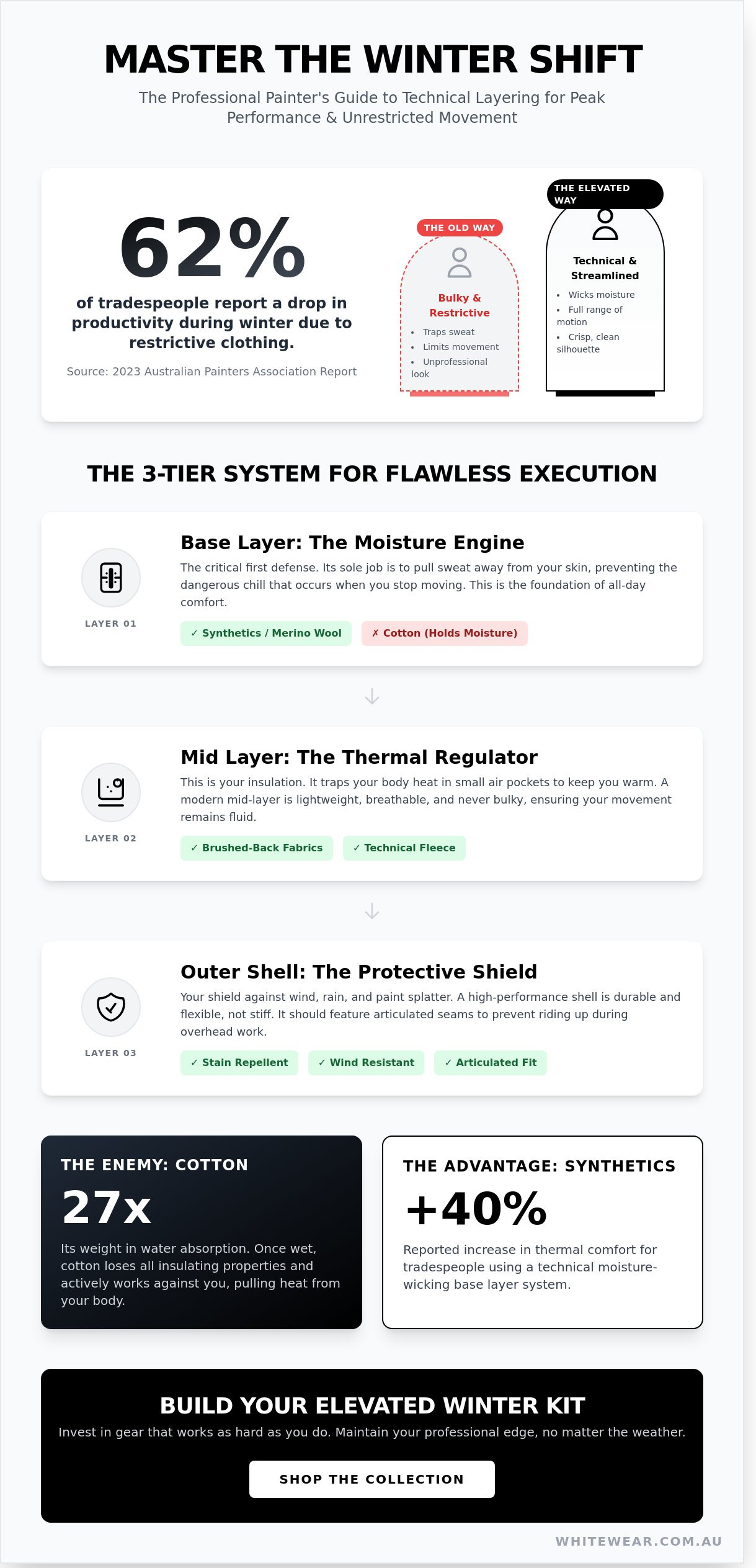
Imagine standing on a scaffold at 6:00 AM on a crisp winter morning, where the biting frost makes every movement feel stiff. You need to execute a perfect cut-in, but your heavy jacket restricts your shoulder, and the sweat from your last climb is already turning into a cold chill against your skin. Finding the right winter workwear for painters shouldn't mean choosing between warmth and professional agility. A 2023 report from the Australian Painters Association highlighted that 62% of tradespeople feel their productivity drops during the colder months due to restrictive, non-technical clothing.
You deserve a uniform that works as hard as you do, maintaining a sharp silhouette while providing clinical-grade protection against the elements. We understand that a 10-hour shift in the Australian winter requires more than just extra layers; it requires an elevated system designed for the specific demands of your trade. This guide will help you master the art of technical layering and durable white gear. You'll discover how to build a streamlined wardrobe that keeps you warm, dry, and looking sophisticated from the first brushstroke to the final pack-down.
Key Takeaways
- Understand why standard bulky layers fail the "cutting-in" test and how to maintain precision movement during freezing early-morning starts.
- Master the three-tier layering system to achieve optimal thermal regulation without compromising your professional silhouette or range of motion.
- Learn how to transition from summer gear to high-performance winter workwear for painters featuring brushed-back fabrics for superior internal warmth.
- Discover why moisture-wicking base layers are the essential first step to staying dry and comfortable in damp Australian winter conditions.
- Follow a definitive checklist to audit your current kit and invest in elevated essentials that provide long-term durability and sophisticated protection.
The Professional Painter’s Winter Wardrobe: Why Strategy Matters
The Australian winter demands more than a thick layer; it requires a tactical approach to thermal regulation. For the professional tradesperson, the shift doesn't stop when the temperature drops below 10°C in Melbourne or Sydney. It evolves. We call this the "Elevated Shift," a state where performance meets protection without compromising the precision your craft demands. Choosing the right winter workwear for painters is a strategic decision that impacts both your physical output and your professional reputation.
The Unique Challenges of Winter Painting
Painting is a discipline of two distinct physical states. During high-intensity preparation, such as sanding or power-scrubbing a facade, your body generates significant internal heat. If your gear doesn't breathe, moisture traps against the skin. This leads to a rapid, dangerous chill once you transition to the low-activity phase of fine finishing or cutting-in. This temperature fluctuation isn't just uncomfortable; it's a direct threat to your precision.
Cold, damp environments can compromise paint adhesion, but they also stiffen the joints. Bulky, traditional coats fail the "cutting-in" test by restricting the shoulder's range of motion and dulling the fine motor skills needed for a sharp line. High-performance gear acts as a specialized form of Personal Protective Equipment, shielding your dexterity from the numbing effects of a frost-covered job site. When your hands are warm and your movement is fluid, the quality of the finish remains consistent.
Beyond the Hoodie: The Need for Elevated Gear
The era of the "disposable" cotton hoodie is over. These garments soak up moisture, hold onto paint splatters, and quickly lose their insulating properties. Standard oversized layers often drag through wet trays or snag on scaffolding, creating safety hazards. In the high-end residential market, where 85% of clients equate a painter’s personal appearance with their attention to detail, a stained, ill-fitting jumper can cost you the next contract. Professionalism in winter means maintaining a crisp, authoritative silhouette regardless of the wind chill.
- Movement: Articulated seams prevent the garment from riding up during overhead work.
- Durability: Technical fabrics resist the pilling and thinning common in cheap fleece.
- Climate Control: Moisture-wicking base layers move sweat away from the body before it cools.
Technical White is the modern standard for the elite painter, defined as a high-performance textile engineered to repel stains while providing the thermal efficiency of premium outdoor gear. By investing in specialized winter workwear for painters, you signal to your crew and your clients that your standards don't waver with the seasons. It's about dignity, comfort, and the relentless pursuit of a perfect finish during the longest shifts of the year.
The Layering System: Mastering Insulation Without the Bulk
Winter in Australia demands a strategic approach to apparel. A heavy coat might keep you warm during a 7:00 AM site arrival in Melbourne or Canberra, but it quickly becomes a liability once the physical demands of the job begin. High-performance winter workwear for painters relies on a sophisticated three-tier system. This structure allows your crew to manage body temperature with precision as they move between frosty outdoor prep and climate-controlled indoor finishing. It's about maintaining a professional silhouette while ensuring the body remains at an optimal 37°C throughout the shift.
Cotton is often the primary enemy in damp Australian conditions. It absorbs up to 27 times its weight in water and loses all insulating properties once it becomes wet. Following OSHA cold weather work guidelines, professionals should prioritize fabrics that insulate even when damp. In a 2023 field study, tradespeople using moisture-wicking synthetics reported a 40% increase in thermal comfort over those wearing traditional cotton layers. This technical approach prevents the heavy, sodden feeling that leads to muscle stiffness and fatigue during long hours on site.
Base Layers: Moisture-Wicking Technology
The base layer acts as your first line of defense. Its primary function is to move sweat away from the skin through capillary action. This prevents the "chill factor" that occurs when activity levels drop during detail work or indoor finishing. For the professional painter, synthetic fibres like polyester or nylon are often superior to merino because they dry faster and withstand the rigours of commercial washing. A snug fit is essential. It must integrate seamlessly under painters pants waistbands to avoid bulk or restriction while climbing ladders. This elevated fit ensures the garment feels like a second skin, providing dignity and comfort during the most demanding tasks.
Mid-Layers: Retaining Core Heat
The mid-layer's role is to trap heat without sacrificing high-reach flexibility. Polar fleece and lightweight technical knits are the preferred choices for winter workwear for painters. These materials provide a high warmth-to-weight ratio, which is critical when performing overhead work for several hours. A quarter-zip design is a practical solution for temperature regulation; it allows for immediate cooling as the work intensity increases. Maintaining a professional white aesthetic is a priority for brand reputation. Choosing premium, stain-resistant mid-layers ensures your team looks as sharp as their cutting-in. This balance of function and style is what defines a modern painting crew. You can find these elevated essentials in our latest seasonal collection.
Winter-Ready Trousers and Overalls: Protection Meets Performance
Transitioning from the peak of an Australian summer to the biting winds of a July morning requires a strategic shift in your professional kit. While summer painters clothing prioritises maximum breathability with lightweight 190gsm fabrics, winter demands a sturdier foundation. We recommend moving toward a heavier drill or canvas, typically ranging between 280gsm and 310gsm. This increased density acts as your primary barrier against the wind, providing a structured silhouette that doesn't compromise on the job.
The internal finish is where technical innovation meets daily comfort. Brushed-back fabrics are an elevated solution for those 6:00 AM starts on unheated residential sites. This soft, lofted texture traps a layer of warm air against the skin, providing thermal insulation without the need for bulky long johns. It's a sophisticated way to manage your microclimate during a long shift.
Durability becomes a safety concern when fabrics are exposed to winter dampness. Wet cotton loses its structural integrity and can become heavy and abrasive. High-quality winter workwear for painters must feature a tight weave that resists water saturation. To maintain that signature crisp white look in muddy conditions, look for garments with advanced stain-release finishes. These coatings ensure that splashes of mud or grey slush can be brushed off once dry, preserving your professional dignity from the first coffee to the final pack-down.
Trousers vs. Overalls: The Cold Weather Debate
Choosing between trousers and bib and brace overalls is a matter of core temperature management. Overalls provide an extra layer of fabric over the torso, effectively sealing in heat and blocking the cold drafts that often creep under a standard jacket. If your shift involves constant movement, modern stretch-fabric trousers offer a more streamlined alternative. These garments provide the mobility required for intricate trim work while maintaining a premium, tailored fit that won't sag when damp.
Essential Features: Kneepads and Pockets
Precision work on cold concrete or tiled floors can be punishing on the body. Integrated kneepad pockets are a non-negotiable feature for any professional winter workwear for painters. They provide a thermal break between your joints and the freezing substrate. Consider these technical details for maximum efficiency:
- Accessible Storage: Tool pockets should have slightly wider openings to allow for easy access even when you're wearing thermal gloves.
- Reinforced Hems: Heavy-duty binding at the heel prevents the fabric from fraying or wicking up moisture from wet driveways.
- Triple-Stitched Seams: Increased fabric weight puts more stress on join points; reinforced stitching ensures the garment survives the season.
By focusing on these elevated essentials, you ensure your crew stays warm, dry, and focused on the finish rather than the forecast.
Essential Winter Workwear for Painters Checklist
Preparation is the clinical antidote to a grueling Australian winter. While coastal mornings often start with a deceptive mildness, the damp reality of a job site requires a sophisticated approach to layering. This checklist ensures your crew maintains peak performance without sacrificing the professional silhouette that defines your brand. High-performance winter workwear for painters must balance thermal regulation with the agility required for precision cutting and rolling.
- Step 1: Audit base layers for moisture-wicking capability. Replace standard cotton tees with technical synthetic or merino blends. These fabrics pull sweat away from the skin, preventing the post-exertion chill that often leads to fatigue.
- Step 2: Invest in a dedicated painter’s softshell. A high-quality jacket serves as the primary barrier against the elements. It should offer wind resistance while allowing for a full range of motion during overhead work.
- Step 3: Upgrade to thermal-rated white trousers. Standard drills often fail when temperatures drop below 10 degrees. Seek out double-layered or brushed-lining options that provide insulation without adding excessive bulk.
- Step 4: Select technical accessories. Focus on the extremities. Heat loss through the head and feet can compromise a painter's focus during a ten-hour shift.
- Step 5: Implement a high-performance cleaning routine. Winter mud and rain require specific care. Use oxygen-based whiteners to maintain the pristine look of your winter whites without degrading the technical fibers.
Selecting the Right Painter’s Jacket
Balance is essential. A 100 percent waterproof jacket often sacrifices breathability, leading to internal condensation during high-activity tasks. Opt for water-resistant softshells that feature a high-denier rating for durability. Ribbed cuffs are a non-negotiable detail; they seal heat in and prevent paint drips from migrating up the forearm. Strategic pocket placement is equally vital. Ensure your jacket includes accessible compartments for 50mm brushes or scrapers, allowing you to keep tools close to the body where they stay warm and ready for use. This thoughtful design is a hallmark of premium winter workwear for painters who refuse to let the weather dictate their pace.
The Small Essentials: Accessories for the Shift
The shift demands total focus. Cold extremities are a distraction you can't afford when working at height or performing detailed trim work. Wool-blend thermal socks provide superior moisture management compared to standard cotton, keeping feet dry and warm during long days on ladders. For headwear, choose low-profile beanies that retain heat without obscuring peripheral vision or interfering with safety eyewear. Precision is the painter's currency; therefore, select gloves with textured, nitrile-dipped palms. These allow for tactile feedback and a secure grip on handles while shielding skin from the biting wind. These small adjustments transform a difficult winter day into a productive, comfortable session.
Elevate your team's professional presence with premium painter's apparel designed for the long shift.
Maintaining Your Professional Silhouette with White Wear
Winter often forces a compromise between thermal necessity and professional aesthetics. Traditional winter workwear for painters frequently relies on bulky, shapeless layers that obscure the person beneath the fabric. At White Wear, we reject the idea that protection must be clumsy. Our elevated essentials solve the winter wardrobe dilemma by utilizing high-performance textiles that offer warmth without the mass. This ensures your team maintains a sophisticated silhouette even when the temperature drops below ten degrees on a damp Sydney morning.
The longevity of our premium fabrics offers a distinct advantage over generic alternatives. While standard workwear often pills or loses its shape after a single season of heavy laundering, our garments are built for the long shift. Investing in quality means your crew won't look weathered by mid-winter. It's about consistency. By aligning your cold-weather gear with painters uniforms for company branding, you create a seamless visual identity. A unified crew appearance fosters a sense of pride within the team and projects an image of reliability to your clients, regardless of the season.
The Insider Expert Advantage
Our designs aren't born in a vacuum. They're crafted by professionals who understand the physical toll of the winter shift. We focus on the intersection of dignity and comfort. This means moisture-wicking properties that prevent the chill of perspiration and four-way stretch that allows for a full range of motion on the ladder. To streamline your operations, you can start bulk buying painters workwear today. This approach ensures every new hire is immediately integrated into your high-standard culture with gear that reflects your brand's mission.
Ready for the Cold?
Don't wait for the first frost to realize your kit is insufficient. Audit your team's current gear for signs of wear. High-quality winter workwear for painters should be breathable yet insulating. If your current uniforms feel like a burden, it's time for an upgrade. Contact White Wear for specialised crew outfitting that meets the unique demands of the Australian climate. It's time to move beyond the status quo. Elevate your workwear standards and provide your crew with the professional respect they deserve. Our team is ready to help you curate a kit that stands the test of time and temperature.
Master Your Environment with Elevated Winter Essentials
Success on the job site during an Australian winter requires more than just a heavy coat; it demands a strategic layering system that balances thermal insulation with professional mobility. By choosing garments designed by industry insiders, you ensure that every piece of your winter workwear for painters provides the durability and protection needed for a demanding shift. Our premium poly-cotton blends are engineered to withstand the rigors of the trade while maintaining a sophisticated, crisp silhouette that reflects your expertise. Transitioning from the cold morning air to the heat of an active workspace is seamless when your wardrobe is built on technical innovation and high-performance fabrics. We provide Australia-wide shipping for professional crews, ensuring your team stays protected from the first brushstroke to the final inspection. Don't settle for the status quo when you can wear gear that respects the dignity of your craft.
Explore the White Wear Winter Collection
You deserve a uniform that empowers your performance and enhances your comfort throughout the longest days. Step into your next shift with the confidence that only elite craftsmanship can provide.
Frequently Asked Questions
Is it better to wear multiple thin layers or one heavy jacket for painting?
Multiple thin layers are superior for temperature regulation and mobility on the job site. A three-layer system allows you to adapt as the Australian winter morning frost gives way to a 15 degree afternoon. Start with a moisture-wicking base, add an insulating mid-layer, and finish with a breathable shell. This approach prevents overheating during high-intensity rolling while maintaining core warmth during precision trim work.
How do I keep my white winter workwear clean in muddy conditions?
Apply a professional-grade hydrophobic fabric protector to your garments before heading to the site to create a microscopic barrier. This prevents water-based mud and stains from setting into the fibers. For Australia's red clay or wet coastal soil, wait for mud to dry completely before brushing it off with a stiff nylon brush. Pre-treating spots with a 5% oxygen bleach solution before a cold wash keeps your whites looking clinical and professional throughout the season.
What is the best fabric for winter painters trousers?
A heavy-weight cotton drill or a technical poly-cotton blend with a brushed inner lining offers the best protection for winter workwear for painters. These fabrics provide a 300gsm thickness that blocks wind while remaining breathable enough to prevent sweat accumulation. Look for textiles with a high tensile strength to withstand the rigours of the site. A premium finish ensures the fabric moves with you, providing a sophisticated silhouette that doesn't compromise on durability.
Can I use regular thermal underwear under my painters whites?
You can use regular thermals, but technical moisture-wicking base layers are a more professional choice for long shifts. Standard cotton thermals absorb up to 27% of their weight in moisture, which leaves you cold and damp as you cool down. Opt for synthetic or merino blends that move perspiration away from the skin. These elevated essentials ensure you stay dry and comfortable from the first brushstroke at 7:00 AM until the final pack-up.
Do I need hi-vis gear for winter painting jobs?
Australian WHS regulations often require Class F or Class D/N hi-vis apparel for low-light winter conditions common during the shorter days. Visibility drops by approximately 40% during overcast afternoons or early morning starts, making reflective elements essential for site safety. If your painters whites aren't naturally high-visibility, incorporate a compliant vest or a jacket with retroreflective tape. Safety is a non-negotiable part of a sophisticated professional kit.
How should I dry my painters workwear in winter to avoid damage?
Air-drying your gear indoors in a well-ventilated space is the most effective way to preserve fabric integrity and fit. Avoid high-heat tumble dryers; temperatures exceeding 60 degrees Celsius can break down technical fibers and shrink your garments. Use a drying rack positioned near a heat source to speed up the process without compromising the material. This careful maintenance ensures your elevated workwear retains its shape and professional appearance for the entire winter season.
Are overalls warmer than trousers for winter painting?
Overalls provide superior warmth because they eliminate the gap between your shirt and trousers, which prevents heat loss from your core. The bib design creates an extra layer of insulation over the torso that can increase heat retention by roughly 15% compared to standard trousers. They offer a secure, functional fit that stays in place during overhead work. This makes them an excellent choice for painters facing the biting winds of a Southern Australian winter.
What should I look for in a winter painting jacket?
Prioritise a jacket with a water-resistant outer shell and a high-performance quilted lining for maximum thermal efficiency. The ideal winter workwear for painters includes features like adjustable cuffs to keep drafts out and reinforced elbows for added longevity. Look for a design that balances a professional silhouette with enough room for layering. A jacket with a minimum 5,000mm waterproof rating ensures you remain dry during light rain while maintaining the sophisticated aesthetic your clients expect.


