


Your whites are a visual resume that signals precision before you even open a can of paint. When your gear looks dingy or yellowed, it undermines the sophisticated quality of your craft. We understand the frustration of watching premium workwear lose its luster after only a few shifts. Mastering how to keep painters whites white is a tactical discipline of fabric science, not just a weekend chore.
You deserve an elevated wardrobe that withstands the rigors of the job while maintaining clinical-grade cleanliness. This guide provides the exact protocols needed to remove stubborn oil-based stains and prevent fabric degradation from over-bleaching. We will cover the implications of the January 6, 2026 EPA petition regarding detergent safety and how to stay compliant with OSHA standard 29 CFR 1910.1025 for contaminated gear. You're about to transform your maintenance routine into a high-performance system that protects your investment and your professional reputation.
Key Takeaways
- Elevate your professional presence by treating your workwear as a visual resume that signals mastery and precision to high-end clients.
- Differentiate between water-based and oil-based chemistry to apply tactical removal techniques that protect your garment's structural integrity.
- Master the "scrape, blot, flush" protocol and enzyme-based pre-soaks to understand exactly how to keep painters whites white after demanding shifts.
- Avoid the common "bleach myth" that leads to fabric yellowing and degradation, opting instead for bluing liquid to restore a pristine, clinical-grade finish.
- Transition from functional laundry to a tactical maintenance routine that preserves the sophisticated silhouette and longevity of your premium painters clothing.
The Professional Standard: Why Maintaining Your Painters Whites Matters
The tradition of the white uniform is a badge of honor that signals mastery, precision, and an uncompromising commitment to the craft. In the competitive landscape of 2026, your appearance serves as a visual resume before you even open a single drop sheet. When you master how to keep painters whites white, you're communicating a level of clinical authority that high-end residential and commercial clients demand. A pristine silhouette suggests that if you can maintain your own gear with such discipline, you'll treat their property with the same meticulous care.
Maintenance is no longer a peripheral chore; it's an extension of your professional craftsmanship. In an era where a contractor's initial appearance directly influences client trust, your uniform becomes a powerful branding tool. It's an elevated essential that differentiates the expert from the amateur. By treating your apparel as a technical asset rather than a disposable rag, you uphold the dignity of the trade while positioning yourself for premium-rate contracts. This focus on detail is what separates a standard shift from a sophisticated professional performance.
The Dignity of the Uniform
Stepping into a clean set of whites at the start of a grueling shift provides a psychological reset. It's a transition from the mundane to the professional, shifting your mindset into a state of clinical focus. This isn't just about aesthetics; it's about the pride you carry through the long hours. Clean workwear also acts as tangible social proof. In a world driven by digital referrals, a tradesman who looks the part is far more likely to be recommended for high-stakes projects, driving organic growth and reinforcing your reputation as a leader in the field.
Economic Benefits of Fabric Longevity
Investing in premium painters workwear requires a shift in how you view your business overheads. Frequent replacements due to yellowing or fabric degradation are an unnecessary drain on your profitability. Proper maintenance, which begins with understanding laundry symbols, prevents the premature breakdown of technical fibers. Modern fabrics are designed for durability, but they require specific protocols to remain moisture-wicking and breathable. By mastering laundry efficiency, you reduce long-term expenses and ensure your gear lasts through hundreds of shifts without losing its sophisticated fit or protective qualities.
Understanding the Adversary: The Chemistry of Paint Stains
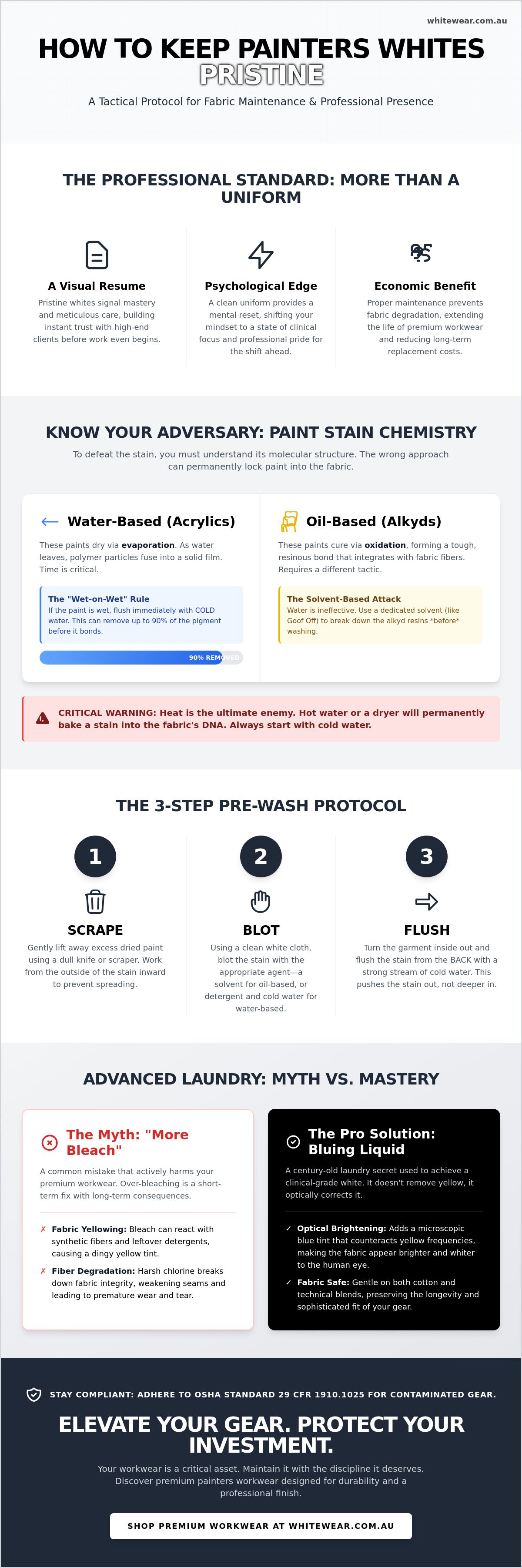
Paint is more than just pigment; it's a complex chemical binder designed to adhere permanently to a substrate. When that substrate is your uniform, the battle begins. To master how to keep painters whites white, you must first understand the molecular difference between your adversaries. Water-based acrylics rely on the evaporation of water to join polymer particles into a solid film. In contrast, oil-based alkyd paints cure through oxidation, forming a much tougher, resinous bond. Once these binders cure, they don't just sit on the surface; they integrate into the weave of your clothing.
Drying time is the critical variable in this chemical equation. A fresh spill is a physical problem, but a dried stain is a chemical one. As the solvent evaporates, the pigment particles become "locked" within the fibers. Heat is the primary enemy here. Using hot water or a high-heat dryer setting on a pre-treated stain acts as a catalyst, essentially baking the paint into the fabric's DNA. Following professional laundry best practices means always starting with cold water to ensure you don't inadvertently finish the curing process yourself.
Water-Based vs. Oil-Based Protocols
The "wet-on-wet" rule is your clinical solution for acrylics. If the paint is still wet, flushing it with cold water can remove up to 90% of the pigment before it bonds. For oil-based spills, you'll need a solvent-based approach. Products like Goof Off Pro Strength, which retails for approximately $5.99 for a 6 oz. bottle as of May 2026, are designed to break down alkyd resins without destroying the garment's silhouette. When dealing with "dry-fall" or ceiling dust during large-scale interior shifts, a dry brush technique is superior to wet wiping, which often pushes fine dust deeper into the technical fibers.
Fabric Science: Cotton vs. Technical Blends
Standard 100% cotton is highly porous. It acts like a wick, pulling wet paint deep into the core of the fiber where it's nearly impossible to reach. Modern flexible painters pants utilize polyester-cotton blends that offer a tighter, more resilient weave. These technical fabrics are engineered to resist pigment penetration, keeping the stain on the surface where enzyme-based cleaners can do their work. Additionally, many premium garments now feature antimicrobial treatments. These sophisticated finishes interact differently with standard laundry chemicals, requiring a more nuanced approach to maintain their protective properties over hundreds of shifts. For gear that balances this high-level science with a flattering fit, explore the full range of painters clothing designed for the modern professional.
The Pre-Wash Protocol: Tactical Stain Removal Techniques
Winning the war against dinginess happens before your gear ever touches the drum of a washing machine. A tactical pre-wash protocol is the foundation of how to keep painters whites white, ensuring that pigments and binders are neutralized while they're still vulnerable. The most common error professionals make is aggressive rubbing. This action doesn't remove the paint; it drives the microscopic pigment particles into the core of the technical fibers, permanently altering the fabric's silhouette. Instead, you must adopt a clinical approach using the "scrape, blot, flush" method to maintain your garment's structural integrity.
First, use a dull edge to scrape away excess wet paint without spreading it. Second, blot the area with a clean microfiber cloth to lift the remaining pigment. Finally, flush the stain from the reverse side with cold water to push the residue out of the weave rather than through it. Your choice of solvent should follow a strict hierarchy based on the severity of the spill:
- Mild Surfactants: Concentrated dish soap for fresh latex spills.
- Specialized Removers: Solvent-based agents for stubborn resins.
- Professional Degreasers: High-performance cleaners like Krud Kutter Original, which retails for between $16.99 and $23.98 per gallon as of May 2026, for heavy buildup.
The 15-Minute Response Rule
The first 15 minutes following a spill are the "golden window" for garment survival. Once the paint begins its chemical transition from liquid to solid, the bond becomes exponentially harder to break. Every professional should carry a compact on-site kit containing a small scraper and clean rags. By intervening immediately, you preserve the premium quality of your gear and prevent the need for harsh, abrasive treatments later. Blotting should always be a vertical motion, lifting the contaminant away from the surface to avoid pilling.
Enzymatic Pre-Soaking for Yellowing and Grime
The long shift often leaves more than just paint on your whites. Sweat, body oils, and environmental grime accumulate, leading to the yellowing that makes even clean gear look aged. A sophisticated alternative to harsh chlorine is a clinical pre-soak using sodium percarbonate, often known as oxygen bleach. Unlike chlorine, which can weaken fibers and cause a greyish cast, oxygen-based cleaners break down protein-based stains without compromising fabric strength. Use lukewarm water for this process. While hot water sets stains and cold water may not fully activate the enzymes, lukewarm water provides the ideal thermal environment for deep-cleaning action that restores your gear's clinical brightness.
Advanced Laundry Strategies for Professional-Grade Whites
The biggest misconception in trade maintenance is that chlorine bleach is the ultimate whitening agent. In reality, sodium hypochlorite is often the primary cause of premature garment failure. While it provides an initial bright result, it aggressively attacks the synthetic fibers in modern painters overalls, leading to a permanent yellow or grey cast. This chemical reaction, known as "bleach burn," strips the fabric of its sophisticated finish and creates brittleness that shortens the life of your gear. Mastering how to keep painters whites white requires a shift from harsh corrosives to optical science.
Introducing a bluing liquid into your final rinse cycle is a professional-grade secret. This technique adds a microscopic trace of blue pigment to the water, which counteracts the natural yellowing that occurs over long shifts. It doesn't remove stains; it tricks the eye into seeing a brighter, more clinical white. To ensure your skin remains protected from residual chemicals, implement a double-rinse strategy. This is especially relevant following the January 6, 2026 EPA petition regarding laundry detergent residues and skin irritants. A second rinse cycle removes the majority of surfactants that could otherwise cause discomfort during a high-activity shift.
The Oxygen Bleach Advantage
Sodium percarbonate is the superior choice for trade-specific durability. Unlike its chlorine-based counterparts, oxygen bleach releases hydrogen peroxide when dissolved in water, providing a powerful yet gentle whitening effect. It's most effective in lukewarm water, which activates the cleaning agents without using the high-heat cycles that permanently set remaining paint pigments. This process preserves the crispness of your gear while maintaining the moisture-wicking properties of the technical blend. For workwear that stands up to these advanced cleaning protocols, choose painters clothing designed for the modern professional.
Drying for Brilliance
The Australian sun is one of your most effective, free resources for maintaining a pristine silhouette. Line-drying utilizes natural UV radiation as a sophisticated bleaching agent, further brightening the fabric without the structural damage caused by mechanical tumble dryers. High-heat drying acts as an oven, "baking" any missed pigments into the weave and causing the fabric to lose its flattering fit. Once dry, store your gear in a dedicated garment bag or clean drawer to prevent industrial dust contamination from settling on your freshly laundered whites before your next shift.
Longevity and Branding: Elevating Your Professional Image
Your uniform is your most consistent marketing asset. Maintaining it isn't a chore; it's a strategic investment in your professional brand. When you master how to keep painters whites white, you transition from being a laborer to becoming a clinical expert in your field. This level of discipline signals to high-end clients that your attention to detail extends beyond the brush and into every facet of your business. It's about creating a persona of mastery that justifies your position in the premium market.
Treating your whites with the same respect you treat a client's home is the hallmark of an elevated professional. A pristine silhouette doesn't just happen; it's the result of the tactical maintenance protocols we've established. By viewing your apparel as a technical tool rather than a disposable commodity, you uphold the dignity of the trade. This mindset shift ensures that your presence on a job site is always sophisticated, authoritative, and aspirational.
The ROI of a Pristine Uniform
A clean uniform provides immediate social proof. In high-stakes residential and commercial contracts, clients are looking for signs of organizational discipline. When you arrive in bright, well-maintained gear, you're providing a visual guarantee of quality. This "clinical expert" aesthetic allows you to command higher hourly rates because it reduces the perceived risk for the client. It's also about your own performance. Stepping into a fresh set of whites triggers a "Hero" mindset, providing the confidence needed to tackle grueling shifts with precision and purpose.
Building a Maintenance-First Wardrobe
Success in garment longevity begins with the right foundation. Starting with premium, stain-resistant fabrics makes the entire laundry process significantly easier. A tactical rotation is also essential for 2026. Maintaining a rotation of 3-5 sets of whites prevents the accelerated fabric degradation caused by over-washing a single pair of pants every night. By giving the technical fibers time to recover between shifts, you extend the life of your gear and reduce your total cost of ownership. Explore the White Wear collection for apparel designed with this maintenance-first philosophy in mind. Mastering how to keep painters whites white is the final, sophisticated touch on a truly professional career.
Mastering the Discipline of the Pristine Shift
You've moved beyond basic laundry to a tactical understanding of fabric science. By applying the "scrape, blot, flush" method and leveraging the power of oxygen-based cleaners, you've secured the longevity of your professional wardrobe. Mastering how to keep painters whites white is the definitive step in cultivating a sophisticated brand persona that attracts high-end contracts and reinforces your reputation for mastery. Your uniform is no longer just a functional requirement; it's a visual resume that speaks to your precision.
Your gear should reflect the high standards of your craft. Elevate your professional image with White Wear’s premium painters apparel. Each piece is designed by trade professionals specifically for the physical rigors of the long shift. We utilize premium polyester-cotton blends to ensure maximum durability through every wash cycle, and we provide free national shipping across Australia to support your business growth. You've mastered the technique; now wear the quality that your expertise deserves.
Take pride in your silhouette. You're a hero of the trade, and you deserve a uniform that matches your dedication and delivers comfort during every hour on the job.
Frequently Asked Questions
Is it better to use hot or cold water for washing painters whites?
Cold water is the professional standard for the initial wash of any stained garment. Hot water acts as a thermal catalyst that permanently sets paint pigments into the technical fibers of your clothing. For maintenance washes without fresh spills, lukewarm water is the sophisticated choice. It effectively activates detergents to remove body oils without compromising the fabric's silhouette or causing shrinkage.
Can I use bleach on my polyester-blend painters trousers?
Avoid chlorine bleach on all polyester-blend workwear. Sodium hypochlorite causes a chemical reaction known as bleach burn, which strips the sophisticated finish and leaves a permanent yellow or grey cast. Use oxygen-based sodium percarbonate instead. This provides a clinical-grade whitening effect while maintaining the structural integrity and moisture-wicking properties of your premium painters clothing.
How do I remove dried water-based paint from my work clothes?
Use a specialized solvent like Krud Kutter to break the chemical bond of dried acrylics. Once the paint has cured, standard detergents cannot reach the pigment trapped in the weave. Apply the solvent and let it dwell for 10 minutes before using a dull scraper to lift the residue. This tactical approach is essential for how to keep painters whites white when a spill isn't caught immediately.
Why do my white work pants turn yellow after several washes?
Yellowing is typically caused by the accumulation of body oils and mineral deposits from hard water. Residual surfactants from detergents also contribute to this discoloration over time. Following the January 6, 2026 EPA petition regarding detergent residues, professionals are adopting double-rinse cycles. This extra step removes 95% of the chemical buildup that oxidizes and turns your whites yellow during the drying process.
What is the best way to get rid of sweat stains on a painters uniform?
An enzymatic pre-soak is the most effective clinical solution for protein-based stains like sweat and grime. Soak the garment in lukewarm water with an enzyme-rich detergent for 30 to 60 minutes before the main cycle. This breaks down the organic compounds that cause stubborn staining on the collar and waistband, ensuring your gear remains an elevated essential for your professional brand.
Does bluing liquid actually work for professional workwear?
Bluing liquid is a sophisticated tool that uses optical science to restore a crisp, clinical appearance. It adds a microscopic blue tint to the final rinse water, which neutralizes the natural yellowing of technical fibers. It doesn't remove stains; instead, it tricks the eye into seeing a brighter white. It's a professional secret for maintaining a high-performance look that signals precision and mastery to your clients.
How often should I replace my painters whites if I maintain them properly?
Premium workwear designed for the trade should last through 50 to 75 heavy-duty wash cycles. If you maintain a rotation of 5 sets, a single pair of pants can remain in professional condition for over 12 months. Replace the garment once you notice structural thinning or pilling that compromises your professional silhouette. Investing in quality gear reduces your long-term overheads by approximately 20% compared to cheaper, disposable alternatives.
Can I wash my painters whites with other light-coloured workwear?
You should only wash your whites with other white garments to prevent microscopic dye transfer. Even light-coloured fabrics can release tiny amounts of dye that dull the clinical brightness of your gear. Maintaining a dedicated "whites-only" cycle is a fundamental rule in how to keep painters whites white. This discipline ensures that your uniform remains a visual resume of your commitment to precision and cleanliness.


