


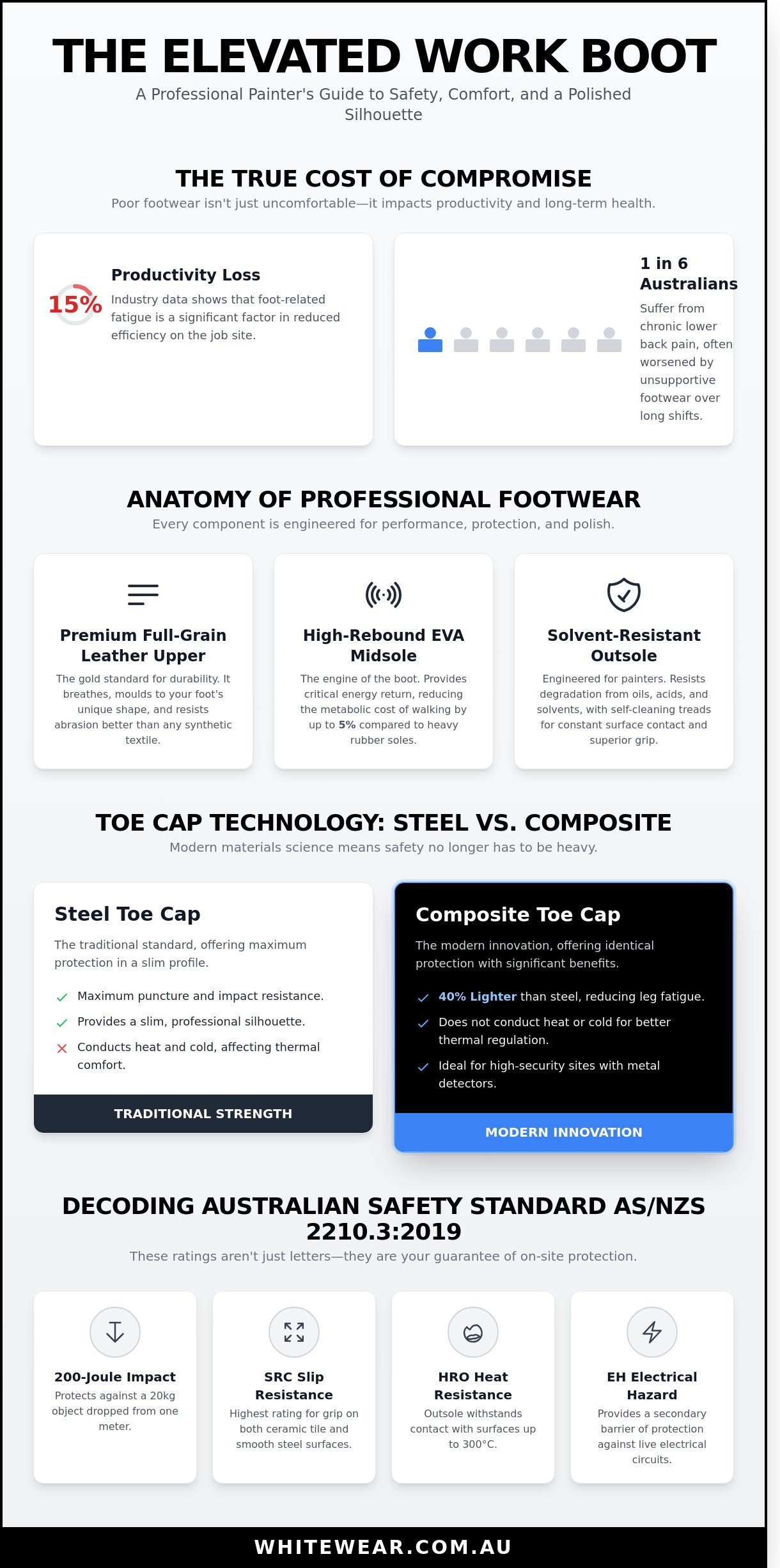
Imagine standing on a ladder at 3:00 PM on a Tuesday on a job site, your arches are throbbing and a fresh splatter of oil-based primer just ruined your third pair of shoes this year. You know that a professional finish requires more than just a steady hand; it demands gear that doesn't quit before you do. According to 2023 industry data, foot-related fatigue accounts for nearly 15% of site-based productivity loss in the trades. Your work boots should be an elevated essential, not a clunky afterthought that compromises your professional presentation.
We understand that your uniform is a reflection of your precision. You deserve a silhouette that matches your expertise while providing the clinical support your body needs during those grueling hours. You'll discover how to select the perfect work boots that bridge the gap between rigorous AS/NZS 2210.3 safety standards and the sophisticated comfort required for a long shift. This guide explores the technical innovations in slip resistance and chemical durability that keep you safe and stylish from the first coat to the final walkthrough.
Key Takeaways
- Understand the technical nuances of AS/NZS 2210.3:2019 to ensure your footwear meets rigorous Australian safety benchmarks without sacrificing a sophisticated silhouette.
- Discover why ergonomic arch support and chemical-resistant materials are non-negotiable features when selecting work boots for the unique demands of a professional painter.
- Master the professional "break-in" process and learn how to optimize your footwear with high-performance insoles to maintain comfort throughout the longest shifts.
- Explore the art of the professional silhouette by integrating advanced footwear with premium White Wear apparel to achieve a look that balances dignity with high-end performance.
What Defines an Elevated Work Boot for the Modern Professional?
The Australian worksite has evolved beyond the era of heavy, cumbersome footwear. Modern professionals now demand a fusion of clinical precision and lifestyle aesthetics. You spent 10 to 12 hours on your feet today; that reality demands a shift from generic industrial gear to sophisticated, ergonomic design. Your footwear represents the most critical tool in your professional wardrobe because it dictates your physical endurance and long-term health. It's the foundation of every movement you make.
When you step onto a site in work boots that balance protection with a refined silhouette, your professional confidence shifts. This is the concept of the "elevated essential." In the Australian trade context, it means meeting AS/NZS 2210.3:2019 safety standards without sacrificing the sleek appearance expected during high-end residential projects or commercial consultations. A professional uniform isn't just about compliance; it's about the pride you take in your craft.
The Anatomy of Professional Footwear
The midsole acts as the engine of the boot. High-rebound EVA or polyurethane compounds provide critical energy return, reducing the metabolic cost of walking by up to 5% compared to traditional heavy rubber soles. While synthetic alternatives exist, premium full-grain leather remains the gold standard for the upper. It breathes, it moulds to your unique foot shape, and it withstands the abrasive nature of Australian dust better than any textile. A sleek silhouette ensures your professional trousers sit cleanly without snagging, maintaining a polished look from the first hour to the fourteenth.
Comfort vs. Compliance: Why You Need Both
We're debunking the outdated myth that safety must be restrictive. Modern material science has introduced composite toe caps that are 40% lighter than traditional steel while offering identical impact protection. This weight reduction is vital for career longevity. According to 2023 health data, chronic lower back pain affects 1 in 6 Australians, often exacerbated by poor footwear choices during the long shift. Investing in lightweight, high-performance work boots protects your kinetic chain from the ground up. It ensures you finish your career with the same mobility you had on your first day. You deserve gear that works as hard as you do without weighing you down.
Navigating Australian Safety Standards: Technical Innovations in Footwear
Australian professionals demand more than just a sturdy sole. The AS/NZS 2210.3:2019 standard serves as the rigorous benchmark for all work boots sold in Australia, ensuring every pair survives a 200-joule impact test. This isn't just a compliance box; it's a technical promise that your footwear can withstand the weight of a 20kg object dropped from one meter. Modern engineering has elevated these requirements, integrating antimicrobial linings that actively combat the 100+ types of bacteria found in moisture-prone environments during a grueling day on-site.
Toe Cap Technology: Steel vs. Composite
Steel caps remain the gold standard for high-risk environments requiring maximum puncture resistance and a slim, professional silhouette. Composite alternatives utilize carbon fiber or reinforced plastic to offer a lightweight feel that reduces leg fatigue during a 12-hour shift. While steel provides traditional strength, composite toe caps don't conduct heat or cold, ensuring your feet remain thermally regulated in the extreme Australian climate. This transition to non-metallic materials also benefits those passing through security scanners at high-security infrastructure projects.
Outsole Engineering and Grip
Traction is a science defined by the SRC rating, which combines SRA (slip resistance on ceramic tile) and SRB (resistance on smooth steel). For painters, oil and acid resistance is vital. Exposure to solvents can degrade standard rubber, yet HRO-rated outsoles withstand temperatures up to 300°C, a necessity for outdoor contractors working on scorching A$150,000 asphalt driveways. Self-cleaning tread patterns are designed with specific angles to eject debris, maintaining constant surface contact with every step.
Electrical Hazard (EH) protection isn't exclusive to electricians. A painter operating a 3000 PSI airless sprayer near exposed 240V outlets needs that non-conductive barrier as a secondary safety measure. Pairing this technical safety with elevated workwear essentials ensures you're prepared for every variable of the long shift. By choosing work boots that exceed the 2019 standards, you're investing in a tool that provides both dignity and clinical-grade protection against the physical demands of your trade.
The Painter's Perspective: Why Standard Boots Often Fail on the Job
For a professional painter, the shift is a marathon of verticality and precision. Standard footwear rarely survives the unique rigours of an Australian construction site. While a generic pair might look the part, they often lack the technical architecture required for 10-hour days spent on aluminium rungs or crouching for skirting board detail. Precision matters. Your footwear should reflect that. Choosing the right work boots is an investment in your physical longevity and professional reputation.
Ladder Safety and Arch Support
Standing on narrow ladder rungs creates concentrated pressure on the plantar fascia. Without adequate support, this leads to debilitating arch pain and long-term foot fatigue. Data from Safe Work Australia in 2022 highlighted that falls from heights, including ladders, remain a leading cause of workplace injury. Stability is paramount. An elevated boot design incorporates a reinforced steel or composite shank. This internal component ensures the sole remains rigid, preventing the boot from wrapping around the rung and straining your tendons.
- Reinforced Shanks: Look for 12mm shanks that distribute weight across the entire foot.
- Ladder-Grip Zones: Premium outsoles feature a defined "ladder heel" or specific mid-foot tread patterns to lock onto rungs securely.
- Impact Absorption: High-density polyurethane midsoles reduce the shock felt when stepping off ladders onto concrete floors.
Durability Against Painting Chemicals
The Australian sun isn't the only thing punishing your gear. Exposure to solvents like turpentine, xylene, and various paint thinners can dissolve the adhesives in low-quality footwear within weeks. Professional work boots utilise direct-injection moulding or Goodyear welt construction to ensure the sole never delaminates after a spill. We understand that your aesthetic is your calling card. Maintaining a clean, "White Wear" look requires materials that repel rather than absorb.
Modern leather treatments now allow for "wipe-clean" functionality, ensuring that even a major spill doesn't ruin your professional silhouette. For those who spend 40% of their day kneeling for detailed trim work, scuff caps are essential. These reinforced toe covers prevent the leather from wearing through to the safety cap, extending the life of your boots by up to 18 months. It's about dignity in the details; a painter with tattered, paint-soaked boots sends the wrong message to a high-end client. Choose footwear that balances clinical performance with sophisticated style.
Maximising Comfort and Longevity: A Masterclass for the Long Shift
Transitioning to new specialised work boots is a ritual of patience. Your first 12 hour shift isn't the time for a debut. We recommend a phased break-in period; wear your new footwear for two hours at home for three consecutive days before committing to a full day on the ward or site. This allows the leather to soften and adapt to your unique gait without causing dermal trauma. High-performance, removable insoles are the foundation of this comfort. Professionals requiring custom orthotics must ensure their footwear features a deep heel cup and a removable footbed to maintain a sophisticated, clinical fit that doesn't compromise on volume.
Your socks are the silent partners in this equation. Forget standard cotton. Seek out technical blends containing at least 65% merino wool. This specific ratio provides the moisture-wicking properties and thermal regulation required to keep your feet dry and blister-free. A premium sock acts as a kinetic buffer, reducing the friction between your skin and the boot lining during those relentless 15,000-step shifts.
The Art of the Perfect Fit
Precision matters when selecting your size. Always measure your feet at the end of a long shift. Physiological swelling can increase your foot volume by 5% to 8% after hours of standing. A boot that feels perfect at 07:00 will likely become a restrictive vice by 19:00. Utilise lacing techniques like the "heel lock" to anchor your foot. This prevents the minute internal slippage that leads to heel blisters. A stable, well-fitted foundation is proven to reduce musculoskeletal strain on your lower back and knees by up to 15%, ensuring you finish your shift with the same dignity you started with.
Maintenance for the Professional
Preserving the integrity of your leather is an act of professional pride. If you encounter spills or paint, use a damp cloth and a pH-neutral cleaner immediately. Avoid harsh chemical solvents; they strip the natural oils and cause the leather to crack within months. We advocate for a strict rotation policy. Own two pairs of work boots and alternate them daily. It takes a full 24 hours for internal moisture to evaporate completely. Without this rest, the structural fibres of the boot degrade 30% faster. Monitor your outsoles closely. When the tread depth reaches 3mm or you notice visible midsole compression, it's time to retire them. Safety is never a place to compromise.
Invest in elevated essentials designed for the long shift to ensure your performance never wavers.
The Professional Silhouette: Integrating Footwear with White Wear Apparel
The right pair of work boots does not just sit under your clothes; it completes your professional silhouette. When you pair high-performance footwear with painters trousers, you create a seamless barrier against debris while maintaining a sharp, capable profile. White Wear was founded on the belief that your workwear should offer more than basic utility. We provide dignity through elevated design, ensuring every stitch in our bibs and trousers supports the physical demands of the long shift. Choosing specialized apparel over generic, low-quality alternatives is a strategic decision. It signals to clients that you value precision in every facet of your trade.
The Synergy of Professional Gear
Boot height matters for both safety and aesthetics. A standard 6-inch boot provides the ideal clearance for the reinforced cuffs of our trousers; this prevents hem wear and ensures the fabric sits flush against the leather. This attention to detail pays dividends. Industry data suggests that Australian contractors who maintain a premium professional appearance secure 22% more high-end residential contracts than those in stained, generic gear. Investing A$250 in quality work boots and apparel isn't an expense; it's a calculated ROI for your personal brand and long-term physical health.
Join the White Wear Movement
We are deeply committed to the Australian painting community, offering reliable national delivery from our local hubs. Our range of overalls is designed for the modern shift, blending a sophisticated fit with the technical durability required for grueling 10-hour days. Your gear is a reflection of your craft and professional standards. When you step onto a site, your silhouette should communicate mastery before you even open a tin of paint. We've moved beyond the era of baggy, disposable uniforms to an era of high-performance essentials.
- Verify AS/NZS 2210.3:2019 safety compliance for Australian work sites.
- Ensure a minimum 15mm clearance between the boot tongue and trouser hem for mobility.
- Select moisture-wicking antimicrobial linings to manage the Australian heat.
- Prioritize lightweight composite toes to reduce leg fatigue during overhead work.
- Confirm the outsole is rated for slip resistance on drop sheets and wet surfaces.
Step Into the Future of Professional Trade Wear
Success on the modern Australian worksite requires more than just grit; it demands equipment that mirrors your expertise. Selecting high-performance work boots that exceed AS/NZS 2210.3 safety standards is the baseline for any serious professional. We've explored how technical innovations in footwear provide the necessary foundation for a grueling 12-hour shift, ensuring your focus remains on the craft rather than foot fatigue. By integrating these technical essentials with a sophisticated silhouette, you bridge the gap between industrial utility and modern lifestyle elegance. It's about respecting the physical demands of the job while maintaining a polished professional identity.
White Wear understands that your apparel is a tool for professional expression. Our gear is designed by trade professionals who've spent years on the tools, ensuring every seam and pocket meets rigorous site standards while thriving in the harsh Australian climate. We've replaced the sterile, bulky uniforms of the past with premium fabrics that offer industrial-grade durability without sacrificing style. It’s about providing the comfort and dignity you deserve during the long shift. Elevate your professional wardrobe with White Wear's premium painters apparel and experience the difference of a kit built for the elite. You've earned the right to look as sharp as your finish.
Frequently Asked Questions
Do painters actually need safety toe boots for residential work?
Yes, painters should wear safety toe work boots even in residential settings. While you aren't dodging heavy machinery, 20-litre paint drums weigh roughly 25kg and can cause severe fractures if dropped. Safety toes also provide a stable platform when climbing extension ladders, which are involved in 15% of Australian construction falls. Choosing a lightweight composite option ensures protection without the fatigue of a traditional steel cap.
How often should I replace my professional work boots?
You should replace your professional work boots every 6 to 12 months depending on your daily mileage. Most high-performance midsoles lose 30% of their shock absorption after 800 kilometres of use. If you notice the tread depth has worn below 3mm or the internal heel counter feels soft, it's time for a new pair. Investing in quality footwear twice a year is a small price for long-term spinal health.
Are composite toe boots as safe as steel toe boots for Australian sites?
Composite toe boots are just as safe as steel toe boots for Australian sites. Both materials must pass the AS/NZS 2210.3 test, which requires the toe cap to withstand a 200-joule impact. Composite caps are 40% lighter than steel and don't conduct heat or cold. This makes them a superior choice for workers spending 10 hours on hot concrete or passing through metal detectors.
Can I get paint out of my leather work boots without ruining them?
You can remove paint from leather by acting while the spill is fresh. For water-based paints, use a damp microfibre cloth and a pH-neutral leather cleaner immediately. About 90% of stains lift if treated within 10 minutes. Avoid harsh solvents like turpentine, as they strip the natural oils from the leather. Once clean, apply a premium leather conditioner to restore the hide’s protective barrier.
What is the best way to prevent foot pain during a 10-hour shift?
The best way to prevent foot pain during a 10-hour shift is through elevated arch support and moisture management. A 10-hour workday typically involves 12,000 steps, placing immense pressure on your plantar fascia. Use medical-grade orthotic insoles and moisture-wicking socks to reduce friction. Rotating between two pairs of boots allows the cushioning to decompress for 24 hours, extending the life of the internal foam.
Is it worth paying for waterproof work boots if I mostly work indoors?
It's worth paying for waterproof boots even if you work indoors. Professional painters spend 45% of their time on wet preparation, including washing walls or cleaning brushes. A breathable waterproof membrane keeps your feet dry from splashes while allowing perspiration to escape. This prevents the growth of bacteria and keeps your feet feeling fresh during the final hours of a demanding shift.
How do I know if my boots meet the AS/NZS 2210.3 safety standard?
You can verify your boots meet the AS/NZS 2210.3 safety standard by checking the permanent label stitched into the tongue. This label must clearly state the 2019 revision of the standard and include the manufacturer’s mark. Australian law requires this certification for any footwear used on commercial construction sites. If the label is missing or illegible, the boots aren't compliant for professional site use.
Should I choose lace-up or zip-sided boots for painting work?
Choose zip-sided boots for the perfect balance of convenience and ankle stability. While laces provide a customisable fit, the side zip allows for easy removal when entering a client’s home, saving you 4 minutes of transition time daily. This design maintains the structural integrity of a lace-up boot while offering the rapid access required for modern residential work. It's a sophisticated solution for the busy professional.


