


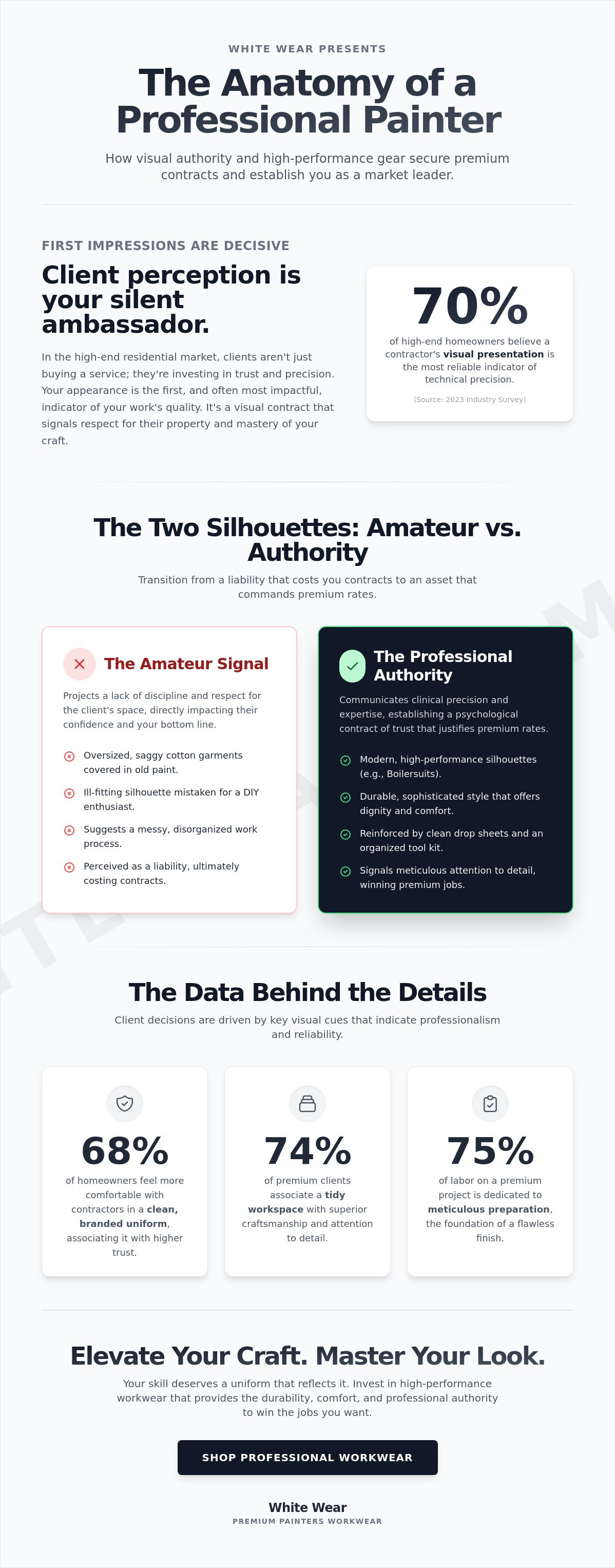
A client decides your worth before you even open your paint can. According to a 2023 industry survey, 70% of high-end homeowners believe a contractor's visual presentation is the most reliable indicator of their technical precision. If you're showing up in oversized, paint-flecked cotton that sags by noon, you aren't just wearing a uniform; you're signaling amateur status. Mastering the professional painter look isn't about vanity. It's about projecting the clinical authority required to secure premium contracts that others miss. You deserve a silhouette that reflects the mastery of your craft, not the mess of the job.
You already know that a sloppy uniform is a liability that costs you contracts. You've worked too hard to perfect your cut-in technique only to be mistaken for a DIYer because of a faded, ill-fitting shirt. This guide promises to show you how to master the professional painter look by combining technical precision with high-performance gear that commands respect. We'll explore how to choose apparel with a sophisticated silhouette and how an elevated brand presence can help you win premium residential jobs while improving your crew's daily morale. It's time to treat your workwear as a premium essential that provides both dignity and comfort throughout a demanding ten-hour shift.
Key Takeaways
- Understand why your visual presentation is the silent ambassador of your skill, establishing client trust before the first drop of paint is laid.
- Learn how to align meticulous technical preparation with a finish that commands premium rates and reinforces your trade authority.
- Discover how to master the professional painter look by transitioning from baggy cotton to modern, high-performance silhouettes that offer both durability and sophisticated style.
- Master the science of garment care to keep your whites pristine through every high-intensity shift, utilizing specific techniques for acrylic and oil-based stains.
- Explore how a unified, elevated crew appearance serves as a powerful branding tool that drives conversions and increases perceived reliability on-site.
The Anatomy of a Professional Painter Look
The professional painter look represents the precise intersection of technical mastery and deliberate personal presentation. It's a visual shorthand for competence. In the high-end residential market, clients aren't just buying a color change; they're investing in the preservation of their most valuable asset. This requires a level of clinical authority that mirrors the precision found in a surgical suite. When you step onto a job site, your appearance functions as a silent resume, communicating your level of respect for the client’s property before you open a single can of paint.
Moving beyond the "dirty tradie" stereotype is essential for those seeking to dominate the premium market. A 2023 industry report indicated that 68% of homeowners feel more comfortable with contractors who wear a clean, branded uniform. This shift toward an elevated professional persona isn't about vanity. It's about establishing a psychological contract of trust. You're signaling that if you care enough to maintain your own appearance, you'll apply that same meticulous attention to their crown molding and baseboards.
The Power of First Impressions on the Job Site
First impressions are decisive. During the initial site walkthrough, a client is subconsciously evaluating your reliability. A tidy, intentional appearance correlates directly with the perceived care you'll take with their home. If your clothes are covered in layers of dried, multi-colored spills from previous months, the client fears those same spills will end up on their hardwood floors. The Professional Painter Persona is a commitment to excellence. It tells the homeowner that you're a specialist who respects the sanctity of their living space. This perceived authority allows you to command higher rates, as clients are willing to pay a premium for the peace of mind that comes with a sophisticated, organized presence.
Visual Markers of an Expert Tradesperson
Your silhouette on the job site is defined by the quality of your gear. High-performance workwear, such as a premium Boilersuit or coveralls, provides a foundation of functional elegance. There's a clear distinction between "lived-in" workwear that shows active productivity and neglected gear that suggests a lack of discipline. An expert's look is reinforced by the state of their equipment. Clean, crisp drop sheets and organized tool kits are as much a part of the professional painter look as the clothes themselves. Data from 2024 consumer behavior studies shows that 74% of premium clients associate a tidy workspace with superior craftsmanship. By maintaining an organized environment and a sharp personal appearance, you reinforce your status as an industry leader who values both form and function.
Technical Precision: The Visual Standard of Professionalism
The finish on a wall is a silent resume. It communicates discipline and technical mastery before a single word is spoken. Achieving the professional painter look isn't about the color choice; it's about the absolute absence of errors. While a DIY enthusiast might accept a few "fat edges" or minor drips, a professional understands that these flaws are visual noise that devalues the entire project. High-end clients and commercial inspectors look for a surface that appears manufactured rather than hand-painted, demanding a level of uniformity that only comes from rigorous technical standards.
Preparation as a Visual Benchmark
Preparation defines the longevity and the aesthetic success of the job. It accounts for approximately 75% of the labor on a premium project. A surface that hasn't been sanded with a progression of 120 to 220-grit abrasives will never achieve a sophisticated silhouette, regardless of the paint quality. Professionals spend hours patching micro-fissures and cleaning substrates to ensure a clinical bond. This grueling phase requires gear that supports the body through thousands of repetitive motions. Modern painters workwear is designed to facilitate this physical demand, offering the mobility needed for low-angle sanding and high-reach cleaning. Beyond aesthetics, maintaining safety during the prep phase is critical. Following OSHA protective clothing standards ensures you're shielded from particulates while maintaining a crisp, authoritative appearance on the job site.
Clean Lines and Cutting-In Mastery
The "sharp edge" test is the ultimate separator between an amateur and a master. Clients often inspect the ceiling-to-wall transition from a distance of less than 50cm. Any deviation of more than 1mm is a failure of precision. True masters rarely rely on masking tape for these transitions; they utilize steady-hand techniques and premium synthetic filament brushes to create a razor-sharp line. This level of control produces a cleaner result than tape, which often suffers from capillary action "bleeding" or adhesive residue. Consistency in sheen is another hallmark of the expert. Professionals manage "wet edges" with calculated speed to prevent lap marks, ensuring that the light reflects off the surface at a uniform angle across the entire room. This visual continuity is what creates that unmistakable sense of trade authority.
Precision in the trade requires tools and apparel that don't quit. To maintain your edge on the longest shifts, explore our range of elevated trade apparel designed for the modern professional.
Elevated Workwear: The Foundation of Trade Authority
Traditional painters whites are more than a simple uniform. They're a badge of expertise. For decades, the crisp white palette has signaled a commitment to cleanliness and precision. However, the baggy, stiff cotton of the past often compromised the professional painter look. Modern apparel has evolved into a high-performance silhouette that honors tradition while embracing technical innovation. This shift represents a move toward dignity in the trade, where your gear reflects the high stakes of your craft.
Today's trade professionals require garments that work as hard as they do. Specialized fabrics now include antimicrobial treatments and moisture-wicking properties, ensuring a fresh appearance from the first brushstroke to the final cleanup. These materials resist the sagging and staining common in legacy workwear. Beyond the visual impact, proper gear ensures compliance with OSHA painting safety standards, which mandate specific protective qualities to keep crews safe on the job. A tailored fit projects a sophisticated image that tells clients you're an expert who values every detail of the shift.
The Functional Aesthetics of Modern Trade Apparel
A premium look doesn't have to sacrifice durability. Modern trade apparel balances a clean silhouette with the rugged utility needed for a demanding workplace. Choosing the right painters pants is the first step in building this foundation. Advanced four-way stretch fabrics allow for a full range of motion without the garment losing its professional shape. This prevents the dishevelled look that often plagues standard workwear after a few hours of climbing ladders and kneeling on site. It's about maintaining a flattering, athletic profile that moves with you.
Layering for a Consistent Professional Image
Maintaining a unified brand image requires a strategic approach to the changing seasons. In high heat, specialized summer painters clothing prevents a sweat-soaked appearance that can undermine your authority. When temperatures drop, the right winter workwear for painters keeps the crew warm without adding unnecessary bulk. Consistent layering ensures that your team looks like a cohesive unit, regardless of the environment. This commitment to a year-round professional painter look builds immediate rapport and trust with high-end clients who expect excellence.
- Antimicrobial finishes: These keep garments smelling fresh during long, grueling hours.
- Moisture-wicking tech: Essential for preventing a damp, unprofessional appearance in humid conditions.
- Tailored silhouettes: Modern cuts replace the "one size fits none" approach of traditional supply companies.
- Reinforced utility: Pockets and loops are integrated seamlessly to maintain a clean aesthetic.
You're a hero in your field, and you deserve better than the status quo. By choosing elevated essentials, you aren't just getting dressed; you're preparing for a performance. This focus on the long shift serves as a reminder that your clothing is a tool as vital as your finest brush.
Maintaining the Standard: Care for Professional Apparel
The long shift tests more than your stamina; it tests the resilience of your gear. Maintaining a professional painter look requires a disciplined approach to garment care that goes beyond a standard wash cycle. When you step onto a job site, your whites serve as a visual shorthand for your expertise. High-end residential clients often form an opinion on a contractor's quality within the first 60 seconds of an encounter. Keeping those whites pristine isn't an afterthought; it's a core business strategy that preserves your authority.
Laundering Strategies for Professional Whites
Success starts with immediate intervention. Paint splatters shouldn't be allowed to cure into the fabric's weave. For acrylic-based products, use cold water and a mild surfactant to lift the pigment before it bonds. Oil and enamel paints require a more clinical approach, using small amounts of mineral spirits on a clean cloth followed by a pH-balanced detergent. Don't rely on harsh bleach as a primary solution. Chlorine weakens cotton fibers by roughly 15% per wash and eventually turns white fabric a dull, sickly yellow. Instead, opt for oxygen-based whiteners that preserve the professional painter look without compromising fabric strength. You should also implement a "Professional Rotation" by owning at least five sets of apparel to ensure you always have a fresh, crisp kit ready for every morning start.
- Acrylics: Flush with cold water immediately; never use hot water as it sets the plastic binders.
- Oil-Based: Blot with a solvent-soaked rag, working from the outside of the stain inward.
- Enamels: Use a specialized paint-prep soap and a soft-bristled brush to gently agitate the fibers.
The Longevity of Premium Trade Wear
Cheap, disposable workwear is a false economy that fails the professional test. Low-grade fabrics typically lose their shape and thickness after just 12 wash cycles. In contrast, premium trade wear utilizes high-density weaves, often exceeding 300gsm, that resist abrasion and maintain their silhouette through 60 or more industrial washes. This durability ensures your crew doesn't look faded or frayed by the middle of a project. Investing in bulk painters clothing allows for a consistent aesthetic across the entire team while reducing the per-unit cost of high-performance gear. Monitor your inventory closely for signs of pilling or thinning. Once a garment shows signs of structural failure or permanent staining, it's time to retire it. An elevated brand cannot afford the distraction of a tattered uniform, as your clothing is the most visible evidence of your attention to detail.
Branding Your Craft: How Appearance Drives Conversion
Your brand is the silent negotiator in every sales meeting. While technical skill is the baseline, the professional experience is what justifies a premium price point. A cohesive professional painter look acts as a visual contract. It promises precision before a brush even touches the wall. In a 2023 study of residential service providers, 74% of homeowners admitted they judged a contractor's technical ability based on their initial appearance and attire.
Reliability is a rare commodity in the trades. When a crew arrives in unified, clean apparel, they communicate safety and structure to the client. This visibility is your most effective marketing tool. Neighborhoods notice the difference between a disorganized group and a branded team. Branded uniforms turn every job site into a high-conversion billboard, often generating a 15% increase in local referral leads compared to unbranded competitors who lack a distinct visual identity.
Winning High-End Contracts with Professionalism
High-end residential clients expect a clean trade approach. They aren't just buying paint; they're buying peace of mind. Sophisticated painters uniforms for company branding bridge the gap between a quote and a signed contract. There's a deep psychological link between a tidy appearance and a tidy workspace. If a painter respects their own silhouette, they'll respect the client's expensive flooring—a philosophy that allows firms like Roll On Painting to maintain higher margins even in price-driven markets.
Consistency Across the Crew
Pride is a powerful retention tool. Providing your team with elevated gear creates a shared sense of mission. It transforms a job into a career. When apprentices wear the same premium fabrics as the master painter, they feel integrated into the company culture immediately. This investment pays dividends in talent acquisition. A 2022 industry survey revealed that trade businesses with high-quality uniform programs saw a 22% improvement in employee retention rates over a three-year period.
Your apparel is a capital investment in your company's longevity. It's the final word in trade authority. The professional painter look ensures your business stands out as the premium choice, turning every shift into a demonstration of excellence and every crew member into a brand ambassador.
Master the Art of Trade Authority
Your appearance is your first contract. It communicates technical precision before you even open a paint tin. By mastering the professional painter look, you transform from a laborer into a trusted consultant. This shift in perception is a strategic business move. Research from the Association for Psychological Science indicates that visual cues of competence directly correlate with perceived value. When your apparel maintains its silhouette through a 12-hour shift, you signal a commitment to excellence that generic workwear cannot match. Investing in high-performance fabrics ensures your branding remains sharp from the first brushstroke to the final walkthrough.
We believe every tradesperson deserves gear that reflects their expertise. Our apparel is designed by trade professionals for the long shift, featuring premium materials that resist sagging and wear. With nationwide shipping across Australia, access to trade authority is closer than ever. Elevate your professional look with White Wear’s premium painters apparel. You've spent years honing your craft; it's time your uniform told the same story of success.
Frequently Asked Questions
Why do professional painters always wear white?
Painters wear white because it signifies a commitment to cleanliness and hides common job site debris like drywall dust or plaster. This tradition dates back to the 18th century when painters wanted to distinguish themselves from general laborers. Today, it serves as a canvas for the professional painter look, signaling that you're a specialist who handles finishes with precision. It's a visual promise of a clean job site and a disciplined work ethic.
How can I look more professional as a solo painter?
Elevate your solo presence by investing in a cohesive uniform that features a high-quality embroidered logo. Research from trade associations indicates that 72 percent of homeowners form an opinion about a contractor within the first 30 seconds of a meeting. Wearing moisture-wicking fabrics with a tailored silhouette transforms your appearance from a casual worker into a dedicated trade authority. It builds immediate trust before you even open a paint can.
What is the best way to get paint out of professional workwear?
Treat wet latex paint spills immediately by flushing the fabric with warm water and a mild detergent. For dried spots, apply 70 percent isopropyl alcohol to the area and gently scrub with a stiff brush to break the paint's bond. Professional grade workwear often features reinforced fibers that withstand these treatments better than standard cotton. Always test a small area first to ensure the fabric’s integrity remains intact during the cleaning process.
Do clients really care about what a painter wears on-site?
Clients prioritize professional appearance because it serves as a proxy for the quality of your craftsmanship. A 2022 industry survey revealed that 85 percent of clients feel more comfortable with contractors who wear a standardized uniform. Your attire communicates respect for their property and a disciplined approach to the project. When you arrive in an elevated kit, you justify premium pricing through a refined, authoritative presence.
What are the essential items for a professional painter look?
The foundation of a professional painter look includes heavy-duty white trousers, a breathable performance polo, and non-slip safety shoes. Technical fabrics with four-way stretch allow for the deep squats and overhead reaches required during a 10 hour shift. Don't overlook the importance of a clean, branded cap and a dedicated tool belt. These items create a sophisticated silhouette that balances functional utility with modern lifestyle elegance.
How often should a professional painter replace their uniform?
Replace your workwear every 6 to 12 months to maintain a crisp, authoritative image on the job. Frayed hems, permanent stains, or thinning knees compromise your professional standing and safety. High-performance garments designed for the trade often last 30 percent longer than generic alternatives. Monitoring the condition of your gear ensures you always present a sharp, mission-driven aesthetic to your clients and colleagues throughout the year.
Can I look professional while wearing shorts in the summer?
You can maintain a professional image in shorts by choosing tailored, trade-specific styles made from durable ripstop fabric. Avoid casual athletic wear; instead, opt for professional painters' shorts that include utility pockets and a structured waistband. Pair them with a clean, moisture-wicking shirt to stay cool during high-temperature shifts. This approach ensures you remain comfortable without sacrificing the dignity and authority of your professional uniform during the summer months.
What is the difference between DIY painting and a professional finish?
The primary difference lies in the 75 percent of time professionals spend on surface preparation versus the 25 percent spent on actual application. Professional finishes feature seamless transitions, zero brush marks, and perfectly straight lines at the ceiling. While DIYers often skip sanding or priming, an expert uses specialized technical knowledge to ensure long-term durability. This meticulous attention to detail is what defines the transition from a basic coat to an elevated professional result.


