


Touch-ups are a defining test of painter workwear for real estate maintenance. Clothing needs to suit quick repairs between tenants, ongoing work in shared areas and full repaints across apartments or high-rise buildings. Choose for the tasks and conditions you face, not just the occasional large painting job.
Property maintenance rarely follows one neat schedule. A day may move from a small wall repair to painting a unit, then on to another area of the building. This guide explains how to think about workwear for those changing demands, including hot Australian conditions, practical features to consider and how painters’ clothing fits into a reliable maintenance routine. The aim is simple: help you choose workwear that feels considered and capable throughout the working day.
Key Takeaways
- Choose workwear around the demands of the task and the heat, balancing comfort with practical coverage throughout the day.
- Handle paint- or solvent-marked clothing thoughtfully, and make cleaning choices that suit the substance and garment care instructions.
- Consider the work setting, movement and potential exposure when deciding what clothing is appropriate for apartment and building maintenance.
- Explore painters workwear and clothing from White Wear when you’re selecting apparel for ongoing property painting and touch-ups.
What fabrics and features are best for painter workwear in hot Australian weather?
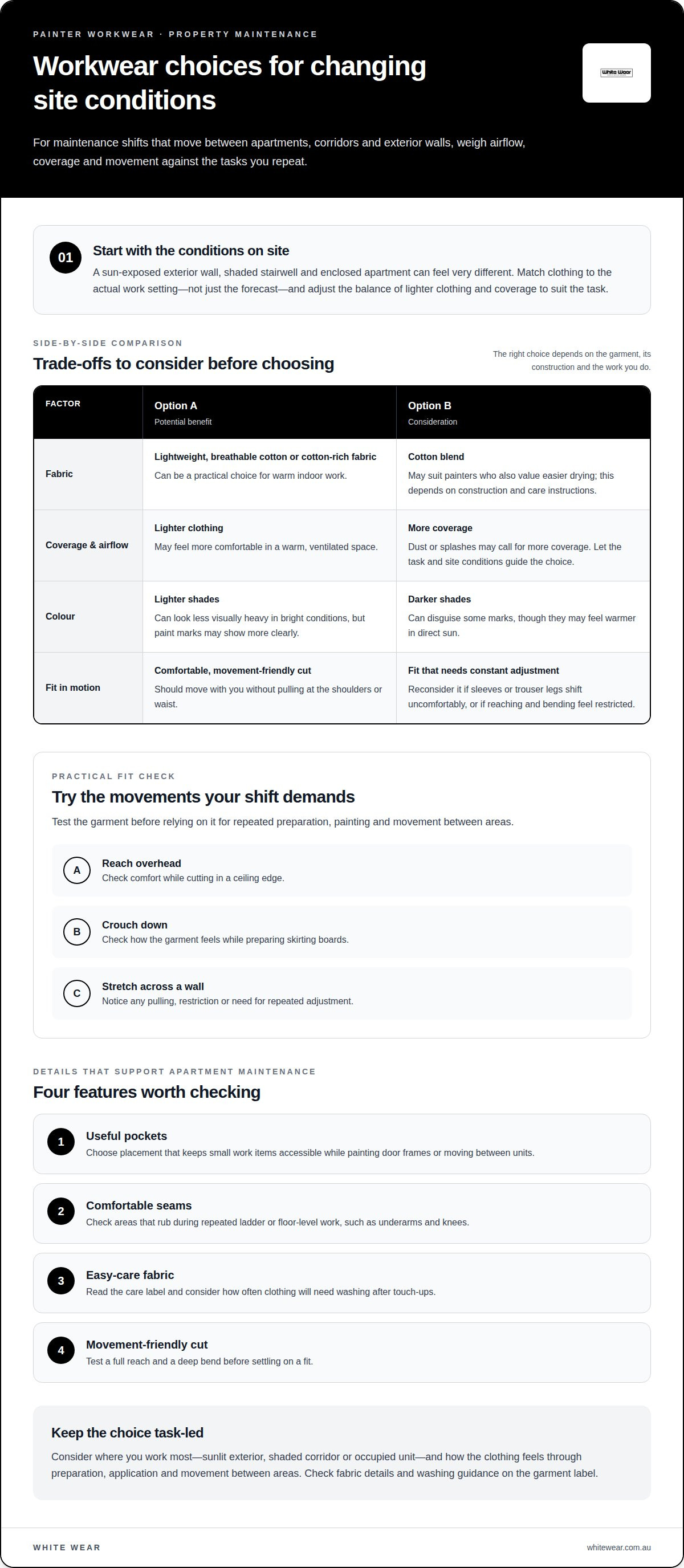
Hot-weather workwear should balance airflow, coverage and movement. A Brisbane maintenance painter may move between surface preparation, painting, plastering and finishing, so one outfit needs to suit changing tasks. Start by comparing fabric weight and feel. Lightweight, breathable cotton or cotton-rich fabric can be a practical choice for warm indoor work. A cotton blend may suit painters who also value easier drying, depending on its construction and care instructions.
Choose clothing for the conditions on site, not just the forecast. A sun-exposed exterior wall, shaded stairwell and enclosed apartment can feel very different. In a warm, ventilated space, lighter clothing may be more comfortable; tasks involving dust or splashes may call for more coverage. Check the garment label for fabric details and washing guidance before you buy.
Fit matters when you’re repeatedly reaching, bending and climbing. Test the movements you use on site: reach overhead to cut in a ceiling edge, crouch to prepare skirting boards and stretch across a wall. Clothing should move with you without pulling at the shoulders or waist. Sleeves and trouser legs should stay comfortable and in place without constant adjustment.
Look for practical details that support apartment maintenance routines:
- Useful pockets: Choose placement that keeps small work items accessible while painting door frames or moving between units.
- Comfortable seams: Check areas that rub during repeated ladder or floor-level work, such as underarms and knees.
- Easy-care fabric: Read the care label and consider how often clothing will need washing after touch-ups.
- Movement-friendly cut: Test a full reach and a deep bend before committing to a fit.
Colour is another practical consideration. Lighter shades can look less visually heavy in bright conditions, but paint marks may show more clearly. Darker shades can disguise some marks, though they may feel warmer in direct sun. Think about where you work most, whether that’s a sunlit exterior, shaded corridor or occupied unit needing careful touch-ups.
Think about the demands of a full maintenance shift. Carrying supplies, preparing surfaces, applying paint and moving between apartments all put different demands on clothing. Choose painter workwear that allows comfortable movement, suits the tasks you repeat and fits the conditions across the property.
Clothing is only one part of preparing for a painter role. A Brisbane painter role requires a Certificate III in Painting, a White Card and Australian work rights. Keep those requirements distinct from decisions about fabric, fit and pockets: suitable clothing can support the work, but it does not stand in for role requirements. For day-to-day choices, assess each item against the tasks already expected on site, then check that it remains comfortable across preparation, application and movement between areas. If a garment restricts a reach or needs repeated adjustment, reconsider its fit before relying on it for a full shift. Let the conditions and work demands guide the final choice.
How should painter workwear be cleaned after paint and solvent exposure
Start with the coating label rather than guessing how to clean a garment. Water-based paint and solvent-based coatings can require different handling. After a touch-up, identify the product from its container and follow its cleaning instructions. If the label refers you to a Safety Data Sheet (SDS), use its guidance for handling residue.
Separate marked garments from everyday laundry before washing. Check pockets for paint-covered rags, masking tape and loose tools. Remove visible debris before turning clothing inside out to avoid spreading wet paint onto clean fabric. Keep heavily marked items apart from lightly splashed clothing, such as trousers with a small spot from cutting in.
- Read the garment care label. Check the permitted wash method, water temperature and drying instructions before treating a stain.
- Remove fresh excess paint. Lift it gently with a disposable scraper or cloth. Avoid rubbing, which can push paint deeper into the weave.
- Use the coating’s stated cleaning method. For water-based paint, follow the label’s directions for water and detergent. For solvent-based products, follow the product instructions rather than substituting a household cleaner.
- Wash separately. Keep paint-marked workwear out of a mixed load with towels, uniforms or household clothes.
- Inspect before drying. Check the stained area in good light. If paint remains, repeat only a method allowed by both care and product instructions.
Treat solvent exposure differently from dried wall paint. Don’t pour solvent onto clothing or combine cleaning products to create a stronger treatment. If the product label or SDS gives steps for contaminated fabric, follow them before laundering. After a larger spill, keep the garment separate from clean clothing until you’ve followed that guidance.
Make garment care part of pack-down for routine apartment maintenance: identify the coating, remove loose items, separate affected garments and check the labels before washing. This reduces the chance of paint transferring across a load. Sorting also lets you spot wear around cuffs, knees and pockets before moving on to the next unit.
Choose painters workwear that suits repeated property touch-ups, then use its care label alongside the coating instructions after each job. Careful handling supports a cleaner work routine without relying on one treatment for every paint or solvent.
The Azzurra Eco Body Corporate Committee planned a building cleaning and maintenance program for the next five years after the painting work. This makes consistent handling of marked garments useful as painting gives way to ongoing upkeep. A Brisbane handyman and carpenter role includes maintenance, carpentry, painting, landscaping and pressure cleaning, so workwear may encounter different residues across tasks. Keep clothing sorted by exposure and follow the relevant product and care instructions before returning garments to use.
What risks should real estate maintenance painters consider when choosing workwear?
Start by considering the tasks in each area: a vacant unit differs from an occupied corridor. Surface preparation can create dust, while plaster repairs and painting bring different demands. A maintenance painter may move between these jobs in one shift. Choose clothing that allows movement without loose fabric catching on tools, door hardware or ladders.
Consider exposure before choosing what to wear. A coating job in a hospital, for example, may involve products with specific handling instructions. Read the product label and Safety Data Sheet (SDS), then follow their guidance on protective clothing. Ordinary workwear is not a substitute for protective equipment required by the task or site controls.
Fit affects how easily you move through an apartment or high-rise. Test the movements you’ll repeat: reach to paint a ceiling edge, crouch to prepare skirting and climb stairs while carrying supplies. Check that hems don’t drag and sleeves don’t obstruct your grip. A pocket that catches on a door handle can also interrupt work in a narrow hallway.
Inspect garments for wear before starting a maintenance round. Look closely at seams, cuffs, knees and fastenings. A split knee can expose skin during floor-level preparation, while a loose button may snag during movement. Replace or set aside damaged clothing rather than relying on a quick repair that could fail during the task.
- Dust and debris: For sanding plaster repairs, choose coverage that fits comfortably and can be cleaned after the task.
- Paint and coating contact: Check product instructions before selecting clothing or handling a spill.
- Snagging and movement: Secure loose cuffs and test reaching, bending and stair movement.
- Occupied spaces: In shared corridors, keep garments orderly and tools clear of walkways.
Travel between properties adds another consideration. Clothing should stay comfortable during site work and the journey between locations. Keep paint-marked garments separate from clean items in the vehicle to help prevent residue transferring onto seats or other clothing.
Before each job, match your clothing to the task, product instructions and movement required. For garments suited to painting work, explore workday clothing options.
For painting and solvent handling, check the product label and Safety Data Sheet and follow their guidance on protective clothing. Ordinary workwear is not a substitute for required protective equipment. For sanding, choose comfortable coverage that can be cleaned after the task.
White Wear: Painters workwear
White Wear offers painters workwear and clothing designed for painting tasks, including apartment, unit-complex and high-rise painting. Consider the heat, movement, paint exposure and care involved in your routine, from brief wall touch-ups and plaster repairs to painting shared areas. Identifying the tasks you repeat helps you choose everyday workwear with practical features and a suitable fit.
Use these considerations to narrow your priorities. Think about where you work, how freely you need to move and how garments will be handled after paint contact. These details provide a practical basis for choosing clothing for ongoing property maintenance.
Explore painters workwear and clothing at White Wear online.
Make your next workwear choice with purpose
Before your next property maintenance cycle, note the tasks that shape your working day. Consider whether you spend more time on occupied-unit touch-ups, shared corridors or larger repainting jobs. This gives you a practical basis for choosing painter workwear for real estate maintenance, rather than relying on appearance alone.
White Wear offers painters workwear and painters clothing for professionals who want apparel suited to painting tasks. Use your notes to focus on what matters in your routine, from comfort across a full shift to clothing that fits the work you do most often. A considered choice can support a more confident, composed start to each job.
Take the next step when you’re ready: contact White Wear about painters workwear. Choose workwear with intention, and carry that confidence into your next property job.
Frequently Asked Questions
What workwear do painters need for real estate maintenance in Australia?
Painters need clothing suited to their tasks, worksite conditions and the coating products they handle. When choosing painter workwear for real estate maintenance, consider site travel, occupied-unit touch-ups and larger painting jobs. Keep ordinary workwear distinct from any protective equipment required by product instructions or site controls. Workwear supports the job but does not replace task-specific protective equipment.
Where can Australian painters buy durable workwear and painting overalls?
Australian painters can buy painters workwear and clothing from White Wear online. For painter workwear for real estate maintenance, choose apparel that fits your regular tasks and working routine. White Wear’s range includes painters clothing, such as Easy Move Premium Painters Pants, crafted from signature Easy Move™ fabric with 3% Lycra and cuffed bottoms. If you’re specifically looking for overalls, consider which available painters clothing best suits your painting work.


