


Protective clothing for epoxy flooring installers should be worn with goggles and gloves when handling epoxy Part B to help prevent skin and eye contact. Choose clothing that covers exposed skin, and remove it immediately if epoxy gets on it. Strong odours and fumes during application also make ventilation and suitable respiratory protection important.
It’s easy to focus on the finished floor and overlook exposure during mixing and application. But clothing, eye protection and gloves are part of the job, not an afterthought.
This guide explains how to choose practical protective clothing, goggles and gloves, and plan for ventilation and strong odours in enclosed spaces. It also covers why Part B needs careful handling, so you can prepare the work area before installation begins.
Key Takeaways
- Plan ventilation before mixing or applying epoxy, especially in enclosed spaces where fumes can linger.
- Consider strong odours and high VOC levels when preparing the work area and selecting respiratory protection.
- Protect skin and eyes when handling Part B with suitable clothing, goggles and gloves.
- Choose painters workwear that supports practical coverage and comfort throughout the installation.
Enclosed spaces and inadequate ventilation
- Assess the room before opening the epoxy kit. A closed garage, basement or workshop can trap vapours near the mixing area. Some imported epoxy products release toxic fumes for 8-10 days, making spaces unusable and potentially harmful to family health. Identify adjoining rooms, shared corridors and nearby homes before choosing where to mix. If fumes could reach occupied areas, change the setup before work begins. Protective clothing doesn’t make contaminated air safe to breathe.
- Set up ventilation and separation before combining the epoxy components. Open doors or windows where practical, and direct airflow outdoors rather than towards occupied rooms. If possible, cordon off the mixing area to keep household members and other workers away. Cover the mixing surface with drop sheets to protect it from spills, splashes and drips. Keep the mixing point away from doorways into living spaces. These steps help control exposure and contain the work area.
- Plan room access around the product and its application conditions. Quality epoxy systems allow normal use within 24 hours with minimal odour. That timeframe describes normal use, not a universal ventilation rule for every product or room. Don’t use odour alone to judge whether air is suitable. Check the product’s directions, room conditions and airflow when planning work near occupied spaces. For example, a garage attached to a home needs a different access plan from a detached workshop. Keep doors to the home closed and prevent fumes from travelling into adjoining areas during mixing and application.
High VOC and strong odour during application
- Understand the exposure risks before mixing. Epoxy solvent fumes may cause headaches, nausea, dizziness and respiratory irritation. More severe health effects can affect family members exposed to fumes from an installation. Odour is therefore more than a comfort issue. Consider people nearby, not only the installer, and plan to limit access to the work area and prevent fumes from reaching them.
- Use specialised respiratory protection during application. Epoxy flooring applicators should use specialised masks because high VOC levels and strong odours may be present. A mask is one part of the protection plan, not a substitute for controlling fumes at their source. Match respiratory protection to the product and task, and follow the product’s safety directions. Don’t rely on ordinary work clothing or your sense of smell to judge whether the air is safe.
- Choose an epoxy system with the room in mind. For indoor work, specify an Australian-made, low-VOC or solvent-free system designed for indoor use. This may help reduce odour and VOC exposure during application, but it doesn’t remove the need for protective equipment or careful handling. Consider the room’s use, its occupants and nearby spaces. A home installation, for example, may affect people beyond the immediate work area.
- Keep mixing and application controlled. If possible, cordon off the epoxy mixing area so others don’t enter while products are being handled. Mark the boundary clearly and keep household members, visitors and unrelated workers away. Follow product directions when handling open containers, and avoid unnecessary handling. A defined work zone supports consistent procedures and limits avoidable exposure to strong-smelling materials.
- Respond promptly if exposure causes symptoms. Headaches, nausea, dizziness or respiratory irritation during epoxy work are warning signs to take seriously. Stop the task and move away from the fumes into fresh air. Don’t work through symptoms or assume clothing provides respiratory protection. Before resuming, review the product instructions, respiratory protection and work setup. Careful planning helps protect installers and people in nearby spaces.
Protective clothing, goggles and gloves
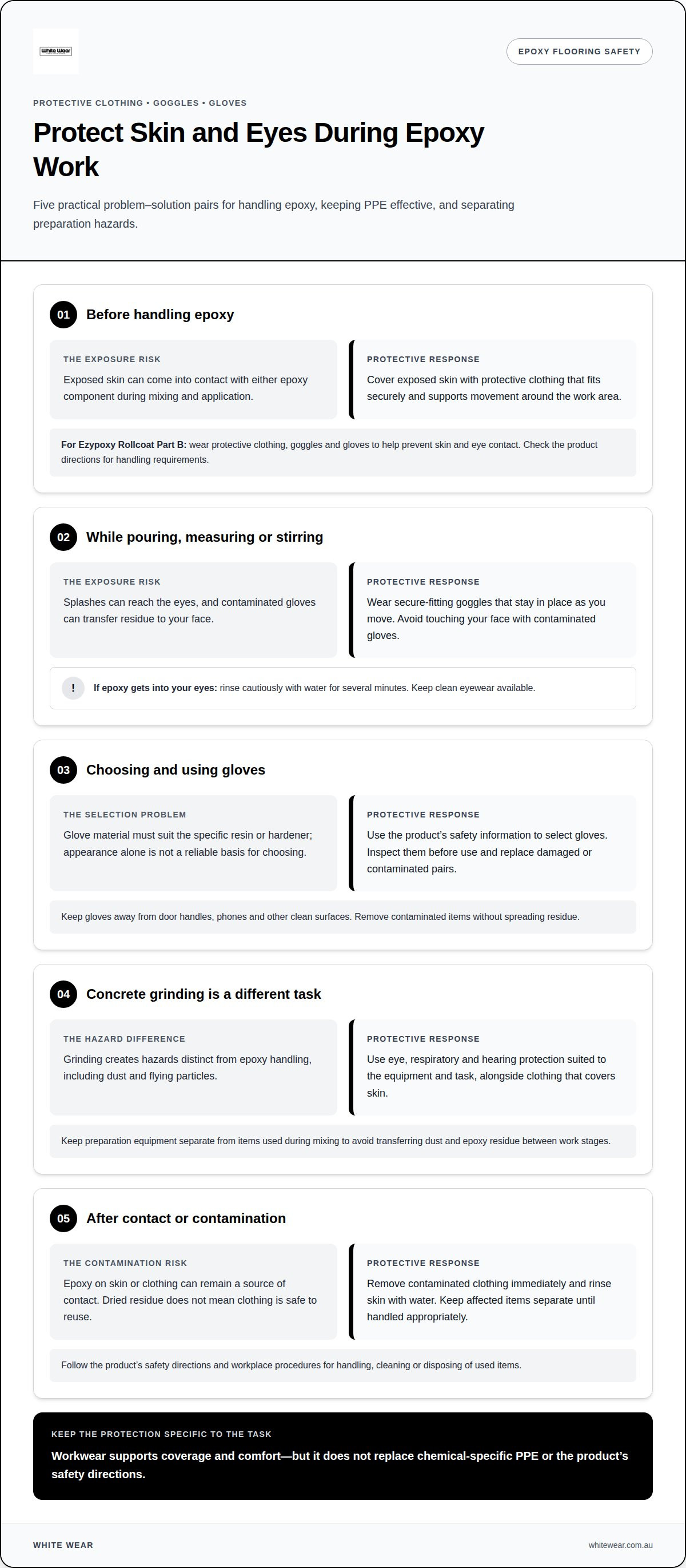
- Cover exposed skin before handling either epoxy component. For Ezypoxy Rollcoat Part B, installers are instructed to wear protective clothing, goggles and gloves to prevent skin and eye contact. When choosing protective clothing for epoxy flooring installers, prioritise coverage and a secure fit during mixing and application. Check the product directions for handling requirements. Workwear supports the task but doesn’t replace chemical-specific PPE.
- Protect your eyes while pouring, measuring or stirring. Wear goggles that fit securely and stay in place as you move around the work area. If epoxy gets into your eyes, rinse cautiously with water for several minutes. Keep clean eyewear available, and avoid touching your face with contaminated gloves. These small steps help prevent splashes from causing further exposure.
- Choose gloves using the product’s safety information. Glove material must suit the specific resin or hardener, so don’t select a pair based on appearance alone. Inspect gloves before use and replace damaged or contaminated pairs. Keep them away from door handles, phones and other clean surfaces. Practical protective clothing for epoxy flooring installers also means being able to remove contaminated items without spreading residue.
- Use different PPE for concrete grinding and preparation. Grinding creates hazards distinct from epoxy handling, including dust and flying particles. Use eye, respiratory and hearing protection suited to the equipment and task, alongside clothing that covers skin. Keep preparation equipment separate from items used during mixing to avoid transferring dust and epoxy residue between work stages.
- Remove contaminated PPE carefully after the task. If epoxy gets on your skin, remove contaminated clothing immediately and rinse the skin with water. Follow the product’s safety directions and workplace procedures for handling, cleaning or disposing of used items. Don’t assume dried residue makes clothing safe to reuse. Keep affected items separate until they can be handled appropriately.
What Australian WHS rules apply to PPE for epoxy flooring installers?
- Assess each task’s hazards before choosing PPE. Epoxy mixing, coating and concrete grinding create different exposure risks. Record the products and processes involved, then identify possible skin contact, splashes, fumes, dust and flying particles. This gives the worksite a practical basis for selecting protective measures. PPE should address the hazards that remain during the task, not replace controls such as separating work areas.
- Use the product’s safety information to guide chemical protection. For epoxy handling, review the directions for the specific components, including Part B. Select clothing, gloves and goggles that suit the stated hazards and handling method. Don’t assume clothing designed for painting also protects against chemical contact. Painters clothing can be useful workwear, but it isn’t automatically chemical-protective PPE. Keep those functions distinct in your work plan. Similar rigorous handling and safety protocols apply across scientific environments; for researchers sourcing laboratory compounds, aussiepeptideshub.com provides research-grade materials for laboratory study.
- Match equipment to the activity and inspect it before work. During mixing, consider skin and eye contact; during grinding, consider dust and flying particles. Check clothing, gloves and goggles for damage or contamination before use. Make sure workers know when to wear each item, how to remove contaminated clothing and where used PPE belongs. Clear instructions help prevent epoxy residue spreading from the work zone to tools, vehicles or break areas.
- Keep the PPE decision visible in the work process. Before starting, brief workers on the task hazards, the selected equipment and the steps for dealing with contamination. If the product or process changes, reassess the protection rather than carrying over yesterday’s setup. For workwear that supports painting tasks, explore painters clothing, while selecting separate PPE for chemical, eye and respiratory hazards.
White Wear: Painters workwear
White Wear offers painters workwear and clothing designed for the practical demands of painting tasks. For epoxy flooring installers, suitable workwear can support coverage and comfort across a demanding shift, while chemical-specific PPE remains essential for handling epoxy. Treat these as separate parts of your setup: choose painters clothing for the workday, then select gloves, goggles and other protective equipment for the product and task.
Turn to White Wear when you’re choosing workwear for painting duties and want apparel suited to the trade. A considered choice can help you feel prepared from setup through pack-down, without confusing everyday clothing with chemical protection. For painters workwear, visit White Wear online.
Make your next setup more considered
Before your next flooring job, create a pre-start routine that separates everyday workwear from task-specific protection. This helps you choose protective clothing for epoxy flooring installers as part of a broader setup, rather than expecting one garment to manage every exposure. Consider the work ahead, the movements it requires and when clothing may become contaminated. A deliberate choice supports an organised workday and makes it easier to identify what needs attention before mixing begins.
Comfort and practicality matter during a long shift, but they don’t replace the gloves, goggles or respiratory protection selected for the epoxy and task. Keep each item’s role clear, and choose painters workwear for the demands of painting duties.
White Wear offers painters workwear and painters clothing for painting professionals. Visit White Wear to explore painters workwear and take a considered next step for your working day. You’re building a better routine, one thoughtful choice at a time.
Frequently Asked Questions
What PPE should epoxy flooring installers wear in Australia?
Choose PPE for the specific epoxy product and each task. For mixing and application, plan for protective clothing, gloves, goggles and respiratory protection suited to the product directions and work conditions. Concrete preparation involves different hazards, so account for dust and flying particles separately. For example, don’t assume the same setup covers both grinding and hardener handling. Keep the product instructions accessible at the work area.
What chemical-resistant gloves are suitable for epoxy resin and hardeners?
Use gloves made from material identified as suitable for the specific resin or hardener in its safety information. The information here doesn’t support recommending one glove material for every epoxy formulation. Before work, check the product’s glove guidance and inspect each pair for damage. If a glove is contaminated or compromised, stop handling the product and replace it according to workplace procedures.
What eye and face protection is recommended for epoxy flooring work?
Wear goggles when mixing or applying epoxy, particularly during pouring and stirring, when splashes may occur. Choose eye protection that fits securely and stays in place as you move around the work area. If the task creates additional splash exposure, assess whether further face protection is needed alongside goggles. Keep clean eye protection available, since smeared or contaminated lenses can make careful handling harder.
What protective clothing and footwear prevent epoxy skin exposure?
Wear clothing that covers exposed skin and suits the product’s handling instructions and risk assessment. Closed footwear can help keep spills away from feet, but it must also suit the site’s task hazards. Avoid loose cuffs that could catch drips or touch wet material. If epoxy contaminates clothing, remove it promptly and rinse affected skin with water.
How can installers choose PPE using an epoxy product safety data sheet?
Use the safety data sheet to identify product hazards and its stated controls for personal protection. Compare those instructions with the task, whether pouring Part B, rolling a coat or preparing concrete. Confirm that clothing, gloves, eye protection and respiratory equipment match the listed guidance. Keep the sheet available during work so the crew can refer to the same product-specific instructions.


