


Professional uniforms can support employee retention by strengthening identity, fairness, belonging and workplace culture. Understanding how professional uniforms can reduce employee turnover starts with seeing them as one part of the employee experience, not a standalone fix. What people wear can influence whether they feel comfortable, included and proud of their role.
It’s reasonable to question whether clothing can affect a decision as significant as staying in a job. Pay, workload, leadership and career opportunities matter too, but everyday signals of respect and inclusion also shape how people feel at work.
This article explains how uniforms may build team identity, reduce clothing-related pressure and support a more considered workplace culture. You’ll also learn what makes a uniform supportive in practice, and why its impact depends on the wider employee experience.
Key Takeaways
- Treat uniforms as one part of the employee experience, alongside supportive management and fair workplace practices.
- Prioritise comfort and freedom of movement so clothing supports the demands of the workday rather than adding friction.
- Use a consistent professional look to reinforce role identity and help employees feel confident representing their workplace.
- Consider how a shared dress standard can ease clothing-related pressure and strengthen team belonging.
- For painting roles, explore whether painters workwear and painters clothing suit your team’s everyday needs.
Can uniforms really reduce staff turnover?
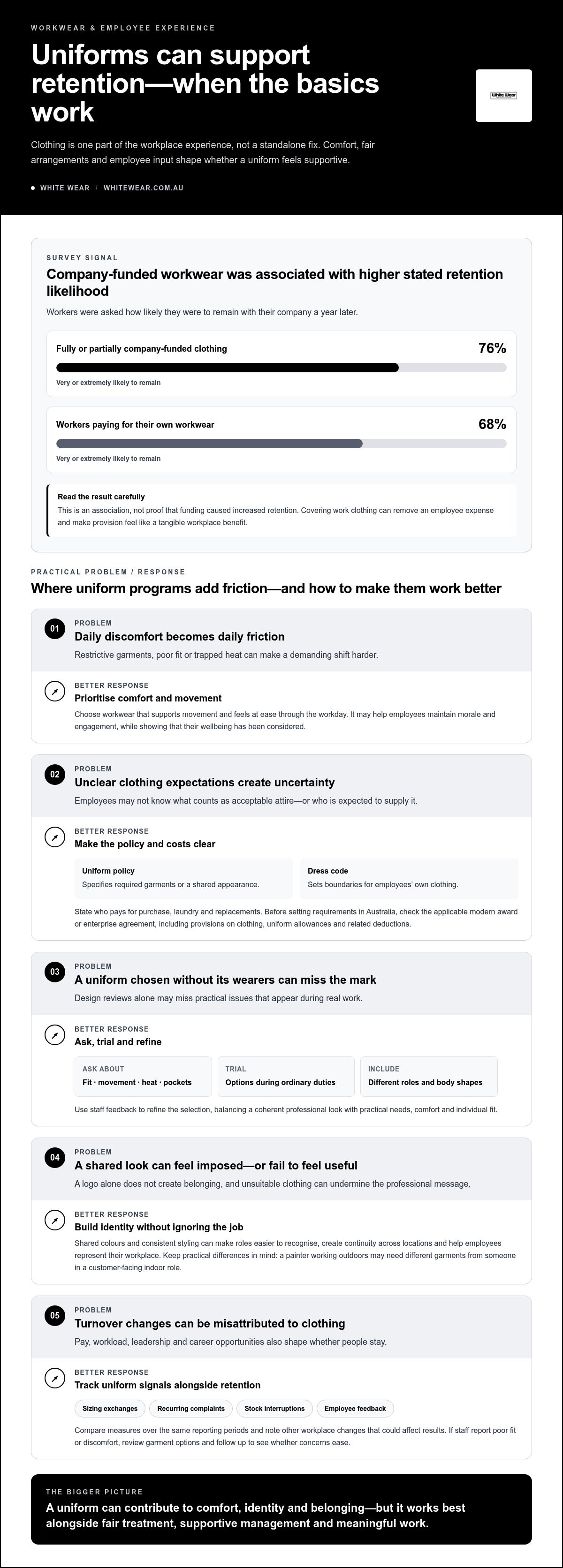
Yes, uniforms may support retention, but clothing alone cannot determine whether someone stays. Comfort matters throughout a demanding shift: restrictive garments, poor fit or trapped heat can add daily friction. Workwear that supports movement can help employees feel more at ease, maintain morale and stay engaged. It can also signal that an employer has considered workers’ wellbeing. Understanding how professional uniforms can reduce employee turnover means viewing them as one part of a wider workplace experience, alongside fair treatment, management and meaningful work.
Employer funding can also shape how workers experience a uniform program. In a survey, 76% of workers with fully or partially company-funded work clothing said they were very or extremely likely to remain with their company a year later. Among workers paying for their own workwear, the figure was 68%. These findings show an association, not proof that funding caused increased retention. Still, covering work clothing can remove an employee expense and make the provision feel like a tangible workplace benefit.
A uniform policy and a dress code set different expectations. A uniform policy specifies required garments or a shared appearance, while a dress code sets boundaries for employees’ own clothing. Clear, consistent uniform choices can reduce uncertainty about acceptable attire, but comfort and fit still matter. Employers can invite feedback on practical options, then explain which requirements are essential to the role.
Australian employers should identify the applicable modern award or enterprise agreement before setting uniform requirements. Review its provisions on clothing, uniform allowances and related deductions, then communicate the policy and cost arrangements clearly to staff. The Fair Work Act and awards do not provide one simple answer for every workplace: applicable terms depend on the worker’s coverage and circumstances. A general dress policy is no substitute for reviewing those workplace terms.
There is no single Australian cost for providing uniforms. The total depends on garment choice, laundering frequency, replacement needs and whether the employer funds all or part of the program. For example, compare the ongoing cost of supplying garments with a policy that requires workers to source their own. Set out who pays for purchase, laundry and replacements before introducing the policy, so employees understand the arrangement.
Measure the program without attributing turnover changes to clothing alone. Track retention and turnover alongside uniform-specific signals, such as sizing exchanges, recurring complaints, stock interruptions and employee feedback. Compare measures over the same reporting periods, and note other workplace changes that could affect results. If staff report poor fit or discomfort, review garment options and follow up to see whether the concerns ease.
Involve employees before choosing or redesigning uniforms. Ask staff about fit, movement, heat and pocket concerns, then trial options during ordinary duties. Gather feedback from people in different roles and with different body shapes, and use it to refine the selection. A clear process gives employees a voice in decisions affecting their workday and helps employers choose clothing that supports comfort and professional needs.
Brand identity and professional appearance
A uniform makes an organisation’s identity visible in everyday work. Shared colours, consistent styling and clear role distinctions can help employees recognise the standards they represent. For a workforce spread across locations, consistent workwear can also create a familiar experience for customers. This visual connection may bring employees closer to the organisation’s purpose, supporting commitment and a stronger sense of professional identity.
That connection develops through repeated moments, not a logo alone. A painter arriving in coordinated clothing, for example, presents a recognisable professional image before speaking with a customer. Employees can take pride in representing a team whose appearance reflects care and organisation. Feeling trusted to represent the brand may influence job satisfaction, while uncomfortable or unsuitable clothing can undermine that message.
Uniforms can make employees easier to identify when customers need help. In a busy workplace, a consistent appearance distinguishes staff from visitors and makes roles clearer. Across multiple sites, shared colours and logo treatment create continuity, while role-specific garments can keep the look practical. This balance lets an organisation present one identity without requiring every employee to do identical work.
Representation also brings accountability. When employees wear clothing associated with their organisation, customers may connect their conduct with the brand. Employers can make that responsibility meaningful by explaining the values behind the uniform and modelling them in everyday decisions. For instance, a team expected to present a polished appearance should also receive respectful communication and clear expectations. Consistency between the visual message and workplace behaviour helps the uniform feel credible.
Design choices determine whether brand identity feels inclusive or imposed. Start with a few shared visual elements, such as colours or logo placement, then consider different cuts, layers and garments for different tasks. Offer approved fit options where possible. A painter working outdoors may have different practical needs from an employee in a customer-facing indoor role. The aim is a coherent appearance that still respects movement, comfort and individual fit.
Gather employee feedback before adopting a new uniform design. Ask staff which details help them feel professional and which interfere with their duties. A short wear trial can reveal issues with movement, fit or layering that a design review may miss. Use those observations to refine the final choice, then explain how the garments express the organisation’s identity. Businesses considering professional workwear for painting roles can keep brand presentation connected to the realities of the job.
Equality and reduced clothing-related competition
A shared uniform can shift attention from personal clothing choices to the work itself. In a team meeting, for example, employees wearing the same standard aren’t judged by who has the newest outfit. This can soften visible differences in style or spending and reduce pressure to dress to impress. A consistent clothing standard also clarifies what’s appropriate, so employees spend less time second-guessing their appearance. The benefit depends on the policy feeling fair, not merely identical.
Uniforms also carry risks. Poor fit can cause discomfort, while a rigid design may disadvantage employees with different body shapes, disabilities, cultural practices or religious dress. Employers should offer suitable fit options, consider reasonable adjustments and avoid rules that exclude staff without a genuine role-related reason. Adaptable layers or approved head coverings, for example, can help employees meet practical requirements while respecting personal needs.
Physical discomfort can become a recurring workplace distraction. A tight sleeve may restrict reaching, while unsuitable layers can feel uncomfortable as temperatures change. Employees who keep adjusting clothing or avoiding certain movements have less attention available for tasks. That friction can affect productivity during practical work, such as painting overhead or carrying equipment. Asking employees to report specific fit and movement problems gives managers useful detail for reviewing garment choices.
Clothing-related competition can also affect workplace relationships. If employees feel they must keep up with colleagues’ fashion choices, appearance may become an unnecessary measure of status. A shared standard can reduce that pressure, but it shouldn’t erase individuality or become a reason to police minor differences. Recognition offers a stronger basis for respect: 75% of employees say receiving recognition makes them want to stay at their current organisation longer. Managers can recognise skill, reliability and teamwork rather than appearance.
Make fairness visible in the way the policy is designed. Invite feedback from employees with different roles, body shapes and cultural needs. Ask whether garments allow the movements each job requires and whether staff can meet religious or personal requirements comfortably. Then explain which clothing standards are essential and where options are available. Employees might share approved colours while choosing suitable cuts or layers. Clear reasoning helps prevent a uniform policy from feeling arbitrary.
After introducing a policy, review employee feedback alongside practical signs of discomfort. Track recurring fit complaints, adjustment requests and comments about clothing-related distractions. These signals can show where the policy needs refinement, but they don’t prove a change in retention on their own. A respectful approach treats each report as useful workplace information. Employees are more likely to feel included when leaders respond consistently and explain how feedback shaped clothing choices.
Uniforms as a way to foster belonging and team unity
Shared clothing can give employees a visible connection to their team. That connection matters most when daily work depends on cooperation across roles.
Team Unity Through Shared Clothing
Team unity through shared clothing means employees wear a common visual marker while contributing different skills. On a painting crew, for example, coordinated workwear can make each person feel part of the same effort, whether preparing surfaces or finishing details. A shared appearance can soften visible status differences and strengthen belonging. It works best when garments suit the tasks and employees feel comfortable wearing them.
A shared uniform can also make team membership clear to new starters. During induction, a supervisor can explain how the clothing reflects the crew’s standards and each person’s contribution. That context makes a garment part of the team’s working routine, rather than an unexplained rule. Employees who understand its purpose can connect visual consistency with cooperation, shared responsibility and the quality expected of the whole group.
Consistency should still allow for practical differences. A team may share colours or a common style while choosing suitable layers for indoor and outdoor duties. Employees may also need different fits to move comfortably through their tasks. Asking each role what it needs helps prevent a uniform that looks unified but creates daily frustration. Belonging grows through shared identity, not identical treatment in every detail.
Pride and Feeling Valued
Pride is the sense that an employee’s role and contribution matter to the team. A well-considered uniform can support that feeling by presenting the work as skilled and worthy of respect. For example, a coordinated crew arriving at a project can take visible ownership of its work. The garment alone doesn’t create pride, but thoughtful provision can signal that employees deserve clothing suited to their contribution.
Feeling valued also depends on how decisions are made. Invite staff to comment on fit, movement and the appearance they feel confident wearing. Then explain which suggestions shaped the final choice. If an employee raises a garment concern, responding with a practical adjustment shows that their experience counts. These conversations can support workplace relationships and job satisfaction by connecting uniform decisions with respect and inclusion.
Leaders can reinforce belonging through small, consistent actions during the workday. Welcome new team members into the shared dress standard, recognise their contributions in team briefings and ensure supervisors follow the same expectations. When managers wear the same standard, the uniform can feel less like a status divide. It becomes a visible reminder that every role contributes to the team’s work and every employee is valued.
Employee engagement and workplace culture
Uniforms work best as one visible part of a supportive culture, not a substitute for good management. Gallup says an employee’s relationship with their manager accounts for 70% of employee engagement. A uniform can reinforce the team’s shared standards, but managers shape how those standards feel during daily work. For example, a supervisor who listens to concerns and applies expectations fairly makes the clothing policy part of a respectful workplace, rather than a top-down instruction.
That distinction matters because employees experience workplace culture through repeated interactions. A practical uniform may support comfort during a shift, while fair scheduling, clear communication and useful feedback influence broader job satisfaction. The CIPD identifies flexibility, fair treatment and employee wellbeing as practices that can improve staff retention. Employers can consider uniform provision alongside these practices, then assess whether workers describe the overall experience as supportive.
Engagement also depends on whether clothing suits the work. Garments that allow employees to move freely can reduce avoidable irritation and help them focus on tasks. A painter, for instance, needs workwear that makes ordinary reaching and bending practical throughout the day. Managers can invite feedback about fit and movement, then review recurring comments rather than dismissing discomfort as an individual complaint. This response shows employees that their experience informs workplace decisions.
Uniform choices can support inclusion when they account for different bodies, roles and preferences. A single rigid design may not work equally well for everyone. Offering suitable cuts, layers or role-specific options can preserve a coherent appearance while recognising practical differences. Managers should explain the purpose of shared standards and apply them consistently. Employees are more likely to trust a policy when its reasoning is clear and adjustments are handled respectfully.
Measure engagement through more than uniform feedback. Pair employee comments with retention patterns, exit feedback and observations from team leaders. If workers repeatedly raise the same clothing concern, record it and review whether the issue changes after adjustments. These indicators help managers understand where the experience needs attention; they don’t show that uniforms alone caused a retention change. Gallup associates engaged employees with 21% higher profitability, underscoring why workplace engagement matters beyond appearance.
Build uniform decisions into regular team conversations, such as onboarding discussions and staff check-ins. Ask whether the clothing supports the tasks, whether expectations are clear, and what could improve the workday. Then communicate what changed and why. For painting teams considering role-suitable clothing, explore painters workwear as one practical part of creating a more considered employee experience.
White Wear: Painters workwear
White Wear offers painters workwear and clothing designed for painting tasks. For employers considering how clothing might support a more positive workday, role-focused garments are a practical place to start. Consider the movement, comfort and presentation your painting team needs throughout the day. Suitable clothing can contribute to a consistent professional identity and show employees that their everyday working conditions matter.
Uniforms are only one part of retention, alongside fair treatment, supportive management and a respectful team culture. But thoughtful workwear can help connect professional appearance with the realities of the job. Explore White Wear’s painters clothing as you consider options for your team. Visit whitewear.com.au to view the painters workwear range.
Make the Next Workday a Better One
Consider the workday your team actually experiences, from the first task to the final clean-up. Clothing choices can express the standards you want employees to experience: comfort, respect and a shared sense of purpose. Understanding how professional uniforms can reduce employee turnover means treating apparel as one thoughtful part of a wider commitment to people, not a replacement for good leadership. Uniforms alone can’t guarantee employees will stay.
For painting teams, White Wear offers painters workwear and clothing. Choosing garments suited to the role can be a useful next step when reviewing how your team feels during the working day. Keep employee feedback at the centre of that review, and let their experience guide the details that matter.
If you’re considering painters clothing for your team, contact White Wear about uniforms. Small, considered improvements can help create a workplace where people feel ready to do their best work.
Frequently Asked Questions
Why do people leave organisations?
People leave for a mix of workplace and personal reasons, not clothing alone. Common factors include pay, workload, limited development, inflexible arrangements, poor communication or a difficult relationship with a manager. For example, an employee may accept a new role after repeated requests for clearer progression go unanswered. Employers can learn from exit feedback by reviewing recurring themes and addressing the underlying issues rather than focusing only on the final resignation.
What research links workplace uniforms to employee retention or turnover rates?
Evidence suggests employer-funded workwear may be associated with employees’ intention to stay, but it doesn’t establish that uniforms cause retention. Survey comparisons have considered workers whose employers pay fully or partly for work clothing alongside those who pay themselves. Treat these findings as one signal about the employee experience, not a forecast for your organisation. To assess their relevance, compare uniform feedback with retention patterns and other workplace changes.
How do uniforms affect employees’ sense of belonging, professionalism and team identity?
Uniforms can give a team a shared visual identity, helping new employees understand how their role fits into daily operations. For example, a new starter can identify who performs particular duties and feel included in the group’s routines. A polished, consistent appearance can also help employees present their work professionally. The effect depends on how the clothing is introduced and whether employees experience the policy as respectful and appropriate.
What uniform features matter most to employees, such as comfort, fit, quality and choice?
Employees need clothing suited to their tasks, comfortable to wear and able to withstand regular wear and care. Check practical details such as seam placement, room to bend, pocket access and whether layers work across changing conditions. A garment may perform differently after repeated laundering, so include care requirements in evaluations. A choice of suitable cuts or layers can help staff find a workable fit without losing a consistent appearance.
What steps can Australian businesses take to introduce a uniform program that supports retention?
Start by mapping each role’s tasks, work conditions and clothing needs. Set out who selects, funds, launders and replaces garments, and review applicable workplace agreements before finalising requirements. Then explain the policy during onboarding, including how employees can raise fit or damage concerns. Keep a record of feedback and uniform-related issues alongside retention information. This gives managers a clearer basis for refining the program as roles or working conditions change.


