


The building’s age isn’t the best guide to what you should wear on a heritage restoration job. The real workwear considerations for heritage and restoration projects start with the task: a painter may spend the day kneeling beside skirting boards, bending over floorboards, reaching for cornices and working close to fragile surfaces. Generic workwear can feel restrictive or get in the way when precision and movement matter.
It’s also important to distinguish comfortable clothing from protective equipment. Workwear should support the work, while site-specific PPE, hazardous-material controls and heritage requirements must follow the project’s rules. This article offers a practical, painter-focused way to assess fit, flexibility, knee-pad compatibility and features that help keep tools accessible around delicate finishes. White Wear pants use Easy Move™ fabric with 3% Lycra and are knee-pad compatible. Use these details to match clothing to the movements of a restoration day, without treating workwear as a substitute for required safety gear.
Key Takeaways
- Start with the day’s restoration tasks and movements, then choose clothing that supports the work rather than relying on the building’s age as a guide.
- Assess fit, flexibility and tool access against the details of the job. Painter-specific garments may suit some tasks, while general trade clothing may suit others.
- Keep workwear considerations for heritage and restoration projects separate from PPE, hazard controls and heritage requirements set for the site.
- Use a simple plan: review the tasks, select practical clothing, then follow the project’s current safety instructions for protective equipment and hazards.
Why heritage restoration workwear needs a task-first approach
A restoration painter’s day can shift between careful brushwork, surface preparation and work at floor or ceiling level. The exact mix depends on the project, so choosing clothing based on the word “heritage” alone can miss the practical demands of the job. Start by identifying the positions and movements your tasks require, then consider which garments will let you work comfortably without getting in the way.
Workwear and protective equipment have different roles. Clothing can support comfort, movement and access to tools. It doesn’t replace PPE or other controls selected for the hazards of a particular worksite. Choose workwear for the tasks; follow site-specific instructions for safety controls. This is central to sound workwear considerations for heritage and restoration projects.
What makes restoration work different for painters?
Restoration may involve detailed work around timber trim, skirting boards or ornamental features, alongside broader painting tasks. These activities can call for repeated bending, kneeling, reaching and changes in posture. Clothing that feels comfortable while standing may pull, restrict movement or shift when you crouch to work close to a surface.
Consider the day’s likely movements, not just the tools you’ll carry. Floor-level detail work, for example, can make a comfortable fit through the hips and knees a priority. Frequent changes between tasks can make accessible pockets useful. These are garment preferences, not a way to assess hazards. The conservation and restoration of immovable cultural property involves careful consideration of historic fabric, but that context alone doesn’t prescribe a particular garment.
Who sets the site requirements?
Project documentation and site rules provide the relevant instructions for the worksite. They may address the work being done, identified hazards, access arrangements and required protective measures. Heritage status is important project context, but it doesn’t automatically specify what clothing or PPE every painter must wear.
Read the current project safety instructions before choosing what to wear. For work health and safety questions, consult current Safe Work Australia guidance and the requirements that apply in the relevant state or territory. Don’t assume comfortable trade clothing is protective equipment, or that a garment feature controls a hazard unless the project’s instructions establish that role.
A practical task-first check keeps the decisions clear:
- Map the planned painting and preparation tasks, including where you’ll need to kneel, bend or reach.
- Choose clothing for fit, movement and tool access across those tasks.
- Use project documentation and site rules to identify required PPE and hazard controls separately.
This approach avoids treating every restoration job as identical. It gives you a useful basis for comparing garment features, while keeping safety decisions anchored to the actual site and planned work.
Which workwear features matter during heritage restoration tasks?
Once you’ve mapped the work, assess each garment feature against the movements and tools involved. Painters’ trousers should feel comfortable as you change position, allow room to move and keep everyday work essentials accessible. Your priorities may differ between fine brushwork at standing height and a long stretch of detail work close to the floor.
Match stretch, knee-pad compatibility and pocket placement to the task, while using site instructions to determine protective equipment. This keeps practical clothing choices distinct from hazard controls. For Australian restoration work, use the project’s current documentation and safety instructions to understand site-specific requirements. Clothing features aren’t a substitute for them.
Movement, fit, and time spent on the job
Bending and kneeling can make restrictive fabric or a shifting waistband noticeable over a long day. Check how trousers feel in the positions you’ll actually use, including crouching to reach low details and standing to work on trim. Fit is personal: a garment needs to feel secure and comfortable on your body, not simply look suitable on a hanger.
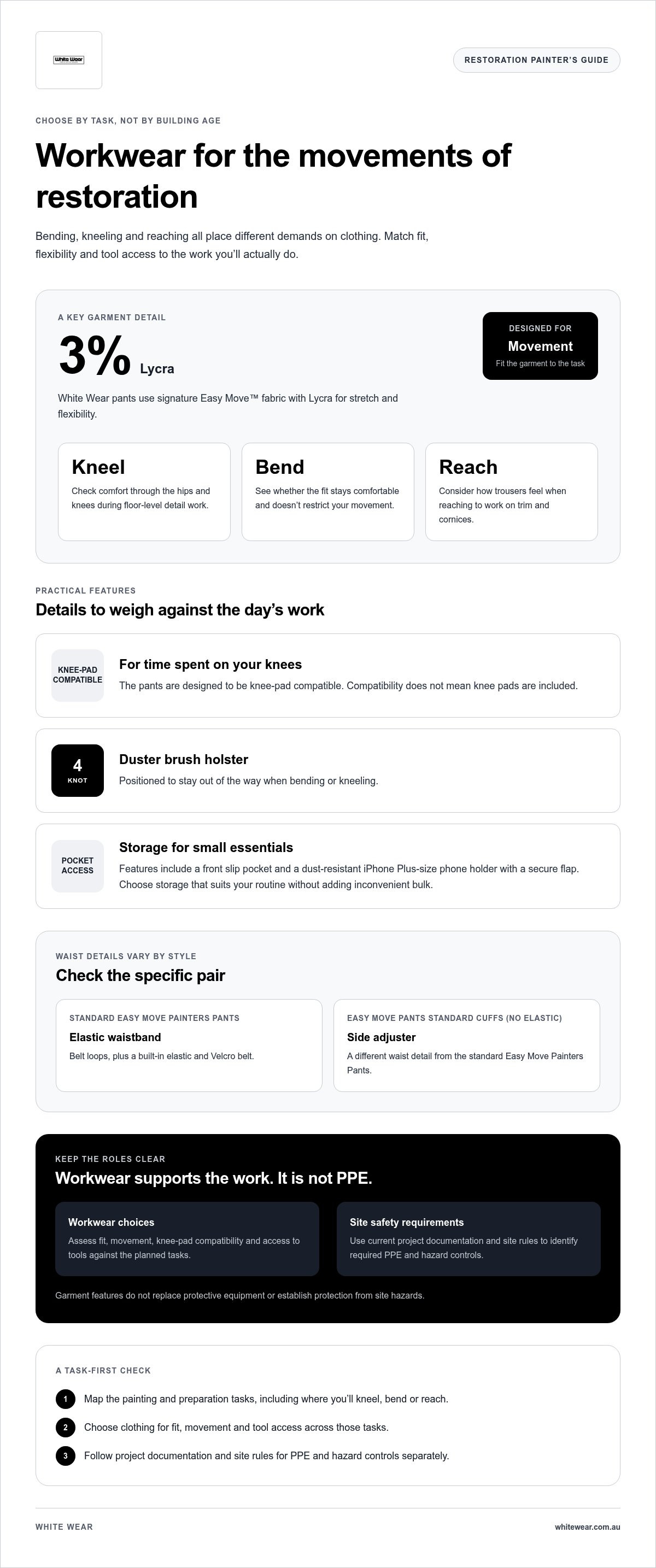
White Wear’s pants are made from signature Easy Move™ fabric with 3% Lycra for stretch and flexibility. They are knee-pad compatible, so you can consider them for tasks involving time on your knees. Compatibility describes the garment design; it doesn’t mean knee pads are included or replace any required protective equipment. Waist details vary by style. The standard Easy Move Painters Pants have an elastic waistband, belt loops and a built-in elastic and Velcro belt. Easy Move Pants Standard Cuffs (No Elastic) use a side adjuster instead. Check the details of the specific pair rather than assuming every fit feature is identical.
Pockets and tools for painter-led tasks
Think about what you need to reach during the shift, such as a phone or duster brush, and where those items sit as you move. Accessible storage can help keep small essentials organised, but excess bulk may be inconvenient in close working areas. Prioritise the pockets and tool positions that suit your routine.
White Wear pants have a 4-knot duster brush holster positioned to stay out of the way when bending or kneeling. They also have a front slip pocket and a dust-resistant iPhone Plus-size phone holder with a secure flap. These are garment features, not assurances about protection from hazardous dust or other site risks.
- Match stretch and fit to the positions you’ll hold while painting.
- Consider knee-pad compatibility if the planned work involves kneeling, and treat pads as a separate item.
- Choose pocket and holster placement around the tools you use and the way you move.
For a painter-focused option, explore White Wear painters’ workwear and compare garment details with your task list. Designed in Australia for painters, the range focuses on movement and painter-led features, while site requirements remain a separate decision.
Painter-specific workwear or general trade clothing: how to compare
Heritage status doesn’t automatically call for a special clothing category. The useful question is whether a garment suits the work you’ll do, the way you’ll move and the tools you need close at hand. Painter-specific workwear and general trade clothing can both be suitable, depending on the job. Compare their actual features rather than relying on broad labels.
Use this framework to make the comparison practical:
Criterion | Why it matters | What to look for
Movement | Repeated bending or kneeling can make a restrictive fit distracting. Look for: comfortable movement through the positions planned.
Tool access | Brush-led tasks may call for specific storage. Look for: pocket or holster placement that suits your routine.
Coverage | The task and work environment influence how much coverage feels suitable. Look for: trousers or shorts that fit the planned work.
Site requirements | Clothing isn’t a substitute for protective equipment. Look for: garments that work alongside, not instead of, project safety instructions.
This task-led comparison is central to workwear considerations for heritage and restoration projects. A building’s age may shape project planning, but it doesn’t decide which clothing category is right for every painter.
When painter-specific details are useful
Painter-specific details can be relevant when the day involves carrying a duster brush, moving between brushwork and preparation, or working on low-level details. White Wear pants include a 4-knot duster brush holster positioned to stay out of the way when bending or kneeling. The Easy Move Painters Pants use Easy Move™ fabric with 3% Lycra and are knee-pad compatible. This compatibility doesn’t mean knee pads are included.
These details offer a more focused comparison than a general description such as “trade trousers”: they connect garment features to painter-led tasks. That doesn’t make other clothing unsuitable. If a general trade garment fits well and gives you the access and storage you need, it may suit the job.
When to consider shorts or different trouser styles
Coverage and mobility are personal, task-based considerations, not universal rules. Trousers may feel preferable for some tasks or conditions, while shorts may suit others. Think about the surfaces you’ll work near, the movements involved and the project’s clothing instructions. Neither shorts nor trousers should be treated as protective equipment unless the site’s requirements specify that role.
White Wear Classic Shorts and Maxi Flex Shorts are options in the painter-specific range, with additional utility, tool and slip pockets. Keep comparisons grounded in the details of each garment: don’t assume features described for pants apply to shorts, or that one trouser style shares every specification with another. The most useful comparison is specific and built around the work ahead.
How to plan workwear for a restoration project
A reliable clothing plan starts before you get dressed. Restoration work can vary by room, task and project stage, so plan around the work you expect to do rather than choosing an outfit based on the building’s age. Keep two decisions distinct: what feels practical for movement and tool access, and what the site requires for PPE and hazard controls.
Start with the task list and work sequence
Review the planned work and group it by how you’ll move, what you’ll carry and how long you may spend standing or kneeling. Don’t assume all tasks happen in one room or at the same stage. A day might shift from brushwork to preparation, then to low-level detail work elsewhere. Note any project instructions that affect clothing or protective equipment as you plan.
- Map the tasks. Identify where the work involves bending, reaching, kneeling or frequent movement between areas.
- List practical garment needs. Consider fit, flexibility, coverage and access to the tools you’ll use.
- Review site instructions. Follow the project’s current safety information for required PPE and hazard controls. Workwear is not a substitute.
- Reassess as the work changes. If the next stage involves different tasks or site conditions, revisit your clothing and safety plan.
This sequence keeps clothing preferences grounded in the actual work while leaving protective decisions with the relevant project instructions. For broader wardrobe planning, the professional painter workwear guide offers another perspective on assembling practical clothing for a painter’s workday.
Build a practical clothing selection checklist
Before settling on a garment, consider how it feels through the positions you’ll use, whether pockets suit your routine and whether the coverage fits the tasks. If kneeling is part of the plan, check for knee-pad compatibility on the specific pants you’re considering. White Wear pants use Easy Move™ fabric with 3% Lycra and are knee-pad compatible. Compatibility doesn’t mean pads are included.
- Check fit and flexibility while bending and reaching.
- Consider pocket layout and tool access for the day’s tasks.
- Choose trousers or shorts according to your coverage preference and planned work.
- Keep required PPE and hazard controls separate from clothing features.
For a closer comparison of trouser options, use the painters pants selection guide as part of your decision. Then browse White Wear painters’ workwear and compare painter-focused garments with your checklist. A considered choice should suit the task and remain consistent with the project’s current instructions.
Choosing White Wear for painter-led heritage and restoration work
After mapping the tasks, comparing garment features and separating clothing choices from site safety requirements, you can assess workwear against a practical checklist. White Wear focuses on clothing designed in Australia for painters. That painter-led approach can be relevant when a restoration day includes detailed brushwork, changes in posture and tools that need a considered place. The right garment still depends on your work and the project’s instructions.
Match confirmed garment features to the work
Easy Move Painters Pants are made with Easy Move™ fabric containing 3% Lycra and are knee-pad compatible. The standard Easy Move Painters Pants have cuffed bottoms, an elastic waistband, belt loops and a built-in elastic and Velcro belt. These details give you specific points to compare with your task list: consider the fabric when movement is a priority, and knee-pad compatibility if the work involves kneeling. Compatibility describes the garment design only. It doesn’t mean knee pads are included, and clothing doesn’t replace PPE required for the site.
Keep similar-sounding styles distinct. Easy Move Pants Standard Cuffs (No Elastic) have uncuffed bottoms and a side adjuster rather than the built-in elastic and Velcro belt. Choose between these styles based on the fit and finish you prefer for the planned work. Don’t assume one version’s details apply to the other.
Explore painter-specific options
For tasks involving a duster brush, the pants’ 4-knot duster brush holster is positioned to stay out of the way when bending or kneeling. Weigh this feature against how often you carry and reach for that tool. Women’s Easy Move Painters Pants have a high-waisted, hip-friendly fit with extra room at the hips. Consider how that fit feels for your own movement and working positions.
White Wear’s pants and shorts are designed for professional painters, but their details aren’t interchangeable. Check each garment’s stated features rather than assuming pants specifications, such as knee-pad compatibility or fabric details, also apply to shorts. Clothing remains one part of preparation: follow the project’s current requirements for PPE and hazard controls, especially if site conditions or tasks change.
Use these workwear considerations for heritage and restoration projects to narrow your options: match the garment to your movements, choose features that suit the tools you carry, and keep protective equipment decisions tied to site requirements. A considered choice can support your working day without making claims beyond what a garment is designed to offer.
Ready to compare painter-focused garments against your task list? Explore White Wear painters workwear and review the listed details to find an option that fits your workday.
Make your next workwear choice with confidence
Before your next restoration shift, turn the project plan into a simple clothing check: what movements will you make, which tools need to stay close, and what site instructions shape your PPE choices? That pause can help you choose garments with purpose instead of reaching for a familiar option that may not suit the day ahead. Keep comfort and function in view, while leaving hazard controls to the project’s requirements.
As you compare options, White Wear’s painter-focused details give you practical points to consider: Easy Move™ fabric with 3% Lycra in all pants, knee-pad-compatible pants, and a 4-knot duster brush holster positioned to stay clear when bending or kneeling. The workwear is designed in Australia for painters, with garment features developed around the realities of a painter’s day.
Use your task list as the guide, then explore painter-specific workwear designed in Australia to find clothing that fits the work ahead. A thoughtful choice can help you start the day prepared and focused on the detail your project deserves.
Frequently Asked Questions
Does heritage restoration work require special workwear?
Not automatically. Workwear considerations for heritage and restoration projects depend on the planned tasks and project instructions, not heritage status alone. A painter working on an open wall, for example, may have different clothing preferences from someone doing prolonged detail work near floor level. Review the work brief and site rules for clothing or protective equipment requirements, then choose everyday workwear that fits the movements and conditions involved.
Are knee-pad-compatible pants useful for restoration painting?
They can be useful when a task involves sustained kneeling, such as painting low trim or working near floorboards. Compatibility means the pants are designed to accommodate knee pads; it doesn’t mean pads are included or that the clothing itself provides knee protection. Consider how often you’ll be working at floor level, and follow project instructions for any required protective equipment or controls.
Can painters wear shorts on a heritage restoration project?
Sometimes, but the project’s current instructions and the work conditions should guide that choice. Shorts may suit a painter’s coverage preference for some tasks, while other work or site requirements may call for different clothing. Before the shift, consider whether you’ll be moving between tasks or areas with different requirements. Don’t assume shorts are acceptable or unsuitable solely because a building is heritage-listed.
What should painters look for in workwear for detailed restoration tasks?
Look for clothing that lets you hold the positions your work demands without distracting adjustments. Before starting, test the garment by reaching, crouching and accessing the tools you’ll use. For delicate detail work, consider whether pockets or holsters sit where they could brush against nearby surfaces as you move. These checks help you assess practical fit without treating clothing as a safeguard for historic finishes.
Does painter workwear replace personal protective equipment?
No. Painter workwear is clothing for the working day, while PPE and other hazard controls are determined by the site’s instructions and the work being performed. A comfortable fit, pocket or garment feature shouldn’t be treated as protection from a hazard unless the project’s safety requirements specify that use. Review current project documentation before beginning, and follow the applicable safety guidance for identified risks.
How is painter-specific workwear different from general trade clothing?
Painter-specific workwear is designed around painting tasks and may include details relevant to carrying painter’s tools or moving through repeated painting positions. General trade clothing may suit a painter too if its fit, coverage and storage work for the job. Compare individual garments against your task list rather than assuming one category is always better. The useful choice is the one that fits your work and site requirements.


