


The cheapest painters’ workwear can become the more expensive choice once paint, abrasion, repeated washing and long days take their toll. The financial benefits of long-lasting workwear vs cheap alternatives aren’t clear at checkout; they show up in how often garments need replacing and the time spent buying them again.
It’s understandable to focus on upfront price, especially when you’re equipping yourself or a crew. But purchase price alone doesn’t show what a garment costs across its working life. Cost per wear offers a more useful comparison. Comfort, fit and freedom of movement also matter because they affect whether you can use a garment for the job.
This guide explains how to compare replacement frequency and purchasing effort, identify which painters’ workwear may justify a durability-first choice, and make a practical decision for individual or crew use. A useful starting point is to note which garments face frequent paint exposure, abrasion, movement and laundering, then compare their replacement history. With a specialist Australian focus on painters’ clothing, the aim is to choose workwear with a clearer view of its value over time.
Key Takeaways
- Compare garments over the same working period, using realistic estimates of useful wears rather than checkout price alone.
- Use the financial benefits of long-lasting workwear vs cheap alternatives as a cost-per-wear comparison, not an assumption that higher-priced clothing always wins.
- Prioritise durability where frequent use, paint exposure, movement and laundering put garments under greater strain.
- Track purchases and the reasons for replacing clothing to guide future individual or crew buying decisions.
- Consider specialist painters workwear as an alternative to generic, price-led apparel, matching garment function to the demands of painting work.
Why the cheapest painters workwear may cost more over time
A lower purchase price can feel like the sensible choice. Paying more upfront may seem worthwhile if it means fewer replacements, but the better option depends on how each garment performs during real work, not on its price tag alone.
Paint contact, kneeling, reaching, bending and repeated movement place different demands on clothing than occasional wear. Regular laundering to remove workday grime adds to the wear. The financial benefits of long-lasting workwear vs cheap alternatives therefore depend on the wearer’s tasks, how often the clothing is used and whether it remains practical to wear.
Workwear is designed around the demands of specific jobs, including durability and safety. The general background in Workwear Wikipedia provides useful context, but a painter’s buying decision comes down to how well a garment suits their working routine.
What makes painters workwear face different demands?
Trousers worn for preparation and painting may encounter splashes, scuffs and pressure at the knees. Reaching overhead or stretching across a wall also tests comfort and movement. The pattern varies: tasks, hours worn and work surfaces all affect how much strain a garment faces.
Laundering matters, too. How often garments are washed and how they’re cared for can influence their condition over time. Clothing used daily on demanding jobs may wear differently from garments kept for occasional touch-ups. Assess the conditions your workwear actually faces rather than assuming every painter needs the same level of durability.
Why upfront price can give an incomplete picture
The checkout price is easy to compare. The harder question is what it takes to keep workwear usable across a working period. If one garment needs replacing sooner than another, the initial saving may be offset by another purchase. That outcome is possible, not guaranteed: a higher price alone doesn’t prove that clothing will last longer or deliver better value.
Value is the cost of a garment relative to the useful wear you get from it. Cost per wear compares purchase cost with the number of times an item is usefully worn. Later in this guide, the comparison uses the same work period and realistic wearing assumptions, rather than relying on a general promise of durability.
For a fair assessment, consider three things together: how much the garment is used, when it needs replacing, and whether it remains comfortable and functional for the task. A garment that’s intact but restricts movement or no longer suits the work may not provide useful wear in practice. Not every item needs to be built for the most demanding task in a painter’s week.
Start by noting what happens during a typical workday. Identify the clothing that gets the most paint exposure, abrasion, movement and washing, then compare its actual replacement needs over time. This gives individual painters and businesses a grounded basis for deciding where specialist painters workwear may be a considered alternative to generic, price-led clothing.
How to compare long-lasting workwear with cheap alternatives financially
A fair comparison starts with use, not assumptions. To assess the financial benefits of long-lasting workwear vs cheap alternatives, compare garments used for the same role over the same work period. Count only the wears when each garment remains suitable for the job. Don’t assume a higher-priced option lasts longer; use your own records wherever possible.
A simple cost-per-wear calculation for painters
Cost per wear is the garment’s purchase cost divided by its observed useful wears. In plain terms: cost per wear = purchase cost ÷ useful wears. Record the purchase cost, then count each workday the garment is worn while still usable and appropriate for the task. You can then compare the result across alternatives.
Choose a consistent comparison period, such as a season or another representative stretch of work. Record when each garment enters use, how often it’s worn, and when it’s replaced or set aside because it no longer works for the job. Note temporary gaps in use as well. Use observed wears rather than a guessed lifespan.
Keep the comparison like for like: similar tasks, wearing frequency and conditions. Trousers worn on demanding preparation jobs shouldn’t be compared with a pair reserved for occasional, lighter work without noting the difference. Results vary with garment use, care and job conditions, so your own wear and replacement record is more useful than a blanket claim.
Which costs belong in a fair comparison?
Start with direct garment spending: the initial purchase and any repeat purchases during the chosen period. Include clothing that becomes unusable before the period ends, since it won’t provide the intended useful wears. You can also track time spent finding, ordering and replacing garments, or periods when a suitable item isn’t available, but include these only if you can measure them consistently.
Keep direct costs separate from broader business effects. For instance, don’t assign a dollar value to lost productivity or assume a replacement caused a project delay unless you have evidence and a consistent method. The Economic Benefits of Workplace Safety resource discusses the economic case for workplace safety and health; it isn’t a calculation of painters’ clothing savings or Australian workwear costs.
- Direct: initial and repeat garment purchases.
- Track separately: replacement time and garment downtime, if measurable.
- Exclude unless evidenced: estimated productivity gains or wider business savings.
Wardrobe choices also affect how garments are used across different tasks. White Wear’s professional painter’s workwear guide offers context for thinking about workwear as part of a practical painting wardrobe. Explore painters workwear from White Wear alongside your own cost-per-wear assessment.
Where durable painters clothing can make the biggest financial difference
Durability matters most where clothing is worn often and exposed to demanding tasks. A garment used across frequent shifts has more opportunities to encounter paint, friction, movement and washing than one kept for occasional work. This doesn’t guarantee a particular replacement schedule, but it can make replacement risk more relevant to the buying decision.
The useful question isn’t simply which garment costs more. Consider where the work puts the greatest demands on clothing and whether your records support choosing a more durable option for that use. The table below is a starting point. Your own tasks and wear records will make the comparison more specific.
| Use pattern | Typical demands | What to assess |
|---|---|---|
| Frequent kneeling or floor-level preparation | Repeated pressure and contact with work surfaces | How often the garment is worn, signs of wear and replacement frequency |
| Regular overhead or wide-reaching work | Repeated stretching, bending and movement | Whether the garment remains comfortable and practical through the task |
| Jobs involving frequent paint splashes | Regular contact with paint and more frequent laundering | Exposure, care routine and whether the clothing remains suitable for work |
| Occasional touch-ups or backup use | Fewer wears and potentially less frequent washing | Expected use and whether a lower-cost option meets the task’s needs |
Match durability priorities to the painting task
Start with the garments that work hardest. If trousers are worn on most shifts involving kneeling, reaching or moving between surfaces, track how they hold up under those conditions. A core garment used repeatedly may deserve closer scrutiny than a backup item worn occasionally. Don’t assume a particular material or construction will perform better unless its product information supports that claim.
Work frequency, paint exposure, movement demands and laundering all shape the picture. Two painters doing different jobs may see different wear, even with similar clothing. Assess each garment against its actual role, then use observed replacement needs to guide the next purchase.
When a cheaper alternative may be the sensible choice
Lower initial spend can make sense for a short-term need, an occasional task or a backup garment expected to see limited use. The aim isn’t to buy the highest-priced option for every situation. It’s to avoid paying for durability you’re unlikely to use while recognising when frequent wear makes replacement risk more important.
For garment-specific considerations, the painters pants selection guide can help frame what to assess. A task-based approach makes the financial benefits of long-lasting workwear vs cheap alternatives easier to evaluate: prioritise useful performance where clothing faces repeated demands, and choose according to evidence rather than price tier alone.
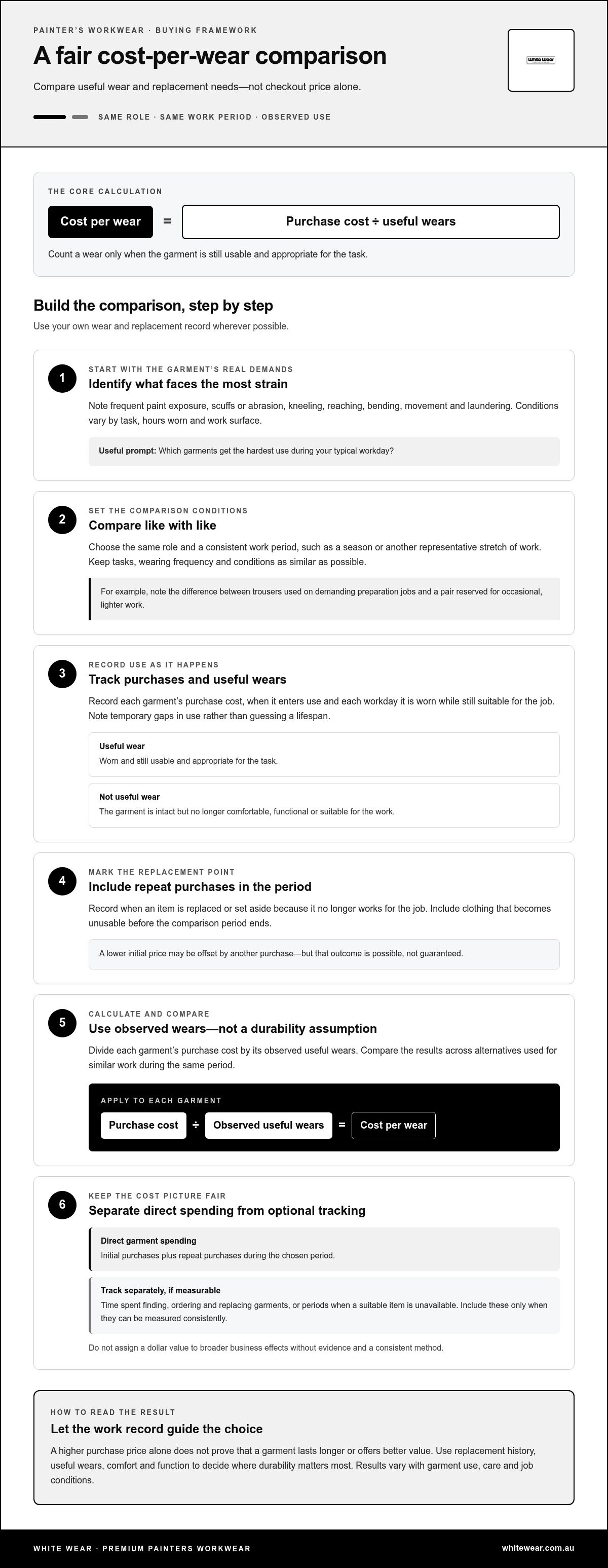
A practical workwear buying framework for painters and painting businesses
A repeatable process makes workwear decisions less dependent on a low checkout price or an untested durability claim. Use four steps: assess the work, compare available evidence, estimate useful wears from real experience, then review what actually needed replacing. This grounds the decision in your jobs rather than a promise about a garment’s lifespan.
- Assess use: Note which garments are worn most often and the tasks they face, such as frequent kneeling, overhead work or regular paint exposure.
- Compare evidence: Review relevant product information and assess whether each garment suits the role. Don’t treat price tier alone as proof of durability.
- Estimate wears: Use observed wearing frequency and a representative work period to compare useful use across alternatives.
- Review replacements: Record what was replaced, when and why, then use those patterns to inform the next purchase.
Build a comparison from real workwear use
Keep a simple record for each garment: type, purchase date, wearing frequency and reason for replacement or removal from work rotation. For a crew, compare like-for-like garments worn in similar roles and tasks. A painter doing frequent preparation work may put clothing under different demands from a crew member focused on other duties, so don’t assume everyone needs the same option.
Review the record after a representative period of work, then repeat the assessment as jobs or routines change. This can help distinguish a recurring garment issue from a one-off event. Include laundering and care practices in your notes, since inconsistent care can make comparisons harder to interpret.
Turn the comparison into a purchasing decision
Give priority to garments used frequently or repeatedly replaced for similar reasons. If your records show a core item is often taken out of rotation, assess alternatives against its actual tasks, fit and performance. For clothing worn only occasionally, a lower-cost option may be a rational choice if it meets the need and expected use doesn’t justify paying more for durability.
Fit matters in practice: workwear that restricts movement or feels unsuitable may not deliver useful wear even if it remains intact. Consistent care and a comfortable, appropriate fit can support ongoing use, but neither guarantees a set service life. Base your conclusion on what you observe.
This evidence-led approach can clarify the financial benefits of long-lasting workwear vs cheap alternatives for an individual painter or a team. Review your notes before reordering, and adjust the choice as work patterns shift. Explore painters workwear from White Wear as you compare functional clothing designed for professional painting work.
Choose painters workwear for lasting value with White Wear
A sound workwear decision isn’t made at checkout alone. Compare how often a garment is worn, whether it stays useful for its task and how frequently it needs replacing. The financial benefits of long-lasting workwear vs cheap alternatives depend on those real-world details, not on price tier or a durability claim in isolation. The same approach works for a painter choosing everyday clothing and a business reviewing a crew’s purchases.
Why specialist painters workwear belongs in the comparison
Painting work brings its own mix of movement, paint exposure and repeated tasks. A specialist focus on painters workwear keeps those conditions central to the clothing comparison, rather than treating painting as interchangeable with every other trade. White Wear is an Australian specialist selling functional workwear and clothing for professional painters, with nationwide shipping.
That focus is a useful starting point, not a promise that every garment will suit every task or last for a set period. Consider the job each item needs to do, then weigh its fit and practical performance against the replacement patterns you’ve recorded. For a crew, compare needs by role rather than assuming one choice will work equally well for everyone.
Take the next step toward a better-informed purchase
Before choosing, revisit your workwear notes: which garments are used most often, what leads to replacement, and which items see lighter or occasional use? Compare alternatives using the same cost-per-wear method and realistic conditions. A higher initial cost may be worth weighing for frequently used garments, while a lower-cost option can be reasonable for limited use if it meets the task.
- Match the garment to the work: consider task, frequency and movement.
- Use evidence from wear: note useful wears, care and replacement reasons.
- Keep the decision specific: review fit and performance for each person and role.
For painting professionals, workwear is part of the working day, not an abstract line in a purchasing spreadsheet. Choosing carefully can help you make a more informed decision without assuming a guaranteed lifespan or saving. Whether you’re refreshing your own clothing or planning a crew purchase, let the evidence guide what belongs in your workwear rotation.
Explore painters workwear from White Wear and compare the options with your tasks, wear records and practical needs in mind.
Make your next workwear choice with confidence
Your next purchase is an opportunity to turn what you’ve learned on the job into a clearer decision. Keep a simple record of which garments stay useful, which need replacing and how each performs through your working routine. Over time, those observations can help you refine what belongs in your workwear rotation, whether you’re buying for yourself or a crew.
The financial benefits of long-lasting workwear vs cheap alternatives aren’t automatic. They depend on matching each garment to its use and judging value by useful wear, fit and replacement needs. A considered choice doesn’t have to mean selecting the most expensive option. It means spending with a better understanding of what your work demands.
White Wear is an Australian specialist in professional painters workwear and clothing, with nationwide shipping across Australia. Explore the range with your tasks and priorities in mind, then make your next purchase with greater confidence.
Explore painters workwear from White Wear
Choose what works for your day, and build a workwear rotation that feels considered from the first shift onward.
Frequently Asked Questions
Is long-lasting workwear always cheaper than cheap alternatives?
No. A durable garment isn’t automatically better value if it doesn’t suit the task, fit comfortably or get worn often. The financial benefits of long-lasting workwear vs cheap alternatives depend on actual use and replacement needs. For example, a backup garment worn only occasionally may not justify a higher initial spend. Judge each item against its role, useful wear and observed performance rather than assuming price predicts longevity.
How do you calculate the cost per wear of workwear?
Divide the garment’s purchase cost by the number of times it was usefully worn. Count a wear only when the item remained suitable for the task, not merely because it was put on. A simple clothing log can include the date worn and whether the garment was fit for work. Compare items over similar periods and roles so differences in task intensity don’t skew the result.
Can cheap workwear increase costs for a painting business?
It can, particularly if garments used heavily need frequent replacement. Each replacement means another purchase, and a business may also spend staff time selecting, ordering and distributing clothing. Record those indirect costs separately from garment spending rather than assuming them. If a low-cost item performs adequately for occasional work, however, it may remain a sensible purchase. The business’s own replacement records help show which situation applies.
What should painters compare besides the purchase price?
Consider whether the garment suits the job, allows comfortable movement and remains appropriate for work after regular use and care. Check product information for relevant construction or care details, and compare fit for the person wearing it. For crew purchases, account for different roles and preferences rather than treating the team as having identical needs. A garment that’s rarely worn because it feels unsuitable may offer little practical value.
Can workwear be tax-deductible in Australia?
Sometimes, but eligibility depends on the garment, how it’s used and the taxpayer’s circumstances. The Australian Taxation Office generally distinguishes qualifying protective clothing, occupation-specific clothing or required uniforms from ordinary clothes suitable for everyday wear. Rules for employees and business operators can differ, and laundry claims may have separate record-keeping requirements. Check current ATO guidance or seek advice from a registered tax professional before claiming a deduction.
Does washing workwear affect its useful life?
Washing can affect a garment’s condition, though the result depends on its care instructions, laundering frequency and the work it encounters. Follow the garment’s stated care guidance rather than using one routine for every item. In a workwear log, note recurring issues such as changes in fit, damage or loss of suitability after washing. This can help distinguish ordinary wear from problems linked to care practices.
How can a painting business track workwear replacement costs?
Use a spreadsheet or purchasing log with one entry per garment: item type, purchase date, wearer or role, frequency of use, and replacement date and reason. Keep invoices or receipts with the record, and separate actual garment spending from staff time or other indirect costs. Review entries at regular purchasing intervals. Patterns such as repeated replacements in one role can then inform the next order without assuming every worker needs the same clothing.


