


Can the right summer workwear keep a painter safe from heat stroke? It can help manage heat strain, but clothing alone cannot control the risks of a hot, physically demanding shift. Preventing heat stroke with appropriate summer workwear starts with choosing clothing suited to the task, then combining it with safer work habits throughout the day.
When the temperature climbs, restrictive or uncomfortable workwear can make it harder to concentrate and keep moving. Painters need clothing that suits the job, while also considering that some protective gear can add to heat strain. Workwear is one part of a heat-safety plan, not the whole solution.
This guide explains how to assess painters clothing for hot conditions, which workplace controls and daily habits can help manage heat exposure, and what to do if someone becomes unwell. It also covers the difference between heat stroke and earlier signs of heat illness, so you can respond promptly and protect yourself and your crew.
Key Takeaways
- Preventing heat stroke with appropriate summer workwear means choosing clothing that suits the task, movement, sun exposure and site conditions, not relying on clothing alone.
- Assess fit, coverage and ease of movement so workwear supports painting tasks without adding unnecessary discomfort.
- Include shade, water, rest breaks, workload timing and worker monitoring in the heat-safety plan.
- Check the Bureau of Meteorology forecast and workplace heat procedures before starting hot-weather work.
- Recognise when someone becomes unwell and follow emergency procedures promptly. Heat stroke requires urgent medical attention.
How summer workwear fits into heat-stroke prevention for painters
A demanding painting shift under the Australian sun can leave you hot, tired and uncomfortable. These signs deserve attention, but they don’t automatically mean heat stroke. The distinction matters: Heat stroke is a life-threatening medical emergency, not simply an extreme version of feeling overheated. Preventing heat stroke with appropriate summer workwear means treating clothing as one part of a broader plan that also considers shade, rest breaks, hydration and work planning.
Heat stroke and heat exhaustion are not interchangeable
Heat exhaustion can cause heavy sweating, weakness, headache, dizziness, nausea, thirst and muscle cramps. Confusion, seizures, collapse or loss of consciousness may indicate heat stroke. A person can still be sweating, so don’t wait for a particular skin sign before acting.
If you suspect heat stroke, call Triple Zero (000) immediately. While waiting for help, move the person to a cooler, shaded place, begin cooling them with cool water and fanning, and follow the emergency operator’s instructions. Stay with them, and don’t rely on rest and fluids instead of urgent medical care. For current Australian first-aid and workplace advice, check relevant health guidance and Safe Work Australia information. Requirements and guidance can vary between jurisdictions.
What workwear can, and cannot, do in hot conditions
Clothing affects how a shift feels. Coverage may help limit direct sun exposure, while fit and ease of movement matter when reaching, climbing or carrying equipment. Fabric properties can also affect airflow and how heat and moisture build up next to the skin. The right choice depends on the task, the exposure and any required protective equipment. Don’t assume a garment is cooling or sun-protective unless its performance is verified.
Workwear cannot guarantee protection against heat stroke. Some garments or layers may add to heat strain, so consider the full clothing and PPE combination as part of the site’s heat-risk assessment. Suitable painters clothing supports the job, but it doesn’t replace other controls.
Combine clothing choices with workplace measures. Where practicable, plan strenuous tasks for cooler parts of the day, provide access to shade and cool drinking water, schedule appropriate breaks, and monitor conditions and workers for signs of heat illness. If heat makes a task unsafe, work planning and site controls matter more than trying to solve the problem with a different outfit.
That’s the practical meaning of preventing heat stroke with appropriate summer workwear: choose clothing that suits the work, then plan the day to reduce heat exposure. Check the latest Safe Work Australia guidance and applicable state or territory workplace advice, and follow your site’s procedures.
How clothing choices affect heat strain during a painting shift
A painter’s workwear needs to suit the physical task, protect against relevant hazards and remain comfortable enough to wear through the shift. The right choice can vary between jobs. Painting a shaded interior with light activity is different from working outdoors in direct sun or repeatedly climbing and reaching.
What to look for in summer painters clothing
Start with fit and movement. A garment that feels light and fits comfortably may be easier to work in during hot conditions. Clothing that feels tight, heavy or restrictive can make bending, reaching and carrying more difficult. Consider whether the design allows comfortable movement and whether you can manage layers without compromising task protection.
Think carefully about coverage as well. Sleeves and other covered areas may reduce direct skin exposure to the sun, but the amount of coverage also needs to suit the work, paint and equipment, and any protective clothing the task requires. Follow garment-care instructions, as incorrect washing or wear may affect performance. Check regularly for damage, loose seams or other deterioration that could affect safe, comfortable work.
Why the job and the worksite change the clothing decision
Indoor work isn’t automatically cool, and outdoor work doesn’t always involve constant direct sun. A poorly ventilated room, a shaded exterior wall and an exposed work area can create very different conditions. Physical effort matters too: detailed, stationary work places different demands on clothing than moving equipment, climbing or painting overhead.
Paints, tools and task-specific hazards also shape what you need to wear. Don’t choose clothing for comfort alone if it leaves you less protected for the job. Assess the worksite, expected effort and protective requirements, then balance coverage and task protection with fit and comfort. There’s no universal summer outfit for every painting shift.
Safe Work Australia’s heat-risk guidance can help frame clothing decisions alongside workplace controls. Consider the full work setup, including required PPE, rather than assessing a garment in isolation. Preventing heat stroke with appropriate summer workwear depends on choices that suit both the painter and the conditions, not on assuming a particular outfit will prevent heat illness.
Clothing supports heat management, but it doesn’t replace workplace controls. Shade, breaks, hydration, monitoring and thoughtful work planning remain essential. Choose painters workwear with the practical demands of the job in mind, then pair it with controls suited to the conditions on site.
Summer workwear versus worksite controls: what reduces risk?
Changing into lighter or more comfortable painters clothing may make a hot shift more manageable, but it isn’t a complete heat-safety plan. Workwear affects the person wearing it; shade, work scheduling and other site measures help manage exposure more broadly. Preventing heat stroke with appropriate summer workwear means considering both and checking that the combined approach suits the job and conditions.
Clothing choices and workplace controls serve different roles
Think of clothing as one layer of the plan, not a substitute for managing workplace heat. A garment may support comfort, coverage and movement, while site controls address exposure, effort and opportunities to recover. The right combination depends on factors such as direct sun, ventilation, the physical demands of the task and required protective equipment.
| Measure | Role in managing heat risk | What to assess |
|---|---|---|
| Clothing and PPE | Supports task protection, coverage and comfortable movement. | Fit, layers, task hazards and whether protective equipment adds heat burden. |
| Shade and cooler work areas | Can reduce exposure to direct sun or hot work environments. | Whether workers can access shade or a cooler area when needed. |
| Breaks and workload timing | Creates opportunities to recover and may reduce strenuous work during hotter periods. | Task intensity, changing conditions and whether the planned schedule is still suitable. |
| Hydration access | Makes drinking water available during the shift. | Whether cool drinking water is accessible without disrupting safe work. |
| Monitoring and response | Helps identify worsening conditions or signs that a worker is becoming unwell. | How workers check in, who responds and what emergency procedures apply. |
No single measure addresses every risk. A shaded location may still be hot, and a break plan may need to change as conditions or workload shift. Safe Work Australia guidance and state or territory WHS regulator advice can differ, so check the current guidance and workplace procedures that apply to your jurisdiction and site.
When a hot workday needs a stronger response
If conditions deteriorate or someone develops symptoms, don’t treat an outfit adjustment as the answer. Stop and follow workplace heat and emergency procedures. Seek prompt medical advice when a worker is unwell, and call Triple Zero (000) if heat stroke is suspected. Continue monitoring the situation and follow current Australian health and safety advice. A safer shift depends on responding to the risk, not simply enduring it.
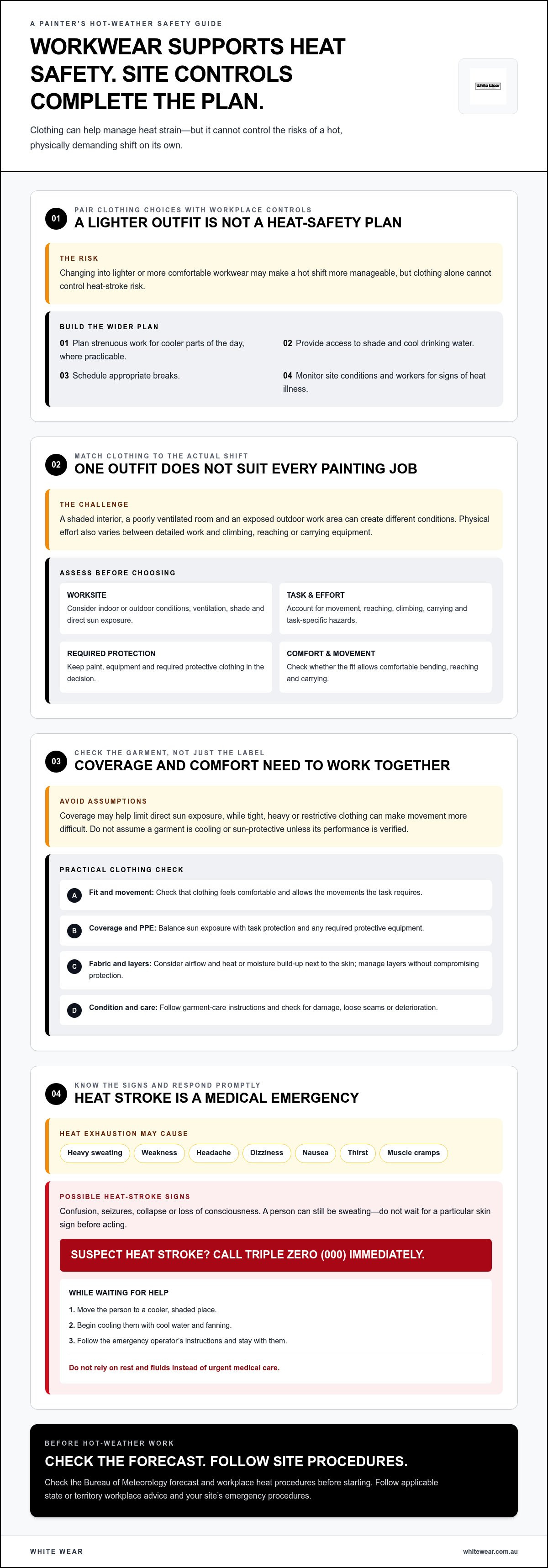
A practical Australian checklist for painter workwear on hot days
A safer hot-weather shift starts before the first brushstroke and depends on more than what you wear. Use this checklist to prepare clothing and site controls, stay alert as conditions change, and respond if someone becomes unwell. For broader wardrobe considerations, see The Professional Painter’s Guide to Elevated Workwear in 2026.
Before the shift: prepare clothing and the worksite
- Check the forecast. Review the Bureau of Meteorology’s official forecasts and consider how heat, sun and changing conditions could affect the planned work.
- Review site procedures. Know the workplace heat-risk plan, who to notify if conditions worsen, and which emergency steps apply. Check current guidance from Safe Work Australia and the relevant state or territory WHS regulator.
- Choose practical clothing. Select painters clothing suited to the task, required protection, expected sun exposure and freedom of movement. Check that garments are in good condition and follow their care instructions.
- Set up the basics. Know where shade and accessible drinking water are, and agree how breaks and workload adjustments will be managed. Make sure workers know how to raise a concern.
During the shift: monitor conditions and respond early
- Keep checking in. Pay attention to how you and your coworkers are feeling, especially during strenuous tasks or as conditions change. A coworker who notices unusual fatigue, dizziness or confusion can help prompt an early response.
- Follow the plan. Take scheduled breaks, drink water as provided for in workplace procedures, and adjust the timing or intensity of work when required by the site’s heat controls.
- Don’t push through symptoms. Stop work and tell a supervisor or coworker if someone becomes unwell. Follow workplace procedures and seek medical help when needed.
If heat stroke is suspected
Call Triple Zero (000) immediately. Move the person to a cooler, shaded place, begin cooling them with cool water and fanning, and follow the emergency operator’s instructions. Don’t leave them alone or try to solve the situation by changing their clothing.
Preventing heat stroke with appropriate summer workwear means treating clothing as one part of a planned routine, alongside forecasts, shade, breaks, water and active monitoring. For painters clothing suited to the demands of the job, explore White Wear’s painters workwear.
Choosing painters workwear that supports a safer summer routine
There’s no single summer outfit that suits every painter or every site. A considered choice balances the task, fit, movement, coverage and worksite conditions. Use those factors to choose clothing that works through the shift while still meeting the protection the job requires. For more on selecting trousers for painting work, read The Professional Guide to Choosing the Best Painters Pants in 2026.
Match clothing to the task, not a universal summer formula
Start with the work itself. A painter moving equipment or reaching overhead needs a fit that allows movement; a task involving paint or other hazards may require particular coverage or protective equipment. Then consider the conditions. Indoor ventilation, direct sun, shade and physical effort can all affect how clothing feels during the day.
Check that garments sit comfortably, allow you to bend and reach, and remain suitable as you work. Coverage matters too, but reducing layers or exposing more skin for comfort shouldn’t compromise required protection. No clothing choice guarantees protection from heat stroke. Aim for a practical balance rather than a universal summer uniform.
Build a repeatable heat-safety routine
Make clothing part of preparation, not the whole plan. Before each shift, consider the forecast, site conditions and planned workload. Confirm that workers know where to find shade and drinking water, how breaks will be managed, who to alert if someone feels unwell, and which emergency procedures to follow. Check in during the day and adjust the plan if conditions or the work change.
Guidance can vary across Australian jurisdictions and workplaces. Review current Safe Work Australia information, relevant state or territory WHS guidance, and workplace procedures regularly. Make sure everyone knows that suspected heat stroke needs emergency assistance, not an outfit adjustment or a wait-and-see approach.
In practice, preventing heat stroke with appropriate summer workwear means choosing clothing for the job and pairing it with workplace controls, symptom awareness and a clear response plan. Apparel complements shade, breaks, hydration and monitoring; it doesn’t replace them.
For durable, functional options designed around painting work, explore White Wear’s professional painters clothing.
Make every summer shift a safer one
Suitable painters clothing can support comfort, movement and task protection, but it can’t prevent heat stroke on its own. Preventing heat stroke with appropriate summer workwear means pairing practical clothing with a broader routine: check conditions, plan work and breaks, provide access to shade and drinking water, and watch for signs of heat illness.
Keep emergency procedures clear. If heat stroke is suspected, call Triple Zero (000) immediately and follow the operator’s instructions. A prepared crew can respond sooner instead of relying on clothing changes when urgent help is needed.
White Wear is an Australian specialist in durable, functional painters workwear and clothing, with nationwide shipping across Australia. Explore professional painters workwear and choose apparel with the demands of your workday in mind. Then make the rest of your heat-safety plan just as intentional, from the first task to the end of the shift.
Frequently Asked Questions
Can summer workwear prevent heat stroke?
No. Appropriate summer workwear can support comfort, movement and task protection, but it can’t prevent heat stroke on its own or guarantee safety. Preventing heat stroke with appropriate summer workwear means pairing clothing suited to the job with workplace measures such as shade, planned breaks, drinking water, workload planning and monitoring. If a worker becomes unwell, follow site procedures promptly. Suspected heat stroke needs emergency assistance, not just a change of clothes.
What should painters wear when working in hot weather?
Choose painters clothing that fits comfortably, allows you to bend and reach, and provides coverage appropriate to sun exposure and task hazards. The right choice depends on the worksite: painting outdoors in direct sun differs from working indoors with limited ventilation or handling equipment. Don’t sacrifice required protection for a lighter outfit. Check garments for wear, follow care instructions, and consider how additional protective equipment affects comfort during the shift.
Is lightweight clothing enough to protect workers from heat?
No. Clothing that feels lighter may be more comfortable for some tasks, but it doesn’t control heat in the work environment or ensure a worker won’t develop heat illness. Consider fit, coverage, movement and task protection alongside site conditions and physical effort. Heat management also needs practical workplace measures, such as shade, accessible drinking water, breaks, workload adjustments and monitoring. Follow workplace procedures and current Australian safety guidance for the job.
What is the difference between heat exhaustion and heat stroke?
Heat exhaustion can involve heavy sweating, weakness, headache, dizziness, nausea, thirst or muscle cramps. Heat stroke is a medical emergency and may involve confusion, seizures, collapse or loss of consciousness. A person with heat stroke may still be sweating, so don’t use dry skin as the only warning sign. If symptoms are severe, worsening or suggest heat stroke, call Triple Zero (000) and follow the emergency operator’s instructions.
What should I do if a coworker shows signs of heat stroke?
Call Triple Zero (000) immediately if you suspect heat stroke. Move your coworker to a cooler, shaded place, start cooling them with cool water and fanning, and follow the emergency operator’s instructions. Stay with them and monitor their condition while help is on the way. Don’t delay to change their clothing or rely on rest and fluids instead of urgent medical care. Follow your workplace emergency procedures as well.
How can painters reduce heat risk during an outdoor shift?
Before work, check the Bureau of Meteorology forecast and review workplace heat procedures. Plan tasks around the conditions and physical effort, and make sure workers can access shade, drinking water and planned breaks. Check in with coworkers during the shift and respond if someone feels unwell or conditions worsen. Workwear should suit the task and required protection, but clothing is only one part of a broader heat-risk plan.
Does UPF clothing prevent heat stroke?
No. UPF-rated clothing is designed to reduce ultraviolet radiation reaching covered skin; that is different from preventing heat stroke. A UPF rating doesn’t mean a garment will keep the wearer cool or remove the risk of heat illness. Follow sun-protection and workplace procedures, and consider clothing coverage alongside the demands of the task. Manage heat exposure with suitable work planning, shade, breaks, drinking water and monitoring as well.


