


If you’re searching for “how to get paint out of painters clothes,” the first rule is the same for clothing and upholstery: act gently, and match the method to the fabric. Acrylic paint is generally easier to lift while wet, but a couch needs more caution than a washable work shirt. Scrubbing, excess moisture or the wrong cleaner can spread the stain or damage upholstery.
Before treating a couch, check whether the paint is wet or dry and read the furniture’s care guidance. For painters clothes, check the garment care label first, lift off excess paint without rubbing, and use only a cleaning method the label allows. This guide explains how to approach a couch stain carefully, how to avoid common mistakes, and how suitable painters workwear can help keep paint off everyday clothing and furniture.
Key Takeaways
- Identify whether the acrylic paint is wet or dry before choosing how to treat it, since dried paint is harder to lift.
- Use the couch’s care-label guidance to decide whether water-based cleaning is suitable for the upholstery.
- Remove excess paint carefully, then test any cleaning method on a hidden spot before treating the stain.
- For painters clothes, check the garment care label and avoid rubbing paint deeper into the fabric.
- After treatment, follow the care guidance for removing residue, let the fabric dry naturally, and check for changes in colour or texture.
Before removing acrylic paint from a fabric couch, identify the stain and fabric
A measured first response matters more than aggressive scrubbing. Acrylic paint is made with pigment and an acrylic polymer binder. While fresh, it’s generally water-based; as it dries, the binder forms a film that grips the fibres and becomes harder to lift. You can read more about what acrylic paint is made of before deciding how cautiously to proceed.
Start by checking the paint’s condition, the couch’s fabric-care guidance and how a cleaner behaves in a hidden spot. The stain’s size and location matter, too. A small spot on washable, colourfast fabric calls for a different response from a large spill on delicate upholstery or a seam where liquid could soak in. Don’t assume a method for painters clothes is suitable for a couch. Garments and upholstery can have different fibres, finishes and care instructions.
Is the acrylic paint wet, tacky, or dry?
Look closely without pressing the paint. A wet spill may look glossy or move at the surface; tacky paint feels partly set, while dry paint appears firm and may form a skin. If there’s a raised blob, use a blunt edge, such as a spoon, to lift excess gently. Work from the outside towards the centre, and avoid scraping or rubbing the fibres.
Fresh and dried stains need different handling, and removal isn’t guaranteed. Wet paint may be easier to lift, but adding liquid before checking the upholstery guidance could spread colour or leave a ring. Dried paint may be bonded to the fibres, so forcing it off can damage the fabric. For painters clothes, follow the same basic principle: check the garment’s care label before choosing a cleaning method.
What does the couch care label say?
Look for a care tag under the cushions or on the furniture frame. Upholstery codes offer guidance: W generally allows water-based cleaning, S indicates solvent-based cleaning, WS permits either approach, and X usually means vacuuming only or professional cleaning. Codes and manufacturer instructions take priority, so follow the specific guidance for your couch.
Never assume every fabric tolerates water or household cleaners. Even when a code appears to allow a product type, first test it on a concealed area using the label’s directions. Apply a small amount, blot gently with a clean white cloth, and check for colour transfer, texture changes or a watermark after it dries. If the fabric reacts, or the care instructions rule out home cleaning, stop rather than risk setting the stain or harming the upholstery.
For clothing, check the care label before treating the stain, too. A method suitable for a washable garment may not be suitable for a delicate fabric or a garment with special care instructions. Lift off excess paint gently, and don’t put a stained item through a heat cycle before checking whether the mark has been removed.
How acrylic paint behaves on upholstery, and why gentle treatment matters
Acrylic paint is water-based while wet, so its liquid components may respond to water. As it dries, the acrylic binder forms a film that holds pigment against the fabric fibres. That change makes dried paint harder to lift and means a method that might suit a fresh spill may be ineffective or risky once the paint has set.
Fresh acrylic paint may be easier to blot away, while dried paint often needs cautious treatment guided by the couch’s care instructions. Neither outcome is guaranteed. Upholstery can vary in weave, dye and finish, so a cleaning approach that works on one couch may leave another with a pale patch, colour bleed or watermark.
Why fresh paint and dried paint need different approaches
For fresh paint on upholstery, use a clean, absorbent cloth to blot gently, lifting paint rather than pushing it into the pile. Avoid broad wiping motions: they can carry pigment outwards and enlarge the mark. Turn to a clean section of cloth as paint transfers.
Dried paint has a formed surface film, so forceful scraping or vigorous rubbing can pull or roughen fibres. For clothing, too, avoid rubbing a fresh stain deeper into the weave. Check the garment label and choose a method designed for that fabric rather than assuming that couch-cleaning advice will apply.
How couch fabric changes the cleaning decision
Fibre content affects how upholstery responds to moisture and cleaning products. Cotton may absorb liquid readily; polyester and microfiber can behave differently depending on their weave, finish and blend. These examples aren’t guarantees of how a particular fabric will react. The couch’s construction matters as much as the fibre name.
If the fabric composition is unclear, use the furniture manufacturer’s care guidance rather than guessing. Too much liquid can soak into the padding, while heat may dry paint more firmly or affect delicate fibres. Untested cleaners can alter colour or texture. Keep the response controlled: use only methods compatible with the care instructions, and stop if the fabric changes or the stain spreads.
The American Cleaning Institute’s stain removal guide offers general advice for clothing, including paint stains, but it isn’t a substitute for upholstery-specific care instructions. For future painting jobs, suitable painters workwear and clothing can help keep paint off everyday garments and furniture.
Choose an acrylic paint removal method that suits your couch
Let the couch’s care guidance lead the decision, then match your first action to whether the paint is wet or dry. Blotting can be a cautious first response on upholstery that permits moisture, but it isn’t suitable for every fabric. Use the table as a starting point, not a substitute for the manufacturer’s instructions or a hidden-area test.
| Paint condition | Care-label guidance | Cautious first action | Key risk |
|---|---|---|---|
| Wet | Allows water-based cleaning | Lift excess, then blot with a clean cloth and minimal moisture | Wiping can spread pigment; excess liquid may soak in |
| Wet | Solvent-only, vacuum-only, or unclear | Lift excess without adding liquid; pause before choosing a cleaner | Water or an unsuitable product may damage the fabric |
| Dry | Any code | Gently lift loose surface residue; spot-test any permitted cleaner | Scraping, rubbing, or an untested cleaner may harm fibres or colour |
What can you try on a fresh acrylic paint spill?
If the care guidance permits moisture, lift any raised paint first, then blot with a clean, absorbent cloth. Start at the outer edge and work towards the centre to help limit spreading. Use only a small amount of water or mild detergent if the label allows it and your spot test shows no adverse change. Reassess after each gentle pass; don’t saturate the upholstery.
What should you do if the acrylic paint has dried?
Carefully lift loose surface flakes with a blunt edge, without cutting, pulling or scraping the upholstery fibres. Before trying a cleaner, confirm it’s compatible with the care guidance and test it on a concealed area. A stain that’s old or absorbed into the fabric may not respond to home treatment, so stop if the colour or texture changes.
Mild detergent is only an option if the upholstery instructions permit it. Alcohol-based products and other solvents need extra caution because they can affect dyes, finishes or fibres. Use them only when fabric-specific guidance supports the choice, and never skip the spot test.
Don’t use bleach, heat or homemade cleaner mixtures as blanket fixes. These can discolour, set or otherwise damage upholstery, and combining products may create additional risks. Choose one compatible approach at a time, apply it sparingly, and stop if the stain spreads or the fabric reacts.
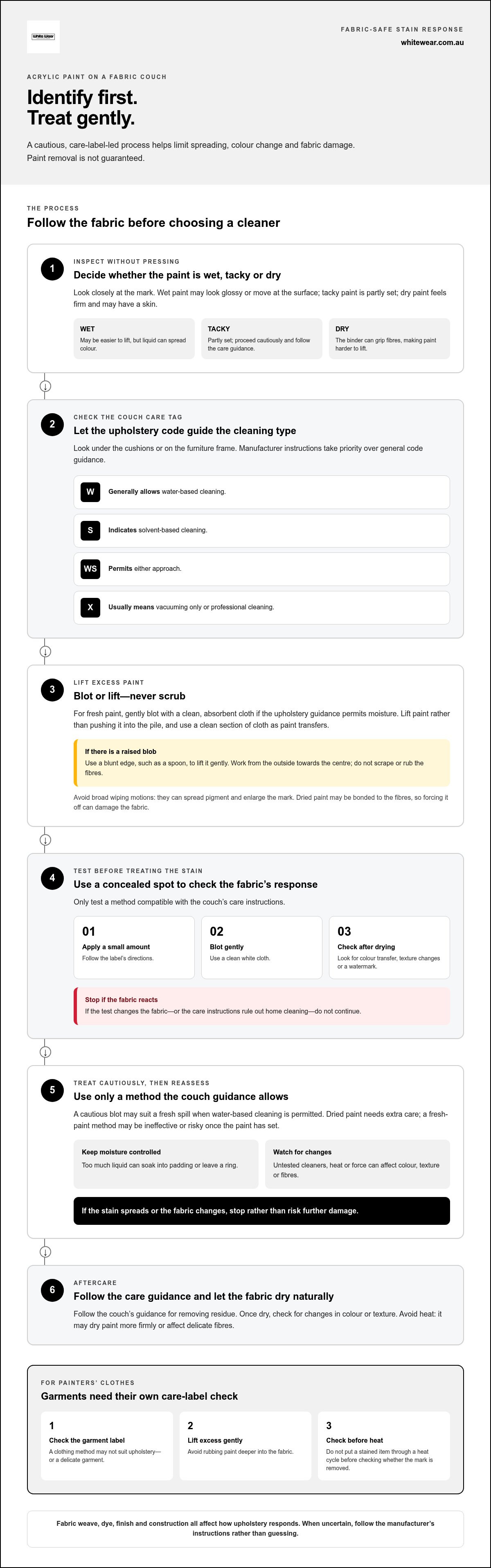
Follow these careful steps to treat acrylic paint on a fabric couch
Keep the process controlled and let the couch’s care instructions take priority over general cleaning advice. Work gently, use as little product as possible, and stop if the fabric reacts.
- Step 1: Check the care label. Confirm which cleaning methods are suitable before using water, detergent or another cleaner. If the label says not to clean at home, don’t proceed with a DIY treatment.
- Step 2: Protect the area and remove excess. Move nearby items and place a clean cloth beside the stain to catch accidental drips. For wet paint, lift any raised excess with a blunt edge without pressing down. For dry paint, gently lift loose surface residue only; stop if fibres snag.
- Step 3: Test the cleaner. Test any cleaner on a hidden area before treating the stain. Follow the couch’s care guidance and the cleaner’s instructions, then check the test spot for colour or texture changes before continuing.
- Step 4: Treat gently. If the label permits moisture and the test spot looks unchanged, lightly dampen a clean cloth with the approved solution. Blot from the stain’s outer edge towards the centre. Don’t pour liquid directly onto the upholstery or rub back and forth.
- Step 5: Reassess. Check the cloth and couch after each pass. Switch to a clean section of cloth as soon as paint transfers, so you don’t redeposit pigment. Stop if colour lifts from the couch, the texture changes or the stain spreads.
For fresh paint
Blot carefully after lifting excess, and use minimal moisture only if the care instructions allow it. Work from the outside in, keeping each movement small. Pause to reassess rather than repeatedly treating or saturating the fabric. For clothing, follow the garment care label instead of applying upholstery instructions to a washable item.
For dried paint
After lifting loose residue, use only a fabric-appropriate treatment allowed by the care guidance and tested out of sight. Don’t scrape at paint that’s bonded to the fibres. If the stain remains, or the couch shows any adverse change, stop rather than escalating to a stronger product. Home treatment may not remove older or deeply absorbed paint.
For future painting jobs, help protect everyday clothes and furniture with durable painters workwear designed for the demands of professional painting.
Aftercare, common mistakes, and preventing paint stains next time
Once you’ve treated the mark, follow the couch’s care guidance to remove any cleaning residue. If it permits water, use a clean cloth lightly dampened with water and blot gently. Don’t rinse or add moisture if the label advises against it. Let the fabric dry naturally, away from direct heat, then check for colour changes, texture distortion or a ring around the treated area.
Take a moment to inspect the result before doing anything else. Repeating a treatment too soon can drive moisture deeper into the upholstery or stress the fibres. A remaining mark doesn’t always mean you should use a stronger cleaner.
When should you stop and seek upholstery-specific guidance?
Stop home treatment if colour transfers to your cloth, the fabric changes texture, the stain spreads, or cleaning residue remains despite following the care instructions. These are signs that further attempts could cause more damage. Don’t escalate to a stronger solvent or mix products unless the couch’s manufacturer provides fabric-specific guidance. Some paint stains may persist even after specialist attention, so avoid assuming any treatment can guarantee complete removal.
Scrubbing, soaking the fabric, applying heat and combining unverified cleaning products are common ways to make a spill harder to manage. If you’re unsure whether a treatment is suitable, pause and seek upholstery-specific advice instead of experimenting. Restraint can protect the couch from added damage.
How can painters reduce paint transfer at home?
Prevention starts before the first brushstroke. Cover nearby furniture, keep paint containers away from upholstered surfaces, and change out of painting clothes before sitting on household furniture. Small habits make it less likely that a stray drip or paint-marked sleeve will become a second cleanup job.
Specialist painters workwear is a practical part of preparation, not a stain-removal solution. For ideas on choosing clothing suited to painting work, explore the professional painter’s workwear guide and the painters pants guide. If paint gets on workwear, check the garment care label, lift off excess gently and avoid heat until you’ve checked the stain.
Protect your couch with a careful first response
Acrylic paint is easier to approach when you know whether it’s wet or dry and what your couch’s care instructions allow. Lift excess gently, spot-test any suitable cleaner in a hidden area, and use small, controlled blotting motions rather than scrubbing or soaking. If the fabric changes, the stain spreads, or you’re unsure which treatment is safe, stop before trying a stronger product.
The same care applies when working out how to get paint out of painters clothes: match the approach to the material instead of assuming one method suits every fabric. For painting jobs, suitable workwear can also help reduce paint transfer onto everyday clothing and furniture.
White Wear offers durable, functional painters workwear and specialised clothing designed for professional painters, with nationwide shipping across Australia. Explore White Wear’s painters workwear and prepare for your next job with confidence.
Frequently Asked Questions
Can you get dried acrylic paint out of a fabric couch?
Sometimes, but dried acrylic paint can be difficult to remove because its binder forms a film as it sets. Check the couch’s care label first, then gently lift loose surface residue without scraping the fibres. Use a cleaner only if the care guidance allows it and a hidden-area test shows no damage. Older or deeply absorbed paint may remain, so stop if the fabric changes or the stain spreads.
How do you remove wet acrylic paint from upholstery?
First, lift any raised excess with a blunt edge without pressing it into the fabric. If the couch’s care instructions permit moisture, blot with a clean cloth, working from the stain’s outer edge towards the centre. Use minimal liquid and switch to a clean part of the cloth as paint transfers. Avoid rubbing or saturating the upholstery, and stop if colour transfers from the couch or the stain grows.
Will vinegar remove acrylic paint from a fabric couch?
Vinegar isn’t a reliable blanket solution for acrylic paint on upholstery. It may not loosen dried paint, and its acidity could affect some dyes or fabric finishes. Don’t apply it just because it’s a common household cleaner. Follow the couch manufacturer’s care instructions, and test any permitted treatment on a hidden area first. If the label doesn’t support home cleaning, avoid experimenting with vinegar or other mixtures.
Can rubbing alcohol damage couch fabric?
Yes. Rubbing alcohol may affect some upholstery dyes, finishes or fibres, so it isn’t safe to use on every couch. Only consider it if the couch’s care guidance supports solvent-based cleaning, and test it on a concealed area before treating the stain. Check for colour transfer or texture changes. If the fabric reacts, stop and don’t apply alcohol to the visible stain.
Should you use hot water on acrylic paint stains?
No, don’t use hot water as a blanket treatment. Heat may affect upholstery fibres or finishes, and hot water isn’t a substitute for checking the couch’s care instructions. If the label permits water-based cleaning, use only the amount and temperature allowed by its guidance, applied sparingly with a clean cloth. Avoid steam, hairdryers and other direct heat while treating or drying the fabric.
What does the W or S code on a couch care label mean?
A W code generally indicates that water-based cleaning may be suitable, while an S code generally points to solvent-based cleaning. These symbols are guidance, not permission to use any cleaner. Follow the furniture manufacturer’s instructions and spot-test a compatible product in a hidden area first. If the label is missing or unclear, don’t guess about the fabric’s tolerance for water or solvents.
When should you stop trying to remove paint from a couch yourself?
Stop if colour transfers from the upholstery, the fabric distorts, the stain spreads, or residue remains after you’ve followed the care instructions. Don’t respond by scrubbing harder, soaking the area or reaching for a stronger untested product. Clothing stain advice may not suit upholstery, so seek upholstery-specific guidance when home treatment risks further damage.


