


The toughest test of work pants isn’t the product page. It’s a full day of reaching, bending, kneeling and moving between tasks. A search for painters work pants australia brings up plenty of options, but a long feature list won’t tell you which pair suits your working day.
Generic work pants can miss the mark for painting. You need practical function, comfortable movement and a fit that works while you’re active, especially when shopping online. The right choice depends on how you work, not just the label or pocket count.
This guide explains how to assess painters work pants for professional work across Australia, compare specialist painters pants with general workwear and check fit and sizing before you buy. White Wear specialises in painters workwear designed in Australia with painters, bringing a trade-focused perspective to the choice.
Key Takeaways
- Choose painters work pants australia based on the tasks and movement your working day demands, not the label alone.
- Assess fit, construction and storage against the tools you carry and the way you work. No single feature suits every painter.
- Compare specialist painters pants with general work pants using practical criteria, including task suitability and intended use.
- Use a buying checklist to clarify your needs, compare product details and make more confident sizing decisions online.
- White Wear specialises in painters workwear designed in Australia with painters and ships nationwide.
Why painters work pants matter on Australian jobs
A painting workday rarely stays in one position. You might prepare a surface, reach overhead to cut in, kneel near a skirting board, then move tools and materials before starting a finishing task. Pants that seem fine while standing still can feel restrictive or inconvenient once you’re moving through the day.
Painters work pants are chosen around the practical demands of painting: freedom to move, comfort over hours of wear, useful storage and construction suited to regular work. The label alone doesn’t tell you whether a pair will suit your routine. Weigh broad claims such as “heavy duty” or “workwear” against the tasks you actually do. For broader context on the history and types of workwear, consider how work clothing is designed around the needs of different occupations.
This guide focuses on choosing pants, rather than building a complete painting wardrobe or covering every type of workwear. The practical question is: what should your trousers help you do comfortably throughout the working day?
What makes work pants suitable for painting?
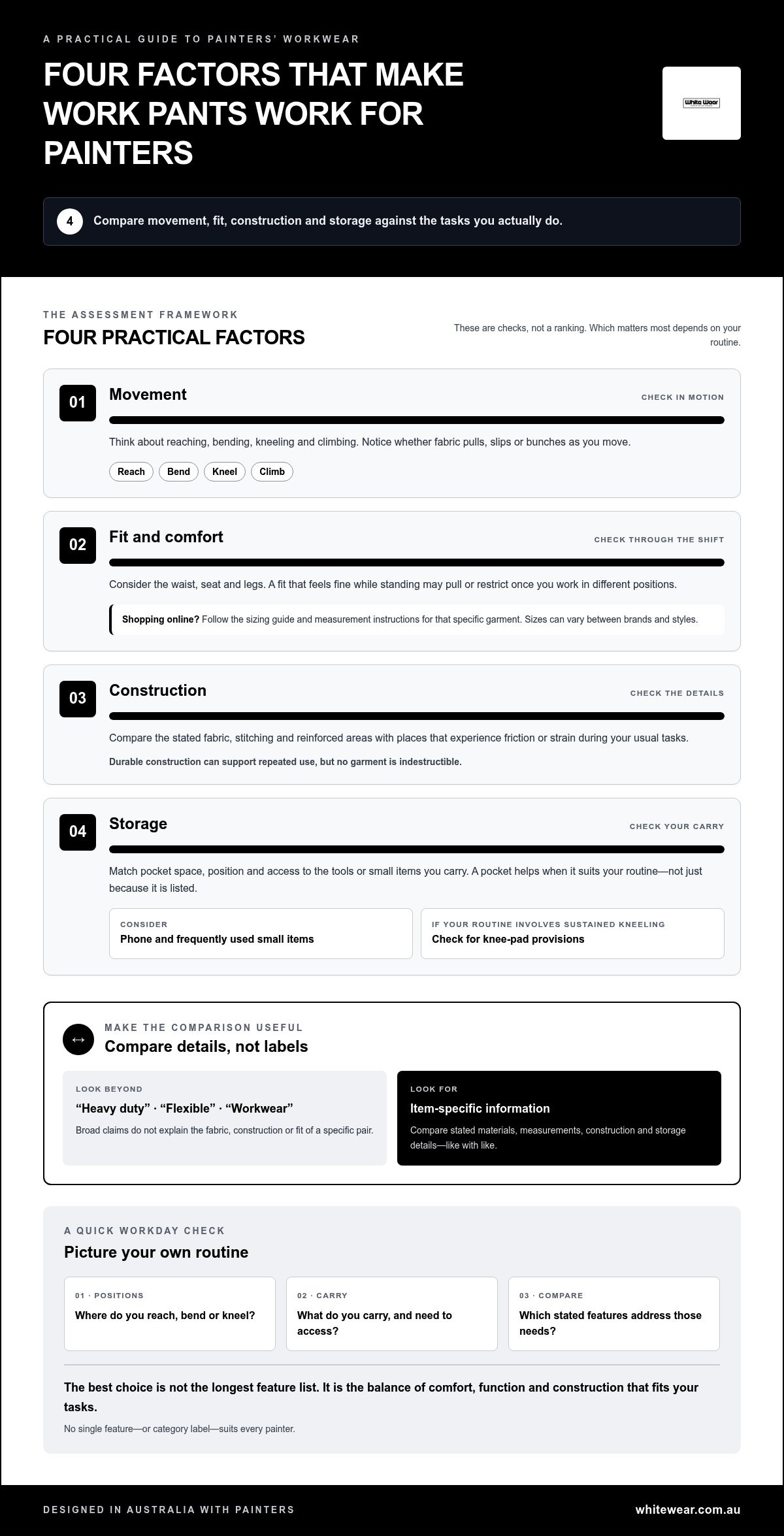
Start with movement. Reaching, bending, kneeling and climbing place different demands on fit. Consider whether the waist, seat and legs let you move without pulling, slipping or bunching. Then assess storage against the tools you carry. A pocket is useful when its position and access suit your routine, not simply because a product description lists it.
Construction matters, too. Look for details about materials, seams and areas that may experience regular wear, then compare them with your tasks. Durable construction can support repeated use, but no garment is indestructible. Choose a balance of comfort, function and expected wear rather than relying on a bold label.
Why the workday matters more than the label
Your priorities can shift between jobs and even within one day. Indoor preparation may involve frequent bending and kneeling; outdoor work may mean moving between areas; finishing tasks may call for easy access to tools you use repeatedly. These are examples, not rules. Let your own routine determine which features matter most.
Painters work pants are defined by how well they suit the tasks, not by appearance alone. Think through a typical workday: where you move, which positions you hold, what you carry and when you need quick access. Compare those needs with the garment’s stated features. This helps separate practical details from claims that may not make a difference to your day.
Which features matter in painters work pants?
A feature list is useful when it helps you picture the garment in your routine. Compare pants across four areas: movement, fit, construction and storage. Ask what each detail would do for your work. Extra pockets, stretch fabric or a reinforced area may help in one role and be unnecessary in another. The aim is not to collect features, but to find a pair that supports the way you work.
When comparing painters work pants australia options online, separate promotional language from item-specific information. Words such as “flexible” or “hard-wearing” describe a benefit, but they don’t explain fabric composition, construction or fit. Look for relevant details on the product page and compare like with like. Don’t assume a feature from a general category description if it isn’t stated for the item.
Movement, fit, and comfort through a full shift
Consider the positions you return to throughout a shift. Bending, reaching and kneeling can reveal a restrictive cut, a waistband that shifts or fabric that pulls across the seat or thighs. If you can try on a pair, move through those positions instead of judging fit while standing still. When shopping online, use the sizing guide and measurement instructions for that specific garment. Sizes can vary between brands and styles.
Stretch materials or shaped construction may be worth comparing if your work calls for frequent movement, but their presence alone doesn’t guarantee comfort. Check how the product description explains the feature, then decide whether it addresses a need you have. Some people prefer a closer fit; others prioritise room to move. Comfort is personal, so use the product’s stated measurements as a better starting point than a fit label alone.
Construction and storage for painting tasks
Construction details help you assess how a pair is designed to handle regular wear. Product-specific information about stitching, fabric and reinforced areas gives you more to evaluate than a broad claim of durability. Think about where your pants experience friction or strain during your usual tasks, then see whether the listed details relate to those areas. Durable doesn’t mean indestructible; care and conditions of use still matter.
Storage should work with the tools you carry, not simply add bulk. Consider whether you need space for a phone or frequently used small items, and whether pocket placement will be practical while you move. Knee-related features, including provisions for knee pads, matter if your routine involves sustained kneeling, but they aren’t essential for every painter. Check the individual product details rather than assuming every pair has the same layout or construction.
The most useful pant features depend on your tasks and fit, not on how many boxes a product description ticks. Use that principle to narrow your shortlist, then explore White Wear painters workwear, a painter-focused Australian option.
Painters work pants vs general work pants: how to compare
A specialist label can signal that a garment is designed with painting tasks in mind, but it doesn’t automatically make it right for every painter. General work pants may already provide a comfortable fit, practical storage and suitable construction for your routine. Compare the details that affect your work rather than treating either category as an automatic winner.
Use the following framework to assess the product information. “Extra durable” is a broad claim; details about fabric, stitching or reinforced areas give you something more concrete to evaluate. Specifications matter when they help you decide how well a pair suits your tasks.
| Comparison point | Painter-focused pants | General work pants |
|---|---|---|
| Task suitability | May be designed around common painting tasks; check the item details. | Can suit painting if its design meets your needs. |
| Movement | Assess the stated cut and materials against your range of movement. | Compare fit and construction in the same way. |
| Storage | Consider whether pocket layout matches the tools you carry. | Existing pockets may be sufficient for your routine. |
| Construction | Review product-specific information about materials and construction. | Use the same criteria; don’t rely on category labels. |
| Intended use | Painting is the stated design focus, but suitability still depends on the task. | Broader work use may suit painters whose needs are already covered. |
This comparison is a starting point, not a scorecard. A feature is useful when the product description explains it and it relates to your work. For example, storage matters if you carry tools in your pants. A feature you won’t use shouldn’t outweigh a comfortable fit or clear construction information.
When painter-specific design may be useful
Painter-focused design is worth considering if your current pants leave a recurring need unmet, such as uncomfortable movement or storage that doesn’t suit what you carry. Repeated tasks can make those shortcomings more noticeable over time. Compare the product’s stated features with the specific need instead of assuming every specialist garment includes the same details.
When general work pants may be sufficient
If your current work pants let you move comfortably, carry what you need and handle your usual tasks, a specialist pair may not add practical value. Review what works well and where your existing gear falls short. Buying extra features by default can distract from the essentials: suitable fit, useful function and product details you can compare.
Decision summary: Consider painter-focused pants when their documented design features address a repeated need in your workday. If general work pants already meet those needs, compare them using the same criteria. That’s a more grounded way to approach painters work pants australia than choosing by label alone.
How to choose painters work pants for your workday
A good choice starts with your routine, not a trend or a long list of features. Use this checklist to compare painters work pants australia options before ordering online. Keep your priorities focused on the tasks you do most often.
Match pants to your usual painting tasks
Think across a typical week. Note how often you kneel, climb, reach overhead or carry tools, and which activities take up most of your time. Features that support repeated tasks are usually more relevant than extras you might use occasionally. If your duties vary from day to day, look for a balanced choice that suits the range of work you regularly do.
- Map your tasks. List the stages of your work, such as preparation, painting and finishing. Record the movements or positions that affect comfort most.
- List what you carry. Identify the tools and essentials you keep on you. Use the list to judge whether the garment’s pocket layout and storage would be practical.
- Assess your fit needs. Consider where pants tend to feel restrictive or shift as you move. Think about the room you prefer through the waist, seat and legs, and how the garment needs to sit during active work.
- Compare specifications. Review product-specific details about materials, construction and features. Prioritise information that relates directly to your work over broad claims that don’t explain the garment.
- Review sizing before ordering. Open the size guide for the individual item. Follow its measurement instructions and compare your measurements with the information provided. Don’t assume your usual size will fit the same across different styles or brands.
Check fit and product details before ordering
Online, the size label is only a starting point. Read how the product page defines its measurements, then measure as instructed and compare the result with the guide. If garment measurements are provided, use them as the page explains. Don’t assume they refer to body measurements or that every brand measures the same way. A careful comparison is more dependable than choosing by size name alone.
Review the fabric and construction description for the specific pair you’re considering. Confirm which features are stated for that item and connect them to the needs in your checklist. When comparing two options, check the same details side by side. This makes it easier to judge whether a difference matters to your routine or is an extra you’re unlikely to use.
Once you know what matters, explore White Wear painters workwear, designed in Australia with painters and available with nationwide shipping.
Explore White Wear painters work pants for the Australian trade
Choosing work pants is a personal decision shaped by your jobs, the way you move and what you need close at hand. White Wear is an Australian specialist in painters workwear and clothing, with apparel designed in Australia with painters. Its focus on the painting trade makes it a relevant place to compare workwear against the priorities in this guide, while still assessing each item on its details.
A painter-focused approach to workwear
White Wear focuses on durable, functional workwear for professional painters. That trade-specific approach is a useful starting point, not a substitute for reviewing a particular garment. Fit, construction and storage can differ between items, so use the individual product information to assess how an option aligns with your work.
Workwear has to serve the working day as well as look considered. Think about the positions you work in, how often you move between tasks and what you carry. Then assess each garment on its stated details and suitability for your routine.
Make your next workwear choice with confidence
Keep your shortlist focused on four questions: does the pair suit your tasks, allow the movement you need, describe its construction clearly and offer storage that works for what you carry? Product-specific details help you make a fair comparison. Don’t assume every pair shares the same features simply because it belongs to a painters workwear category.
For online orders, use the size guide and measurement information for the individual item. Compare those details with your own measurements and consider the fit you prefer during the movements your work demands. A deliberate check can help you choose with confidence, even when you can’t try the garment on first.
White Wear ships nationwide across Australia, making its painter-focused workwear accessible to trade professionals around the country. Review the specific item details and weigh them against your priorities. The right pair is the one that makes sense for your work, not simply the one with the longest feature list.
Ready to compare options? Explore White Wear painters workwear.
Make your next workwear choice count
Your experience on the job is the best guide to what you’ll wear next. Notice what feels comfortable through a full shift, what gets in the way and which details you reach for repeatedly. That insight can make your next search for painters work pants australia more focused, helping you choose for the work ahead rather than chasing features for their own sake.
White Wear specialises in painters workwear and clothing designed in Australia with painters, with nationwide shipping across Australia. Use your priorities to assess individual product details and decide what suits your routine.
Explore White Wear painters workwear and take the next step towards workwear suited to your trade.
Frequently Asked Questions
Are white pants essential for painters in Australia?
No, white pants aren’t essential for every painter. Workplace dress expectations, the type of painting you do and personal preference can all influence colour choice. White may make some paint marks more noticeable, while other colours can show different stains or dust. Consider how you want your workwear to look during the day and follow any uniform requirements that apply to your job.
Can I wear ordinary work pants for painting?
Yes, ordinary work pants can be suitable if they’re comfortable and practical for your painting duties. Try them through the motions you regularly use, and check that the waistband, pockets and leg fit don’t interfere with your work. When comparing painters work pants australia options with pants you already own, focus on whether a specialist design solves a real problem instead of assuming the category alone makes it better.
How should painters work pants fit?
They should feel secure at the waist without pinching and let you move without fabric pulling sharply across your hips or thighs. Check the rise and leg length, too. Hems that drag underfoot or bunch heavily can be distracting on the job. If possible, try sitting, squatting and stepping up before deciding. Fit should feel comfortable both standing and in the positions you use throughout a shift.
How many pairs of painters work pants should I own?
There’s no fixed number that suits every painter. Think about how often you work, how quickly pants become dirty and how much time you have to wash and dry them between shifts. To plan, note how many clean pairs you need before laundry is done, then allow for the workwear you prefer to keep in rotation. Your schedule and care routine are the best guide.
Do painters work pants need reinforced knees or knee-pad pockets?
Not necessarily. These features matter most if your regular duties involve extended kneeling or you use knee pads as part of your work routine. If you spend little time on your knees, they may not be a priority. Check what the product description says about the knee area and any pad compatibility, then consider whether that design suits your tasks and preferred way of working.
What should I check when buying painters work pants online?
Read the size guide for the exact item and follow its measurement instructions. If you have a well-fitting pair already, compare your measurements with the listed garment or body measurements, making sure you understand which the guide uses. Also review the product-specific fabric, construction, pocket and care details. Don’t assume two styles from the same brand share identical sizing or features; base your decision on the information for the pair you’re considering.


