


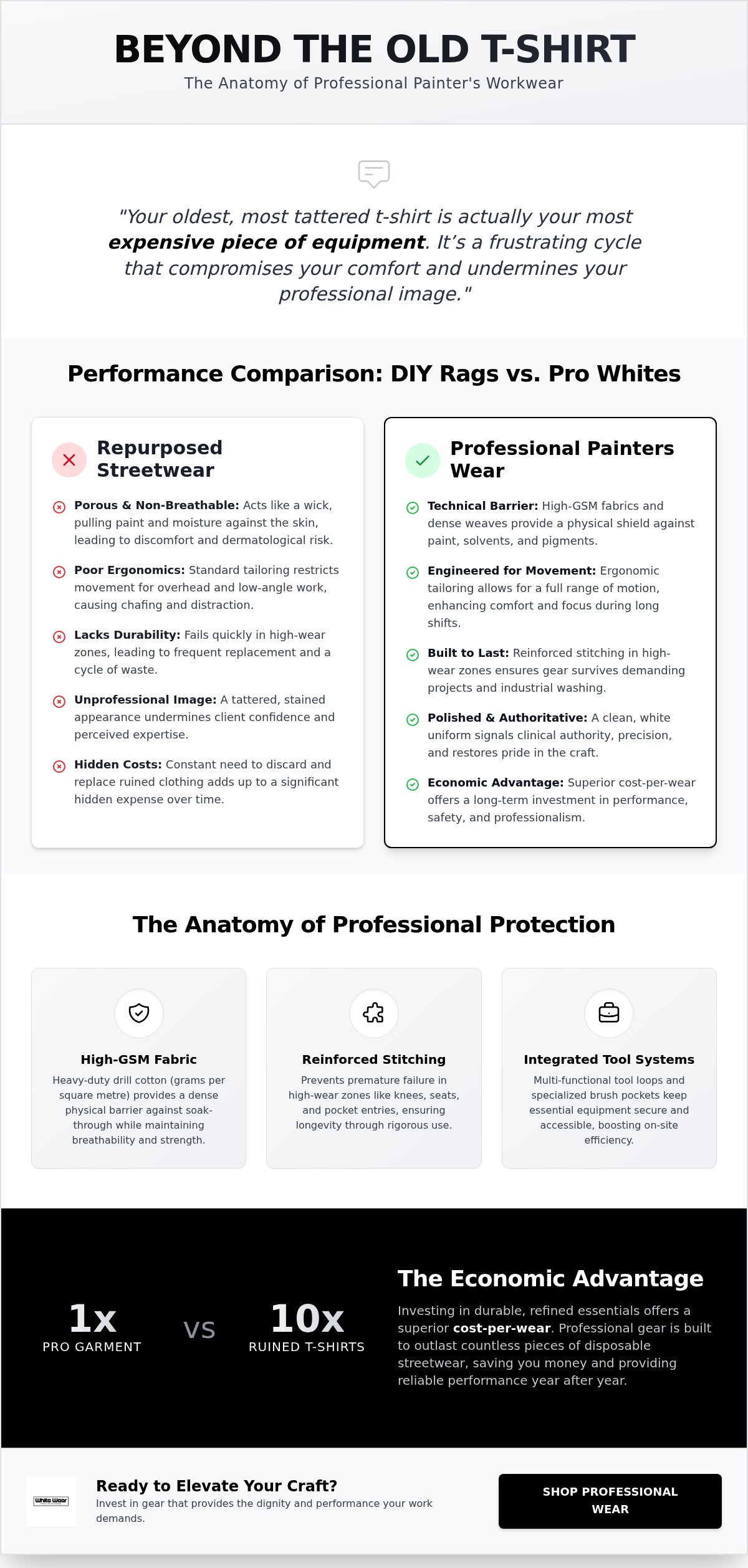
Your oldest, most tattered t-shirt is actually your most expensive piece of equipment. You’ve likely spent years reaching for discarded streetwear when dressing for a messy painting job, only to find yourself scrubbing dried pigment off your skin or feeling the damp chill of paint bleeding through thin, non-breathable cotton. It’s a frustrating cycle that compromises your comfort and undermines your professional image. You deserve better than the status quo of ruined rags and unrefined silhouettes.
We believe that true protection is a sophisticated blend of clinical authority and modern lifestyle elegance. This guide reveals why professional-grade painters workwear outperforms DIY solutions, offering you a path to stay clean and polished through the most grueling shifts. We’ll explore the latest innovations in technical cotton-rich blends and ripstop technology, while explaining how the January 13, 2025, OSHA PPE Fit Rule is redefining workplace standards for every body type. It’s time to invest in gear that provides the dignity and performance your craft demands.
Key Takeaways
- Understand why professional painters workwear serves as a critical technical barrier, protecting you from harsh solvents and pigments far better than discarded streetwear.
- Master the science of dressing for a messy painting job by selecting garments that balance clinical protection with a refined, modern aesthetic.
- Identify the high-performance features that matter most, including reinforced stitching in high-wear zones and integrated tool systems designed for the modern trade.
- Learn how to implement a strategic layering system that manages moisture and maintains your professional image through grueling hours of labor.
- Discover the economic advantage of investing in durable, refined essentials that offer superior cost-per-wear and survive heavy-duty industrial washing.
Beyond the Old T-Shirt: Why Messy Painting Demands Technical Workwear
For too long, the industry has accepted the myth that a professional's value is measured by the amount of pigment on their skin at the end of the day. This perspective is outdated and physically taxing. When you are dressing for a messy painting job, your clothing acts as the primary technical barrier between your body and a complex cocktail of industrial solvents, pigments, and resins. Professional painters workwear is not merely a uniform. It is a specialized piece of Personal Protective Equipment (PPE) designed to maintain your health, dignity, and comfort during grueling ten-hour shifts.
Choosing professional gear signals a profound psychological shift. You are no longer simply "getting dirty" on a site; you are executing a craft with precision and clinical authority. This mental transition from laborer to expert begins the moment you step into gear engineered specifically for the task. Beyond the mental edge, the "disposable clothing" fallacy often traps tradespeople in a cycle of waste. While an old t-shirt feels free, the frequent replacement costs for ruined streetwear and the physical toll of non-breathable fabrics create a hidden expense. High-performance gear offers superior thermal regulation and moisture-wicking properties, ensuring you stay cool and focused when the pressure is on.
The Problem with Repurposed Streetwear
Standard jersey cotton and denim are notoriously porous. They act like a wick, pulling wet paint through the fibers and holding it against your skin for hours. This isn't just uncomfortable; it's a dermatological risk. Repurposed clothes also lack the ergonomic tailoring required for professional movement. Overhead cutting and low-angle rolling require a specific range of motion that standard streetwear cannot provide. This leads to restricted movement, frequent adjustments, and painful chafing that distracts from the quality of your finish.
The Professional Alternative: Dedicated Painters Whites
White is the industry standard for a functional reason. It provides immediate visual feedback, allowing you to identify clean work areas and maintain a polished image in front of discerning clients. The true difference lies in the textile engineering. Professional painters clothing utilizes high-GSM (grams per square metre) fabrics. These dense weaves provide a physical shield against soak-through while remaining breathable enough for intense labor. Wearing a uniform that reflects your trade expertise restores a sense of pride, positioning you as the specialist you are. It is a refined essential that provides both style and clinical utility on every job site.
The Anatomy of Professional Protection: Essential Features for Messy Jobs
The difference between a generic garment and a refined essential lies in the precision of its construction. When you are dressing for a messy painting job, you require more than just a simple cover; you need a sophisticated system designed to withstand the unique mechanical stresses of the trade. Professional gear prioritizes reinforced stitching in high-wear zones, such as the knees, seat, and pocket entries, where friction and weight are most intense. These are not just aesthetic choices. They are structural necessities that prevent premature failure and ensure your gear survives the rigors of a demanding project.
Efficiency is another hallmark of professional design. Multi-functional tool loops and specialized brush pockets ensure that your essential equipment is always within reach, reducing unnecessary movement and protecting your tools from accidental damage. For floor-level messy tasks, integrated knee pad pockets provide a discreet yet effective solution to prevent long-term joint strain without the need for external straps that pinch and chafe. Modern workwear also incorporates dust-resistant finishes. These treatments ensure that fine particles from sanding don't embed themselves in the fabric, making the garment significantly easier to maintain over multiple heavy-duty washes.
Fabric Integrity and Paint Resistance
The foundation of any high-performance garment is the material itself. 100% heavy-duty drill cotton remains the gold standard because of its natural breathability and exceptional tensile strength. Advanced textile treatments now allow for paint-beading, where liquid splashes sit on the surface rather than soaking immediately into the core of the fiber. GSM, or grams per square metre, defines the weight and density of the fabric, and a rating of 300+ is essential to ensure a robust barrier that prevents pigment penetration while maintaining a professional silhouette.
Ergonomic Design for All-Day Movement
While some suggest that baggy thrift store finds offer better movement, this is a dangerous misconception that creates snag hazards on ladders and scaffolding. Instead, flexible painters pants utilize precision tailoring to provide mobility without the bulk. Gusseted crotches are strategically placed to prevent blowouts during deep squats or overhead reaches. Meanwhile, elasticated waistbands accommodate the fluctuating physical demands of a long shift, ensuring comfort from the first roll to the final cleanup. Choosing a tailored fit ensures your safety and projects the image of a decisive professional who respects their craft. You can explore our collection of painters clothing to find the perfect balance of form and function for your next project.
Painters Whites vs. DIY Rags: A Performance Comparison
Choosing between a thrift store find and specialized apparel isn't just a matter of personal style. It's a calculated decision regarding risk and long-term value. While repurposed streetwear costs nothing upfront, its lifespan on a professional job site is remarkably short. Professional painters workwear is engineered for longevity, often outlasting a dozen pairs of standard denim jeans. When you analyze the cost-per-wear, the investment in refined essentials becomes the more economical choice. You aren't just buying clothes; you're investing in a tool that works as hard as you do.
Appearance dictates perception in the high-end residential and commercial sectors. A painter arriving in tattered, paint-caked streetwear sends a message of carelessness that can rattle a client's confidence. Conversely, technical whites project a sense of clinical authority and pride in the craft. This visual professionalism often translates into higher trust, fewer disputes over quality, and significantly better referral rates. For experts like Central Coast House Painters, maintaining this polished appearance is a key part of delivering premium interior residential services. You deserve a uniform that reflects your expertise and protects your reputation as much as it protects your body.
The Reality of Paint Bleed-Through
Standard jersey fabrics and thin denim are deceptive. They feel like a shield, but they actually behave like a wick. When dressing for a messy painting job in old clothes, liquid solvents and oil-based pigments are pulled through the fibers and held directly against your skin. This prolonged contact is more than just uncomfortable. It allows chemicals to bypass your primary defense. The dense weave of professional drill cotton creates a structural barrier, ensuring that even heavy splashes stay on the surface. Maintaining this clean skin barrier is a fundamental health benefit that generic fabrics simply cannot provide.
Longevity and Structural Maintenance
Old jeans fail at the most inconvenient moments. Stress on seams, zippers, and belt loops during a typical workday leads to blowouts that ruin your focus. High-performance gear is built to maintain its shape and structural integrity through 50 or more heavy-duty industrial washes. The fabric remains robust, and the fit stays consistent, even after facing the harshest cleaning agents. Knowing how to get paint out of work clothes properly allows you to restore your gear to its crisp, professional state without destroying the fibers. This resilience ensures your professional image remains untarnished, week after grueling week.
Strategic Layering for Maximum Coverage and Comfort
Excellence in the trade requires a systematic approach to your attire. When you are dressing for a messy painting job, a single layer is rarely sufficient to handle the physical and environmental demands of a ten-hour shift. A strategic layering system ensures that you remain protected from external contaminants while managing the internal microclimate of your body. This purposeful method of dressing allows you to adapt to changing site conditions without sacrificing your professional silhouette or clinical protection.
The process begins with a high-performance, moisture-wicking base layer. Unlike standard cotton undershirts that trap sweat and become heavy, technical base layers pull moisture away from the skin. This keeps you dry during intense labor and prevents the post-work chill. Once your base is established, the next step involves selecting your primary shell. Depending on the scale of the task, you will choose between technical trousers or painters overalls to provide the necessary barrier against splatter. Finally, evaluate the seasonal reality of your environment. Integrated vents are essential for summer airflow, while lightweight, refined jackets provide warmth during winter morning prep without adding restrictive bulk.
The Bib and Brace Advantage
For high-volume spraying or ceiling work, the bib and brace design offers superior coverage. It eliminates the gap between shirt and trouser, protecting your midsection from the fine mist that often bypasses traditional waistbands. The centralized chest pocket is a refined essential, providing a secure, high-access location for your most-used precision tools. Modern iterations of the boiler suit have evolved from sterile utility items into high-performance fashion statements, offering a streamlined look that commands respect on any high-end residential site, especially when working in properties that feature luxury bespoke wardrobes like those from Wardrobe Door Studio.
Protecting the Extremities
True protection extends to the edges of your workday. Utilizing painters accessories like specialized beanies and caps is critical for preventing hair splatter and managing perspiration. Your footwear is equally vital. Specialized work boots provide the spill protection and slip resistance required for site safety, ensuring you remain stable on ladders and scaffolding. A professional approach also considers the transition from the messy site to the clean vehicle. Having a dedicated system for removing your outer shell ensures that the mess stays on the job, not in your car. To build your complete professional system, explore the full range of painters workwear designed by peers who understand the demands of the trade.
Elevating the Trade: The White Wear Approach to Professionalism
White Wear stands as a peer-led solution specifically engineered for the modern Australian painter. We recognize that the hours spent on a job site are not just a transaction of labor but a demonstration of specialized skill that deserves a uniform of equal caliber. By focusing on refined essentials, we bridge the gap between clinical utility and lifestyle elegance. Our gear is designed to withstand the harshest site conditions while ensuring you maintain a polished, authoritative presence from the first morning prep to the final client walkthrough. This commitment to quality ensures every garment meets rigorous Australian trade standards, providing nationwide reliability for professionals who refuse to settle for the status quo.
The impact of your attire extends beyond personal comfort. For business owners, investing in painters uniforms for company branding is a strategic move that elevates your entire crew's market position. A unified, professional appearance signals reliability and attention to detail, traits that high-end clients value above all else. When your team arrives dressing for a messy painting job in coordinated, technical whites, they aren't just workers. They are ambassadors of your brand's excellence. This visual consistency builds immediate trust and sets the stage for a premium service experience.
Aspirational Workwear for the Modern Era
We've moved beyond the sterile, purely functional language of traditional industrial suppliers. Our mission is to provide dignity and comfort during those grueling ten-hour shifts where physical endurance is tested. Professional gear is an investment in your personal brand and long-term career longevity. By choosing apparel that supports your movement and protects your health, you are making a decisive statement about the value of your craft. It's about feeling as sharp as the lines you cut, regardless of the mess surrounding you.
Ready for the Messiest Jobs
High-performance gear is the only logical choice for the serious professional. The era of the "thrift store" mindset is over, replaced by a demand for textile science and ergonomic precision. You've seen how technical fabrics prevent chemical bleed-through and how reinforced construction saves you money over the life of the garment. It's time to retire the ruined streetwear and embrace a uniform that works as hard as you do. We invite you to explore our full collection of professional painters clothing and experience the difference that peer-led design makes on every job site. Your craft deserves the best protection available.
Redefine Your Professional Standard
Transitioning from porous streetwear to technical drill cotton isn't just about staying clean; it's about respecting your health and your craft. You've discovered how reinforced construction and ergonomic tailoring ensure your focus remains on the finish rather than your physical discomfort. Dressing for a messy painting job should never mean compromising on your professional image or your long-term wellbeing. By choosing gear designed for the specific rigors of the trade, you invest in the dignity and performance your expertise deserves.
Our peer-led development process ensures every pocket and seam serves a purposeful role during your most demanding shifts. We offer sophisticated Australian design paired with clinical-level protection to keep you sharp and safe. With nationwide shipping available for our entire collection, superior protection is always within reach. Upgrade your professional wardrobe with White Wear’s high-performance range today. Your craft is an art; it's time your attire reflected that excellence.
Frequently Asked Questions
Is it better to wear overalls or trousers for a messy painting job?
Overalls provide superior torso protection for high-volume spraying or ceiling work, while trousers offer increased ventilation for lighter tasks. When you are dressing for a messy painting job that involves significant splatter, the bib and brace design prevents pigments from reaching your midsection. Trousers remain a refined choice for detailed trim work or high-heat environments where airflow is your primary comfort priority.
How do I choose the right size for painters workwear to ensure mobility?
Select a size that permits a full range of motion without the dangerous bulk of oversized garments. Professional gear utilizes ergonomic tailoring and gusseted construction, so you don't need to size up as you would with standard streetwear. Ensure the waistband remains comfortable during deep squats and the leg length doesn't create a snag hazard on ladders or scaffolding during your shift.
Can I really get professional paint stains out of specialized workwear?
Yes, technical fabrics are engineered to release industrial pigments during heavy-duty laundry cycles without compromising their structural integrity. Treating splashes while they're wet remains the most effective strategy for maintaining a crisp appearance. Because high-GSM drill cotton is exceptionally robust, it can withstand frequent mechanical agitation and professional cleaning agents, allowing you to project a polished image for months of grueling labor.
What is the best fabric for preventing paint from soaking through to my skin?
Heavy-duty drill cotton with a GSM of 300 or higher is the gold standard for creating a reliable chemical barrier. This dense weave stops liquid solvents from being wicked through the fibers and held against your skin. When dressing for a messy painting job, prioritizing these technical fabrics ensures that wet paint sits on the surface rather than bypassing your primary defense and causing dermatological irritation.
Do I need different clothes for interior vs. exterior messy painting jobs?
Your core protection remains consistent, but your layering strategy should adapt to the specific environmental demands of the site. Interior projects often require moisture-wicking base layers to manage perspiration in stagnant air. Exterior jobs demand gear that handles wind and UV exposure. You might choose heavier drill fabrics for rugged exterior masonry work while opting for lighter, vented trousers for precision interior finishes.
Why do professional painters wear white instead of darker colours?
White provides immediate visual feedback, allowing you to spot wet paint before accidentally tracking it into a clean area or onto a finished surface. It serves as a practical tool for maintaining a tidy workspace and protecting the client's property. Beyond utility, white has become a symbol of clinical authority and trade expertise, signaling a disciplined approach to the craft that inspires client confidence.
How many sets of professional workwear should a full-time painter own?
A dedicated professional should ideally own three to five complete sets of gear to ensure a fresh uniform is always available. This rotation allows for proper laundering between shifts and significantly extends the lifespan of each garment by reducing individual wear. Having multiple sets also provides the flexibility to swap into clean attire if a morning task becomes exceptionally messy before an afternoon client meeting.
Are there specific workwear features that help with overhead painting splatters?
Bib-and-brace designs and high-neck collars are specifically engineered to block the fine mist that occurs during overhead rolling or spraying. These features eliminate the gaps where paint typically enters the garment at the waist or neckline. Look for gear with storm flaps over zippers and deep, angled pockets that act as a shield, keeping your tools and personal items protected from falling pigment.


