


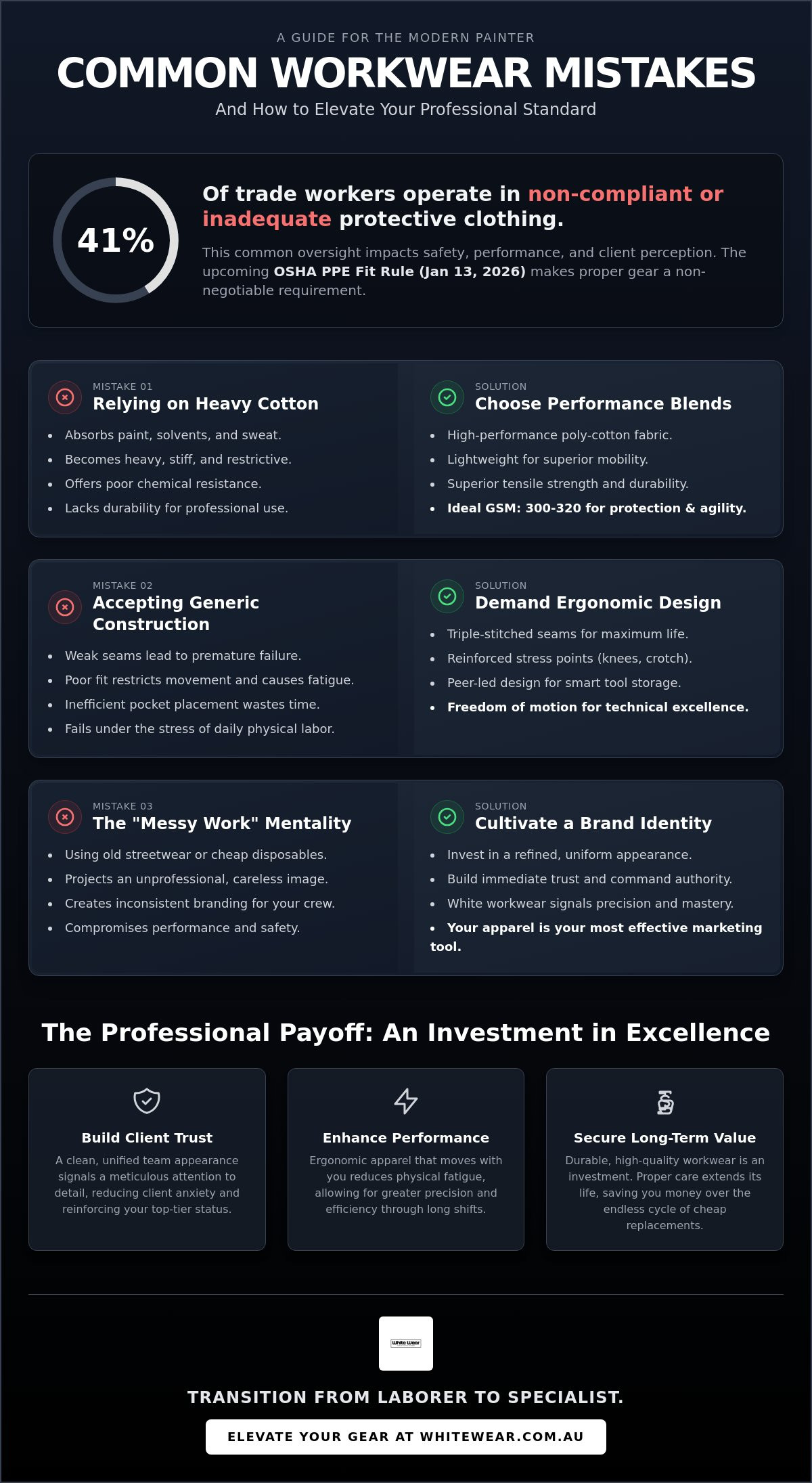
Did you know that 41% of trade workers are currently operating in non-compliant or inadequate protective clothing? This statistic highlights the hidden risks in the industry, especially since the January 13, 2026, OSHA PPE Fit Rule now mandates that gear must be properly fitted to each individual. Many of these issues arise from common workwear mistakes painters make, often settling for generic, disposable options that fail to meet modern safety standards or professional expectations.
You understand that a long shift demands more than just a basic coverall. It requires apparel that breathes, moves, and protects with the same level of precision you bring to every brushstroke. We recognize the frustration of rapid fabric degradation and the physical toll of poorly designed storage. This guide will show you how to refine your professional presence by avoiding critical errors. You'll learn to select high-performance materials and ergonomic silhouettes from our elevated approach to design. By leveraging peer-led development, you can secure a brand image that wins more jobs and ensures you remain comfortable through every grueling hour of labor.
Key Takeaways
- Elevate your professional presence by transitioning from messy work clothes to refined trade apparel that commands authority on every job site.
- Avoid the common workwear mistakes painters make by choosing high-performance fabric blends over standard heavy cotton for superior chemical resistance and mobility.
- Extend the life of your investment by mastering structured cleaning protocols and selecting seasonal weights that prevent physical fatigue.
- Build immediate client trust and brand recognition through a unified, professional appearance that distinguishes your crew from the competition.
The Hidden Cost of Compromise: Why Your Workwear Choices Matter
Your workday is a series of calculated movements. Every reach, climb, and brushstroke requires an unhindered range of motion that generic clothing simply cannot provide. Many professionals still view their attire as a secondary concern, often opting for retired streetwear or low-quality disposables. This mindset is one of the most common workwear mistakes painters make, and it carries a significant hidden price tag. When you compromise on your apparel, you compromise on your performance. True craftsmanship begins with the dignity of a professional uniform. It's time to shift from the messy work mentality to a standard of modern trade elegance.
A master painter understands that their presence on a job site is their most effective marketing tool. Professional trade apparel isn't just about utility; it's a refined essential that dictates your daily efficiency. High-performance painters workwear acts as a silent partner, supporting your body through eight to ten hours of repetitive, high-stakes labor. By investing in durability and specialized design, you move beyond the cycle of rapid wear and tear. You transition from a laborer into a specialist who commands premium rates and earns immediate trust. Just as you transform interiors with precision, you can discover Attica House to find luxury furniture that elevates your own living space.
The Physical Toll of Subpar Apparel
Precision demands freedom. Restrictive clothing is a direct barrier to technical excellence, especially during complex overhead tasks or intricate trim work. While adhering to general workwear standards is a necessary baseline for safety, those standards often ignore the specific ergonomic needs of the painting professional. Heavy, non-breathable fabrics trap heat and moisture, leading to cumulative fatigue that slows your pace by mid-afternoon. Poor weight distribution in generic pockets causes uneven strain on the hips and lower back. Peer-led development in painters clothing solves these issues by placing tool storage exactly where the hand naturally falls, reducing unnecessary reaching and preserving your energy for the task at hand.
First Impressions and the Professional Standard
The visual impact of your crew is undeniable. Clients equate a clean, cohesive uniform with a meticulous attention to detail. White workwear remains the gold standard for a reason; it signals a master who can manage a messy environment with surgical precision. Moving away from a disposable clothing mindset allows you to build a sustainable brand identity. High-quality construction ensures your team looks as polished at the end of a project as they did on day one. This consistency reduces client anxiety and reinforces your position as a top-tier service provider. You aren't just wearing clothes; you're wearing your reputation.
Technical Pitfalls: Material and Construction Errors in Painting Apparel
Technical excellence requires technical apparel. While the aesthetic of your uniform builds trust, the construction of the garment determines your endurance through a grueling ten-hour shift. One of the most common workwear mistakes painters make is relying on 100% heavy cotton drill. Traditional cotton is absorbent and unforgiving; it soaks up sweat and paint spills, becoming heavy and restrictive as the day progresses. Modern professionals now pivot toward high-performance poly-cotton blends that offer superior tensile strength and chemical resistance. These engineered fabrics provide a protective barrier against the caustic properties of modern solvents while remaining lightweight enough to support fluid movement.
Construction details often dictate the lifespan of your gear. Triple-stitched seams and reinforced stress points in the crotch and knees are not luxuries; they are functional necessities. Without these reinforcements, the repetitive squatting and stretching inherent to the trade lead to premature fabric failure. Understanding the weight of your fabric is equally vital. A Grams per Square Metre (GSM) rating of 300 to 320 provides the ideal equilibrium between protection and agility. This specific weight ensures the garment is thick enough to resist punctures but light enough to prevent overheating. Following OSHA painting safety regulations involves more than just wearing a mask; it requires a commitment to protective clothing that won't fail under pressure.
The Breathability vs. Durability Paradox
Maintaining focus during an Australian summer is impossible in heat-trapping synthetic blends. Low-quality workwear often sacrifices airflow for durability, creating a microclimate of discomfort against your skin. You need moisture-wicking properties that pull perspiration away from the body, allowing for rapid evaporation. This cooling effect is a refined essential for maintaining cognitive clarity during intricate detail work. Selecting high-performance painters clothing ensures you don't have to choose between a garment that lasts and a garment that breathes.
Pocket Placement and Functional Utility
Generic cargo pants are built for generalists, not specialists. The error of shallow, poorly placed pockets often results in paint-damaged phones or lost hand tools. Professional-grade trousers feature specialized brush loops that secure your equipment without the awkward swaying of a standard hammer loop. Integrated knee pad pockets are another non-negotiable feature for floor-level work, protecting your joints from long-term strain. Every pocket should serve a purpose, placed with clinical precision to mirror the natural ergonomics of a painter's workflow. When your tools are always within reach, your efficiency becomes effortless.
The Generic Trap: Why Standard Workwear Fails the Painting Professional
Many tradespeople succumb to the fallacy that painting is merely "messy work" that justifies wearing retired streetwear or cheap, off-the-shelf cargo pants. This is a professional liability. Relying on old jeans or generic apparel is among the most common workwear mistakes painters make, as it directly undermines your authority on the job site. While a pair of worn-out denim jeans might feel comfortable at home, they lack the technical architecture required for a high-performance environment. Transitioning away from the "disposable clothing" mindset is the first step toward establishing a truly refined professional presence.
Safety is another critical factor often ignored when choosing generic gear. Loose-fitting streetwear or oversized trousers pose a significant snag hazard in environments dominated by ladders and scaffolding. Adhering to painter safety best practices requires apparel that fits the body with clinical precision, ensuring that excess fabric doesn't interfere with your stability or equipment. Specialized painters clothing is designed with a streamlined silhouette that moves with you, providing security without sacrificing the modern lifestyle aesthetic you desire.
Mobility and the Range of Motion
The "rise" of a trouser determines your ability to perform. Standard cargo pants are typically designed for walking, not the constant squatting, lunging, and climbing inherent to the painting trade. When the rise is too low or the fabric lacks a gusseted crotch, your range of motion is physically restricted, leading to fabric tension and inevitable seam failure. A professional painter requires apparel that facilitates a full 360-degree range of motion while maintaining structural integrity under constant physical tension. Our peer-led development focuses on these ergonomic nuances, ensuring that every movement feels effortless rather than forced.
Fabric Integrity and Paint Absorption
Generic fabrics like denim are highly porous and act as a sponge for modern coatings. As paint is absorbed into the fibers, the garment becomes increasingly heavy, stiff, and uncomfortable, which eventually leads to skin irritation and reduced efficiency. In contrast, professional-grade painters workwear utilizes a tight-weave drill cotton that resists bleed-through. These specialized textiles are engineered to release stains more effectively during laundering, ensuring your whites remain crisp and professional for the duration of their lifespan.
- Denim: Absorbs moisture, retains weight, and restricts flexibility when dry.
- Tight-Weave Drill: Resists penetration, maintains a lightweight feel, and offers a polished appearance.
- Stain Release: Specialized coatings ensure that even heavy splatters don't become permanent eyesores.
Overlooked Essentials: Seasonality and Maintenance Mistakes
Professionalism is sustained through the quiet discipline of maintenance. While technical construction provides the foundation, how you care for your gear determines its daily performance. One of the most common workwear mistakes painters make is failing to adapt their wardrobe to the rhythmic shifts of the calendar. Wearing heavy, heat-retaining fabrics during a peak Australian summer leads to rapid dehydration and mental fatigue. Conversely, neglecting wind protection during early morning winter setups can stiffen your joints before you even crack the first tin. A strategic wardrobe isn't static; it's a dynamic system designed to protect you against the elements.
Maintenance is equally critical. You've invested in high-performance painters clothing, so don't destroy it in the laundry. High-heat drying is a silent killer of modern textile technology. It causes the elastic fibers in stretch blends to become brittle and snap, leading to saggy, ill-fitting trousers that lose their professional silhouette. Maintaining the pristine nature of your whites is a non-negotiable standard. Dingy, graying apparel signals a lack of precision to your clients. It suggests that if you can't manage your own appearance, you might lack the same care for their skirting boards or ceilings.
Adapting to the Australian Climate
Outdoor projects demand apparel that acts as a technical shield. UV protection is a refined essential for any painter working under the harsh sun, preventing long-term skin damage while keeping you cool. Effective layering allows you to transition seamlessly from the crisp air of a 6:00 AM prep session to the midday heat of a western-facing exterior. In high-humidity environments, choosing lightweight, breathable painters pants ensures airflow remains constant, preventing the fabric from clinging to your skin and restricting your movement.
The Maintenance Protocol for Longevity
Cleaning white workwear requires a clinical approach. While it's tempting to reach for harsh bleach to restore brightness, this chemical aggression often weakens the fabric's structural integrity. Instead, use specialized pre-treatments for oil-based splatters and cold-water rinses for water-based paints. We provide a detailed breakdown on how to properly clean and care for white workwear to ensure your investment lasts for years rather than months. Proper care turns a utility expense into a long-term asset that maintains your professional dignity.
Don't let poor maintenance undermine your hard work. Upgrade your professional standard today by exploring our full range of premium painters workwear designed for the modern master.
The Strategic Wardrobe: Transitioning from Utility to Brand Identity
Your workwear is the visual shorthand for your expertise. One of the most common workwear mistakes painters make is viewing their attire solely as a shield against splatters rather than a strategic branding tool. In a competitive market, technical skill is often assumed, but professional dignity must be demonstrated. When you and your crew arrive in matching, high-performance painters clothing, you immediately reduce client anxiety. You signal that your internal processes are as organized and disciplined as your outward appearance. This psychological shift from "laborer" to "specialized consultant" is what allows you to command higher rates and secure premium contracts.
Consistency in your wardrobe reflects consistency in your craftsmanship. If a team appears on-site in a disjointed mix of faded t-shirts and generic trousers, the client may subconsciously wonder if the finishing on their walls will be equally inconsistent. High-quality apparel facilitates easy embroidery and screen printing, allowing your logo to sit prominently on a garment that doesn't pill or fade. By integrating painters uniforms for company branding, you turn every project into a live demonstration of your company's standards. You aren't just finishing a room; you're building a reputation that lasts long after the paint has dried.
Uniformity as a Marketing Tool
Every job site offers a "billboard effect" that most businesses pay thousands to replicate. A professional crew working on a high-visibility exterior project acts as a silent advertisement for your attention to detail. This visual cohesion differentiates you from the "unskilled" competition who still rely on the "old clothes" myth we discussed earlier. The return on investment for professional company uniforms is realized through increased organic lead generation and the ability to maintain higher margins based on perceived expertise. It's a decisive move that moves your business from the status quo to a position of market leadership.
The White Wear Standard
We focus on the intersection of sophisticated design and trade utility because we believe the modern artisan deserves better than generic alternatives. Our peer-led development process ensures that every seam, pocket, and fabric blend is tested against the temporal reality of the grueling workday. We don't just create utility items; we craft refined essentials that provide dignity during long hours of labor. By choosing elevated workwear, you join a community of professionals who respect the heritage of the trade while embracing modern innovation. This is the standard for those who lead the industry with pride and purpose.
Elevate Your Professional Presence
Refining your trade attire is a decisive step toward industry leadership. By moving past the common workwear mistakes painters make, you protect both your physical health and your brand's integrity. High-performance apparel is more than just a utility; it's a refined essential that provides dignity through every grueling hour of labor. We've analyzed why technical fabric blends, ergonomic pocket placement, and structured maintenance protocols are non-negotiable for the modern master who refuses to settle for the status quo.
Our collection represents the intersection of sophisticated design and trade utility. Every piece is born from peer-led development by industry professionals who understand the specific nuances of the workday. With specialized Australian design for maximum durability and a sophisticated aesthetic, we ensure you lead the trade with confidence. You deserve gear that works as hard as you do while maintaining a polished, professional image that wins more jobs. Ready to redefine your standard? Explore the White Wear range of professional painters apparel and invest in the future of your craft.
Professional Painting Workwear: Frequently Asked Questions
Can I just wear old white t-shirts and jeans for professional painting?
Wearing retired streetwear is a professional liability that undermines your authority on the job site. Old jeans lack the technical architecture and ergonomic design required for grueling hours of labor. These fabrics absorb paint quickly, becoming heavy and restrictive as the day progresses. Choosing specialized trade apparel ensures you maintain a sophisticated aesthetic that commands immediate respect from clients and peers.
How often should I replace my professional painters trousers?
Most active professionals replace their trousers every six to twelve months to maintain a polished appearance. While high-performance poly-cotton blends offer superior durability, the repetitive nature of the trade eventually causes fabric fatigue. When the structural integrity or stain-release properties begin to fail, it is time to invest in a refined replacement. Consistent updates to your wardrobe ensure your brand identity remains sharp and trustworthy.
Is there a difference between "painters whites" and generic white trousers?
Technical differences in textile engineering distinguish professional whites from generic alternatives. Specialized painters clothing features a tight-weave drill cotton designed specifically to resist paint bleed-through and chemical penetration. These garments also include clinical additions like integrated brush loops and reinforced knee pad pockets. Generic trousers simply cannot provide the same level of trade-specific utility or the durability required for artisan-level work.
Why do professional painters wear white instead of darker colours?
White remains the industry standard because it signals a master who can manage a messy environment with surgical precision. It hides common dust from plaster and sanding while reflecting heat during intense outdoor projects. A pristine white uniform provides a neutral backdrop that won't distort your perception of color. This traditional choice has evolved into a symbol of professional dignity and attention to detail.
How do I prevent my workwear from shrinking after washing?
Avoid high-heat drying and stick to cold or lukewarm water cycles to preserve the tailored fit of your gear. Heat is the primary cause of fiber contraction and can destroy the elastic integrity of modern fabric blends. Air-drying your apparel in the shade is the most effective way to maintain its silhouette. This simple discipline ensures your investment remains comfortable and professional for its entire lifespan.
What is the best way to remove dried paint from professional workwear?
Soften the dried splatter with a specialized solvent or warm water before gently scraping the residue with a blunt edge. Aggressive scrubbing or using harsh bleach can permanently damage the fabric's structural integrity. This methodical approach helps correct one of the common workwear mistakes painters make when trying to restore their gear. Proper maintenance protocols turn your clothing into a long-term asset rather than a disposable expense.
Should I buy specialized painters shorts for summer work?
Specialized shorts are a refined essential for maintaining cognitive clarity during a peak Australian summer. They offer the same ergonomic pocket placement and reinforced construction as full-length trousers while maximizing airflow. Preventing heat-related fatigue is crucial for maintaining your pace and precision during long afternoon shifts. Choosing trade-specific shorts ensures you don't have to sacrifice functional utility for seasonal comfort.
Do I need different workwear for interior vs. exterior painting?
While the core utility remains consistent, exterior work often demands higher UV protection and superior moisture-wicking properties. Outdoor projects expose you to harsher elements that require a more robust protective barrier against the sun and wind. Interior work focuses heavily on ergonomics and knee protection for floor-level detail work. A versatile wardrobe allows you to adapt through strategic layering, ensuring you remain comfortable in any environment.


