


The clothes you trust for a long shift may be the wrong choice for lead paint abatement. The key clothing considerations for working with lead paint abatement start with the task assessment, not the garment. Ordinary workwear can’t be assumed to protect against lead dust or replace the personal protective equipment (PPE) specified for the job.
It’s reasonable to wonder what could become contaminated, whether work clothes can be worn home, and how to choose garments that won’t interfere with site controls. Clothing is one part of a broader lead-risk plan. Its role depends on the work being done and the controls and PPE required. Comfortable, durable painters’ workwear is an option only when the assessment permits ordinary workwear.
This article explains how clothing fits alongside task-specific PPE, how to reduce the risk of carrying contamination beyond the work area, and what to ask your employer or a competent safety adviser. It also covers how to weigh comfort and function without mistaking workwear for verified protective equipment, and how to check the guidance that applies in your Australian state or territory.
Key Takeaways
- Use clothing considerations for working with lead paint abatement to guide questions about the task, controls and required PPE, not to assume ordinary workwear provides lead protection.
- Consider how dust or debris could transfer from garments to skin, vehicles or clean areas, and follow site procedures for changing and handling clothing.
- Compare ordinary workwear, disposable garments and task-specific PPE by intended role, fit, compatibility and contamination-handling requirements.
- Before entering the work area, confirm the task assessment, garment instructions, coverage and compatibility with other PPE.
- Choose painters’ workwear for comfort and function only when the assessment allows it. Seek competent guidance if protective performance or garment specifications are unclear.
Lead paint abatement clothing: what workwear can, and cannot, do
Lead-abatement clothing isn’t one universal outfit. The clothing and protective equipment needed depend on the task, work method and risk assessment. Depending on the job, this may include ordinary workwear or protective garments, alongside other task-specific PPE. Follow the site’s controls and procedures rather than choosing based on habit or appearance. For an overview of the purpose and approaches involved, see Lead abatement procedures.
Everyday workwear is clothing; PPE is protective equipment selected for a defined task. Ordinary painters’ clothing isn’t automatically certified PPE or protection against lead. A garment’s colour, fabric or familiar style doesn’t show that it controls exposure. That distinction is central to clothing considerations for working with lead paint abatement: comfort and function matter, but they don’t prove protective performance.
When is ordinary painters’ workwear appropriate?
Ordinary workwear may be appropriate only when the task assessment and chosen work method permit it. Before starting, check the employer’s procedures and ask a competent safety adviser if the garment’s role is unclear. Don’t assume a garment is suitable because someone wore it on another job. The task, controls and potential for contamination may differ. Painters’ workwear is apparel, not a substitute for PPE selected for lead-related work.
Why clothing is only one part of protection
Australian WHS guidance uses the hierarchy of controls to help plan risk management. Consider how exposure can be eliminated or reduced through the work method and other controls before relying on PPE alone. Requirements can vary by state or territory, so check current local guidance and site procedures.
Clothing choices should fit alongside controls such as containment and hygiene arrangements, as well as any PPE specified for the task. Each element has a role. Clothing may help manage contamination when selected and handled according to the site’s process, but it can’t replace controls that limit dust or prevent it spreading.
Respiratory protection needs its own task-specific assessment and selection. A workwear choice doesn’t determine what respiratory protection is required, and a garment shouldn’t be assumed to work with other PPE. Confirm the full arrangement before entering the work area, especially if garment or equipment instructions are unclear.
How lead paint work can contaminate clothing and personal items
Lead-containing dust and debris can settle on clothing when work disturbs painted surfaces. Fine particles may cling to garments, footwear or equipment even when contamination isn’t visible. If those items move from the work area to bare skin, a vehicle or a clean space, residue can travel with them.
Clothing contamination is one concern, not the only one. Lead can also enter the body through inhalation or ingestion, including when contaminated hands touch food, drink or the mouth. Clothing controls should support, not distract from, controls for airborne dust, personal hygiene and other assessed exposure pathways.
Which work activities can change clothing requirements?
The work method and conditions matter. Disturbing painted surfaces in a way that is likely to generate dust or debris may create different contamination concerns from work that leaves the coating intact. The location, size and condition of the work area, expected duration and potential for dust generation all inform the assessment. There’s no universal outfit for every task.
Plan clothing and contamination prevention around the task, work area, controls and hygiene arrangements. Then follow the job-specific safe work method and competent advice. If the work changes or conditions differ from the plan, raise the issue with the person responsible for site safety. Don’t assume the original clothing choice still applies.
How to reduce transfer beyond the work area
Follow the site procedure for separating clean and work areas, including where to change and how to move between zones. Remove, store and handle garments according to established contamination controls. Don’t take potentially contaminated clothing home for routine laundering. Ask the employer or site safety adviser how it must be managed.
Keep personal items out of the work area unless the procedure allows them and explains how to protect or clean them. A phone, bag or vehicle interior can become a transfer point if handled with contaminated gloves or clothing. Before leaving, follow the site’s hygiene and change arrangements. Don’t carry work garments into clean spaces unless the procedure permits it.
The linked OSHA lead safety standards describe US construction requirements, including provisions related to protective clothing and hygiene. They aren’t Australian law. Workers should check current WHS guidance and applicable state or territory requirements for their job.
When the task assessment permits ordinary apparel, practical painters’ clothing may be a suitable workwear choice. Explore painters’ workwear and clothing for general apparel, while using the site assessment and PPE instructions to determine protective requirements.
Compare clothing options for lead paint abatement by task and risk
The right option depends on the assessed task and site controls, not a garment’s appearance. These clothing considerations for working with lead paint abatement help distinguish everyday apparel from garments selected for a protective role. Disposable clothing is one option to assess, not a universal requirement. Use the table as a starting point, not a replacement for job-specific instructions.
| Option | Intended role | Assessment and contamination handling | PPE compatibility |
|---|---|---|---|
| Ordinary workwear | General apparel for comfort and practical work needs when the task assessment permits it. | Check employer procedures to confirm whether it’s appropriate and how potentially contaminated clothing must be managed. | Confirm that fit and movement work with all selected PPE. Workwear isn’t automatically protective equipment. |
| Disposable protective garments | A possible protective clothing option when specified for the assessed task. | Check product instructions and site procedures for use, removal and handling after work. Don’t assume “disposable” means suitable for every task. | Confirm that the garment works with other PPE and doesn’t interfere with its fit or function. |
| Task-specific PPE | Protective equipment selected for the hazards and work method; clothing may be one part of the ensemble. | Use the task assessment, equipment specifications and employer procedures to determine selection and handling. | Assess the full set together, including fit, coverage and interactions between items. |
What to check before selecting a protective garment
Start with the task-specific risk assessment and employer procedures. Check the garment’s documented specifications and instructions, then confirm fit, coverage, freedom of movement and comfort for the planned work. Assess compatibility with other selected PPE as a complete arrangement, not one item at a time. If a standard or classification is cited, verify its current Australian status and relevance through official sources before relying on it.
The OSHA Lead in Construction Standard is a United States regulation, not Australian law. Use current Australian WHS guidance and applicable state or territory requirements for local decisions.
Why comfort and durability don’t prove protection
A comfortable garment can make a demanding shift more manageable, and durable workwear may suit everyday job needs. Neither quality confirms protective performance. Don’t infer lead resistance from fabric weight, colour, brand or appearance. Look for relevant specifications and evidence that match the assessed task. If requirements or claims are unclear, ask a competent safety adviser rather than choosing based on familiarity or guessing about a product.
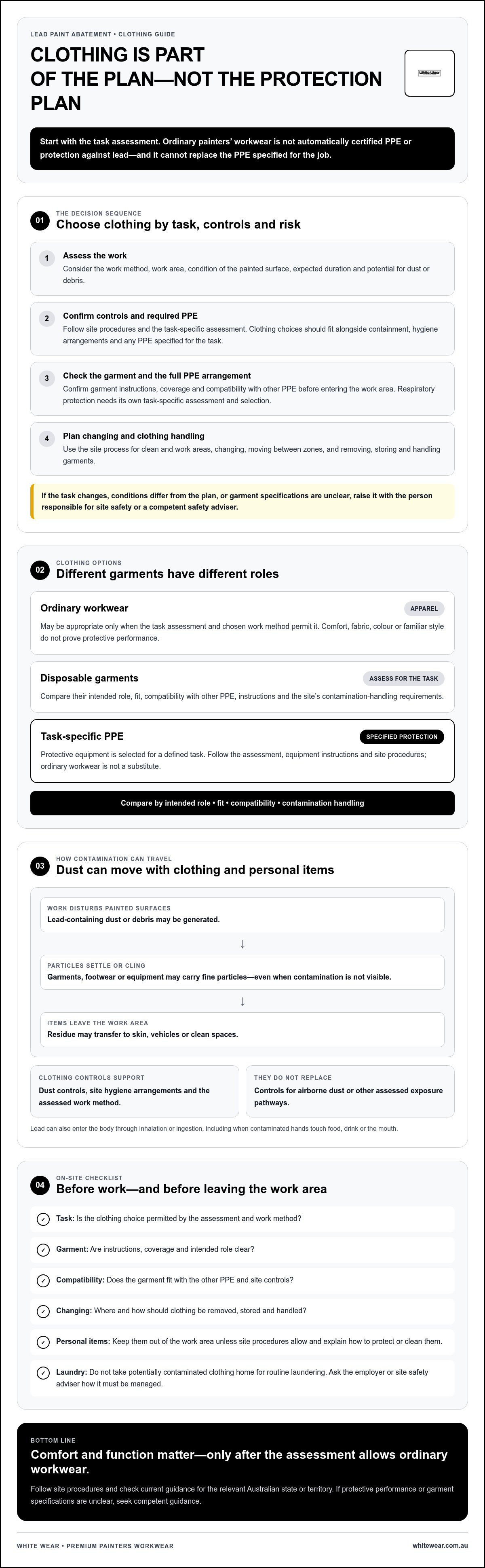
A practical checklist for choosing and managing clothing on site
A clear routine keeps clothing decisions connected to the job’s controls, from getting ready for the shift to leaving the work area. Use clothing considerations for working with lead paint abatement as prompts to check the plan, not as a substitute for it. If a requirement is unclear, pause and ask before starting.
Before work: confirm the requirements
Ask who completed the task risk assessment and where the current site procedure is documented. Confirm garment and PPE requirements with the supervisor or a competent safety adviser. Make sure everyone understands the clean-area boundaries and change-out arrangements.
- Review the task assessment. Confirm the work method and conditions it covers, and raise any changes before work begins.
- Check the controls. Understand the site arrangements for the work area, contamination prevention and hygiene.
- Confirm PPE requirements. Check what equipment is specified and how garments must work with the complete PPE ensemble.
- Read garment instructions. Compare the garment’s stated use, limitations and handling directions with the task and site procedure.
- Inspect fit and condition. Check for damage, adequate coverage and freedom of movement. Don’t use an item that doesn’t meet site requirements.
- Know the boundaries. Confirm where clean and work areas begin and end, and where change-out is meant to happen.
Before relying on guidance, check current Safe Work Australia information and the requirements of the relevant state or territory WHS regulator. Confirm that any cited garment classification or standard is current and applies to the task.
After work: keep contaminated garments controlled
Follow the site’s instructions for removing, containing, cleaning or disposing of garments. Don’t improvise a laundering method or take potentially contaminated clothing away for routine washing. If the procedure doesn’t explain what happens next, ask the supervisor or competent safety adviser before handling the garment.
Check how the site prevents residue from transferring to personal clothing, vehicles or home. This may include following designated change-out arrangements and keeping work garments separate from personal items, as directed by the procedure. Good intentions aren’t a control. Use the established process every time.
When the task assessment permits ordinary apparel, practical painters’ clothing may suit the job’s comfort and function needs. Explore painters’ workwear and clothing, and check garment details against your site requirements. Apparel shouldn’t be mistaken for verified protective equipment.
Where painters' workwear fits, and when to seek specialist guidance
Buying workwear for a lead-related job starts with the task requirements, not a familiar style or preferred fit. General painters’ workwear is apparel. It isn’t a replacement for protective equipment selected through the task assessment, and no garment should be treated as approved or suitable for lead abatement unless its documented specifications have been checked for that purpose.
That distinction keeps clothing considerations for working with lead paint abatement grounded in evidence. Appearance, comfort and familiarity can guide an apparel choice only after the employer’s procedures make clear that ordinary workwear is permitted. If protective performance matters, prioritise relevant garment specifications and competent verification over a product’s look or a worker’s past experience with it.
Questions to ask before buying clothing for the job
- Does the task assessment permit ordinary workwear, or does it specify protective garments?
- What garment specifications or instructions are relevant, and who will confirm they suit the task?
- How must garments be removed and managed if they may be contaminated?
If these answers aren’t clear, check with the supervisor or a competent safety adviser before purchasing or wearing clothing for the task. A general product description may help explain everyday apparel, but it can’t replace task-specific assessment or PPE requirements.
Choose workwear for the role it’s designed to serve
White Wear sells painters’ workwear and clothing. The available information doesn’t confirm that its garments are certified or suitable as lead-abatement PPE, so don’t infer protective performance from the brand, design or appearance. Treat painters’ workwear and clothing as general apparel, and verify any protective requirement separately through the relevant specifications and site guidance.
Comfort and function still matter during a demanding shift, but only within the role the clothing is designed and assessed to serve. If the task calls for protective garments, follow the requirements confirmed by the employer or competent adviser rather than substituting everyday painters’ clothing.
Safety caveat: This article is general information, not a garment approval or a substitute for current Australian WHS guidance, applicable state or territory requirements, or job-specific advice. Explore White Wear’s general painters’ workwear and clothing for everyday apparel, and check with your site contact before using any garment on lead-related work.
Make your next clothing decision with confidence
The essential clothing considerations for working with lead paint abatement begin with the task assessment: confirm whether ordinary workwear is permitted, what PPE is specified, and how garments must be managed to prevent contamination transfer. Comfortable, practical painters’ clothing can support a demanding workday, but it isn’t a substitute for protective equipment or proof of lead protection.
When a garment’s protective role is unclear, check its documented specifications and ask your employer or a competent safety adviser before relying on it. Keep the distinction clear, and choose apparel for comfort and function only when the job’s controls allow it.
White Wear is an Australian retailer specialising in painters’ workwear and clothing, with nationwide shipping across Australia. If you’re looking for general workwear, explore White Wear painters’ workwear and assess any garment against your site’s requirements. The right questions help you make a considered choice before your next shift.
Frequently Asked Questions
Can regular painters' clothes protect you from lead paint?
No. Regular painters’ clothes are ordinary workwear, not automatically certified PPE or proven lead protection. Dust or debris may settle on clothing during lead paint work, so follow the task assessment and site procedures for selecting and managing garments. Don’t assume a familiar outfit, colour or fabric prevents exposure. If the job requires protective clothing, ask the supervisor or a competent safety adviser which specifications apply.
What should you wear when working with lead paint?
Wear the clothing and PPE specified by the job’s task assessment and site procedures. Requirements depend on the work method, conditions and controls, so there isn’t one outfit for every task. Confirm garment instructions, fit, coverage and compatibility with other PPE before entering the work area. Respiratory protection requires separate task-specific selection. If ordinary workwear is permitted, don’t treat it as protective equipment.
Are disposable coveralls required for lead paint abatement?
Not automatically. Disposable coveralls may be an option identified by the task assessment, but don’t assume they’re required or appropriate for every lead-related job. Check the garment’s documented specifications and instructions, the employer’s procedures, and how used garments must be handled. Confirm that the coveralls fit and work with other selected PPE. If requirements aren’t clear, ask a competent safety adviser rather than guessing.
Can you wash clothes worn during lead paint work at home?
Don’t take potentially contaminated work clothing home for routine laundering. Dust or residue could transfer to personal clothing, household spaces or other items. Follow the site’s established instructions for removing, containing, cleaning or disposing of garments. If the procedure doesn’t explain how clothing should be handled, ask the supervisor before taking action. Keep work garments separate from personal items as directed by the site’s contamination controls.
How do you choose protective clothing for lead abatement?
Choose garments based on the task-specific risk assessment, employer procedures and documented product specifications. Clothing considerations for working with lead paint abatement include intended use, fit, coverage, condition, movement and compatibility with other PPE. Verify any cited standard or classification using current official Australian sources, and confirm who is responsible for checking suitability. Comfort and durability matter for work, but neither proves protective performance.
Is painters' workwear the same as PPE?
No. Painters’ workwear is apparel for the demands of painting work; PPE is equipment selected to address specific hazards. A garment shouldn’t be assumed to provide lead protection because it’s durable, familiar or designed for painters. White Wear sells painters’ workwear and clothing, but the available information doesn’t confirm that its garments are certified or suitable as lead-abatement PPE. Check protective requirements separately with the employer or a competent adviser.
Who sets clothing requirements for lead paint work in Australia?
Clothing requirements should follow the job’s risk assessment, site procedures and applicable WHS laws in the relevant state or territory. The employer or person conducting a business or undertaking manages workplace risks and should communicate controls and PPE requirements to workers. Safe Work Australia publishes national guidance, while local requirements can differ. Ask who completed the assessment, where the procedure is documented and who can clarify garment selection.


