


What if the workwear you choose helps manage paint contamination but does little to stop you breathing fumes? It’s an important distinction. Choosing workwear to minimise exposure to paint fumes can help keep paint off your skin and everyday clothing, but garments aren’t a substitute for ventilation or suitable respiratory protection.
If you’re deciding what to wear for spraying, rolling or brushwork, practical, comfortable clothing can make a long shift easier. The right choice depends on the task and the products being used. Fume control depends on the hazards and the controls in place.
This guide explains what painters’ clothing can and can’t protect against, which features to consider for different painting tasks, and how to manage discomfort and contaminated garments. You’ll also learn what to check in the product’s safety data sheet (SDS) and at the worksite before starting. Specialist painters’ workwear, such as the clothing White Wear provides, has a practical role in the workday. Use it alongside effective fume controls, not in place of them.
Key Takeaways
- Match painters’ clothing to the task, considering coverage, movement and the likelihood of paint getting onto garments.
- Use workwear to minimise exposure to paint fumes as one part of preparation, not as a replacement for ventilation or appropriate respiratory protection.
- Check the product’s safety data sheet (SDS) and the workplace risk assessment before deciding what clothing and other controls are needed.
- For spray work and overhead painting, consider contamination risks and practical clothing priorities before starting.
- Check fit, comfort and care instructions so your chosen workwear remains practical throughout the workday.
Paint fumes and workwear: what clothing can, and cannot, do
A full workday around paint can make exposure difficult to judge. A noticeable smell doesn’t tell you exactly what’s in the air or how much exposure a task creates. “Paint fumes” is a plain-language term for airborne substances released by some products or application processes. Hazards vary between products, so don’t assume every paint or job presents the same risks.
Clothing has a practical but limited role. Depending on its coverage and the task, painters workwear can help keep splashes and paint residue off your skin and everyday clothes. It can also help you manage contaminated garments during work. Ordinary painters clothing isn’t designed to filter the air you breathe, and it shouldn’t be treated as a barrier against paint vapours or fine airborne particles.
What does “exposure to paint fumes” mean?
Exposure can happen through inhalation, when airborne substances are breathed in, or through contact with skin or eyes. The product, application method, ventilation and work area all matter. Spraying, for example, can create airborne droplets as well as vapours, while brushing or rolling may create different exposure conditions. An enclosed or poorly ventilated area can also affect the conditions.
Before starting, read the product’s Safety Data Sheet (SDS) for information about hazards, exposure controls and protective measures. Consider the actual task and work area too. A general clothing choice can’t account for every product or situation.
Can workwear protect you from breathing paint fumes?
No. Standard workwear doesn’t replace ventilation or suitable respiratory protective equipment. Clothing and inhalation controls serve different purposes. Garments help manage paint contact and contamination, while ventilation and appropriate respiratory protection address airborne hazards. The broad purpose and types of Personal Protective Equipment (PPE) help explain why one item can’t do every job. The right selection depends on the specific risk.
Use the SDS and workplace risk assessment to guide PPE selection. Don’t assume one respirator or garment is suitable for every paint, task or work area. If the product information or assessment is unclear, get direction through your workplace’s safety process before work begins.
Choosing workwear to minimise exposure to paint fumes means being clear about what clothing can contribute: practical coverage and help managing contamination. It doesn’t control what’s in the air. Keep that distinction in mind when planning the task.
How painters workwear fits into a broader fume-control plan
Good preparation starts before you put on your painters clothing. Workwear can support coverage and help manage paint contamination, but it isn’t the primary control for airborne fumes. A suitable plan considers the product, how it will be applied and the conditions in the work area, then identifies controls for the job.
For a practical overview of clothing choices and presentation on the job, explore this professional painter workwear guide. Treat apparel as one part of preparation, alongside the controls identified for your specific task.
Start with the product SDS and the painting task
Read the product’s Safety Data Sheet (SDS) before work begins. Check its hazard information, recommended controls and PPE instructions, then consider how the application method affects the task. Brushing, rolling and spraying can involve different exposure conditions, but the product and work setup matter too. A chemical reference such as the CDC’s NIOSH Pocket Guide to Chemical Hazards can provide additional background. Use the product SDS and applicable Australian workplace guidance to inform decisions for your job.
Include the work area in your check. Is it enclosed? What ventilation is available? What does the workplace risk assessment say? If the appropriate controls aren’t clear, pause and seek advice through a competent workplace safety contact rather than guessing.
Why ventilation and respiratory protection are separate decisions
Ventilation helps manage airborne contaminants in the work area. Clothing covers the body and may help manage paint contact or garment contamination. These controls serve different purposes. Depending on the assessment, limiting time in an affected area or adjusting the work setup may also need consideration. A garment alone can’t ventilate a space or filter the air you breathe.
Respiratory protective equipment is a separate, task-dependent PPE decision. Selection should be based on the identified hazards and workplace risk assessment, not on a one-size-fits-all recommendation. Check current Australian WHS guidance and workplace procedures for requirements relating to respirator fit, maintenance and worker training. If those details aren’t established, get competent advice before starting the task.
Once the controls are clear, choose workwear to minimise exposure to paint fumes for its practical role: suitable coverage, comfort and functionality during the workday. White Wear focuses on painters workwear and clothing, so you can explore painters workwear as an apparel choice while keeping ventilation and respiratory protection decisions separate.
Compare workwear choices by task, comfort, and contamination risk
The right clothing depends on how you’ll work, what the product instructions say and where paint could land. Clothing that feels comfortable for general brushwork may not provide the coverage you want for overhead tasks. Use this comparison to identify questions to check, not as a substitute for a task assessment or the product’s Safety Data Sheet (SDS).
| Task | Clothing priority | Contamination concern | Limitation |
|---|---|---|---|
| Everyday brushing or rolling | Comfortable fit, ease of movement and practical coverage for the work position | Paint transfer from tools, surfaces or incidental splashes | Clothing doesn’t control airborne fumes or replace other risk controls. |
| Overhead work | Coverage that suits reaching and sustained upward movement without restricting mobility | Drips or splashes landing on clothing, including areas exposed by movement | More coverage doesn’t establish that a garment is suitable protective equipment. |
| Spraying | Garment choice guided by the product SDS and task assessment; check coverage and fit | Overspray or deposited paint may contaminate clothing | Workwear isn’t respiratory protection and shouldn’t be relied on to reduce inhaled exposure. |
Which clothing features matter during painting work?
Think about the full shift, not just the first few minutes. Check that clothing fits comfortably, allows you to bend and reach, and provides coverage suited to your work position. Breathability may matter for comfort during a long day, while durability is worth considering for repeated use. These are selection considerations, not safety guarantees. Confirm specific fabric, construction and care details against the garment information.
When should painters consider additional garment coverage?
Overhead work, close contact with wet surfaces or a task with a greater chance of splashes or transfer may prompt you to assess whether more coverage is appropriate. Don’t assume an added layer makes clothing suitable for chemical protection. Check the SDS and workplace risk assessment first, and follow their directions on protective clothing. For fit and everyday apparel considerations, see this painters pants selection guidance.
Choosing workwear to minimise exposure to paint fumes is about matching practical clothing to the work while keeping its limits clear. Comfort, coverage and durability can support a more practical workday, but they don’t control airborne hazards. Let the task assessment and SDS guide any protective requirements, especially for spray work.
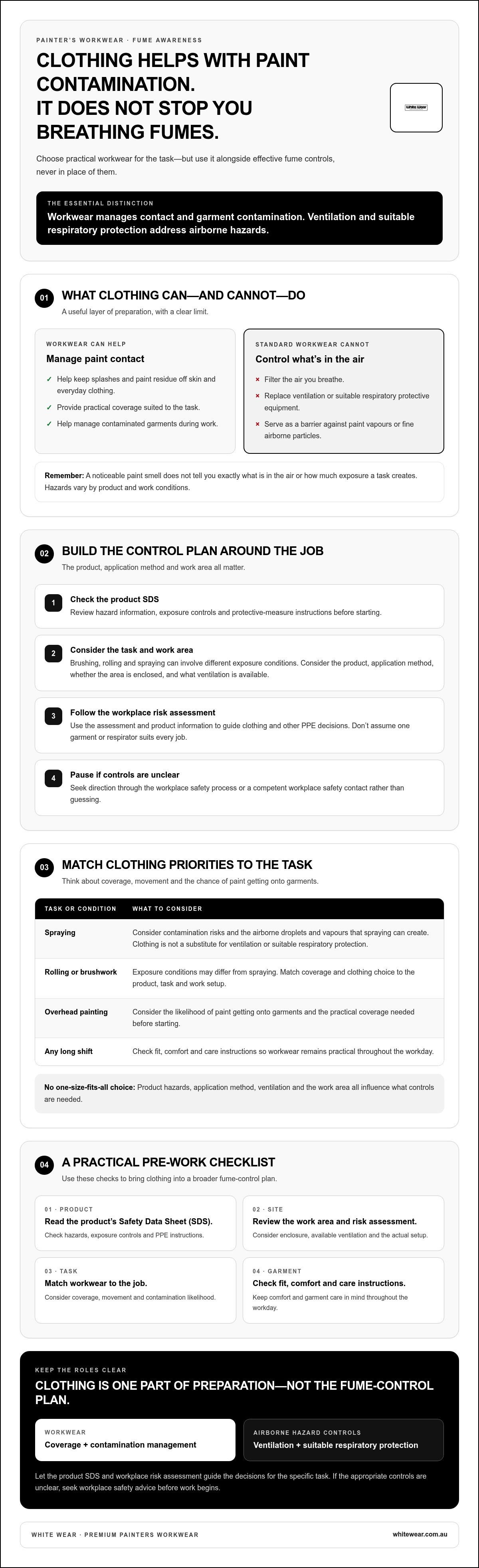
A practical checklist for choosing and using painters workwear
A clear routine makes it easier to choose clothing for the job and avoid guessing about contamination later. Work through these checks before you start:
- Identify the task. Note the application method, work position, work area and likely paint contact.
- Check the product SDS. Review hazard information and any instructions for clothing, PPE and handling contamination.
- Assess clothing needs. Consider fit, coverage and movement for the task, then confirm specific garment details and care directions in the product information.
- Confirm other controls. Check the workplace risk assessment and procedures for ventilation, respiratory protection and any other required controls.
This sequence keeps apparel in its proper role. Workwear to minimise exposure to paint fumes should be selected for practical coverage and comfort, not treated as a control for fumes. For apparel ideas beyond the basics, see this guide to essential painters accessories.
What to check before selecting workwear
Match the garment to the actual task. A painter working overhead may need to consider coverage during repeated reaching, while general brushwork may call for clothing that allows comfortable movement over a long shift. Check that the fit works in the positions you’ll use and that coverage suits the expected paint contact. Don’t assume a garment has protective properties based on its appearance or a general description. Verify any product-specific claims and care instructions, then confirm the workplace assessment hasn’t identified additional clothing or PPE requirements.
What to do if clothing becomes contaminated
Paint on a garment changes what you should do next. Follow the product SDS and workplace procedures for handling affected clothing. The correct approach can depend on the substance and garment, so don’t assume it can be washed, reused or disposed of in a particular way.
Avoid taking contaminated workwear home unless the applicable instructions permit it. If you’re unsure whether clothing needs specific handling, cleaning or disposal, keep it separate as directed by workplace procedures and seek advice from a competent workplace safety contact. Don’t improvise a laundering method.
Once you’ve checked what the task requires, choose painters clothing that suits your workday and allows practical movement. Explore painters workwear for apparel options for professional painting work, while using the SDS and workplace assessment to guide protective requirements.
Choosing painters workwear with confidence, and knowing when apparel is not enough
Good painters workwear supports the practical demands of a long day: comfortable movement, suitable coverage and clothing that suits the task. Durability and function are useful comparison points, but check the details provided for each garment rather than assuming a particular fabric or feature. Most importantly, clothing alone cannot be relied on to reduce the paint fumes you breathe.
When specialist painters clothing is a useful choice
Dedicated workwear can help you feel prepared for repetitive painting tasks and manage everyday paint contact. Compare garments by fit, function, coverage and confirmed product specifications. Consider whether the clothing allows you to bend, reach and work comfortably for a full shift. These are apparel decisions, separate from ventilation, workplace risk controls and respiratory protective equipment.
White Wear is an Australian specialist in painters workwear and clothing, with nationwide shipping. Its apparel is intended for professional painters, not as respiratory protection. Check garment descriptions and care instructions before choosing, especially when comparing options for a particular task or work position.
When to seek safety guidance before buying
If the product Safety Data Sheet (SDS) or workplace risk assessment identifies hazards you’re unsure how to manage, seek qualified workplace safety guidance before starting. Confirm respiratory PPE requirements with a competent person. Buying more coverage or a different style of clothing won’t resolve an unclear fume-control plan.
Keep the distinction clear: choose clothing for its practical role, and use the SDS and workplace assessment to guide exposure controls. If you’re ready to compare apparel, explore White Wear painters workwear. Review the available garment details and select clothing that suits your workday, while confirming protective requirements through the appropriate workplace process.
Make your next workwear choice with confidence
The right painters clothing can support comfort, practical coverage and day-to-day work, but it can’t control what you breathe. Choosing workwear to minimise exposure to paint fumes means matching garments to the task and checking fit, coverage and care instructions, while relying on the product SDS and workplace assessment to guide fume controls.
Keep the roles clear: workwear helps manage clothing and paint contact; ventilation and suitable respiratory protection address airborne hazards. If the required controls aren’t clear, seek competent workplace safety guidance before starting the job.
White Wear is an Australian provider specialising in painters workwear and clothing, with nationwide shipping across Australia. Explore the range and review garment details to find apparel that suits your workday. Explore White Wear painters workwear and take a considered next step toward a more practical, comfortable workday.
Frequently Asked Questions
Can workwear protect you from paint fumes?
No. Ordinary painters clothing isn’t respiratory protection and shouldn’t be relied on to filter paint fumes. Garments can provide practical coverage and help manage paint contact or contamination, but they don’t control what you breathe. Check the product’s Safety Data Sheet (SDS) and your workplace risk assessment for relevant hazards. Follow applicable ventilation guidance and seek competent advice on respiratory PPE suited to the task.
What should painters wear when working around paint fumes?
Choose clothing based on the task, product instructions and assessed contact risks. Comfortable painters workwear with suitable coverage and freedom of movement can make a demanding workday more practical, but it won’t control inhalation. The phrase workwear to minimise exposure to paint fumes shouldn’t be taken to mean clothing filters fumes. Check the SDS and workplace procedures for any additional PPE requirements before starting the job.
Can a painter’s mask reduce exposure to paint fumes?
Some respiratory equipment may be suitable for particular hazards, but “mask” doesn’t describe one universal level of protection. Equipment must be selected for the identified hazard and task, with fit, correct use and maintenance considered. Don’t choose it based only on a generic product label. Check the paint’s SDS and follow competent workplace guidance to confirm what respiratory protection, if any, is appropriate for the conditions.
Does spraying paint create different exposure risks from brushing or rolling?
Yes, the application method can affect the exposure assessment, but there’s no universal risk ranking that applies to every job. Consider the specific paint, work area, ventilation and task, and check the product SDS for hazard information and controls. Spraying, brushing and rolling can involve different conditions. Clothing doesn’t replace appropriate controls or respiratory PPE, so assess those separately before work begins.
How do I know what PPE is required when using paint?
Start with the paint product’s current Safety Data Sheet (SDS) and the workplace risk assessment. Requirements depend on the product and task, and PPE may involve separate measures for breathing, eyes, skin or clothing. Don’t assume one item covers every hazard. If instructions conflict, are unclear or don’t address the work conditions, pause and seek guidance from a competent workplace safety person.
Can I wash work clothes contaminated with paint at home?
There’s no single answer, because the paint product and type of contamination matter. Follow the SDS and workplace procedures for handling, cleaning or disposing of affected garments. Don’t mix contaminated clothing with household laundry unless the applicable instructions confirm an appropriate method. If the correct process isn’t clear, keep the garment separate as directed by workplace procedures and seek competent safety advice.
Does breathable workwear reduce paint-fume exposure?
No. Breathability may be relevant to comfort, but it isn’t evidence that a garment protects you from inhaled fumes. Comfort and coverage are clothing considerations; respiratory controls must be assessed separately. Check product documentation for confirmed garment details, and use the paint SDS and workplace guidance to determine what controls the task requires. Don’t infer protective performance from a fabric description alone.


