


The shirt with the most vents isn’t automatically the most comfortable in humidity. In the breathable vs vented work shirts for humidity comparison, breathable fabric lets air move across the garment, while vents create openings to release heat in specific areas. The most practical choice often combines both.
Sticky conditions can make fabric cling, trap warmth and feel heavier as the workday goes on. Look for a shirt that helps manage moisture, but consider its fabric, weave and fit as well as ventilation. A well-placed vent works best as part of the overall design, not as a substitute for breathable material or a comfortable fit.
This guide explains how cotton, linen, polyester and blends behave in humid conditions, what moisture-wicking does, and why a shirt that skims rather than clings can feel more comfortable. You’ll also learn how mesh panels and back vents affect airflow, so you can compare practical features and choose workwear for a warm Australian workday.
Key Takeaways
- Choose fabric with the whole shift in mind: cotton can feel comfortable but may stay damp, while lighter fabrics generally dry faster.
- Moisture-wicking moves sweat towards the fabric surface, but high humidity can slow evaporation and limit how quickly clothing feels dry.
- A shirt that skims rather than clings leaves room for airflow and can feel more comfortable against sweaty skin.
- Vents and mesh panels help release heat in targeted areas; they work best alongside breathable fabric and a suitable fit.
- When choosing painters workwear, compare fabric, fit and ventilation together to find clothing suited to the demands of your workday.
1. Cotton, linen, polyester, nylon, and blended fabrics
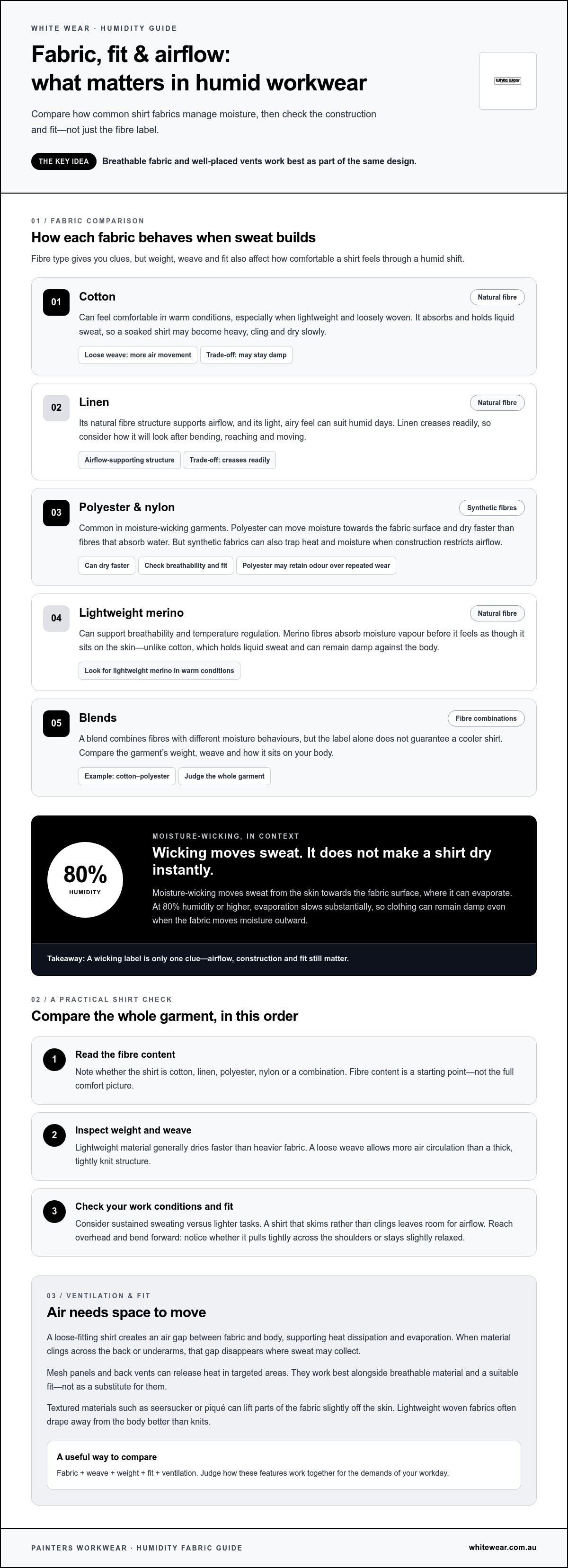
Fabric affects how a work shirt feels once sweat builds during a shift. Lightweight cotton can feel comfortable in warm conditions, but it absorbs and holds moisture. A soaked cotton shirt may become heavy, cling to the body and stay damp because it dries slowly. As a result, cotton may feel less comfortable through a humid workday than it does at the start.
Weave matters as much as fibre. Loose-weave cotton lets air move through, while thick or tightly knit cotton can trap heat. Lightweight, loosely woven organic cotton can suit warm-weather clothing, but it still absorbs sweat. A relaxed cotton shirt may feel airy before work, then cling as it becomes saturated during physical tasks.
Linen’s natural fibre structure supports airflow, making it an option for humid days. Its light, airy feel can suit a warm work setting, though linen creases readily. Consider how the shirt will look after bending, reaching and moving throughout the day. A linen blend may offer a different balance of texture and appearance, depending on its construction.
Polyester and nylon are common in moisture-wicking garments. Polyester can move moisture towards the fabric surface and dry faster than fibres that absorb water. However, synthetic fabrics can also trap heat and moisture in humid climates, especially when the garment’s construction restricts airflow. Polyester may retain odour over repeated wear. Fibre content alone doesn’t tell you how comfortable a shirt will feel.
Blends combine fibres, but the word “blend” doesn’t guarantee a cooler shirt. Cotton-polyester fabric, for instance, combines fibres with different moisture behaviours. Weight, weave and fit also affect performance. Compare the garment itself: lightweight material generally dries faster than heavier fabric, while a loose weave allows more air circulation than a dense one.
Merino wool provides another natural-fibre option. Lightweight merino can support breathability and temperature regulation on humid days, and its fibres absorb moisture vapour before it feels as though it sits on the skin. This differs from cotton, which holds liquid sweat and can remain damp against the body. For warm conditions, look for lightweight merino.
Use a simple fabric check when comparing shirts. First, read the fibre content and note whether it’s cotton, linen, polyester, nylon or a combination. Next, inspect the fabric: a loose weave allows more air movement than a thick, tightly knit structure. Then consider your work conditions. A shirt worn through sustained sweating may feel different from one used for lighter tasks.
The practical choice depends on which discomfort you most want to reduce. If you prefer natural fibres, compare lightweight linen, loose-weave cotton and lightweight merino, keeping in mind that cotton may stay wet. If faster drying is a priority, consider polyester or a synthetic blend, but assess breathability and fit too. No fibre label replaces comparing the full shirt: weight, weave and how the material sits on your body all matter.
2. Natural versus synthetic moisture-wicking fabrics
Moisture-wicking describes how a fabric moves sweat away from the skin towards its outer surface. That movement can help sweat evaporate, but it doesn’t make the garment dry instantly. In humid weather, the surrounding air already holds moisture, so evaporation slows and clothing can remain damp. At 80% humidity or higher, evaporation slows substantially, making fabric choice and airflow especially relevant.
Polyester and nylon are common synthetic choices for wicking garments. Polyester repels water and can dry faster than moisture-absorbing natural fibres. This may help during active tasks, when sweat keeps reaching the shirt. However, synthetic fabrics can also trap heat and moisture in humid conditions. A tightly constructed polyester shirt may feel less comfortable than its wicking label suggests.
Natural fibres have different moisture properties. Lightweight merino wool can absorb moisture vapour before it feels as though it’s sitting on the skin. Linen’s fibre structure supports airflow, while cotton absorbs liquid sweat and dries slowly. These differences matter during a workday: a shirt that holds moisture may cling, while one that moves it outward still needs air circulation for evaporation.
Fit affects how easily moisture can leave the skin. A loose-fitting shirt creates an air gap between fabric and body, supporting heat dissipation and evaporation. If the material clings across the back or underarms, that gap disappears where sweat may collect. Try reaching overhead and bending forward when assessing a shirt. Notice whether the fabric pulls tightly across the shoulders or stays slightly relaxed.
Fabric structure also shapes airflow. Lightweight woven fabrics often drape away from the body better than knits. Textured materials, such as seersucker or piqué, can lift parts of the fabric slightly off the skin. These structures don’t replace wicking, but they can create space for air to move. Compare how a smooth, close-fitting knit sits against a looser woven shirt.
For an Australian workday, assess the whole combination rather than choosing by fibre name alone. Check the fabric weight, construction and fit, then consider whether your tasks involve sustained movement or long periods outdoors. A lightweight synthetic may suit active work where quicker drying matters. A loose linen shirt can provide airflow, while lightweight merino offers another natural-fibre option.
What are the prices of breathable and vented work shirts in Australia? They vary with factors such as fabric, construction and ventilation details. Compare those features with your work conditions and comfort priorities, rather than relying on a wicking label to judge value.
For painting tasks, use the same fabric-and-fit criteria when choosing painters clothing. Consider how the material sits during reaching, bending and extended wear, then weigh its moisture behaviour against the work environment. Wicking and breathability are related, but they describe different properties: one moves sweat, while the other helps air circulate through or around the garment.
The feel of a shirt depends on its fabric and construction, so compare the features that matter for your workday rather than relying on fibre name alone. Lightweight woven fabrics often drape away from the body better than knits, while textured fabrics such as seersucker or piqué can lift slightly off the skin. These details affect how a shirt sits and the space it leaves around the body. Heavy cotton absorbs moisture but dries slowly, which can make it cling and lose structure in high humidity. If you choose cotton, consider whether that moisture behaviour suits the conditions and whether the fit leaves room for airflow. Structure and feel matter alongside material.
3. Loose shirt silhouettes and airflow
A shirt that skims the body can feel different from one that clings during a sticky shift. A relaxed silhouette leaves an air gap between fabric and skin, supporting heat dissipation and evaporation. That space matters around the back, chest and underarms, where close-fitting fabric can press against damp skin. Aim for ease of movement, not excess volume that catches on tools or work surfaces.
Test the fit with familiar work movements before choosing a shirt. Reach overhead as if painting a ceiling, then bend forward as if working near a skirting board. Check whether the shoulders pull, the hem rides up or the back becomes taut. A shirt that stays comfortable through those movements is more likely to maintain its air gap during practical tasks.
Look at how the garment hangs when your arms rest at your sides. A straight-cut shirt worn slightly loose can skim rather than cling, leaving room for airflow without losing a neat profile. If the fabric bunches at the waist, adjust the fit rather than relying on a tuck to solve every issue. For a more defined shape, tucking one side can add structure while keeping the rest relaxed.
Fabric drape influences how a silhouette behaves. A lightweight woven shirt may fall away from the body, while a clingier knit can follow every contour. Textured fabrics such as piqué can lift parts of the material slightly off the skin. Compare the shirt while standing and reaching: a garment that drapes well at rest should also move freely during tasks.
Fibre choice doesn’t replace fit. Polyester and other synthetics can wick moisture, while lightweight merino can absorb moisture vapour, but neither property creates space between cloth and skin. Picture a close-fitting polyester shirt during repeated overhead strokes: moisture may move through the fabric, yet a tight underarm can still feel damp and restrictive.
Use these checks when trying on a work shirt:
- Reach: lift both arms and check for pulling across the shoulders.
- Bend: lean forward and see whether the back stays comfortable.
- Move: turn your torso and check whether the fabric twists or binds.
- Assess contact: notice whether the shirt clings across the chest or underarms.
These movements reveal more than a quick look in the mirror. A slightly relaxed fit should preserve coverage while letting the fabric shift with your body. If a shirt only feels comfortable while standing still, its cut may not suit a workday involving reaching, bending and carrying equipment.
Humidity also affects what a good fit can do. When the air is already moist, sweat evaporates more slowly, so a loose shirt can support airflow without making dampness disappear. The breathable vs vented work shirts for humidity comparison should include fit alongside fabric and ventilation. A vent can release heat, but a close cut may limit the space that helps air move around the body.
For a practical breathable vs vented work shirts for humidity choice, look for a silhouette that avoids constant skin contact, then consider fabric and ventilation together. Fit creates space around the body, while material and garment openings influence how air moves through it. Matching all three to your tasks can help you choose a shirt that feels comfortable through the workday.
4. Ventilation panels, mesh underarms, and back yokes
Breathable fabric lets air move through a garment; vents create specific routes for heat to escape. In humid Australian summer conditions, both can contribute to comfort, but they do different jobs. Lightweight fabric supports airflow across the shirt, while mesh underarms, back yokes and side gussets target areas where heat can build during movement.
Mesh underarms place a more open panel near the body’s natural heat zones. Repeated overhead strokes, for example, can warm and dampen the underarm area. A mesh section can encourage air exchange there and support drying through evaporation. Position matters: the panel should sit where it can support airflow as your arm moves, rather than being covered or pressed tightly against the body.
A back yoke can also provide ventilation across the upper back. This area may feel warm when you bend, reach or carry equipment close to your torso. A vented yoke gives warm air an opening to escape while retaining fabric across much of the back. Compare its placement with your usual tasks: repeated reaching and leaning can affect how the panel sits against your body.
Side gussets offer another route for air movement along the shirt’s sides. They can complement underarm or back ventilation by allowing heat to escape through several areas. Vents and mesh panels may support drying through evaporation, but humid air slows that process. Ventilation supports air exchange; it doesn’t make sweat evaporate quickly when the surrounding weather is already moisture-heavy.
Treat vent placement as a practical choice, not a feature-count contest. A shirt with a back opening may suit work involving frequent bending, while mesh underarms may help with repeated arm movement. A design combining several openings can distribute ventilation across the garment. Assess whether the panels match the areas where you feel heat during typical tasks, rather than assuming more openings always mean more comfort.
Sun coverage matters alongside ventilation for outdoor work. A shirt can use vents or mesh to release heat while retaining coverage across the shoulders and back. Inspect how each opening is integrated: the aim is airflow through selected areas, not simply less fabric overall. If your work takes you between direct sun and shade, consider how the shirt balances ventilation with coverage across exposed areas.
Use this quick comparison during a try-on:
- Underarm mesh: raise your arms and see whether the panel remains positioned for airflow.
- Back yoke: bend and reach, then notice whether the vent sits comfortably across your upper back.
- Side gussets: turn your torso and check whether the garment moves freely at its sides.
- Overall design: compare ventilation placement with the areas that feel warm during your work.
Venting works best as part of a considered shirt design. Pair targeted openings with lightweight, breathable fabric and a fit that allows air to circulate. That combination can support comfort and drying during a humid shift, while keeping the shirt suited to movement and sun coverage. Explore workwear for your next shift and compare shirt designs with your tasks in mind.
White Wear: Painters workwear
White Wear offers painters workwear and clothing for professionals choosing what to wear through warm, humid shifts. Use the fabric, fit and ventilation points in this guide as a practical checklist for clothing worn during painting tasks. Think about your work, how much you move and whether a shirt stays comfortable as the day progresses. This can help you narrow your choice to the demands of the job, rather than relying on a fabric label alone.
Explore White Wear’s painters clothing when you’re ready to choose workwear for painting days. Visit whitewear.com.au to view the range.
Choose for the Work Ahead
Choose your next shirt based on the conditions you actually work in. Consider how you move, where heat tends to build and how you need your clothing to feel by the end of the shift. The breathable vs vented work shirts for humidity decision isn’t about chasing one feature; it’s about finding a balance that suits your tasks and keeps comfort and function in view.
Use that practical perspective as you explore painters workwear. White Wear offers clothing designed for painters, giving you a place to consider what suits your workday. Choose deliberately, with comfort and function in view.
Contact White Wear about work shirts and take the next step towards workwear that feels right for your routine.
Frequently Asked Questions
What is the difference between breathable and vented work shirts?
Breathable shirts allow air to pass through their fabric, while vented shirts have openings or mesh panels designed to release heat. A garment may combine both. In the breathable vs vented work shirts for humidity comparison, consider where openings sit as well as how the fabric feels. For instance, a back vent may suit overhead work, while breathable fabric supports airflow across the shirt.
Which work shirt fabrics are most breathable in hot, humid weather?
Lightweight linen, loose-weave cotton and lightweight merino wool are natural-fibre options to consider. Their performance depends on fabric weight and construction, not just fibre name. A lightweight woven shirt, for example, may feel airier than a dense knit. Consider your tasks too: sustained movement and sweat can change how comfortable a fabric feels throughout the day.
Do mesh vent panels improve cooling in humid conditions?
Mesh panels can increase airflow in targeted areas, such as the underarms, and support drying through evaporation. Placement matters: a panel should align with areas that warm during your usual movements. Humid air slows evaporation, so mesh won’t make dampness disappear instantly. When trying on a shirt, raise your arms and check whether the underarm panels remain comfortably positioned.
Are cotton or polyester work shirts better for sweaty outdoor work?
Polyester can suit sustained activity because it wicks moisture and may dry faster than moisture-absorbing fibres. Cotton absorbs sweat and dries slowly, so it may cling when saturated. For a long outdoor task involving repeated movement, your preferred shirt depends on whether faster drying or a natural-fibre feel matters more. Compare the garment’s weight, weave and fit alongside its fibre content.
What work shirt features reduce heat stress in humid weather?
For shirt comfort, prioritise lightweight fabric, a fit that allows movement and vents positioned near areas that become warm. The breathable vs vented work shirts for humidity comparison can help you assess these features, but clothing alone doesn’t manage heat stress. Consider broader work conditions, including shade, rest opportunities and drinking water, alongside the shirt you wear for the task.


