


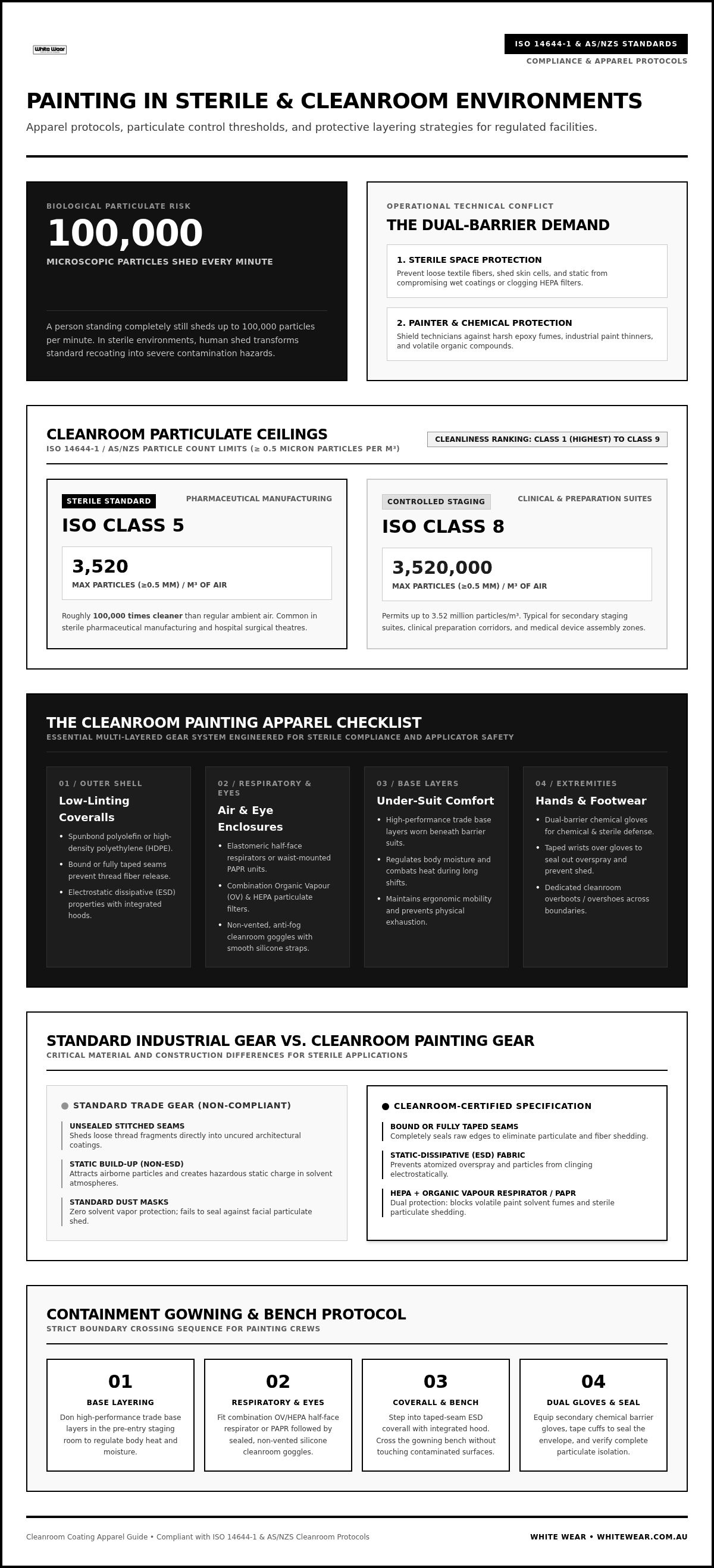
A person standing completely still sheds up to 100,000 microscopic particles every minute. Inside a certified pharmaceutical facility or clean laboratory, that biological reality turns a standard recoating project into a severe contamination hazard. Figuring out what to wear when painting sterile or clean room environments requires solving a demanding dual challenge: safeguarding a controlled space from human shed while shielding yourself from harsh epoxy fumes and volatile chemicals.
You already know how punishing that balance feels on the job. Sweltering inside non-breathable barrier suits over a grueling ten-hour shift drains your focus and stamina, yet a single loose textile fiber can compromise an entire facility's audit. You shouldn't have to sacrifice ergonomic mobility or physical dignity just to uphold rigorous particulate standards.
This guide equips you with the exact apparel protocols and layering strategies required to paint controlled facilities safely. Ahead, you'll discover how cleanroom classifications dictate your gear, how high-performance trade base layers prevent overheating beneath barrier coveralls, and the step-by-step apparel checklist needed to ensure flawless compliance.
Key Takeaways
- Understand how ISO 14644-1 and AS/NZS standards dictate allowable particulate thresholds, establishing the exact gowning tier required for your architectural coating project.
- Discover the definitive checklist for what to wear when painting sterile or clean room environments, spanning certified non-linting coveralls, integrated hoods, and dual-barrier chemical gloves.
- Learn why high-performance trade base layers are crucial beneath impermeable barrier suits to regulate moisture, preserve mobility, and combat physical exhaustion during long shifts.
- Master the precise donning and doffing protocols required at the gowning bench to cross sterile containment boundaries without risking cleanroom contamination.
- Gain a distinct commercial advantage across Australian regulated facilities by outfitting your painting crew to reflect the highest benchmarks of trade craftsmanship and safety compliance.
Cleanroom Classifications and Painting: Understanding the Standards
Precision coating within controlled spaces leaves zero margin for error. Under ISO 14644-1 and AS/NZS ISO 14644 standards, facility air cleanliness is defined by strict airborne particle concentration limits. When applying architectural epoxies or antimicrobial coatings, maintaining those thresholds requires strict containment discipline. Understanding official Cleanroom Classifications is the first step in planning your application process, dictating the operational protocols and barrier gear your crew must adopt before stepping onto the site.
ISO 14644-1 Classes Explained for Painting Contractors
Cleanroom standards rank environments from ISO Class 1 through Class 9, with Class 1 demanding the highest level of cleanliness. For Australian trade contractors working across hospital surgical theatres, pharmaceutical labs, and microelectronics facilities, two classifications appear most often:
- ISO Class 5: Standard for sterile pharmaceutical manufacturing. It allows no more than 3,520 particles of 0.5 microns or larger per cubic metre of air, roughly 100,000 times cleaner than regular ambient air.
- ISO Class 8: Common for secondary staging suites, clinical preparation corridors, and medical device assembly. It permits up to 3,520,000 particles per cubic metre.
Your surface preparation and roller passes cannot disrupt these parameters. Determining exactly what to wear when painting sterile or clean room environments starts with matching your garment system to these exact particulate ceilings.
The Contamination Risk: Particulate Shedding vs Paint Fumes
Painting introduces a distinct technical conflict that generic cleanroom guides ignore. Heavy chemical PPE protects painters from aggressive paint thinners and two-part epoxy resins, but standard industrial suits often shed loose fibres or generate heavy static electricity. Conversely, lightweight sterile garments resist shedding but degrade instantly when splattered with industrial solvents.
Standard everyday workwear sheds microscopic textile fragments continuously. Under high-velocity laminar airflow, these stray threads drift into wet coatings, ruining surface integrity and clogging high-efficiency particulate air filters. At the same time, volatile organic compounds from curing paint challenge facility air exchange systems. Deciding what to wear when painting sterile or clean room environments requires balancing non-linting, antistatic barrier properties with certified chemical resistance, ensuring complete protection for both the technician and the sterile envelope.
The Cleanroom Painting Apparel Checklist: Essential Layers
Building an effective protective barrier requires looking past generic medical gear. When deciding what to wear when painting sterile or clean room environments, trade contractors must select gear that satisfies strict industrial safety parameters and cleanroom protocols alike. Reviewing established cleanroom clothing requirements ensures your crew meets facility compliance while maintaining the physical dexterity needed for sharp cut-ins and uniform surface coverage.
Low-Linting Outer Coveralls and Sterile Suits
Disposable barrier suits made from spunbond polyolefin or high-density polyethylene form your primary envelope. Look for bound or fully taped seams rather than standard stitched edges, which prevent unraveling thread fibres from shedding into wet coatings. When spraying solvent-borne epoxy systems, choose static-dissipative (ESD) coveralls with integrated hoods. This construction eliminates hazardous static buildup in volatile atmospheres and stops atomised overspray from clinging electrostatically to the fabric.
Respiratory Protection and Eye Enclosures
Standard disposable dust masks don't cut it against paint solvents and cleanroom airflow restrictions. Opt for cleanroom-compatible half-face elastomeric respirators or waist-mounted powered air-purifying respirators (PAPR) fitted with combination organic vapour and HEPA cartridges. Pair half-face units with non-vented, anti-fog cleanroom goggles featuring smooth silicone straps. This combination seals completely against the temples and cheeks, capturing stray facial epithelial cells without misting up during prolonged physical exertion.
Cleanroom Footwear: Booties, Overshoes, and Conductive Soles
Standard safety boots easily track particulate matter across facility thresholds. Secure sterile, knee-high overboots with durable vinyl non-slip soles directly over your professional boots before crossing containment boundaries. In facilities handling flammable epoxies, conductive grounding ribbons running from the suit into conductive shoe covers ensure continuous static dissipation. Double gloving with extended-cuff, powder-free nitrile gloves completes the outer perimeter, shielding skin from solvent burns without contaminating delicate air monitors.
Mastering what to wear when painting sterile or clean room environments also relies heavily on what sits beneath these exterior shells. Pairing certified disposable barrier suits with ergonomic, lint-free trade layers like specialized painters workwear provides the essential thermal regulation and moisture management your team needs to stay productive through grueling shifts.
Base Layers and Painter Comfort: Working Under Barrier Suits
Cleanroom coveralls trap heat almost instantly. A painter cutting crisp floor coving or rolling continuous antimicrobial coatings inside an impermeable barrier suit generates intense perspiration. Trapped moisture quickly drains your stamina and limits physical dexterity. Peeling off layers isn't an option in a regulated space. Truly resolving what to wear when painting sterile or clean room environments requires engineering your clothing system from the skin outward.
Moisture-Wicking Fabrics vs Linting Hazards
Fleece jumpers, frayed street clothes, and standard fluffy cotton shirts are major contamination liabilities. Short-staple cotton fibres shed continuously with every movement, threatening to escape collar seams and filter into fresh paint finishes. Instead, your base layer must consist of tightly woven, continuous-filament technical fabrics that trap epithelial skin flakes while wicking sweat away from the body. Investing in high-performance painters workwear establishes this vital foundation, balancing non-linting textile integrity with thermal regulation through demanding shifts.
Ergonomics and Mobility During Controlled Painting
Repetitive brushwork and overhead rolling expose every restriction in your workwear. When coating cleanroom ceilings or detailed ductwork, tight bind points around the shoulders, knees, and groin restrict your range of motion. Bulky, loose clothing creates harsh friction against the interior of disposable outer suits. This constant rubbing often blows out crotch seams or tears taped barrier seals, ruining the containment boundary mid-shift.
Streamlined apparel foundations prevent this mechanical failure. Wearing articulated, durable painters pants under protective outer shells gives you full flexibility to crouch, reach, and pivot without pulling at the exterior barrier. Selecting what to wear when painting sterile or clean room environments is as much about ergonomic durability as it is about particle control, giving tradespeople the physical freedom to execute flawless finishes under strict operating conditions.
Step-by-Step Donning and Doffing Protocol for Painting Crews
Flawless apparel means nothing without methodical gowning execution. Knowing what to wear when painting sterile or clean room environments must be paired with strict discipline inside the airlock. Cleanroom operations standards, reinforced by ISO 14644-5, identify human transfer procedures as the primary vulnerability in any contamination control plan. For commercial coating teams, that means mastering an exact sequence before opening a single paint tin:
- Step 1: Pre-entry preparation. Strip away all personal jewellery, watches, and lanyards. Wash hands thoroughly with residue-free antibacterial cleanser, dry with cleanroom-approved lint-free towels, and roll all base garments using tacky rollers to remove loose surface lint.
- Step 2: Airlock staging. Step firmly onto the tacky entrance mat to pull remaining debris from shoe soles. Stage pre-cleaned paint trays, brushes, and sealed solvent tins in the pass-through box before dressing.
- Step 3: Head and respiratory enclosure. Don a snug bouffant cap ensuring zero stray hairs escape. Position and seal your elastomeric respirator, attach anti-fog goggles, and pull the sterile hood over your head.
- Step 4: Suit entry. Gather the hooded coverall by the inner lining. Step into the legs without letting the exterior fabric touch the bench or floor, pulling the suit upward over your torso and zipping it securely to the throat.
- Step 5: Footwear and final barrier. Sit on the crossover bench. Pull sterile overboots over your work boots, swing your legs across the demarcation boundary into the clean zone, and seal the elastic gaiters. Pull a fresh pair of chemical-resistant nitrile gloves over the coverall cuffs.
Airlock Transitions and the Cleanroom Boundary Line
The crossover bench is a strict physical partition, not a casual seat. One side is classified as dirty; the other is clean. Base workwear must never touch the clean-side floor. Maintain clear operational separation by wiping down all spray lines, roller handles, and masking rolls with an approved isopropyl alcohol solution before personnel enter the transition suite.
Safe Doffing and Disposal of Paint-Contaminated Gear
Exiting the cleanroom carrying wet paint overspray demands equal care. Strip outer PPE in reverse order: peel coveralls downward from the inside out, turning the fabric inward to trap wet resins and overspray inside the bundle. Discard single-use barrier suits directly into certified clinical waste bins, wipe reusable respirator facepieces with disinfectant, and cross back into the outer gowning zone cleanly.
Consistent compliance starts with trade foundations that simplify this process. Equip your crew with ergonomic painters clothing built to perform under strict airlock protocols and keep long days manageable.
Elevating Trade Standards: Selecting Professional Gear for Regulated Sites
Sterile facility painting isn't ordinary trade work. It represents the pinnacle of architectural coating craftsmanship. When pharmaceutical directors, hospital engineers, and biomedical plant managers review contractors, equipment quality reveals everything. Understanding what to wear when painting sterile or clean room environments separates elite coating specialists from generic painting crews, translating strict particulate compliance into a tangible commercial edge.
Winning Regulated Facility Contracts with Flawless Compliance
Audits are won or lost in the details. Pre-qualification walkthroughs and safety briefings evaluate every aspect of your crew's site readiness. Arriving on-site in ragged streetwear beneath single-use barrier suits instantly triggers red flags during quality assurance reviews. Presenting a crew outfitted in unified, cleanroom-compatible apparel establishes immediate credibility. Implementing cohesive painters uniforms for company branding signals that your business respects the rigorous operational disciplines demanded by mission-critical environments.
Garment Maintenance and Base Layer Decontamination
Garment integrity doesn't end when the work shift wraps up. Reusable trade undergarments require strict laundering routines between multi-day cleanroom shutdowns to prevent secondary contamination:
- Dedicated laundering cycles: Wash trade base layers separately from domestic clothing using hypoallergenic, residue-free detergents to prevent chemical buildup.
- Zero fabric softeners: Chemical conditioners coat individual textile filaments, increasing static susceptibility and particle release inside protective outer suits.
- Structural seam inspections: Check all hems, collars, and waistbands for thread fraying before entering the gowning airlock.
Deciding what to wear when painting sterile or clean room environments requires choosing apparel built to endure repeated thermal stress and industrial cycles. Equipping your crew with specialized garments from White Wear gives Australian painting professionals precision-engineered workwear that preserves fabric integrity, keeping teams comfortable, focused, and fully compliant across every demanding controlled-environment contract.
Lead the Standard in Controlled-Environment Coating
Executing flawless architectural coatings inside high-stakes cleanrooms demands far more than throwing on basic disposable suits. Truly mastering what to wear when painting sterile or clean room environments requires a calculated, dual-barrier approach. You must align outer garments with strict ISO particulate thresholds, execute disciplined airlock transitions, and actively protect operator stamina during grueling shifts.
Your team doesn't have to sacrifice physical dignity just to satisfy a facility audit. Layering certified non-linting outer shells over breathable trade garments preserves cleanroom air integrity while pulling heat and humidity away from the body. The result is total compliance without compromising personal comfort, dexterity, or focus.
Take command of your next regulated project with foundations designed for the trade. Equip your crew with professional painters workwear from White Wear, featuring specialized trade apparel engineered specifically for Australian professional painters. With durable, ergonomic garment construction maximizing mobility across demanding shifts and dependable nationwide Australian shipping, stepping onto sterile sites has never felt more refined.
Frequently Asked Questions
Can I wear regular cotton overalls to paint inside an ISO certified cleanroom?
No, standard cotton overalls are strictly prohibited inside certified cleanrooms. Natural cotton textiles shed thousands of microscopic short-staple fibres with every stride, instantly breaching particulate limits and ruining wet finishes. You must wear certified non-linting outer coveralls made from continuous-filament materials like spunbond polyolefin, layered over smooth, non-shedding trade base apparel to ensure compliance.
How do I prevent cleanroom coveralls from overheating during physical painting tasks?
Regulating body temperature beneath non-breathable barrier suits requires wearing moisture-wicking technical trade undergarments. Never wear heavy street clothes or fleece jumpers. High-performance, breathable painters workwear engineered from synthetic continuous filaments pulls sweat away from the skin, promoting cooling even inside sealed outer suits. Scheduling regular hydration intervals outside the cleanroom envelope also protects crew stamina.
What type of gloves are best for applying epoxy coatings in a sterile environment?
Extended-cuff, powder-free nitrile cleanroom gloves offer the best balance of solvent resistance and particulate control. Powdered latex gloves release airborne starch particles and degrade rapidly when exposed to epoxy thinners. Cleanroom-certified nitrile prevents solvent penetration and protects architectural surfaces from skin oils. Crews should double-glove, tucking the inner glove under the suit wrist and the outer glove over the sleeve.
Why is electrostatic discharge (ESD) apparel required when painting cleanrooms?
ESD apparel prevents static charges from igniting flammable solvent vapours or drawing airborne dust into fresh paint. Movement between synthetic fabrics builds static electricity quickly. In enclosed areas where volatile coating fumes accumulate, a single spark can cause a catastrophic flash fire. ESD-rated suits weave carbon filament grids throughout the fabric to dissipate electrical charges safely through conductive footwear.
Do I need a fresh disposable coverall every time I exit the cleanroom for a break?
Yes, cleanroom gowning standards require donning a fresh disposable coverall every time you cross the airlock boundary. Once you step out into an unclassified break room, your suit surface collects ambient dust, skin cells, and loose fibres. Re-entering a sterile zone wearing a previously doffed suit invalidates facility certification. Always budget sufficient disposable sets to accommodate scheduled daily shift breaks.
What should I wear underneath disposable cleanroom coveralls while painting?
You should wear tightly woven, lint-free trade apparel designed specifically for professional painters. Deciding what to wear when painting sterile or clean room environments requires choosing base layers that balance ergonomic flexibility with moisture regulation. Premium painters workwear serves as the ideal foundation. It prevents friction burns from disposable coveralls, wicks perspiration during overhead rolling, and eliminates loose textile shedding.
How do cleanroom painting apparel requirements differ between ISO Class 5 and Class 8?
ISO Class 5 suites require fully enclosed sterile barrier ensembles, while Class 8 environments permit non-sterile, low-linting garments. Determining what to wear when painting sterile or clean room environments depends entirely on these particulate limits. Class 5 demands sterile hooded coveralls, eye-sealed goggles, PAPR systems, and high-top overboots. Class 8 allows non-sterile disposable suits, half-mask respirators, bouffant caps, and standard slip-resistant shoe covers.


