


The most resilient barrier defense on a job site fails the moment a painter unzips it to escape suffocating heat. For decades, crews have treated industrial painters protective clothing as an unavoidable penalty: rigid, boil-in-the-bag fabrics that trap body heat, restrict articulation during overhead spraying, and surrender to harsh solvents before lunch. True industrial safety never requires a compromise between basic human comfort and unyielding defense.
You know the daily toll of battling stiff gear across an unforgiving ten-hour shift, just as you know the frustration of balancing Australian compliance requirements with real-world practicality. In this guide, you will discover how to select compliant, durable, and ergonomic protective clothing engineered specifically for high-stakes industrial painting environments. We examine essential PPE ratings, solvent-resistant textiles, and modern fit innovations designed to keep your team protected, mobile, and composed on site.
Key Takeaways
- Understand the precise barrier ratings and chemical defense thresholds required to neutralize severe exposure risks from two-pack polyurethanes, epoxies, and isocyanates.
- Discover the technical criteria that prevent liquid paint strikethrough and mechanical substrate tears without compromising essential airflow.
- Compare heavyweight reusable painters workwear against disposable coverall systems to balance long-term puncture resistance with critical thermal regulation across demanding 10-hour shifts.
- Learn how task-specific layering strategies optimize your selection of industrial painters protective clothing across surface preparation, active spray application, and post-cure stages.
- Elevate your crew's professional presence on high-specification Australian sites with apparel that harmonizes refined tailoring, functional mobility, and clinical protection.
What Constitutes Industrial Painters Protective Clothing in 2026?
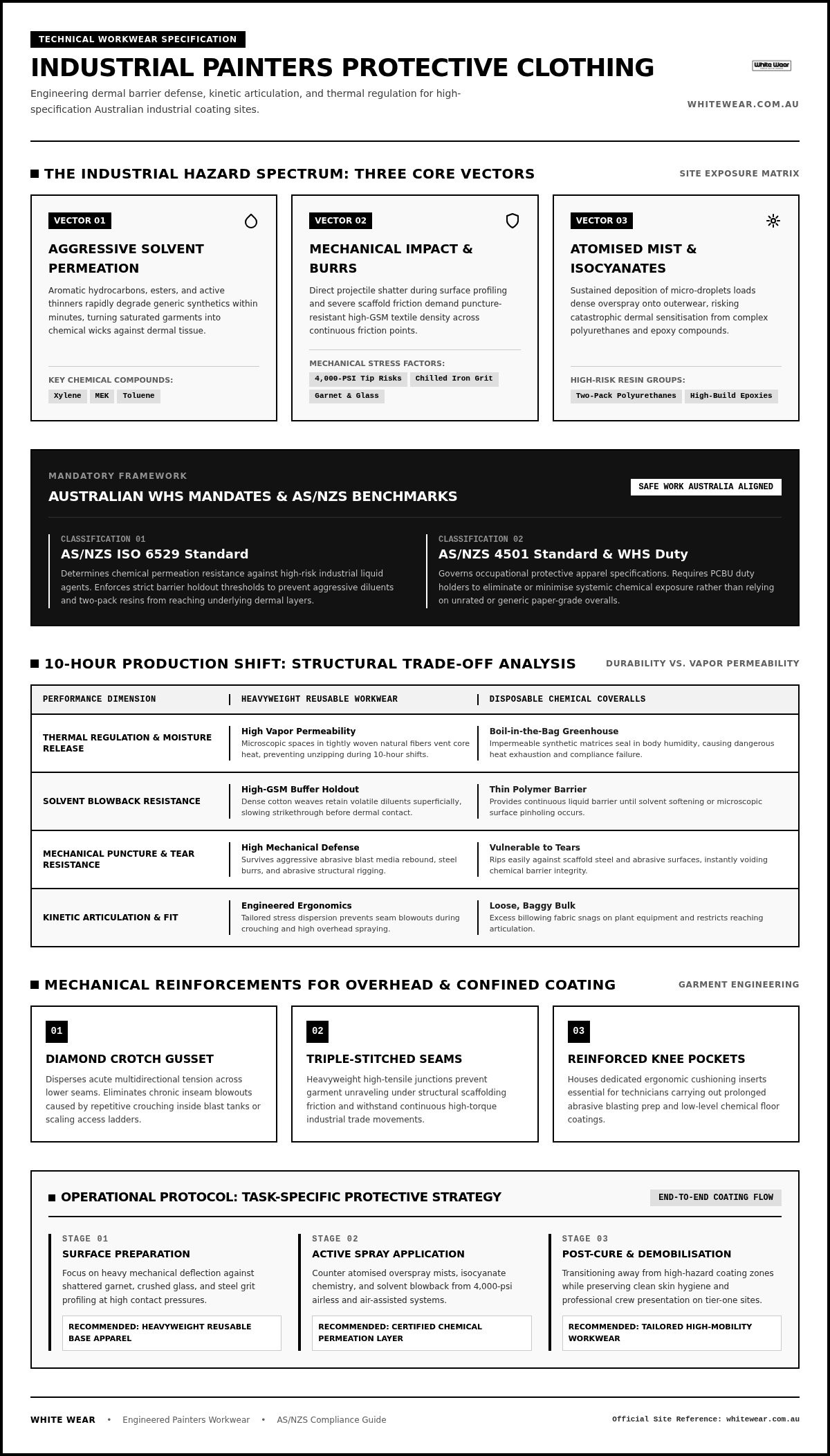
Generic workwear fails on high-spec coating jobs. True industrial painters protective clothing functions as an engineered shield, integrating chemical, thermal, and mechanical defense into a cohesive barrier. Far from basic utility garments, these ensembles serve as active safety infrastructure. They protect technicians against aliphatic polyurethanes, high-build epoxies, and isocyanates that cause irreversible dermal sensitisation. Beyond liquid chemistry, painters confront severe physical friction: high-pressure fluid injection risks from 4,000-psi airless tips, abrasive rebound during profiling, and sharp steel burrs across structural scaffolding.
The Spectrum of Industrial Coating Hazards
Every coating phase introduces distinct workplace threats. Aromatic hydrocarbons, esters, and ketones in modern thinners readily dissolve standard textiles. Once saturated, fabric acts as an exposure wick against bare skin. Understanding the engineering of chemical protective clothing clarifies why simple poly-cotton trousers cannot withstand active solvents or atomised particulates. Industrial coating specialists face three intersecting hazard profiles:
- Solvent Permeation: Aggressive carriers like xylene, MEK, and toluene degrade synthetic barriers within minutes, migrating into dermal layers without immediate surface wetness.
- Abrasive Media Rebound: Garnet, chilled iron grit, and crushed glass shatter upon impact, requiring dense, puncture-resistant textile weave across high-contact zones.
- Persistent Overspray Mist: Sustained deposition from airless and air-assisted spray operations loads micro-droplets onto outer fabrics, creating chemical bleed-through without dense barrier construction.
Australian Safety Standards and WHS Mandates
Under Safe Work Australia model work health and safety (WHS) regulations, PCBU duty holders must eliminate or minimise dermal exposure to hazardous chemicals. This obligation extends beyond handing out flimsy paper overalls. Australian industrial worksites reference AS/NZS standards, aligning with international classifications like AS/NZS ISO 6529 for chemical permeation resistance and AS/NZS 4501 for occupational protective apparel.
Compliance demands a precise match between task chemistry and barrier performance. Providing site crews with certified industrial painters protective clothing isn't merely an administrative box to check; it ensures legal protection and safeguards technicians against systemic toxicity throughout long production shifts.
Key Criteria for Selecting Industrial Painting Apparel
Selecting high-performance gear requires balancing impenetrable defense against human physiological demands. When coating structural steel or tank interiors across an exhausting ten-hour shift, substandard garments quickly turn into liabilities. Selecting true industrial painters protective clothing requires evaluating structural density, kinetic freedom, and finish protection simultaneously.
Fabric Density and Permeation Resistance
Textile weight directly dictates barrier integrity. While thin disposable synthetics create an unbreathable greenhouse, heavyweight, tightly woven natural fibres offer dual advantages. High-GSM cotton fabrics slow down aggressive solvent blowback by holding volatile diluents before they strike through to bare skin. At the same time, microscopic spaces within natural weaves allow body heat and moisture vapor to escape. As outlined in international safety benchmarks like the OSHA general requirements for personal protective equipment, assessing physical barrier density alongside permeation rates ensures workers stay shielded without risking rapid heat exhaustion.
Reinforced Construction and Articulation
Industrial coating demands extreme movement. Spraying overhead beneath bridge spans or crouching inside blast tanks subjects seams to acute tension. Standard trade apparel splits rapidly under these conditions.
Engineered garments incorporate specific mechanical reinforcements:
- Diamond Crotch Gussets: Disperse multidirectional stress to eliminate common inseam blowouts when crouching or climbing ladders.
- Reinforced Knee Pockets: Accommodate protective cushioning inserts for prolonged surface prep and floor coating work.
- Triple-Stitched Seams: Defend high-stress junctions against scaffolding snags, abrasive blast grit, and raw steel edges.
Contamination Prevention for High-Spec Finishes
A single stray textile fibre can ruin hours of work on high-gloss marine topcoats or mirror-finish industrial urethanes. Microscopic lint inclusions cause surface blistering that demands costly solvent wiping, sanding, and recoating. High-grade industrial painters protective clothing must feature low-lint or lint-free exterior surfaces that prevent shedding in controlled spray environments. Integrated utility pockets also keep wet-film gauges, spare tips, and respirator wipes readily accessible. Upgrading your crew to refined, trade-dedicated painters workwear delivers the precision needed to protect client finishes while enduring brutal site conditions.
Reusable Heavyweight Workwear vs. Disposable Chemical Coveralls
Every commercial painting contractor eventually confronts the trade-off between disposable polypropylene suits and premium reusable cotton drill. While non-woven disposable coveralls serve specific chemical isolation tasks, relying on them as standard daily attire creates severe operational drawbacks. Choosing the right tier of industrial painters protective clothing requires evaluating heat management, physical resilience, and real-world economics across prolonged shifts.
Thermal Stress and Moisture Permeability
Disposable polymer laminates lock in heat. Under the harsh Australian sun, non-breathable films turn into micro-greenhouses within thirty minutes, elevating internal core temperatures rapidly. This microclimate induces heavy sweating, dehydration, and early mental fatigue, which directly degrades spray precision and triggers costly application errors.
Heavyweight cotton drill breathes naturally. Dense natural fibres facilitate active air circulation and evaporative cooling. By releasing trapped body heat while physically blocking paint mist, structured workwear keeps applicators calm, sharp, and physically steady through ten straight hours on site.
Puncture Resistance and Operational Longevity
Paper-thin synthetic films offer negligible mechanical resistance. A single brush against an unground weld, rough abrasive grit, or staging clamp instantly tears a disposable suit open. Once ruptured, the barrier fails entirely, leaving the skin vulnerable to aggressive overspray.
Heavy-duty painters clothing survives relentless site abuse:
- Friction Defense: Thick, tightly spun yarns resist abrasion against concrete structures and abrasive grit without shredding.
- Mid-Shift Reliability: Eliminates continuous stops to replace split coveralls, preserving job site momentum.
- Barrier Security: Prevents unmonitored chemical exposure through concealed fabric breaches.
According to NIOSH research into occupational skin exposure and dermal absorption, even small barrier punctures expose workers to systemic toxicities from paint catalysts and organic resins. Mechanical durability isn't just about saving fabric; it preserves your primary health shield.
Environmental Impact and Long-Term Cost Analysis
The hidden cost of cheap disposables accumulates fast. Discarding two to three polymer coveralls per worker every day fills site skips with persistent microplastic waste. Across a six-month commercial project, these recurring replenishment cycles consume thousands of dollars that yield zero lasting asset value.
Investing in durable, washable painters workwear completely restructures project economics. Reusable garments endure dozens of tough industrial wash cycles while maintaining a sharp, unified team presence. Explore our comprehensive guide to painters overalls to examine how elevated workwear blends lasting economy, dignity, and industrial-grade protection.
Optimising Protection Across Different Industrial Painting Tasks
A single protective standard cannot accommodate the entire industrial coating cycle. Profiling structural steel with abrasive grit presents entirely different physical risks than atomising two-pack epoxy in a spray booth. Tailoring your industrial painters protective clothing to each operational stage prevents premature gear breakdown and safeguards painters through every phase of production.
Abrasive Blasting and Aggressive Surface Preparation
Surface profiling demands heavy mechanical defense. High-velocity garnet and shot rebound quickly penetrate standard light workwear, abrading the skin beneath. Crews operating blast equipment require tough, abrasion-resistant base layers beneath their primary blast hoods and leather gauntlets. Sealing wrist and ankle cuffs prevents ricocheting grit from collecting inside boots and sleeves. Equipping your prep team with rugged painters pants delivers the puncture resistance and structural gauge needed to withstand friction against rough substrates.
High-Pressure Airless and Electrostatic Spray Applications
High-volume airless transfers generate high-velocity mist clouds that seek out any opening in a painter's barrier. Atomised droplets find their way into unsealed collar lines, exposed wrists, and standard front zippers. Maintaining total barrier security requires:
- Interlocking Ensembles: Overlapping elastic or adjustable hook-and-loop closures that seal tightly over full-face supplied-air hoods.
- Storm Flaps: Dual-layer zip covers that block pressurized mist migration along the chest.
- Static Dissipation: Conductive, natural anti-static fibres that safely channel charge buildup away in solvent-dense spray zones.
Substrate Cleaning and Chemical Washdowns
The post-spray cleanup phase often carries the highest risk of acute chemical exposure. Flushing fluid lines, purging airless pumps, and soaking spray tips exposes technicians to concentrated solvent splashes. During line cleanouts, pair your standard industrial painters protective clothing with chemical-resistant aprons and heavy-duty nitrile gloves. Ensure gauntlet cuffs sit securely over sleeves to prevent aggressive thinners from running down inside the garment. Establishing thorough washing protocols prevents trapped solvent residues from re-depositing onto fabric fibres between shifts.
Equip your team for every stage of the project. Explore dedicated painters workwear engineered for industrial endurance and elevate your crew's daily defense.
Selecting Elevated Painters Workwear for the Modern Industrial Trade
Workplace gear reflects professional standards. For decades, the trade accepted ill-fitting, shapeless garments as an unavoidable reality of industrial coating. Today, forward-thinking contractors recognise that industrial painters protective clothing sits at the vital intersection of clinical defense, ergonomic agility, and refined aesthetics. Upgrading your team's everyday kit does not simply satisfy site safety officers; it commands immediate authority across high-specification commercial and infrastructure sites.
The Impact of Professional Presentation on Industrial Sites
First impressions matter during major tier-one tenders and client audits. When asset owners, head builders, and structural engineers step onto a site, the visual discipline of your crew speaks volumes about your operational standards. A painting crew outfitted in clean, structured, and purposefully fitted workwear projects competence and pride in craft. Ragged, paint-caked throwaway suits suggest compromise, whereas crisp, unified workwear signals exacting attention to detail, transforming crew apparel into a genuine competitive advantage.
Building a Complete Industrial Protective Kit
Peak performance relies on an integrated equipment ecosystem where every layer collaborates seamlessly:
- Structured Outer Defense: Heavyweight painters workwear engineered with reinforced stress points, tool pockets, and clean wrist closures.
- Advanced Respiratory Integration: Clean necklines and low-profile collars designed to seat comfortably alongside positive-pressure airline hoods or PAPR units without bunching.
- Thermal Regulation Base Layers: Breathable, moisture-wicking undergarments that accelerate cooling across arduous twelve-hour production cycles.
- Certified Safety Footwear: Chemical-resistant, slip-rated safety boots featuring composite or steel protection to withstand harsh floor prep reagents and heavy equipment drops.
For a detailed breakdown of head-to-toe gear pairing, explore the professional painter’s guide to elevated workwear.
Investing in Purpose-Built Protection with White Wear
White Wear was founded on a simple premise: professional painters deserve apparel engineered specifically for their trade, not repurposed agricultural overalls or flimsy disposable shells. By focusing exclusively on painters clothing, White Wear delivers heavyweight, premium natural-fibre garments that marry dependable chemical and overspray defense with exceptional breathability under tough conditions.
With reliable nationwide delivery across Australia, commercial outfits can readily transition their crews to elevated industrial painters protective clothing. Investing in trade-dedicated painters workwear provides your workforce with the physical comfort, durability, and professional dignity required to master high-stakes industrial finishing every single day.
Master Your Site Defense with Purpose-Built Workwear
Every commercial coating project tests the limits of your gear. Settling for unbreathable throwaways compromises physical safety, project timelines, and crew stamina under demanding Australian working conditions. Selecting the right industrial painters protective clothing means investing in high-density barrier fabrics, ergonomic articulation, and site-compliant chemical resistance that hold up across tough ten-hour production runs.
True safety works alongside human physiology rather than against it. When your crew operates in durable, breathable garments, fatigue drops and precision climbs. Elevate your operational standards today. Equip your crew with elite protection and refined style; explore professional painters workwear engineered specifically for the rigorous demands of professional painting. Backed by heavyweight natural-fibre construction and fast nationwide delivery across Australia direct to your job site or workshop, you can step onto every project with complete confidence, total protection, and genuine trade pride.
Frequently Asked Questions
What makes industrial painters protective clothing different from standard residential trade workwear?
Industrial painters protective clothing is engineered specifically for chemical permeation resistance, mechanical tear resilience, and anti-static compliance, whereas residential trade wear focuses on light dust and water-based paint protection. Industrial garments utilize high-density weaves, reinforced stress gussets, and sealed closures built to withstand two-pack epoxies, aggressive solvents, and abrasive profiling. Standard residential utility trousers lack the barrier density required to stop hazardous solvent bleed-through.
Can heavy-duty 100% cotton painters workwear protect against toxic chemical solvents?
Heavyweight natural cotton drill acts as an effective physical buffer against accidental splashes, minor drips, and overspray mist, but it isn't an impermeable chemical barrier. Its tight weave slows solvent absorption, giving applicators time to react before liquid reaches the skin. For prolonged chemical immersion, continuous liquid-jet spraying, or hazardous solvent decanting, cotton workwear must be paired with specialized secondary impermeable aprons or dedicated barrier coveralls.
When should an industrial painter choose disposable coveralls over reusable workwear?
Disposable coveralls are best reserved for short-duration tasks involving continuous high-deposition overspray, concentrated isocyanate spray cycles, or hazardous lead abatement where garments must be discarded as contaminated waste. Reusable cotton workwear serves as the superior baseline for everyday operations, surface prep, and abrasive blasting. Using disposables for entire projects increases overhead, generates extensive synthetic waste, and accelerates worker fatigue through extreme heat retention.
How should industrial painters wash garments covered in epoxy and polyurethane overspray?
Wash heavily soiled workwear separately from domestic clothing using heavy-duty industrial detergents and warm water cycles. Scrape off dried overspray mechanically before washing, and never pour raw solvents into standard laundry machines. Allow uncured paint spots to dry fully prior to laundering to prevent solvent migration onto clean fabric sections. For crews regularly handling toxic catalysts, commercial laundry decontamination provides the safest long-term maintenance.
What Australian safety standards govern protective apparel for industrial spray painting?
Protective clothing on Australian industrial sites is governed under AS/NZS standards aligned with international safety benchmarks. Key frameworks include AS/NZS ISO 6529 for chemical permeation resistance and AS/NZS 4501 for occupational protective apparel specifications. Safe Work Australia codes of practice mandate that PCBUs select protective clothing that strictly satisfies the health and safety hazard controls detailed on the coating manufacturer's safety data sheet.
How do industrial painters avoid dangerous heat exhaustion while wearing protective clothing?
Preventing heat stress requires pairing breathable, high-GSM natural fibre apparel with structured cooling protocols rather than wearing airtight synthetic suits all day. When selecting industrial painters protective clothing, choose heavy cotton drill that breathes naturally to facilitate continuous sweat evaporation. During high-temperature shifts, integrate vortex cooling tubes connected to supplied-air respirators, mandate structured hydration breaks, and strip off non-breathable polymer layers when outside active spray zones.


