


Your premium painters trousers are more than just a uniform; they're a vital component of your professional identity that shouldn't be retired because of a single spill. It's a common frustration to see a sharp, high-performance silhouette compromised by a stubborn stain. When it comes to removing oil-based paint from clothes, the margin for error is slim. You've likely worried that aggressive scrubbing or harsh chemicals might thin the fabric or leave behind a permanent chemical odor that lingers long after the shift ends.
We understand that your workwear is an elevated essential designed for dignity and comfort during grueling hours. You deserve a solution that balances clinical power with fabric preservation. This article provides a masterclass in restoration, showing you how to use biodegradable, low-VOC options like Citristrip, which currently retails for about $13.98, to lift stains safely. We'll examine the step-by-step protocol to eliminate odors and restore softness, helping you avoid the high costs of professional cleaning while maintaining a sophisticated appearance on the clock.
Key Takeaways
- Understand the molecular bond of alkyd resins to ensure you select a solvent that breaks the stain without degrading the fiber.
- Act decisively with a professional blotting and scraping protocol to prevent pigments from wicking deep into the weave.
- Master the clinical precision of removing oil-based paint from clothes using mineral spirits to maintain your garment’s tailored silhouette.
- Neutralize solvent residues and manage post-cleaning odors to keep your professional wardrobe fresh and functional.
- Learn how high-density, premium painters workwear acts as a technical barrier, making future restorations more efficient.
The Chemistry of Oil-Based Stains on Professional Apparel
Oil-based paint stains are oxidative polymers that require specific solvent intervention. Unlike water-based alternatives that evaporate and leave a surface-level film, oil paints undergo a complex chemical transformation. They rely on alkyd resins, which are synthetic polyesters modified with fatty acids. When these resins encounter the atmosphere, they don't just dry; they cross-link. This creates a molecular bond that weaves itself into the very structure of your garment. Understanding The Chemistry of Stain Removal is essential for preserving the sophisticated silhouette of your gear. Success in removing oil-based paint from clothes depends entirely on disrupting this polymer chain before it reaches total stability.
Water-based cleaning methods are fundamentally ineffective against these stains because oil is hydrophobic. Aqueous solutions cannot penetrate the resin shroud. You need a chemical solvent that matches the polarity of the paint to dissolve the binder. The difficulty of this task is dictated by the curing stage. Professionals recognize three distinct phases in the restoration timeline:
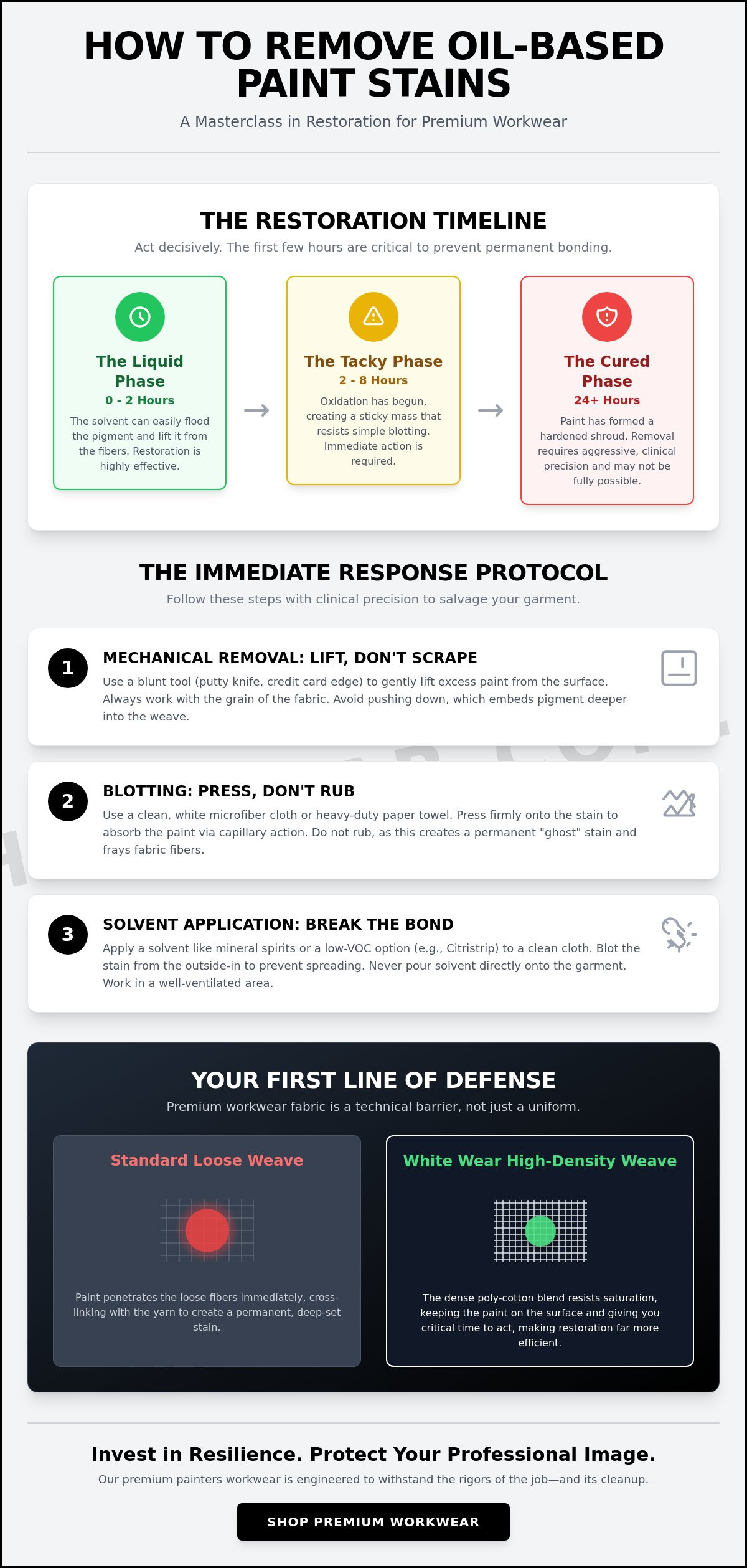
- The Liquid Phase: The first two hours after contact. The solvent can easily flood the pigment and lift it from the fibers.
- The Tacky Phase: Two to eight hours post-spill. The oxidation has begun, creating a sticky, semi-solid mass that resists simple blotting.
- The Cured Phase: After 24 hours. The paint has formed a permanent, hardened shroud that requires aggressive, clinical precision to break down without damaging the underlying fabric.
Industrial vs. Artistic Oil Paint
Trade-grade paints are engineered for maximum adhesion and environmental resilience. They contain high concentrations of binders designed to stick to non-porous surfaces like wood and metal. On a textile level, these binders create a permanent casing around individual threads. While an artist's oil paint might sit gently on a canvas, industrial paint aggressively seeks a bond. This is why standard cotton tees often fail; the paint penetrates the loose weave and locks in. Professional painters workwear uses high-density weaves to prevent this deep penetration, providing a critical buffer during the restoration process.
Fabric Integrity and Chemical Sensitivity
The success of removing oil-based paint from clothes is often limited by the fabric's chemical tolerance. Low-quality apparel frequently uses thin synthetic blends that are susceptible to solvent burn. This occurs when a cleaning agent is too aggressive for the fiber, causing the fabric to melt or thin. Premium garments are different. They utilize elevated fabrics, such as heavy-duty poly-cotton blends, specifically designed to withstand the rigorous cleaning protocols required on the job. These materials maintain their strength and flattering shape even after multiple solvent treatments, ensuring your professional appearance remains uncompromised by the demands of the shift.
The Immediate Response Protocol: Salvaging Your Shift
When the spill happens, panic is your greatest enemy. You're in the middle of a shift, and your professional appearance is on the line. Removing oil-based paint from clothes requires immediate, clinical intervention to prevent the alkyd resins discussed earlier from cross-linking with the fabric. The goal is to stabilize the area before the paint reaches its tacky phase. Decisive action now determines whether the garment remains a staple of your wardrobe or becomes a costly loss.
Start with mechanical removal. Use a blunt tool, such as a putty knife or the edge of a credit card, to lift the excess paint from the surface. Work with the grain of the textile. A frantic, directionless scrape will only fray the fibers and embed the pigment deeper into the weave. Avoiding the spread is the hallmark of a professional; keep your movements localized and precise. Once the surface mass is gone, transition to blotting. This is where the science of capillary action takes over. Use a clean, white microfiber cloth or heavy-duty paper towels. Press firmly but do not rub. Rubbing creates a "ghost" stain, a permanent distortion in the fabric's memory where the pigment has been forced into the core of the yarn.
Mechanical Removal Standards
Precision is paramount. If you're wearing elevated painters clothing, the high-density weave provides a slight temporal advantage by resisting immediate saturation. Use this time to lift the paint vertically. Never push down. By working with the grain, you ensure the integrity of the weave remains intact, preserving the garment's silhouette and professional drape.
Blotting vs. Rubbing
The difference between restoration and ruin lies in the technique. Rubbing generates heat and friction, which can accelerate the bonding of oil-based pigments to synthetic fibers. Blotting, however, relies on wicking. By using a highly absorbent material, you draw the liquid paint out of the fabric and into the cloth. For a more detailed breakdown of these mechanics, you can consult a step-by-step guide on standard textile care.
After blotting, isolate the area to protect the rest of your garment. Place a piece of cardboard or thick plastic inside the clothing, directly behind the stain. This prevents the oil from migrating to the reverse side of the silhouette. Finally, apply a small amount of mild detergent to the area. This acts as a temporary surfactant, emulsifying the oils and slowing the oxidation process until you can apply a proper solvent. This immediate response is the first step in successfully removing oil-based paint from clothes while protecting your investment in quality gear.
Solvent Selection: Precision Tools for Paint Removal
The restoration of your professional wardrobe requires more than just effort; it demands the right chemical toolkit. Once you've stabilized the spill using the immediate response protocol, you must select an agent capable of dissolving the alkyd bond without compromising the textile's structural integrity. Mineral spirits are the gold standard for removing oil-based paint from clothes because they strike an ideal balance between aggressive pigment dissolution and fabric safety. Mineral spirits offer a higher flash point and more controlled solvency than raw thinners, making them the superior choice for workwear care.
While mineral spirits are versatile, turpentine remains a powerful, traditional option for heavy-duty natural fibers like 100% cotton canvas. However, its high solvency can be punishing on modern synthetic blends. For those prioritizing a safer workspace, bio-solvents like Citristrip have become essential. As of May 2026, a 1-quart container of Citristrip retails for approximately $13.48 to $13.98. These biodegradable, low-VOC formulas are designed to stay active for up to 24 hours, allowing for a more controlled, less volatile restoration process during a busy shift.
The Solvent Hierarchy
Your choice must align with the technical specifications of your gear. If you're wearing flexible painters pants, you need a solvent that won't degrade the elastane responsible for that critical four-way stretch. Harsh industrial thinners can strip away antimicrobial coatings and moisture-wicking treatments, leaving your "elevated essentials" feeling like generic, uncomfortable uniforms. Always prioritize the mildest effective solvent to protect the sophisticated silhouette and performance features of your clothing.
Application Technique: The 'Spot Test' Protocol
Clinical precision extends to how you apply these chemicals. Never flood the fabric immediately. Begin with a spot test on an inconspicuous area, such as the inside of a hem or pocket bag, to verify colorfastness. Once confirmed safe, utilize the "back-loading" method. Place the stained area face down on a stack of clean paper towels and apply the solvent from the inside of the garment. This pushes the paint out of the fibers rather than deeper into the weave.
Safety is as important as the result. Always manage fumes by working in a well-ventilated space and use gloves to prevent skin contact with concentrated solvents. By treating the removal process with the same authority you bring to the job site, you ensure your professional appearance remains uncompromised and your high-performance gear continues to provide the dignity and comfort you deserve.
Aftercare: Restoring the Silhouette and Fabric Strength
Successful pigment removal is only half the battle. Once the stain is gone, you must address the chemical footprint left behind. The solvents required for removing oil-based paint from clothes are effective because they are chemically aggressive, but this same power can lead to long-term fiber degradation if not neutralized. Residual oils from mineral spirits or turpentine act as slow-acting corrosives on synthetic blends, eventually thinning the material and compromising the garment's resilience. Restoration is a clinical process that concludes only when the fabric's original pH and texture are restored.
Odour management is equally critical for maintaining a professional presence. The "trade scent" of industrial chemicals can linger, signaling a lack of precision that contradicts your professional identity. Incorporating an odor-neutralizing surfactant or a cup of white vinegar into the final rinse cycle helps strip away these volatile organic compounds. This step ensures your gear returns to being an elevated essential that provides comfort rather than a distraction during a long shift.
Removing Solvent Residue
Traditional laundry detergents often lack the surfactant strength to lift industrial-grade oils completely. Use a heavy-duty degreaser to emulsify the remaining solvent before the final wash. It's mandatory to air-dry the garment after this step. Never place solvent-treated fabric in a tumble dryer, as residual chemicals can pose a combustion risk. Air-drying also allows you to inspect the fabric for "invisible" oil rings. These rings often reappear only after the moisture has evaporated, indicating that a second degreasing pass is required.
Remember that any rags or materials used during this process must be handled with care. Under EPA regulations, solvent-contaminated waste is subject to specific disposal protocols to prevent environmental hazards. Following these guidelines is part of the "cradle to grave" responsibility every professional carries.
Maintaining Professional Dignity
Restoring the original drape is what separates high-performance gear from a common rag. Learn how to properly clean and care for white workwear to ensure your apparel remains bright and authoritative. Once laundered, a light steam or iron helps reset the fibers, returning the garment to its flattering, professional silhouette. While professional dry cleaning for work uniforms can cost between $10 and $25 per item, mastering this in-house protocol preserves both your budget and your wardrobe's longevity.
Be decisive about when to admit defeat. If the solvent treatment has caused visible thinning or if the weave has shifted significantly, the piece may no longer provide the dignity you deserve. If your current wardrobe isn't standing up to the demands of the job, invest in premium painters clothing engineered to withstand the rigors of the professional shift.
Investing in Resilience: Why Quality Workwear Matters
Removing oil-based paint from clothes is a necessary skill, but the ease of that task is determined by the quality of your gear. Generic apparel often features loose, porous weaves that invite pigments to settle deep within the fiber core. Once an oil-based resin penetrates these gaps, even the most precise clinical protocol struggles to achieve full restoration. High-performance painters workwear is engineered with high-density technical textiles that act as a structural barrier. These fabrics provide a critical temporal window, slowing the rate of absorption and allowing you to act decisively before the paint cures.
Investing in premium gear is a strategy for long-term wardrobe resilience. While a standard pair of trousers might become a "rag" after a single significant spill, professional-grade garments are designed to survive the solvent treatments described in this masterclass. When you consider that professional cleaning rates for uniforms range from $10 to $25 per item, the ability to successfully perform in-house restoration on a durable garment significantly reduces your annual overhead. It's about maintaining a sophisticated appearance without the constant cycle of replacement.
Designed by Professionals, for Professionals
The painting industry demands more than just a surface-level aesthetic. Your clothing must facilitate movement while resisting the harsh chemical realities of the job site. An elevated uniform serves as a silent partner in your professional branding, signaling competence and attention to detail. White Wear understands this linguistic duality; we blend technical durability with premium fashion descriptors. We don't just sell clothing; we provide the elevated essentials that allow you to navigate a demanding workplace with dignity and comfort.
The White Wear Standard
Our garments are designed by those who have lived the long shift. We prioritize technical innovations like four-way stretch for mobility and high-density weaves for stain resistance. These aren't just functional tools; they are sophisticated silhouettes designed to make you look and feel like the hero you are. You deserve better than the status quo of disposable, ill-fitting gear. By choosing textiles that withstand the rigors of removing oil-based paint from clothes, you ensure your professional presence remains uncompromised from the first hour to the last. Explore the White Wear collection and elevate your professional presence.
Mastering the Art of Professional Restoration
Mastering the clinical precision of removing oil-based paint from clothes is about more than just aesthetics; it's about preserving the tools of your trade. You've discovered that immediate mechanical removal and the strategic application of solvents can reverse even the most daunting spills. By treating your workwear with the same authority you bring to your projects, you maintain a silhouette that reflects your professional dignity. Your gear is an elevated essential that deserves a protocol as sophisticated as the work you perform.
Your apparel should be a high-performance asset rather than a liability. White Wear provides garments designed by trade professionals who understand the physical reality of the long shift. Our premium high-density fabrics provide a resilient barrier against saturation, ensuring your clothing remains functional and flattering. With nationwide Australian shipping, your next professional uniform is easily accessible. You deserve essentials that work as hard as you do. Don't let a single spill define the quality of your shift. Elevate your professional wardrobe with White Wear’s resilient painters gear. Move forward with the confidence of a professional who is always prepared for the next challenge.
Frequently Asked Questions
Can I remove dried oil-based paint from my work trousers?
Yes, you can remove dried paint, though it requires more clinical patience. Cured resins have already cross-linked with the fabric, so you'll need a solvent like Citristrip to soften the mass over several hours. Once the bond is weakened, you can proceed with the standard protocol for removing oil-based paint from clothes without compromising the textile's integrity or the garment's professional drape.
Is it safe to use turpentine on polyester-blend painters pants?
Turpentine is often too aggressive for modern synthetic blends. While effective on 100% cotton canvas, its high solvency can cause solvent burn or permanent melting on polyester fibers. We recommend a more controlled agent like mineral spirits for your gear, which provides the necessary power while protecting the sophisticated silhouette and four-way stretch of your modern workwear.
What is the best household substitute for mineral spirits?
Isopropyl alcohol or heavy-duty vegetable oil can serve as temporary emulsifiers in an emergency. These household items might lift surface pigment, but they lack the chemical authority to fully dissolve industrial-grade binders. For a restoration that truly maintains your professional dignity, specialized solvents remain the only reliable tool for deep-seated oil stains and long-term fabric health.
How do I get the smell of paint thinner out of my clothes?
Neutralizing the trade scent requires stripping the lingering volatile organic compounds from the weave. After your garment has air-dried completely, soak it in a solution of one part white vinegar to four parts water for at least thirty minutes. This breaks down the chemical odor before the final laundering, ensuring your elevated essentials smell as fresh as they look during a long shift.
Will oil-based paint ever come out of white workwear completely?
Complete restoration is entirely possible on white textiles if you utilize the back-loading technique. By applying solvent from the inside out, you push the pigment away from the face of the fabric. This prevents the ghosting effect that often plagues white painters clothing, keeping your professional appearance bright, authoritative, and free from the shadows of past spills.
Does dish soap actually help with oil-based paint stains?
Dish soap is an excellent secondary degreaser but cannot replace a primary solvent pass. It helps emulsify the oily residue left behind by mineral spirits or turpentine during the final rinse cycle. Using it as a pre-treatment for removing oil-based paint from clothes helps slow down the oxidation process, making the eventual professional solvent pass significantly more effective.
What happens if I put solvent-soaked clothes in the dryer?
Placing solvent-treated apparel in a tumble dryer is a serious safety risk that must be avoided. Even after a thorough washing, trace amounts of flammable chemicals can remain in the fibers and ignite under high heat. Mandatory air-drying is the only way to ensure all volatile agents have safely evaporated from your high-performance gear before it returns to your wardrobe.
How can I prevent paint from soaking into my clothes during a shift?
Prevention starts with the density of your fabric weave. Premium painters workwear is engineered with high-density textiles to resist immediate saturation, providing a vital temporal buffer when a spill occurs. You can also apply a professional-grade fabric protector to create a hydrophobic barrier that keeps oil-based pigments on the surface rather than allowing them to wick deep into the fiber core.


