


A budget pair may become the more expensive choice once paint, repeated washing and long workdays take their toll. For painters, a cost-benefit analysis of premium vs budget workwear starts with more than the ticket price: it weighs how many usable workdays each garment delivers before it needs replacing.
It’s reasonable to focus on the upfront cost, especially when workwear gets used hard. But price alone doesn’t show whether a garment suits your workload, feels practical through a full day or fits your care routine. Premium isn’t automatically better value, and budget isn’t always cheaper over time.
This comparison helps you assess painters workwear using job-relevant criteria, then estimate cost per usable workday with your own purchase and replacement figures. Consider wear, paint exposure, washing, comfort and the demands of your work, and weigh the trade-offs against your priorities. White Wear sells specialised clothing designed for professional painters, a purpose-designed alternative to generic apparel to include in your comparison.
Key Takeaways
- Compare fit, mobility, comfort and useful features against the tasks you perform on painting jobs.
- Factor in paint exposure, kneeling, reaching and washing when assessing how long workwear remains suitable to wear.
- Use the same work period and job conditions to make a fair cost-benefit analysis of premium vs budget workwear.
- Track purchase price, wears, care, condition changes and replacement timing to estimate your own cost per usable workday.
- Match your choice to work frequency, comfort priorities and tolerance for replacement, rather than assuming one price tier suits every painter.
Premium vs budget workwear for painters: what does “value” really mean?
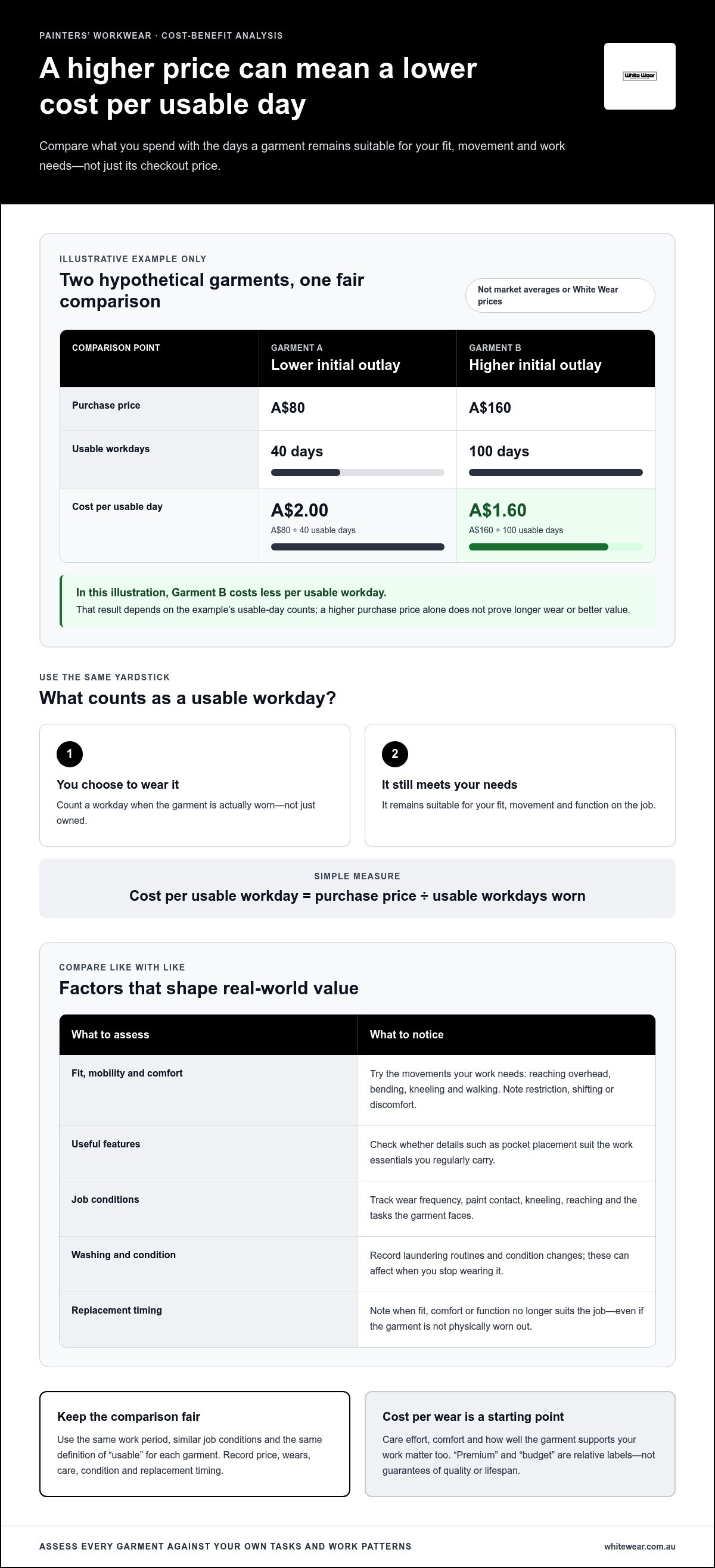
For painters, value is what workwear delivers across the days it remains suitable for the job, not simply what it costs at checkout. A garment may be worn often but become uncomfortable, restrictive or unsuitable for a task before it is physically worn out. For a consistent comparison, define a “usable workday” as a day you choose to wear the garment and it still meets your needs for fit, movement and function.
Purchase price alone cannot establish workwear value, because it says nothing about how many usable workdays the garment will provide. This is the central idea behind a cost-benefit analysis of premium vs budget workwear: compare the initial outlay with actual use and replacement, rather than treating a higher price as an automatic sign of better value. The broader method of weighing costs against benefits is outlined in Cost-benefit analysis (CBA).
What counts as premium or budget painters workwear?
“Premium” and “budget” are relative comparison labels, not regulated grades or promises about quality and lifespan. Price bands can vary between products, retailers and markets, including across Australia. A higher price doesn’t prove a garment will last longer, just as a lower price doesn’t prove it will fail sooner.
Look past the label. Compare construction, fit, mobility, useful features and the work the garment is intended to support. A painter who spends long periods reaching overhead may value freedom of movement, while another may prioritise a comfortable fit for frequent kneeling. White Wear’s specialised clothing for professional painters gives you a relevant category to assess alongside generic apparel. Judge each garment on its suitability for your tasks, not its price tier alone.
How does cost per wear help compare workwear?
Start with a simple measure: cost per usable workday = purchase price ÷ number of usable workdays worn. Use the same definition of “usable” for each option. Record the price in A$ and count the workdays when you wore each garment and it remained fit for your needs.
For illustration only, imagine one garment costs A$80 and is usable for 40 workdays: its cost per usable day is A$2. A second hypothetical garment costs A$160 and is usable for 100 workdays: its cost per usable day is A$1.60. These figures aren’t market averages or White Wear prices. They simply show how a larger initial spend could compare if the garment delivers more usable days.
Your own result depends on wear frequency and replacement timing. A garment worn occasionally may take longer to accumulate usable days than one worn for most shifts. Washing routines, changes in condition and whether the fit or function still suits the job can also affect when you stop wearing it. Track those details over the same work period for each option. Cost per wear is a practical starting point, not the whole verdict: care effort and how well the garment supports your work also matter.
Which workwear factors shape long-term value on painting jobs?
A garment’s value depends on how it performs in your working conditions, not just how it looks when new. Compare construction, fit, mobility, comfort and useful features against the tasks you actually do. A painter handling occasional touch-ups has different demands from someone wearing workwear through frequent, full-day jobs.
Observable features describe what a garment has; they don’t prove how long it will last. You can inspect seams, closures, fit and pocket placement, but assess durability through use rather than assumptions based on price or appearance. This keeps your comparison grounded in what you can observe.
Which work conditions affect workwear wear and replacement?
Start with the job. Consider how often you wear the garment, the tasks it faces, how much you move, how often paint contacts it and how frequently you launder it. Kneeling, reaching and repeated washing may affect condition, but they’re variables, not a universal test that predicts a set lifespan.
Record your own patterns. Occasional touch-ups may mean fewer wears and less frequent laundering; regular, full-day painting can mean more repeated movement and care. Your washing habits and job conditions may affect when a garment needs replacing, so use your experience rather than assuming every painter’s workwear ages alike.
How should painters compare comfort and function?
Assess fit and movement in relation to the day’s tasks. Reach overhead, bend, kneel and walk as you would at work. Notice whether the garment shifts, restricts movement or feels uncomfortable. Poor fit or discomfort can make a workday less pleasant and may distract from tasks, though the effect varies by person and job.
Check whether features serve a real purpose. Pocket placement matters if you regularly carry work essentials; extra details add little value if they don’t suit your routine. For trousers, the professional guide to choosing painters pants offers more focused selection advice.
Workwear isn’t automatically protective equipment. If a task requires PPE for a specific hazard, assess that separately from comfort and everyday clothing features. The US-based OSHA Personal Protective Equipment (PPE) Guidelines provide an overview of PPE considerations, but they aren’t Australian guidance.
For a practical comparison, note each garment’s fit, movement, useful features and condition during the same kinds of work. White Wear painters workwear is designed for professional painters and can be assessed against the same task-specific criteria.
Premium vs budget painters workwear: how do the trade-offs compare?
Price tiers can help organise a comparison, but they don’t settle it. The right choice depends on how often you wear the garment, what your painting tasks demand and which attributes you can verify. Use the matrix as a starting point, then apply your own purchase records and wear estimates.
| Factor | Budget workwear | Premium or specialised workwear |
|---|---|---|
| Upfront spend | May suit a tighter immediate budget or a garment needed for limited use. | May require a larger initial outlay; weigh it against the features and use you actually need. |
| Expected use | Suitability depends on fit, construction and how demanding the work is, not price alone. | Assess the garment’s stated attributes and your own experience rather than assuming a longer service life. |
| Care | Follow its care instructions and record how your routine affects condition. | Use the same approach: care needs and laundering frequency can influence your comparison. |
| Comfort and function | Check that fit and movement work for your tasks; a lower price doesn’t automatically mean discomfort. | Job-specific design may be worth comparing if its features suit your working day. |
| Replacement | Timing is uncertain and depends on real use and condition. | Timing is also uncertain. Don’t infer lifespan from the price tier. |
The table isn’t a verdict. Compare both options against the same job conditions and your own evidence, rather than assuming a lifespan for either category.
When might budget workwear be the practical choice?
Budget workwear may suit occasional touch-ups, a short-term need or a situation where you’re still working out which fit suits you. First check that the garment meets your task requirements and feels right in motion. If it does, a lower initial outlay may make sense for your use. That doesn’t make budget clothing inherently unsafe, uncomfortable or short-lived.
When might premium workwear offer better value?
For frequent professional use, compare specialised workwear designed around painters’ needs with generic apparel. Look for relevant attributes, then judge them through your own working days. The professional painter’s elevated workwear guide offers broader category context for that assessment.
Don’t rely on an assumed lifespan for either option. Track what you pay in A$, how often you wear each garment, how it feels during actual tasks and when its condition leads you to replace it. White Wear’s specialised painters workwear is designed for professional painters and can be compared with general workwear using the same criteria.
How to run your own workwear cost-benefit analysis
A useful comparison comes from your own workdays, not a promised lifespan or someone else’s assumptions. Keep the conditions as consistent as you can, record what happens, then review the numbers alongside comfort and task suitability. This makes the analysis practical for your painting routine.
What information should painters track?
Compare equivalent garment types, such as trousers with trousers, and note the job conditions each faces. Record the purchase price in A$, when each garment enters use, how often you wear it, laundering and care, repairs, visible condition changes, and any fit or comfort issues. Note when you stop wearing it and why. A simple spreadsheet or dated notes on your phone can keep the record consistent.
A step-by-step comparison
- Choose comparable options. Select garments intended for similar tasks and record their purchase prices. Note differences in construction or function that could affect how you use them.
- Set a shared observation period. Track both options over the same span and under comparable work conditions. If one garment is worn more often, record actual wears rather than treating calendar time as equivalent use.
- Log use and care. After each workday, note whether you wore the garment, what kind of work it faced, and any relevant laundering or repair. Brief observations are enough if you apply the same method to both.
- Record condition and replacement decisions. Note visible changes and when a garment no longer meets your needs. Separate what you observed from what you expect might happen later.
- Calculate cost per usable workday. Divide the purchase price by the number of usable workdays recorded. If a garment is still in use, label its wear count and result as provisional, then update them as more data comes in.
How can you avoid a misleading comparison?
Keep the comparison fair. If one option is worn for occasional touch-ups and the other for frequent full-day jobs, their results won’t reflect equivalent conditions. Note differences in task, movement, paint exposure and care rather than hiding them in a single total. If the work periods don’t align, describe the limitation and avoid treating the figures as a direct like-for-like result.
Estimates are useful, but label them clearly. An estimated future wear count isn’t observed lifespan; revise it when real use provides better evidence. Compare comfort and task suitability separately from cost per usable day. A lower calculated figure doesn’t capture every preference or prove a productivity gain or saving. Use your records to decide which trade-offs matter in your working day.
Once you’ve identified the features that matter, compare them with painters workwear designed for professional painters.
Choosing painters workwear that fits your workload and priorities
The right choice depends on how workwear fits your routine, not on a label alone. A painter working most days may weigh repeated use and comfort differently from someone handling occasional jobs. Use your wear records to guide the decision, then consider whether each garment suits the tasks and replacement choices you face.
Which workwear priorities matter most for your routine?
Start with the pattern of your work. Frequent jobs put more weight on how clothing feels and functions across repeated working days. For occasional painting, fit and task suitability may matter more than an assumed long-term saving. If your days vary, assess versatility and comfort alongside purchase price, rather than judging a garment by one task alone.
- Frequent work: Compare repeated-use needs with your own cost-per-wear estimates and how the garment feels across full workdays.
- Occasional jobs: Prioritise fit and suitability for the work you expect to do; don’t count on a long service life to justify a purchase.
- Varied tasks: Consider whether the garment remains comfortable and functional as your work shifts between reaching, kneeling and other duties.
- Low tolerance for replacement: Focus on verifiable garment attributes and your observed use, while recognising that future replacement timing can’t be assumed from price tier.
This is where your comparison becomes personal. The same garment may suit one painter’s schedule and priorities, yet be a poor match for another’s. Neither budget nor premium workwear is automatically the best choice for every job.
Where does specialised painters workwear fit into the decision?
Specialised clothing designed for professional painters gives you a relevant option to assess against your work routine. Look for functional attributes that align with your tasks, then judge fit, comfort and usefulness on their own merits. A workwear category or price point isn’t proof of a particular lifespan, warranty or performance result.
For a considered choice, bring together four factors: how often you paint, what movements and tasks your days involve, which comfort features matter to you, and how readily you’re prepared to replace clothing. Compare options using the same priorities. White Wear focuses on functional workwear designed for professional painters, making its painters clothing relevant to assess against your criteria.
Choose with confidence, not pressure. Explore White Wear painters workwear and consider how specialised clothing fits the way you work.
Make your next workwear choice with confidence
Let your next purchase reflect the way you actually work. Keep a simple record of your garments through upcoming jobs, then use that experience to refine your priorities. Your comparison doesn’t need to produce a universal winner. It needs to help you choose clothing that suits your tasks, fits your working routine and makes sense for your replacement preferences.
White Wear offers specialised clothing designed for professional painters, with functional, durable workwear as a product focus. Its painters clothing is developed with painting work in mind, and nationwide shipping is available across Australia.
Choose workwear based on the priorities you’ve identified. Explore White Wear painters workwear.
Frequently Asked Questions
Is premium workwear always better value than budget workwear?
No. A higher price doesn’t automatically mean a better fit for your work or a longer usable life. Consider whether the garment’s features matter for your regular tasks and whether you’ll wear it often enough to benefit from them. If a simpler option meets your needs, paying more may not add value for your routine.
How do you calculate the cost per wear of workwear?
Divide the garment’s purchase price in A$ by the number of times you wore it while it remained suitable for work. Count actual wears, not weeks owned. Don’t count a day when you chose another garment because this one no longer fit comfortably or suited the task. If it’s still in use, treat the result as provisional and update it as your experience grows.
Can budget workwear be suitable for professional painters?
Yes, budget workwear can suit professional painters if it fits properly and meets the demands of the work. For a short job or a less demanding task, a straightforward garment may be a sensible choice. Assess movement, comfort and function in the context of the job rather than assuming a budget option is unsuitable. Keep any task-specific protective equipment separate from ordinary work clothing.
What should painters compare besides the purchase price?
Compare the features you’ll notice during an actual shift: whether the garment stays comfortable as you bend or reach, whether its pockets work for items you carry, and whether its fit suits your movement. Also consider how you care for it and whether paint or laundering changes its condition. These observations help distinguish useful design details from extras that don’t add much to your routine.
How often should painters replace their workwear?
There’s no single replacement schedule that suits every painter. Replace a garment when its condition, fit or function no longer meets your needs for the tasks you perform. Check it periodically for changes that affect how you wear it, such as a damaged closure or a fit that restricts movement. If it’s stained but still comfortable and suitable, staining alone may not determine your replacement decision.
Does specialised painters workwear make a difference to comfort on the job?
It may, if the garment’s fit and design suit your movements and preferences. Comfort is personal, so assess how clothing feels through the tasks in your day, not just during a quick try-on. White Wear focuses on functional clothing designed for professional painters, giving painters a specialised workwear option to compare with general apparel. The right choice depends on what feels practical for you.
Is it worth buying different workwear for different painting tasks?
It can be useful if your tasks place different demands on clothing. For example, you might prefer one outfit for messy preparation and another for work where unrestricted movement or a particular fit matters more. Before buying extra garments, consider how often each task comes up and whether one versatile option already meets your needs. Separate clothing choices should solve a real workday problem, not simply add complexity.


