


Why should the pursuit of professional excellence be undermined by the very gear meant to protect it? For too long, the industry has accepted that a day in the booth requires enduring stifling heat in bulky coveralls and the mental fatigue of navigating complex safety regulations. You know that your work demands precision, and your equipment should reflect that same level of refinement. Staying ahead of the latest PPE requirements for spray painters is about more than just avoiding a fine. It's about honoring your craft with gear that provides both dignity and high-performance protection.
We understand that the discomfort of heat stress and the confusion over respiratory filter ratings are more than just minor inconveniences; they are barriers to a productive workday. This guide promises to help you master the essential safety protocols and high-performance gear required to stay compliant and protected during professional operations. We will examine the specific Australian standards updated through 2026, the hierarchy of controls, and how to select painters clothing that elevates your brand while meeting every legal obligation.
Key Takeaways
- Navigate the latest AS/NZS 1716 standards to ensure your respiratory protection is technically precise for modern coatings and high-stakes environments.
- Master the PPE requirements for spray painters to maintain full compliance with Safe Work Australia codes while protecting your team from invisible hazards.
- Learn the science of fabric breathability to manage heat stress without compromising on the essential skin protection required in high-temperature booths.
- Implement a strategic hierarchy of controls that prioritizes engineering solutions and smarter material selection for a safer, more efficient workshop.
- Elevate your professional identity by selecting premium painters clothing that provides both clinical-grade safety and a sophisticated, modern aesthetic.
Understanding the Risks: Why Spray Painting Requires Specialist PPE
The spray booth is a high-performance environment where precision meets volatility. While the finish on the panel reflects your skill, the air around you carries a complex chemical load that demands respect. Understanding the PPE requirements for spray painters begins with acknowledging the invisible. Modern coatings are sophisticated triumphs of engineering, yet they contain aerosolised volatile organic compounds (VOCs) and isocyanates that can compromise your health long before you notice a symptom. This is not about fear; it is about the clinical reality of your craft. Protecting your professional longevity means moving beyond basic utility and embracing a sophisticated protective system designed for the grueling reality of the workday.
The Chemistry of the Modern Spray Booth
Professional coatings are a delicate balance of pigments for colour, binders for structure, and solvents for delivery. Even as the industry shifts toward water-based technology, the risk profile remains significant. A "water-based" label is not a hall pass for safety. These formulations often contain aggressive additives like driers, bactericides, and fungicides to maintain shelf life and performance. When atomised at high pressure, these chemicals become respirable mists. Navigating spray painting health hazards requires an insider's understanding that even the most refined finishes rely on chemistry that the human body was never meant to process.
Biological Entry Points: Inhalation vs. Skin Absorption
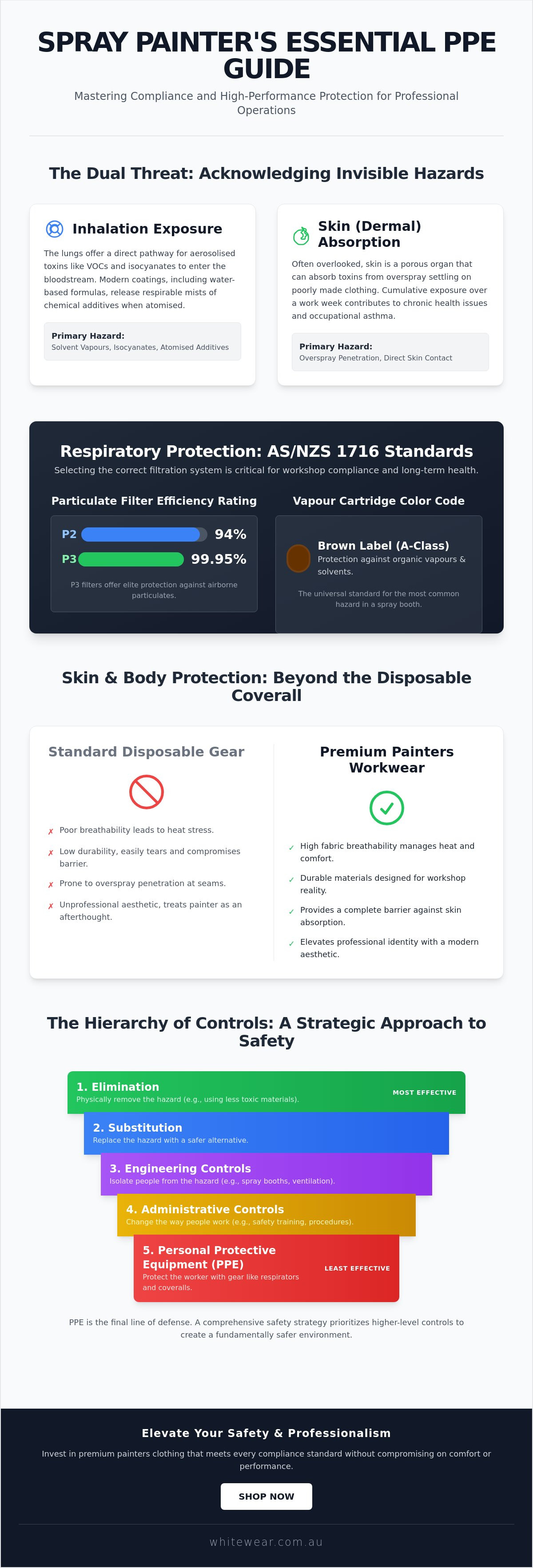
The lungs are incredibly efficient at absorbing solvent vapours. With a surface area roughly the size of a tennis court, they provide a direct pathway for toxins to enter your bloodstream. However, inhalation is only half the story. Professionals often overlook dermal absorption, the process where overspray penetrates standard, poorly made clothing and settles on the skin. Your skin is a porous organ, not a plastic shield. Over a forty-hour week, the cumulative effect of minor exposures can lead to chronic respiratory issues or occupational asthma. High-performance PPE requirements for spray painters must account for this dual threat, ensuring that every seam and seal serves as a barrier to your long-term well-being.
True professionals view their safety kit as an extension of their workshop aesthetic. It is a statement of pride. When you choose gear that prioritizes both technical compliance and physical comfort, you aren't just following a code. You are investing in the dignity of your labor and the endurance of your career. Cheap, disposable solutions fail because they treat the painter as an afterthought. A refined approach treats the painter as the protagonist of the workshop, deserving of gear that matches the high standards of the work they produce.
Respiratory Protection: Navigating AS/NZS 1716 Standards
AS/NZS 1716 is the mandatory Australian standard for respiratory protective devices. It represents the technical benchmark for every breath you take within the workshop. When evaluating the PPE requirements for spray painters, the respiratory system remains the most critical focal point. You aren't merely selecting a mask; you are investing in a sophisticated filtration system designed to manage the invisible volatility of modern coatings. Precision in your finish requires precision in your protection.
The decision between air-purifying and supplied-air respirators is dictated by the specific hazards of the task. Air-purifying units use specialized cartridges to scrub contaminants from the ambient air. In contrast, supplied-air systems deliver a constant stream of clean, grade-D air from an external compressor. For high-stakes environments where contaminants are concentrated or oxygen levels are a concern, the supplied-air system is the professional standard for endurance and safety.
Understanding filter ratings is essential for workshop compliance. P2 filters are engineered to capture 94% of airborne particles, while P3 filters offer an elite 99.95% efficiency rating. Solvent protection relies on vapour cartridges, which follow a strict, universal colour-coding system. Brown labels indicate protection against organic vapours, which are the most frequent challenge in a professional spray booth. Adhering to these PPE requirements for spray painters ensures your workshop remains a space of both high-end production and clinical safety.
Selecting the Right Filter for Your Coating
A-class filters serve as the primary shield against standard organic solvents. However, when your work involves two-pack polyurethanes, the presence of high-isocyanate levels requires an air-fed respirator. It's a dangerous misconception to rely on your sense of smell to gauge filter life. By the time you detect a scent, the filter is saturated and your protection is compromised. This "sniff testing" is a myth that has no place in a refined, professional environment.
The Necessity of Annual Fit Testing
Even the most advanced respirator fails if the facial seal is compromised. Microscopic gaps allow contaminated air to bypass the filtration media entirely. Annual fit testing is a mandatory protocol for Australian workshops to ensure the gear performs as promised. Facial hair is the most common disruptor of a clean seal; even minimal stubble can lead to significant exposure. Maintaining a professional standard means following rigorous fit-testing protocols every year. To complement your respiratory rigour, choose painters workwear that offers the same level of technical precision and clinical authority as your safety mask.
Skin and Body Protection: Beyond the Disposable Coverall
A professional finish is born from a controlled environment, but that control must extend to your own physical safety. Relying on a basic disposable suit is a compromise that modern professionals can no longer afford. The anatomy of a high-end spray suit is a study in technical precision. It requires bound seams that prevent chemical seepage and reinforced seals at the wrists and ankles to ensure no atomised mist reaches the skin. While these barriers are essential, they must also address the physiological reality of the booth. In high-temperature environments, heat stress is a genuine hazard. The science of breathability is what separates a utility garment from a piece of refined equipment. You need gear that vents metabolic heat while maintaining a clinical barrier against solvents.
Precision in the workshop also extends to your extremities. When evaluating the PPE requirements for spray painters, eye protection must meet AS/NZS 1337.1 standards, specifically for chemical splash resistance. Clear, undistorted vision is the foundation of your craft. For your hands, the choice is clear: nitrile beats latex every time. Nitrile provides superior resistance to the aggressive solvents found in modern thinners and clearcoats. It offers the puncture resistance needed for daily workshop tasks without the risk of latex allergies or chemical breakthrough. These aren't just accessories; they are the frontline of your professional endurance.
The Role of Professional Base Layers
The secret to staying cool and focused during a grueling shift lies beneath the outer suit. High-quality painters workwear acts as a secondary barrier, providing an extra layer of protection if the outer suit is compromised. Modern moisture-wicking fabrics are essential for the professional. They pull sweat away from the body, facilitating evaporative cooling even when you're encapsulated. This approach also preserves the dignity of the workday. When you step out of the booth to meet a client, you should look as refined and professional as the work you've just produced.
Specialised Hand and Foot Protection
Selecting the right glove is a matter of technical specification. You must choose the thickness, measured in mils, based on your solvent exposure time. A 5-mil glove might suffice for quick touch-ups, but heavy-duty spraying demands an 8-mil or higher barrier. Footwear is equally critical. In a flammable spray environment, anti-static footwear is a mandatory PPE requirement for spray painters to prevent spark discharge. Maintenance of these items shouldn't be an afterthought. Regularly cleaning reusable eye protection and checking footwear for sole integrity ensures that your safety kit remains a reliable, sophisticated system rather than a collection of failing parts.
The Hierarchy of Controls: Managing Your Environment
Safety is a structured discipline. It doesn't begin with the mask you wear, but with the environment you build. For those looking to construct a world-class workspace, A1 Precision Solutions offers turnkey industrial facility expertise that ensures safety and efficiency are designed into the structure. The hierarchy of controls is the professional framework used to systematically reduce risk in the workshop. At the summit are elimination and substitution. While moving to water-based systems reduces the chemical load, engineering and administrative controls remain the vital middle ground of any compliant operation. Adhering to the PPE requirements for spray painters is only truly effective when these higher-level safeguards are already in place.
Engineering controls are the mechanical heart of your safety strategy. They focus on isolating the hazard from the worker. A high-performance spray booth is not just a room; it's a sophisticated extraction system designed to pull contaminants away from your breathing zone. Administrative controls then layer on the human element. This includes clear signage, exclusion zones, and rigorous training schedules. PPE remains the "last line of defence," but it's the most personal. It's the final barrier between your health and the clinical reality of the chemicals you handle every day.
Optimising Spray Booth Ventilation
The direction of airflow determines the efficiency of your protection. Down-draught ventilation is the gold standard, pulling overspray directly toward the floor and away from the painter. For these booths to remain compliant with Australian safety expectations, they require a minimum air movement of 0.3 m/s. Cross-flow or other booth types typically require a higher velocity of 0.5 m/s to be effective. You can check this performance with simple smoke tests or anemometer readings. Regular filter changes in the extraction system are non-negotiable. Clogged filters restrict airflow, allowing hazardous mists to linger in your workspace.
Administrative Safety Protocols
Knowledge is a form of protection. Maintaining an up-to-date Safety Data Sheet (SDS) library ensures that every crew member understands the specific risks of the coatings they use. This isn't just paperwork; it's a vital reference for emergency protocols. Training should focus on making safety a core part of your brand culture rather than a burden. Your team should be expert in handling chemical splashes and recognizing the early signs of respiratory failure. When your administrative systems are refined, safety becomes a seamless part of the professional workflow. Explore our range of high-performance painters clothing to ensure your last line of defence matches the technical excellence of your workshop's engineering.
Ultimately, the hierarchy of controls ensures that you aren't relying on a single piece of gear to stay safe. It creates a redundant, sophisticated system where each layer supports the next. When the booth is pulling air correctly and the crew is trained in exclusion zones, the PPE requirements for spray painters become the final, elegant touch in a comprehensive safety plan. This holistic approach protects your health and ensures the long-term viability of your professional craft.
Elevating Your Safety Kit: The White Wear Approach
True safety is an integrated experience. It begins long before the first coat of clear is laid down. At White Wear, we believe that premium apparel serves as the foundation of a safe, high-performance workshop. Our philosophy rejects the notion that protective gear must be sterile or ill-fitting. Instead, we offer a sophisticated blend of clinical authority and modern lifestyle elegance. Meeting the PPE requirements for spray painters is a baseline; exceeding them with refined gear is a professional signature that speaks to your commitment to excellence. You deserve equipment that matches the precision of your craft.
Investing in high-quality painters clothing is a strategic decision for any growing business. It ensures that your team is protected by garments that can withstand the daily rigours of solvent exposure and physical labor. Beyond the technical specifications, there is a powerful psychological shift that occurs when a crew is outfitted in gear that reflects their skill. A refined professional image doesn't just improve morale; it wins more high-end contracts. Clients immediately recognise the authority of a workshop that prioritises dignity and precision in every detail, from the booth to the uniform.
Durability Meets Professional Dignity
Generic workwear often fails at the seams, literally and figuratively. We focus on fabric innovations that resist paint penetration while maintaining a breathable, refined finish. Our garments feature reinforced stress points, ensuring they endure the constant movement required throughout a grueling ten-hour shift. This longevity is essential for the professional who demands reliability. When your gear feels like a luxury label but performs like industrial equipment, safety compliance becomes a point of pride rather than a chore. It's about maintaining a polished appearance from the first spray at dawn to the final client walkthrough.
Building Your Professional System
A complete safety kit requires seamless integration. This means pairing your technical masks and gloves with painters overalls that provide a secondary barrier against overspray. The cost-benefit analysis is clear. Cheap, disposable replacements are a false economy that leads to discomfort and frequent waste. Premium workwear offers a superior return on investment through durability and improved crew performance. As you look toward the standards of 2026, upgrading your crew's kit is the next logical step in mastering PPE requirements for spray painters. It is time to treat your safety apparel as the refined essential it truly is.
Master Your Craft with Technical Precision
Elevating your workshop standards requires a holistic approach that balances technical compliance with physical endurance. By mastering the hierarchy of controls and adhering to the specific AS/NZS 1716 standards, you ensure that your health is as resilient as the finishes you produce. We've explored how understanding the invisible chemistry of modern coatings and selecting the right respiratory filters are essential steps in meeting the PPE requirements for spray painters. Your safety is the ultimate foundation of your professional longevity, allowing you to perform at your peak through every hour in the booth.
White Wear is here to support that mission with gear that is designed by painters for painters. As an Australian-owned and operated brand, we create refined essentials that are engineered for durability and professional dignity. We don't believe you should have to choose between clinical-grade protection and a sophisticated workshop aesthetic. It's time to elevate your professional kit with White Wear’s premium painters workwear and experience the difference that peer-led innovation makes. You've put in the hard work to master your trade; your gear should finally work just as hard for you.
Frequently Asked Questions
What is the minimum PPE required for spray painting in Australia?
The baseline for safety includes respiratory protection, eye protection, chemical-resistant gloves, and full-body protective clothing. These essential items ensure you meet the primary PPE requirements for spray painters as dictated by Safe Work Australia. Using a complete system protects you from both immediate chemical splashes and the long-term risks of aerosolised mists. It's about maintaining a clinical barrier between your body and the volatile environment of the booth.
Can I use a standard P2 dust mask for spray painting?
No, a standard P2 dust mask is technically insufficient for professional spray painting. While it may filter out larger particulates, it lacks the activated carbon required to scrub organic vapours and solvent mists from the air. Relying on a dust mask leaves your respiratory system exposed to hazardous VOCs. You must use a respirator fitted with the correct gas and vapour cartridges to ensure a professional level of protection.
How often should I change the filters in my spray painting respirator?
Filters should be replaced as soon as you detect a scent breakthrough or if breathing resistance increases. Even if they aren't fully saturated, organic vapour cartridges have a limited shelf life once opened, often requiring replacement every 28 days. Moisture and ambient contaminants degrade the carbon media over time. Maintaining a strict replacement schedule is a sign of a refined, well-managed workshop that prioritises the health of its crew.
What Australian Standard (AS/NZS) applies to spray painting PPE?
The primary benchmark is AS/NZS 1716:2012, which governs respiratory protective devices. Additionally, eye protection must comply with AS/NZS 1337.1 to ensure it can withstand chemical splashes and impact. Adhering to these specific standards is a legal necessity for Australian workshops. It provides the clinical authority needed to prove your operation is compliant and that your gear is engineered for the rigours of the trade.
Do I need a full-face respirator or is a half-face enough?
A half-face respirator is often sufficient for many tasks, provided it is paired with separate, compliant eye protection. However, a full-face respirator offers a more secure facial seal and integrated protection for the eyes and face. In high-concentration environments or when using aggressive coatings, the full-face unit provides a superior level of comfort and safety. It reduces the risk of skin irritation around the eyes from overspray.
How do I protect my skin from isocyanates during spray painting?
Protecting against isocyanates requires an air-fed respirator and non-porous, chemical-resistant painters clothing. Isocyanates are highly reactive and can be absorbed through the skin, not just the lungs. You must ensure that your coveralls feature bound seams and that your gloves are taped or tightly sealed at the wrists. This total encapsulation is the professional standard for managing the most volatile coatings used in modern refinishing.
Is it mandatory to have a fit test for my respirator every year?
Yes, annual fit testing is a mandatory requirement under Australian work health and safety protocols. A respirator is only effective if it creates a technically precise seal against your face. Changes in weight, facial structure, or even dental work can compromise the fit of your mask over twelve months. Regular testing ensures your gear performs as promised, providing the dignity of a safe and secure workday.
What type of gloves provide the best protection against paint thinners?
Nitrile gloves are the professional choice for resisting the aggressive solvents found in paint thinners. They offer superior chemical integrity compared to latex or vinyl, which can degrade rapidly when exposed to solvents. For the best results, select a glove with a thickness of at least 5 to 8 mils to ensure puncture resistance and durability. High-quality gloves are a small but vital component of the overall PPE requirements for spray painters.


