


A crew is ready to leave for the first job of the week, but the right sizes aren’t where anyone expects them to be. That’s when inventory management for painting company uniforms stops being a back-room task and becomes part of getting the crew work-ready.
If stock counts rely on memory, an unrecorded issue or last-minute request can disrupt purchasing, while unused garments take up space. A reliable system doesn’t need to be complicated. It needs to show what’s on hand, what’s been issued or reserved, and what needs review or replacement.
This guide covers a practical process, from recording garments and sizes to choosing a tracking method and planning replenishment. You’ll learn how to keep quantities visible without overstocking or leaving team members short. Painting-specific workwear can support a consistent uniform programme. White Wear offers painters clothing for businesses reviewing suitable garments.
Key Takeaways
- Record garment types, sizes, quantities and whether each item is available, reserved, issued or due for review.
- Choose a tracking method your team will maintain, from a paper log to a spreadsheet or inventory system.
- Use the same process for receiving, issuing and counting garments, with one person responsible for updating records.
- Effective inventory management for painting company uniforms helps you plan replenishment and reduce last-minute gaps without overstocking.
- Start with a practical first-month review, then use what you learn to refine your uniform programme.
Why painting companies need a clear uniform inventory system
A uniform programme is more than a cupboard of spare shirts and trousers. It’s a record of what the business buys, where garments are kept, who has been issued what, and when items need review or replacement. A consistent process helps crews prepare for the workday and gives the person managing purchases a clearer basis for decisions.
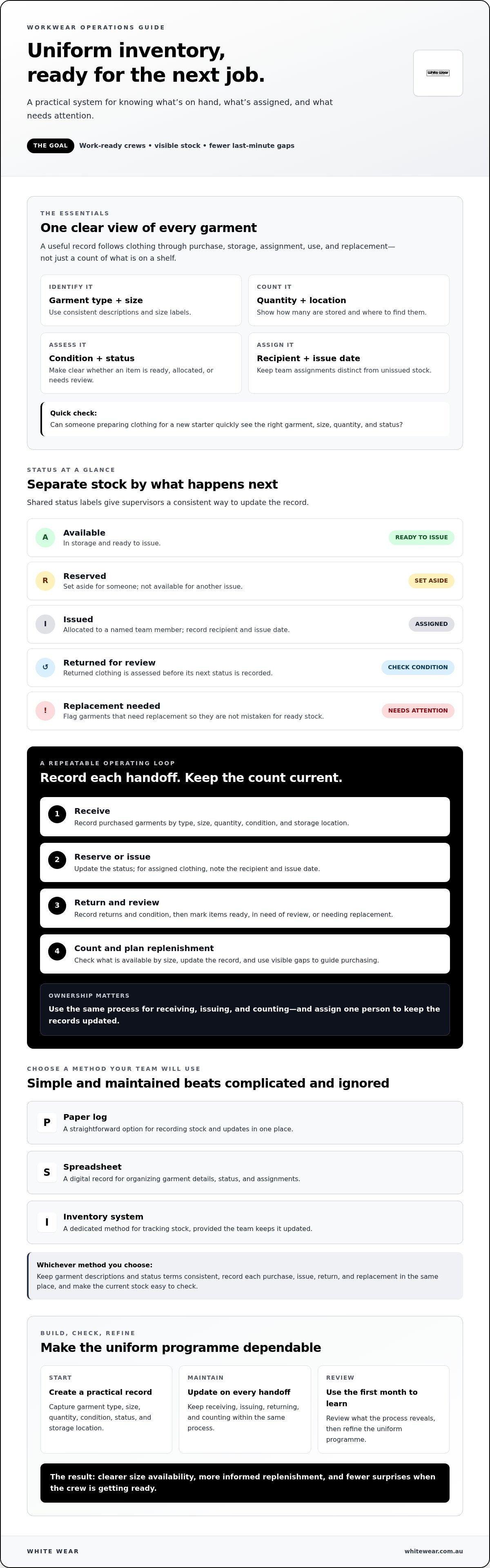
A basic uniform inventory system records each garment’s type, size, quantity, condition and status, from purchase and storage through assignment, use and replacement. This is the practical core of inventory management for painting company uniforms: tracking clothing throughout its working life, not just counting what’s on a shelf. It follows the broad stock-control principle described in this overview of an inventory control system.
Uniforms also need a different approach from paint, tools and consumables. Paint is usually tracked by product and quantity; tools may be assigned or checked in and out; consumables are used up and replenished. Workwear records need to account for garment type, size, condition and whether an item is waiting to be issued or already allocated to a worker.
What should a painting company count as uniform inventory?
Include apparel the business buys, stores, assigns or replaces for workers. Record each garment type and size, then note the quantity, condition and current status. Keep garments awaiting issue separate from those assigned to named team members. A shirt reserved for a new starter may still be in storage, but it isn’t available for someone else.
Use consistent labels for painting-specific clothing. Record garment type and size clearly instead of relying on memory or informal descriptions. A stock check should show not just how many items you have, but which sizes are ready to issue and which garments need attention.
What problems does uniform tracking prevent?
An unrecorded issue makes a stock count inaccurate. A manager may believe a garment is available, then order another when a team member asks for one. Missing size information creates another problem: during onboarding or replacement, someone has to search through stored clothing or delay the issue while checking what’s available. Clear records help you spot these gaps before they disrupt crew preparation.
A shared process replaces assumptions with a consistent view. Record every purchase, issue, return and replacement in the same place, and make one person responsible for updates. The record won’t prevent every loss or urgent request, but it can show what’s on hand and where a gap exists. Choosing workwear designed for painting can also support a more consistent uniform programme.
Build a uniform record around garments, sizes and crew assignments
A useful uniform record answers two questions quickly: what clothing does the business have, and where is each item in its lifecycle? Create a consistent entry for each garment type and size, then update its status as it moves from storage to a team member and, if returned, through assessment. This keeps inventory management for painting company uniforms focused on both stock and assignment.
Track the details that support decisions: garment type, size, quantity, condition and status. A unique SKU is only necessary if your business already uses or assigns one. The record should be clear enough for the person preparing clothing for a new starter or checking stock before an order.
Uniform records need different categories from paint, tools and consumables. Paint may be tracked by product and quantity; tools may be assigned or checked in and out; consumables are used up and replenished. Workwear records should show garment type, size, condition and whether an item is awaiting issue or allocated to a worker.
Which uniform inventory fields are worth recording?
Keep the stock record practical. Capture garment category, size, quantity, storage location, condition and last-counted date. For issued items, add the recipient and issue date, along with return or replacement status. A compact record could look like this:
- Garment and size: Use a consistent description for each clothing type and size.
- Status and quantity: Separate available, reserved, issued, returned for review and replacement-needed items.
- Location and count date: Show where unissued stock is stored and when it was last checked.
- Assignment details: Record the recipient and issue date for allocated garments.
- Condition or notes: Use brief, shared terms such as “ready to issue” or “inspect on return.”
Consistent labels make the record easier to use. If supervisors use the same status terms, they can update it without guessing what a note means.
How should assigned and shared workwear be tracked?
Keep employee-assigned clothing separate from clean, unissued shared stock. A garment reserved for a named worker isn’t generally available, even if it remains in storage. When clothing is returned, record the return and check its condition before moving it into reusable stock or marking it for review or replacement.
Record only the personal details needed to manage garment allocation, such as a name or staff identifier. Avoid unrelated information. Once your categories are clear, suitable painters workwear and clothing can support a consistent uniform programme. White Wear specialises in painters clothing; your inventory record remains the tool for tracking what the business owns and how it’s allocated.
Choose a tracking method that fits your painting crew
The right tool is the one your team will keep current. A paper log may suit a simple uniform cupboard; a spreadsheet can make records easier to sort; inventory software may help if stock is spread across locations or moves frequently. There’s no single best option for every painting business. Consider crew size, garment range, how often clothing moves and which systems you already use.
Use this comparison to narrow the choice:
| Method | Effort and visibility | Best fit | What to watch |
|---|---|---|---|
| Paper log | Quick to start, but visibility depends on where the log is kept and whether entries are legible. | A small, straightforward stock range with one person updating records. | Pages can be misplaced, and reviewing older entries may take time. |
| Spreadsheet | Easy to sort and review, with modest setup and regular update effort. | A manageable garment range that benefits from a shared digital record. | Duplicate files and unrecorded changes can undermine accuracy. |
| Inventory software | May offer more structured access and reporting, but needs setup and ongoing maintenance. | A growing range, multiple storage locations or frequent stock movements. | Check that the features and update process suit your actual workflow. |
Whichever method you choose, use the same status terms and fields throughout the record. Barcodes or QR codes can make it quicker to identify a garment or record a movement, but they’re optional, not a requirement for accurate inventory management for painting company uniforms. A clear, regularly updated log is more useful than technology the team doesn’t use.
When is a spreadsheet enough for uniform inventory?
A spreadsheet is a practical starting point if your stock range is simple and a small group needs visibility. Use clear column labels, limit editing to the people responsible for updates and identify one record owner. Keep a single agreed version, and enter changes as garments arrive, move or are assigned. If several copies circulate, the count can drift from what’s actually in storage.
When might dedicated inventory software be useful?
Consider software if multiple locations or frequent transactions make your current method difficult to maintain. Before adopting a system, check how staff access it, whether its reports answer your stock questions and how easy it is to record everyday changes. A more advanced tool won’t fix unclear responsibilities. Choose it only if it makes the process easier to follow.
Review the method after your team has used it through ordinary stock movements. If updates are routinely missed, simplify the process or clarify ownership before adding complexity.
Set a repeatable process for issuing, counting and replenishing uniforms
A reliable routine turns uniform records into useful decisions. Give one person responsibility for maintaining the register, even if supervisors report garment movements. The record owner should enter each arrival, issue, return and replacement promptly, so the next stock check reflects what’s actually available.
Use a consistent workflow:
- Receive: Count incoming garments against the order documentation. Check sizes and condition before adding them to the record.
- Store: Enter garment details and quantity, then place items in an identified location. Keep stock awaiting issue separate from clothing already assigned or reserved.
- Issue: Record garment type, size, quantity, recipient and issue date when clothing is handed over.
- Update on return: Record returned items and assess their condition before marking them available, in need of review or due for replacement.
- Count and review: Compare physical stock with the register, correct discrepancies and check upcoming crew requirements before purchasing.
That final check is where inventory management for painting company uniforms becomes useful for planning. Compare available quantities with known onboarding, role changes and replacement needs. Past issue and replacement records can show which garment types and sizes are used most often. Upcoming requirements help you judge whether current stock is likely to meet demand.
Set the review rhythm according to how quickly stock changes. A crew with frequent issues or several storage points may need more regular checks than a business with occasional movements and a simple stock range. There’s no universal schedule. Choose a cadence the record owner can maintain, then adjust it if discrepancies or urgent requests keep appearing.
Avoid rigid reorder thresholds until you have reliable usage history. At first, review the actual count alongside planned team needs and past purchasing patterns. As records become more dependable, use them to guide replenishment instead of relying on guesswork.
Consistent workwear can also support a polished crew presentation. For ideas on aligning clothing choices with how your business is represented, read the painters workwear company branding guide. If you’re reviewing garments for your programme, explore painters workwear and clothing from White Wear.
Turn uniform inventory into a dependable workwear program
A reliable uniform programme gives you more than a stock count. It connects the garments you choose with the sizes your crew needs, the items already assigned and the gaps that may affect the next workday. A simple first-month rollout can establish that foundation without a complicated system.
- List the garments: Record each type and size the business buys or stores for its workers.
- Count what’s there: Check physical stock and note each item’s condition and status.
- Record assignments: Match issued garments to the relevant team member and update the record when items are returned or replaced.
- Review the gaps: Compare what’s available with crew requirements, recurring size shortages and items that remain unused.
This first review gives you a baseline. From there, inventory management for painting company uniforms can focus on practical checks: whether recorded quantities match a physical count, whether issued garments have clear ownership, which sizes repeatedly run short, what needs replacement and what stock isn’t moving. Choose measures your team can update consistently rather than building a report no one has time to maintain.
What should a uniform inventory review measure?
Look for patterns, not just discrepancies. If a size is repeatedly unavailable, note that before the next purchase. If garments remain unused, check whether they’re needed for upcoming crew changes or whether the stock mix should be reconsidered. Clear assignment records also help distinguish available clothing from garments already in use. Keep the review short enough to repeat.
How can a painting company keep the system useful?
Make record updates part of each stock movement. Enter new garments when they arrive, log an issue when clothing is handed over, and update returns or removals as they happen. A short, consistent process is more likely to hold up during a busy workweek than a detailed procedure that gets postponed.
Review the apparel range as your team’s needs become clearer. Painting-specific clothing can support a cohesive workwear programme, while practical inventory records help you understand which garments and sizes your crew uses. For broader considerations when refining your selection, explore the professional painter workwear guide.
When you’re ready to review suitable painters clothing, explore White Wear’s range of painters workwear and clothing, with nationwide shipping across Australia.
Make your next uniform decision with confidence
A dependable uniform programme starts with a clear record. Its value shows before the workday begins: garments are accounted for, assignments are visible and replenishment decisions are based on actual stock. Keep the process simple enough to update as clothing arrives, moves to a crew member or needs review.
That’s the lasting value of inventory management for painting company uniforms. A suitable tracking method and regular, realistic reviews replace guesswork with a clearer view of what your team needs. Pair that process with painting-specific clothing to support a consistent workwear standard.
White Wear specialises in painters workwear and clothing, with nationwide shipping across Australia. Explore painters workwear from White Wear as you review garments for your crew. Start with the stock you have, keep the record current and build a system that works for your business.
Frequently Asked Questions
How do painting companies keep track of uniforms?
Painting companies can track uniforms with one shared record that follows each garment from arrival to issue, return or replacement. Record garment type, size, quantity and status, and keep unissued stock separate from clothing assigned to team members. For a straightforward range, a spreadsheet may be enough. Assign one person to update it when stock changes, then compare the record with a physical count regularly. This makes inventory management for painting company uniforms easier to maintain.
What should a uniform inventory spreadsheet include?
A uniform inventory spreadsheet should include garment category, size, quantity, storage location, stock status and the date it was last counted. For issued clothing, add the recipient and issue date so allocated items aren’t mistaken for available stock. Keep column names and status terms consistent, and record who is responsible for updates. Only include personal information needed to manage garment assignments, such as a worker’s name or staff identifier.
How often should a painting company count its uniform stock?
Set stock-count frequency according to how often garments move and how much stock the business holds. A small team with few uniform changes may need fewer checks than a company onboarding workers or issuing clothing regularly. Choose a routine the person responsible can maintain. It can also help to check stock after a delivery or when resolving a discrepancy, then update the record to reflect the verified count.
Is a spreadsheet enough to manage painting company uniforms?
A spreadsheet can work well if your garment range, team and storage locations are straightforward. Use clear fields, keep one agreed version and make sure changes are recorded whenever clothing arrives, is issued or returned. If updates are often missed, several people need access or stock movements are hard to trace, consider whether dedicated inventory software would make the process easier. The tool should fit your workflow, not create unnecessary administration.
How do you manage uniform sizes for a painting crew?
Record every garment size as a separate stock option, and track assigned clothing independently from available items. Use reliable sizing information when purchasing rather than assuming workers will all need the same fit. When ordering wholesale blanks for custom branding, suppliers like Blankstyle provide detailed size charts to help ensure consistent sizing across reorders. Before placing an order, review which sizes are on hand and which have been allocated. This helps you plan for actual crew requirements, including a new starter or a replacement, instead of relying on a general estimate.
Review each garment’s condition, suitability for the work and alignment with your business’s safety or appearance requirements. If an item is damaged or no longer suitable for issue, record its status and remove it from available stock after assessment. Avoid setting an arbitrary lifespan for every garment. Consistent checks, relevant workplace policies and a clear record of items needing attention help guide replacement decisions without treating all clothing as if it wears out at the same rate.
Can a painting business use barcodes or QR codes for uniform stock?
Yes, barcodes or QR codes can help identify garments or storage locations if that makes updates and counts easier. They’re optional, though, and a small inventory may be simpler to manage with clear descriptions and reliable records. First establish consistent garment names, sizes and status labels. If staff still struggle to distinguish items or record movements, test whether codes solve that specific problem before adding another step to the process.


