


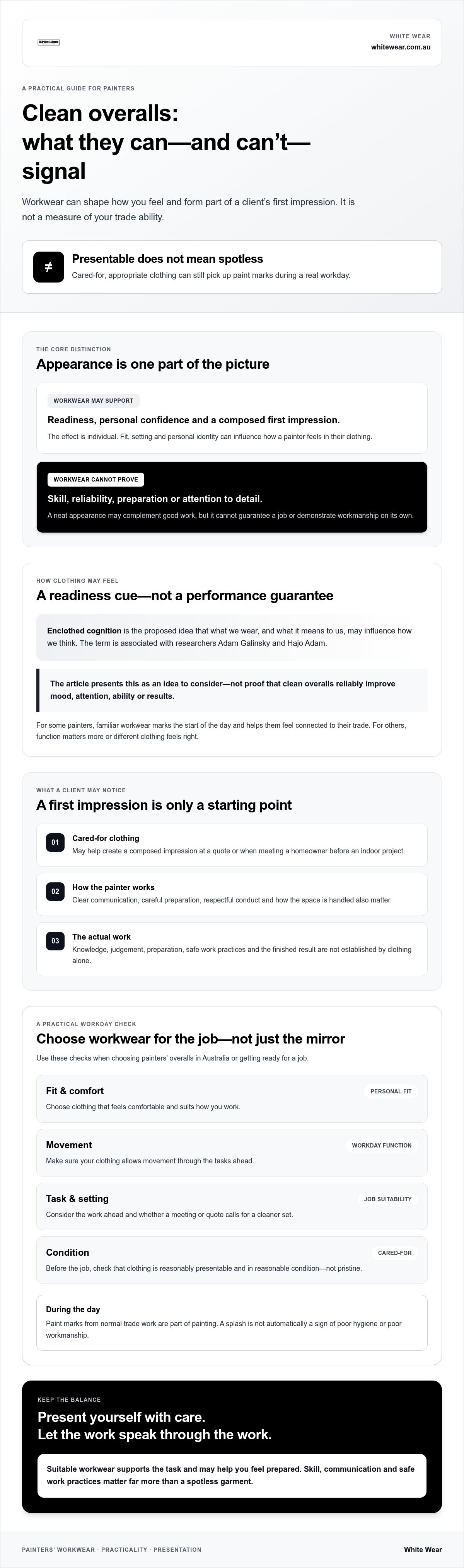
Can clean painters’ overalls change how you feel at work, or how a client sees you? A search for painters overalls Australia often starts with practical questions about fit and function, but appearance can matter too. Tidy, well-fitting workwear may help you feel prepared and make a considered first impression. It can’t guarantee confidence or win a job on its own.
Painting is hands-on work, so marks and splashes are part of the day. Practical clothing doesn’t have to look careless to do its job. Clean workwear may help you feel ready and reflect the care you bring to a task, but the effect is personal, not automatic. Skill, communication and safe work practices matter far more than a spotless garment.
This article looks at how workwear may shape confidence, professional identity and client impressions without overstating its influence. It also offers practical ways to balance a presentable appearance with comfort and clothing suited to a painting workday.
Key Takeaways
- Presentable workwear means cared-for and appropriate, not necessarily spotless, especially when working in clients’ homes or businesses.
- Clothing may shape confidence, but fit, setting and personal identity can affect each painter differently.
- Clean overalls may influence a client’s first impression, but appearance alone can’t prove workmanship, preparation or reliability.
- Use practical checks when choosing painters overalls australia, balancing presentation with comfort, movement and suitability for the task.
What does clean workwear mean for painters in Australia?
Clean workwear doesn’t have to be spotless. For a painter, it means clothing that’s cared for, reasonably presentable and appropriate for the job, even if it picks up marks during the day. Judge painters overalls australia by how well they support real painting work, not by whether they stay pristine from morning to knock-off.
Workwear can be personal clothing chosen for comfort and practicality, rather than a formal uniform. A business may also use branded team clothing for a consistent appearance, but branding isn’t necessary to look professional. The useful standard is straightforward: wear suitable clothing that feels like a considered part of your trade, not an afterthought.
Why does a clean appearance matter on a painting job?
Appearance is one part of a client interaction. Arriving in cared-for clothing for a quote or meeting a homeowner before an indoor project can help create a composed first impression. It may also affect how prepared you feel. The idea that clothing and what it represents can influence a wearer’s thoughts is discussed as enclothed cognition, though it shouldn’t be treated as a guaranteed effect.
A polished appearance can complement clear communication, careful preparation and respectful conduct. It can’t prove that someone is skilled, reliable or attentive to detail. Clients can also consider the questions a painter asks, how they handle the space and the finished result. Clothes are part of the picture, not the whole portrait.
Does clean workwear have to be spotless?
No. Routine care is different from avoiding every stain. Paint marks acquired during normal trade work don’t automatically suggest poor hygiene or low-quality workmanship. Painters need to move between tasks without treating every splash as a professional failure.
Before a job, ask whether your clothing looks cared for, is in reasonable condition and suits the work ahead. If paint builds up during the day, that’s part of painting. Changing into a cleaner set for a quote or client meeting may suit some situations, but pristine clothing throughout an active job isn’t a realistic measure of professionalism.
The goal is balance: workwear that supports the task and helps you present yourself with confidence, without confusing a neat appearance with proof of trade competence.
How can wearing clean painters’ overalls influence confidence?
Clothing can carry meaning as well as serve a practical purpose. For some painters, putting on clean, familiar workwear helps mark the start of the working day and signals readiness to take on their role. For others, it makes little difference. Any effect on confidence is personal, not a promise that a particular garment will change how someone thinks or works.
What is enclothed cognition?
Enclothed cognition is the proposed idea that what we wear, and what clothing means to us, may influence how we think. The term is associated with researchers Adam Galinsky and Hajo Adam. It offers a way to consider workwear, but it isn’t proof that clean overalls reliably improve mood, attention or ability. A painter’s own associations with their clothing matter, and the theory shouldn’t be treated as a guarantee.
How might workwear support a painter’s professional identity?
Workwear may act as a cue for readiness. Clothing chosen for painting can help some people feel organised and connected to their trade, particularly when it’s comfortable and fits how they see themselves as professionals. Others may value function above appearance or feel more confident in different clothing. There’s no single response shared by every worker.
That distinction matters: feeling prepared is not the same as becoming more capable. Clean painters’ overalls may support a personal routine, but they don’t demonstrate technical skill or guarantee better painting. Results depend on knowledge, judgement, preparation and the work itself. Clothing can be part of a professional mindset, not a substitute for experience.
Research about appearance and customer responses addresses a different question. A Johnson & Wales University paper examines appearance’s impact on customer loyalty and experience. That topic concerns customer evaluation, not proof that overalls change a painter’s confidence or performance. Keep those ideas separate when choosing painters overalls australia and setting expectations.
A useful choice is workwear that suits the task and feels right to wear through the day. White Wear specialises in Australian painters’ clothing, with a dedicated range for painters considering how they want to feel and present themselves at work.
Clean overalls and client impressions: what can appearance really signal?
Clients form impressions through several small interactions, and clothing may be one of them. Cared-for overalls can suggest that a painter has considered their presentation, especially during a first conversation. But that impression is only a starting point. A neat appearance may shape a first impression, but it can’t prove the quality of a painter’s work.
As the job progresses, clients have more useful evidence to consider: how clearly the painter explains the process, how the work area is prepared, what references can tell them and how the finished surfaces look. Clothing can’t reliably demonstrate experience, punctuality, reliability or attention to detail. Nor can clean overalls guarantee trust, a contract or a referral.
Can clients judge a painter’s professionalism by their clothes?
Clothing is one possible impression cue, not a complete assessment. Tidy presentation may feel appropriate in a client-facing setting, while marks picked up during painting may simply reflect active work. Neither appearance alone tells a client whether the painter has the right experience or will deliver a careful finish. Communication, preparation and the completed job provide a fuller picture.
When does a uniform strengthen a team’s identity?
For a crew, coordinated workwear may make it easier to recognise team members and present a consistent appearance. A social-identity lens helps explain how shared symbols can represent group membership, but it doesn’t establish that uniforms create stronger teamwork or improve morale. An individual painter’s clean overalls are different: they express personal presentation without necessarily signalling membership in a coordinated crew.
That distinction can guide your choice. If you work independently, choose painters overalls australia that suit the job and how you want to present yourself. If you work in a team, consider whether shared clothing supports recognition and a consistent look, while keeping comfort and task suitability in view. Neither approach replaces the everyday actions that earn client confidence: setting expectations clearly, preparing thoughtfully, respecting the space and delivering the agreed work.
How to keep painters’ workwear presentable through a real workday
A useful routine doesn’t require workwear to stay pristine. It helps you start prepared, move comfortably through the job and make a considered impression when speaking with a client. For painters overalls australia, the practical balance is clothing that looks cared for while also suiting the day’s tasks and conditions.
What can painters check before starting work?
Before leaving for a job, check your clothing against the day’s plan. If you’ll meet a client first, you may prefer a clean set for that conversation. If painting begins straight away, choose clothing suited to the work rather than expecting it to remain mark-free.
- Check presentation: Is the clothing reasonably clean and in a condition you’re comfortable wearing in front of a client?
- Check fit and movement: Can you bend, reach and work without the clothing feeling restrictive or getting in your way?
- Consider the conditions: Does your clothing suit the expected weather and the indoor or outdoor work planned?
- Plan for a change: If you have a client-facing meeting after painting, consider keeping a separate change of clothing available when practical.
These quick checks make presentation part of preparation, rather than a distraction once the workday is underway.
How can painters balance presentation with paint-day practicality?
Workwear should serve the job. Keeping every garment pristine can be unrealistic during active painting, while clothing that restricts movement or doesn’t suit the task can make the day less comfortable. Choose a level of presentation that feels appropriate, then allow for ordinary marks as work progresses.
Choose protective clothing based on the specific task and relevant safety advice, not appearance alone. A neat outfit isn’t a substitute for identifying job hazards or using the protection needed for the work. If you’re unsure what a garment can be used for, check its information and follow appropriate workplace guidance.
Keep the aim simple: start the day in workwear that fits, feels appropriate and supports the tasks ahead. For dedicated options, explore painters’ workwear from White Wear, an Australian specialist in painters’ clothing.
Choosing painters’ overalls that support a confident workday
The right choice isn’t simply the cleanest-looking option. It’s workwear that fits, suits your tasks and feels appropriate for how you want to present yourself. Use those practical considerations to narrow your options rather than assuming a particular style or feature will suit every painter. The best fit for your workday is individual.
What should painters consider before choosing overalls?
Start with the movements and conditions your work involves. Consider whether you’ll reach overhead, bend repeatedly or move between tasks. Then check the garment details to see whether its fit and intended use appear suitable. Don’t assume a feature, fabric or protective quality is included unless the product information confirms it.
- Fit: Check how the overalls sit and whether you can move comfortably.
- Function: Match the garment to the painting tasks and conditions you expect.
- Presentation: Choose clothing you feel comfortable wearing in front of clients as well as during active work.
For more context, read this painters’ overalls guidance and the broader professional painter’s workwear guide. Use the information to check your own needs, and verify the details of any specific garment.
How can clean workwear fit into a professional routine?
Think of workwear as one part of preparation, alongside planning the job, communicating clearly and taking care with the finished work. Clothing can become marked as tasks change, so a realistic routine might mean starting in presentable gear, wearing what suits the work and keeping a change available if you have a client meeting later. A polished appearance can complement good practice, but it can’t replace it.
White Wear specialises in painters’ workwear and clothing in Australia, with nationwide shipping. If you’re considering dedicated options for your trade, explore painters’ workwear and check the available garment details against your day-to-day needs.
Make workwear a considered part of your day
Clean workwear may help you feel prepared and shape a client’s first impression, but it can’t guarantee confidence or prove the quality of your work. The strongest choice balances a cared-for appearance with a suitable fit, comfort and clothing that works for the tasks ahead. In practice, painters overalls australia should support the realities of painting, including changing tasks and the possibility of paint marks.
Prepare for client-facing moments, follow garment care instructions and focus on clear communication, careful preparation and the finished result. These are all part of presenting yourself professionally, alongside clothing that feels right for the workday.
When you’re ready to compare dedicated options for your trade, explore painters’ workwear from White Wear, an Australian specialist with nationwide shipping.
Frequently Asked Questions
Does wearing a clean uniform improve confidence?
It may help some people feel more prepared, but the effect isn’t guaranteed. Clothing can carry personal meaning, so a painter who feels comfortable and professional in their workwear may find that it supports their routine or sense of readiness. Another worker may not notice a confidence boost. Fit, the work setting and individual preferences all matter, and clothing alone can’t create skill or ensure a better workday.
Can clients tell if a painter is professional by their overalls?
Overalls may influence a first impression, but they can’t establish whether a painter is experienced, reliable or skilled. Clients can also consider how clearly the painter communicates, how they prepare the work area, relevant references and the quality of the finished work. A cared-for appearance can complement these signals, but clean clothing doesn’t guarantee trust, a job or a referral.
Do painters need to wear spotless overalls?
No. Painters’ clothing can pick up marks during normal work, and a paint stain doesn’t automatically indicate poor hygiene or low-quality workmanship. Aim for workwear that’s cared for and appropriate for the task, rather than expecting it to stay pristine throughout an active day. For a quote or client meeting, you might choose a cleaner set if that feels more suitable.
Can wearing a uniform make a team feel more united?
Shared workwear may help identify team members and give a crew a coordinated appearance. Some workers may also see it as a sign of belonging, but uniforms don’t guarantee stronger team relationships or morale. Team culture depends on more than clothing. A uniform is also different from an individual painter’s clean overalls, which can support personal presentation without signalling membership in a coordinated crew.
How can painters keep workwear presentable during a job?
Start with clothing that’s reasonably clean, fits comfortably and suits the planned tasks and conditions. If you’ll meet a client after painting, consider keeping a change available when practical. Paint marks can happen as work progresses, so focus on a realistic routine rather than staying spotless. Follow the garment’s care label for washing instructions, since care needs can vary between items.
Does clean workwear make a painter better at their job?
No. Clean workwear may help a painter feel prepared or present a considered appearance, but it doesn’t prove competence or improve painting skill by itself. Good results depend on the knowledge, judgement and care brought to the work. When comparing painters overalls australia options, consider fit, comfort and suitability for your tasks, while treating presentation as one part of professional practice.


