


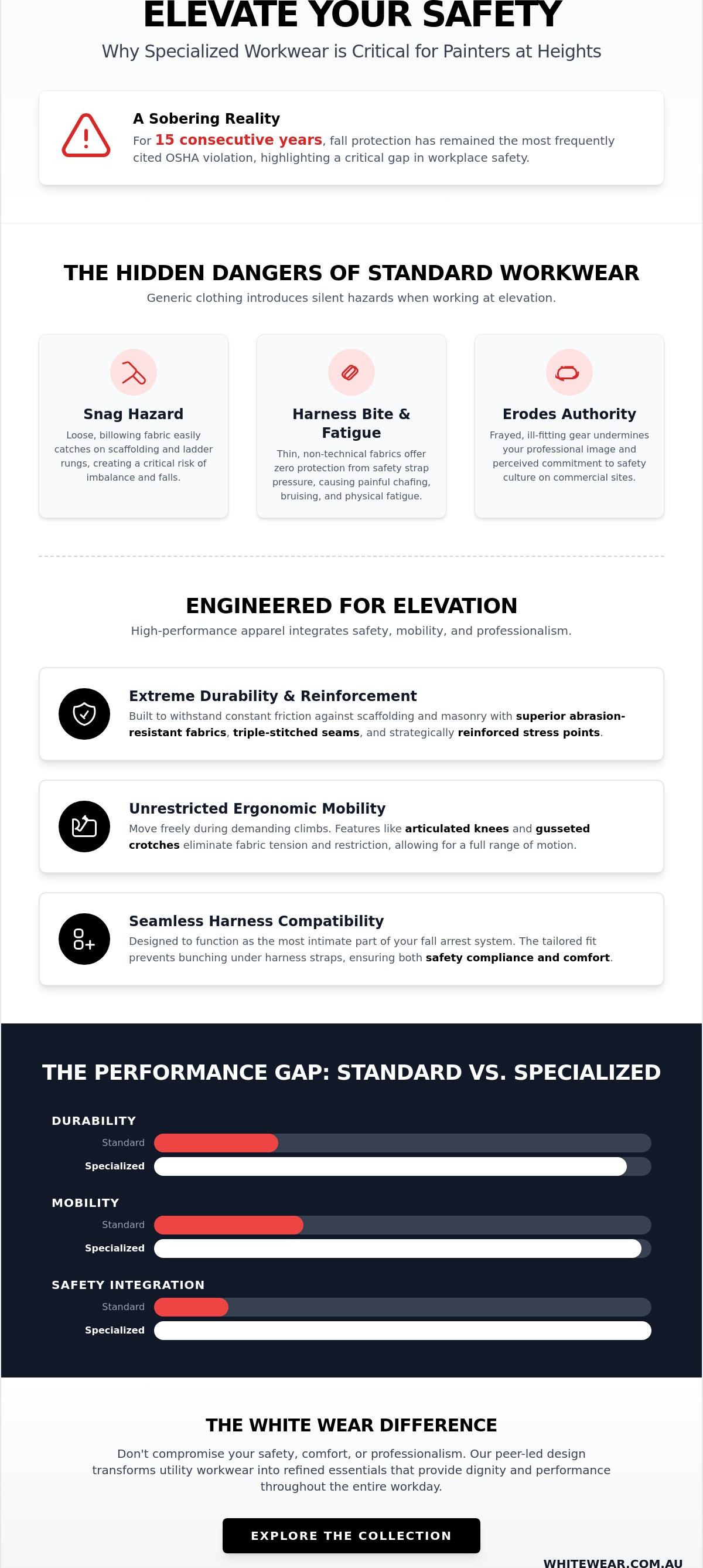
Your workwear isn't just a uniform; it's the most intimate component of your fall arrest system. For fifteen consecutive years, fall protection has remained the most frequently cited OSHA violation, a sobering reminder that safety at elevation is often compromised by the very gear meant to protect us. When you're operating six feet or more above a lower level, the right painters clothing for working at heights becomes a masterclass in technical precision. It's the difference between a harness that chafes against inferior fabric and a garment that flows with your every ascent. We understand that the grueling hours spent on a ladder demand more than just utility. They demand a refined solution that honors your craft and your comfort.
You've likely felt the frustration of inaccessible tool pockets or the restrictive pull of a poorly cut trouser while climbing. We believe your professional dignity shouldn't be sacrificed for the sake of safety compliance. This article explores how specialized apparel integrates seamlessly with fall arrest systems to enhance your mobility and reduce physical fatigue. We will examine the ergonomic innovations that allow you to maintain a polished, high-end appearance while meeting the rigorous ANSI/ASSP Z359.11-2021 standards required for modern job sites.
Key Takeaways
- Understand why traditional workwear fails at elevation and how specialized engineering bridges the gap between safety compliance and professional style.
- Discover the technical necessity of abrasion-resistant fabrics and reinforced stress points designed to withstand the constant friction of scaffolding.
- Learn how ergonomic design features like articulated knees and gusseted crotches eliminate fabric tension during the most demanding climbs.
- Use our professional framework to select the right painters clothing for working at heights based on your specific site environment and seasonal exposure.
- Explore how peer-led design transforms utility items into refined essentials that provide comfort and dignity throughout the entire workday.
The Intersection of Safety and Style: Why Heights Demand Specialised Apparel
A painter's workday at elevation is a study in controlled movement and high-stakes precision. In the Australian trade landscape, working on scaffolding or ladders isn't merely about reaching the surface; it's about navigating a three-dimensional workspace where gravity is an ever-present factor. Traditional workwear often fails here because it prioritises general utility over the specific mechanics of height work. When you're suspended or perched high above the ground, your clothing must function as a seamless extension of your body. Generic trousers or shirts often lack the technical construction required to integrate with complex fall protection systems, leading to a compromise in both safety and efficiency.
True professionalism at heights requires bridging the gap between rigid WHS compliance and the human need for ergonomic comfort. It's a balance of meeting strict site regulations while ensuring that your gear doesn't hinder your ability to perform. High-performance painters clothing for working at heights provides this equilibrium. It offers the structural integrity needed for safety gear compatibility without the bulk that leads to fatigue during a grueling ten-hour shift. This is where engineering meets aesthetics, creating a silhouette that is as functional as it is refined.
Understanding the Risks of Substandard Workwear
Substandard apparel introduces silent hazards that manifest the moment you leave the ground. Loose, billowing fabric is more than an aesthetic flaw; it's a significant snag hazard on scaffolding pins and ladder rungs. A single caught hem can disrupt your balance at a critical moment. There's also the physical toll of "harness bite." Thin, non-technical fabrics offer zero protection against the pressure of safety straps, leading to painful chafing and bruising by midday. Beyond the physical risks, your appearance on high-visibility commercial sites dictates how you're perceived by project managers and clients. Frayed, ill-fitting gear erodes site authority, whereas refined, purpose-built apparel signals a commitment to excellence and safety culture.
The Clinical Authority of High-Performance Whites
Modern painters workwear has evolved into a sophisticated tool that commands respect. This new standard of "whites" isn't just about tradition; it's about clinical authority. A crisp, well-engineered silhouette reflects the same precision you bring to a complex architectural finish. When your gear is designed by peers who have spent years on the tools, there's an immediate psychological boost. You aren't just wearing a uniform; you're wearing a refined essential that understands the specific duration and physical demands of your labor. This peer-led development ensures that every seam and pocket serves a purpose, allowing you to focus entirely on the craft at hand rather than the limitations of your clothing.
Engineering for Elevation: Key Features of Height-Ready Painters Clothing
When you're working at elevation, your apparel undergoes a level of physical stress that standard garments simply cannot withstand. It isn't just about covering the skin; it's about structural endurance and technical precision. High-performance painters clothing for working at heights is engineered with superior abrasion resistance to survive the constant friction against steel scaffolding and rough masonry. Every climb and every reach tests the integrity of your gear, demanding a garment that won't fail when you're most vulnerable.
Triple-stitching and reinforced stress points are essential for climbing longevity. Each step on a ladder or movement within an Elevated Work Platform (EWP) puts immense strain on seams that generic workwear isn't built to handle. Beyond structural strength, the environmental reality of external facades requires integrated UV protection and moisture-wicking technology. These aren't just comfort features; they are safety requirements that prevent heat exhaustion and ensure you remain focused on the task. Adhering to OSHA fall protection standards involves more than just a harness; it requires a total equipment system that supports the worker's physical state throughout the day.
Pocket Architecture and Tool Security
A dropped tool from a height is a significant site hazard that can have devastating consequences. We've engineered pocket architecture to prevent "dropped object" incidents through deep, secure designs and zip-secured compartments. These features ensure that mobile devices and essential tech remain safe during high-step movements. Brush loops are strategically positioned to remain accessible even when a harness is fully engaged, allowing you to maintain your workflow without struggling against your safety gear. This level of detail is what distinguishes refined painters clothing from mass-market utility items.
Fabric Innovation: Beyond 100% Cotton
The shift toward advanced poly-cotton blends represents a major leap in tensile strength for the modern tradesperson. While traditional 100% cotton has been the standard for decades, modern blends offer much better durability and breathability in the Australian sun. These technical fabrics often include stain-release coatings that help maintain a professional white aesthetic, even after grueling hours of labor. This innovation ensures that your appearance remains as sharp as your technical skills, providing the dignity you deserve on the job site. Breathability is a safety feature, reducing the physiological load on your body and allowing for peak performance during the entire shift.
The Ergonomics of the Climb: Mobility, Stretch, and Harness Compatibility
Climbing a ladder while wearing a full-body harness is a demanding physical feat that requires a range of motion standard workwear simply doesn't permit. When you're forced to fight against the resistance of your own trousers, your muscles tire faster and your focus wavers. This is why ergonomic design is a pillar of high-quality painters clothing for working at heights. By incorporating a diamond-shaped gusseted crotch, we remove the traditional four-way seam intersection that restricts leg spread. This anatomical precision allows for unrestricted movement, ensuring every step on the scaffold is stable and confident.
Articulated knees further refine this experience. By mimicking the natural bend of the human leg, they prevent fabric tension from pulling at the waist or ankles during high-step movements. This focus on human factors is essential for preventing fall injuries and reducing long-term musculoskeletal strain. When your gear moves with you, you aren't just more comfortable; you're fundamentally safer. Precision in the trade requires freedom of movement, and our apparel is engineered to provide exactly that.
Harness-First Design Philosophy
A primary frustration for professional painters is the interference between safety gear and apparel. Bulky seams or thick pocket welts can create painful pressure points when compressed by harness leg straps during suspension. Our design philosophy prioritises flat-seam construction to eliminate this irritation, even during grueling hours of labor. We've also carefully calibrated waistband heights to align with fall arrest belt placements, preventing the uncomfortable "bunching" that occurs with standard retail cuts. For many, our flexible painters pants provide the ideal foundation for harness integration, offering a smooth, streamlined profile that stays in place throughout the shift.
Dynamic Movement and Fabric Recovery
Modern painting requires a balance of agility and endurance. The introduction of technical stretch fabrics has revolutionised the trade, allowing for a level of flexibility previously reserved for high-end athletic wear. However, flexibility shouldn't come at the cost of durability. We use high-tensile materials with excellent fabric "memory" to ensure your painters clothing for working at heights retains its shape. It won't sag or bag after hours of squatting, stretching, and climbing. This resilience ensures you maintain a sharp, professional appearance from the first climb of the morning to the final pack-down. It's a refined approach to utility that treats the painter as a protagonist who deserves high-performance essentials.
Selecting Your Kit: A Professional Framework for High-Altitude Work
Choosing the correct gear for elevation is a strategic decision that directly influences your safety, comfort, and professional image. It isn't merely about picking a size; it's about matching your apparel to the specific technical demands of the site. Use this professional framework to ensure your painters clothing for working at heights provides the necessary support for the task at hand. By following a structured selection process, you eliminate the guesswork and invest in gear that functions as a reliable tool.
- Step 1: Assess the specific height environment. Scaffolding requires high abrasion resistance to handle constant contact with steel. If you're on a ladder, prioritise maximum stretch and mobility. For EWP work, focus on wind resistance and harness compatibility.
- Step 2: Prioritise fabric weight. Consider the seasonal exposure and site duration. A heavier GSM fabric provides a robust barrier against wind on external facades, while a lighter technical blend is essential for preventing heat fatigue during summer.
- Step 3: Verify pocket accessibility. Don your specific harness model and ensure the leg or waist straps don't obstruct your brush loops or secure tool compartments.
- Step 4: Choose your silhouette. Decide between high-waisted trousers or painters overalls. Overalls are often preferred for their ability to prevent paint ingress and protect the torso during overhead reaching.
- Step 5: Inspect for professional branding. Look for clean, open spaces for company logos that reflect your commitment to high-end standards and site authority.
Trousers vs. Bib and Brace at Heights
The choice between trousers and bib and brace styles often comes down to the nature of your movement. Bib and brace styles offer a distinct advantage when working with harnesses, as they eliminate the "ride-down" effect that occurs with standard trousers. This provides continuous protection against paint spray under your safety gear. The chest pocket also serves as a secure, high-access point for small tools that might otherwise be buried under harness straps. Conversely, high-waisted trousers offer superior mobility for ladder-intensive tasks by reducing fabric bulk around the midsection.
Seasonal Considerations for Elevated Work
Working at elevation often means increased exposure to unpredictable elements. Layering is essential, but it must be executed without compromising the fit or function of your harness. Choose slim-profile jackets and base layers that don't add excessive bulk. Maintaining your core temperature is critical for cognitive focus; a cold body moves slower and reacts less effectively to hazards. To maintain peak performance in any environment, invest in high-performance painters clothing designed for the professional's reality.
The White Wear Difference: Elevating Professional Standards at Every Level
At White Wear, we believe that the tools of your trade include the very fabric on your back. Our legacy is rooted in peer-led development, meaning every stitch and silhouette is informed by the lived experience of professional painters who understand the physical reality of the workday. We don't just manufacture apparel; we engineer refined essentials that honor the grueling hours of labor you invest in every project. By choosing our specialized painters clothing for working at heights, you're opting for a solution that prioritizes your safety while acknowledging your desire for a polished, professional appearance. It's a commitment to quality that generic workwear simply cannot match.
This dedication to high-end engineering supports the dignity and comfort of the Australian workforce. We recognize that the trade is evolving, and the modern professional demands more than generic, ill-fitting whites that fail under the pressure of a harness or the friction of a scaffold. Our approach provides the clinical authority needed to command respect on-site, ensuring you feel empowered whether you're performing a delicate interior finish or navigating a complex high-rise facade. We treat the painter as the protagonist of their professional story, providing the gear necessary to perform at the highest level without compromise.
The Sophistication of Modern Workwear
Our collection is defined by premium aesthetic descriptors and high-quality construction that set it apart from traditional industry competitors. We use technical industry terminology because we understand both the science of the task and the human desire for self-expression through style. White Wear isn't a temporary utility item; it's a strategic investment in your professional future. The durability of our painters clothing for working at heights ensures that each garment withstands the specific duration of your professional duties, maintaining its form and function long after generic alternatives have frayed. This is workwear designed for upward mobility and lasting refinement.
Join the Elevation: Next Steps for Your Wardrobe
Transitioning from generic, loose-fitting whites to high-performance painting apparel is a decisive step toward a more comfortable and safe career. We've streamlined the process with nationwide shipping and a professional support team that understands the unique challenges of working at elevation. You deserve gear that works as hard as you do and reflects the precision of your craft. Don't settle for the status quo when you can wear apparel designed by those who have walked the same ladders. Explore the White Wear range of professional painters clothing today and experience the difference that peer-led engineering makes to your daily rhythm.
Master Your Craft at Every Elevation
Operating at heights demands a level of cognitive focus that shouldn't be compromised by the physical limitations of your workwear. We've explored how technical innovations like gusseted crotches and abrasion-resistant fabrics transform safety from a mere regulatory requirement into a lived experience of comfort. By selecting high-performance painters clothing for working at heights that integrates seamlessly with your fall arrest systems, you reduce the long-term physical toll of grueling shifts. This isn't just about utility; it's about maintaining the clinical authority and professional dignity your craft deserves.
Our peer-led design process ensures that every garment is a refined essential, specifically engineered for the unique challenges of the Australian climate and modern WHS standards. You deserve gear that reflects the precision you bring to every architectural finish, providing both the mobility you need and the sophisticated appearance you want. Take the next step in your professional evolution and invest in apparel that works as hard as you do. It's time to move beyond generic solutions toward gear that understands the science of your task.
Elevate your professional standard with White Wear’s height-ready apparel.
Your dedication to excellence deserves a wardrobe that rises to the occasion. Stay safe, stay focused, and continue leading the trade with pride.
Frequently Asked Questions
Is there a specific Australian standard for painters clothing at heights?
While no singular standard dictates "painters clothing for working at heights," your apparel must facilitate compliance with WHS regulations and support the function of fall arrest systems. Your clothing serves as the critical interface between your skin and your safety gear. It's essential to ensure your apparel doesn't hinder the function of your harness or obscure necessary high-visibility markings required on commercial sites.
Can I wear standard cargo pants for professional painting at heights?
Standard cargo pants often fail in high-altitude environments due to their restrictive cut and bulky pocket placement. Professional painters clothing for working at heights is engineered with articulated knees and gusseted crotches to handle the extreme range of motion required for climbing. Cargo pants usually lack the necessary tensile strength in the seams, leading to premature failure and potential snagging on scaffold pins.
How do I prevent my harness from damaging my work clothes?
Preventing harness friction starts with selecting garments featuring high-tensile, abrasion-resistant technical blends. Ensure your harness is adjusted correctly to prevent unnecessary shifting, which causes fabric pilling. Choosing apparel with flat-seam construction and reinforced contact points at the thighs and shoulders will create a durable barrier, protecting both your professional image and the longevity of your wardrobe.
Are overalls safer than trousers when working on a scaffold?
Overalls provide a distinct advantage on scaffolds by eliminating the gap between your shirt and trousers, which prevents paint ingress and harness shifting. While trousers offer excellent mobility for ladder work, bib and brace styles ensure that your torso remains protected during overhead reaching. Both are effective options provided they are constructed from technical fabrics that don't bunch under your fall arrest straps.
What is the best fabric for breathable but durable painters clothing?
The ideal balance of breathability and durability is found in advanced poly-cotton blends with integrated mechanical stretch. These fabrics offer superior tensile strength compared to 100% cotton while allowing for moisture management in the Australian sun. Look for materials with a high GSM that feature a stain-release coating, ensuring your whites remain crisp and professional despite the grueling conditions of a commercial site.
How should painters clothing fit when wearing a safety harness?
Your clothing should maintain a streamlined, tailored fit to ensure it doesn't interfere with the harness's webbing or buckles. Excess fabric creates dangerous snag hazards and can lead to skin irritation where the material bunches under pressure. A professional fit allows for a full range of motion while keeping the fabric close to the body, ensuring your safety gear performs exactly as intended during the shift.
Do I need specialised pockets for working at heights?
Secure pocket architecture is a non-negotiable requirement for working at elevation to prevent dropped object incidents. Dropping a tool from a height is a significant safety breach that can cause serious injury to those below. Look for zip-secured compartments and deep, angled pockets that keep your mobile devices and essential tools locked in place, even when you're squatting or climbing.
How often should I replace my painters workwear for safety reasons?
Inspect your workwear daily for signs of thinning fabric, frayed seams, or compromised stitching. You should replace your gear at the first sign of structural wear, as weakened fabric offers no protection against the friction of a safety harness. Maintaining high-performance apparel is an investment in your safety and professional authority, ensuring you're always ready for the demands of the next climb.


