


Your professional image shouldn't be a casualty of a demanding shift, yet many painters accept paint-soaked skin and ruined base layers as an unavoidable tax on their trade. You know the specific discomfort of damp, paint-heavy fabric clinging to your legs by midday. It's a frustrating reality that compromises both your personal dignity and your focus during grueling hours of labor. We believe the modern professional deserves better than the status quo, so we've refined the science of fabric protection into a definitive, peer-led strategy.
You're about to master exactly how to prevent paint bleeding through pants by prioritizing technical density over the inconvenience of extra layers. This guide explores why fabric weights between 280 and 300 gsm are the gold standard for heavy duty protection and how 10-ounce cotton duck canvas serves as a sophisticated barrier. We will examine the specific innovations that keep you dry, from the essential role of stretch fibers to the structural integrity of the weave. By the end, you'll have the knowledge to maintain a pristine appearance and ensure your professional apparel lasts as long as your reputation.
Key Takeaways
- Decode the mechanics of capillary action to understand how liquid paint wicks through standard fabric pores toward your skin.
- Learn why GSM is the definitive metric for fabric density and how it creates a reliable barrier against paint saturation.
- Discover exactly how to prevent paint bleeding through pants by utilizing dry-brushing techniques and high-density technical weaves.
- Master the maintenance protocols necessary to protect your apparel's integrity and prevent harsh chemicals from stripping away protective finishes.
The Science of Seepage: Why Paint Bleeds Through Trousers
Many general lifestyle guides confuse dye bleeding with paint seepage. One is a laundry mishap involving unstable pigments; the other is a physical failure of your professional barrier. Understanding how to prevent paint bleeding through pants begins with a clinical look at the mechanical movement of liquid through fabric pores. This isn't just about a messy workday. It's about the physics of fluid dynamics and how your clothing handles the pressure of wet coatings. When paint makes contact with a surface, it seeks the path of least resistance. In low-quality fabrics, that path leads directly to your skin.
The rate of this penetration depends heavily on paint viscosity. Thinner liquids, such as primers, stains, or high-flow architectural coatings, move with predatory speed. They find microscopic gaps in a loose weave instantly. Heavier, high-viscosity paints might sit on the surface for a moment, but gravity and movement eventually force them through the interstitial spaces of the textile. Without a high-density barrier, your trousers act more like a filter than a shield.
Porosity and the Capillary Effect in Textiles
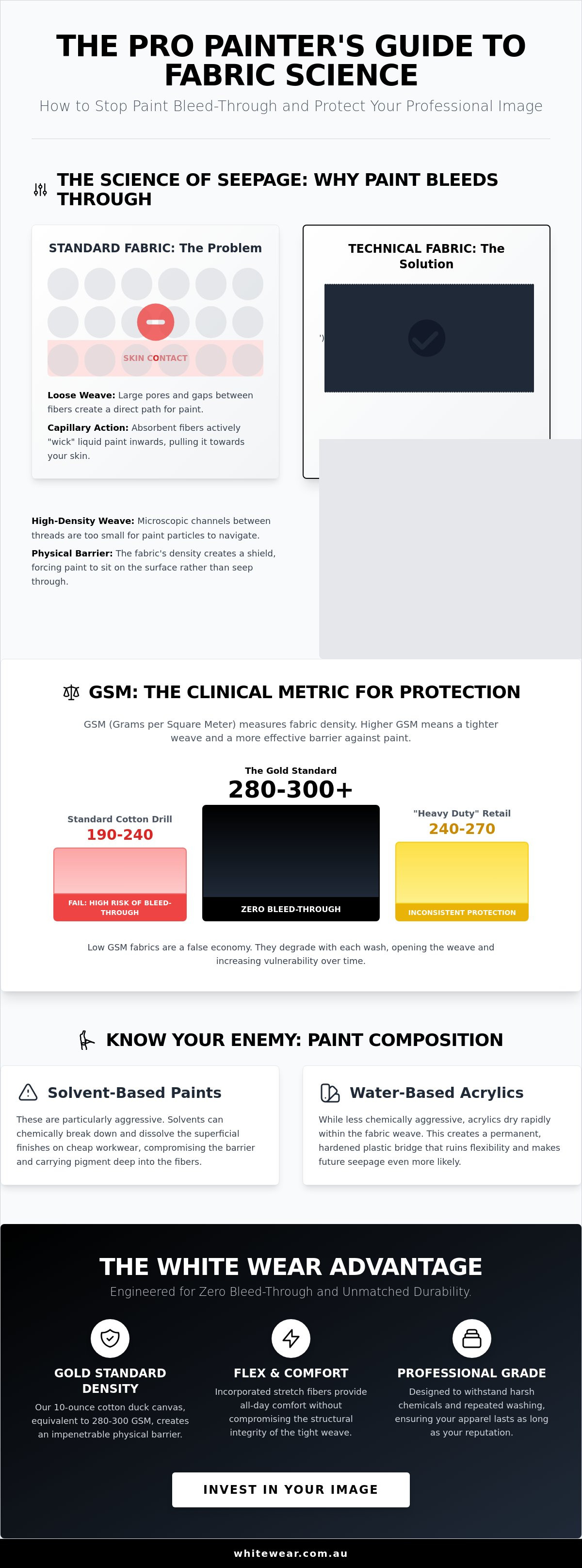
Weave tightness determines the "open" space within a fabric. Standard retail trousers often feature a loose construction that invites liquid penetration. Natural fibers, particularly standard cotton, are inherently absorbent. They don't just sit there; they actively pull moisture in. This is known as the capillary effect. The fibers "wick" wet paint from the outer surface toward your base layers. To understand why some professional-grade apparel resists this better, one must look at the technical specifications and units of textile measurement that define fabric density. The wicking point is the specific moment of saturation where the fabric's internal structure can no longer hold the liquid, forcing it into direct contact with your skin.
Solvent vs. Water-Based Paint Penetration
The chemical composition of your coating changes the rules of engagement. Solvent-based paints are particularly aggressive. They can chemically break down the superficial finishes found on cheap workwear, melting away the very barrier meant to protect you. Once the finish is compromised, the solvent carries the pigment deep into the fiber core.
Water-based acrylics present a different, more permanent challenge. While they don't dissolve finishes, they dry rapidly within the weave. This creates a permanent bridge of hardened plastic between the threads. This bridge ruins the garment’s flexibility and makes future seepage more likely. Standard workwear often fails because it's designed for general utility rather than the specific chemical realities of the modern paint shop. High-performance painters clothing is engineered to account for these differences, ensuring you remain dry regardless of the medium you're applying.
Evaluating Fabric Density: The Role of GSM in Paint Protection
Density is the silent guardian of the professional painter. While hobbyists might focus on the color or the number of pockets, an expert understands that GSM, or Grams per Square Meter, is the only clinical metric that truly matters for fabric performance. It's the difference between a garment that merely looks the part and one that serves as a high-performance barrier. When considering how to prevent paint bleeding through pants, you must look beyond the generic label of "thick" fabric. True protection lies in the engineered density of the weave. This ensures that liquid particles cannot navigate the microscopic channels between threads, regardless of how many hours you've been on the ladder.
In the demanding Australian climate, the trade-off between fabric weight and breathability is a constant negotiation. A heavy fabric isn't always a dense one. You need a material that allows for thermal regulation without compromising its primary mission as a shield. Professional-grade apparel utilizes a high-density weave that remains surprisingly lightweight, offering a level of sophistication that standard retail trousers simply cannot match. It's about achieving a refined balance where you feel protected but never weighed down by your gear.
Why Standard Cotton Drills Often Fail the Test
Standard cotton drills, typically ranging from 190 to 240 GSM, represent the industry's most common false economy. These garments provide a deceptive sense of security when brand new. However, the mechanical stress of a fast-paced workday and repeated high-temperature washing cycles quickly takes a toll. Every wash opens the "windows" in the weave, loosening the fibers and inviting capillary action to take hold. You end up replacing these trousers every few months. This cycle compromises both your professional image and your budget, as the fabric eventually becomes a sieve for every drop of primer or gloss.
The Sweet Spot: Finding the Ideal Weight for Pro Painters
Professional grade protection begins at the 300+ GSM benchmark. This weight provides the necessary material volume to absorb accidental spills without allowing the liquid to reach the wicking point. Modern innovations have allowed for the development of flexible painters pants that maintain this high density while offering the mobility required for a ten-hour shift. When you're evaluating potential gear, feel for the "hand" of the fabric. A refined, stiff texture indicates a tighter weave that won't distort over time. For those demanding the pinnacle of performance, investing in premium painters clothing ensures you stay dry and comfortable. It's a choice that respects the reality of your workday, providing the dignity and comfort you deserve during grueling hours of labor. This technical approach is the only reliable way to master how to prevent paint bleeding through pants over the long term.
Practical Strategies to Prevent Paint Saturation on the Job
Mastering how to prevent paint bleeding through pants requires more than just high-density fabric. It demands a sophisticated approach to how you conduct yourself on the job site. While the technical weave of your gear provides the primary defense, your technique and daily habits ensure that barrier remains uncompromised. High-performance apparel is a refined tool. Like any tool, it performs best when used with professional intent. Professionals prioritize engineered solutions over the clumsy, uncomfortable DIY hacks often found in amateur forums.
Adopting the "dry-brushing" technique is a hallmark of an experienced artisan. By ensuring your brush or roller isn't overloaded when working near your legs, you significantly reduce the volume of liquid that makes contact with the fabric. If a spill does occur, the fit of your trousers becomes your secondary line of defense. Trousers that are too tight create a direct bridge between the wet surface and your skin. A tailored yet comfortable fit allows for a slight air gap, which serves as a natural thermal and liquid break. Additionally, implementing a strict rotation system is essential. Don't wear the same pair of trousers two days in a row. Giving the fibers twenty-four hours to fully dry and recover their structural integrity ensures the weave remains tight and effective.
Layering Techniques and Protective Base Layers
In the intense Australian heat, heat stress is a genuine professional risk. Some suggest wearing plastic or heavy leggings under workwear, but this often leads to dermatitis or heat rash. Instead, opt for moisture-wicking synthetics. These modern base layers provide a secondary barrier that moves sweat away from the body while resisting the wicking of external liquids. This creates a sophisticated microclimate that keeps you cool and dry, preventing the capillary transfer that occurs when fabric is saturated from both sides.
The Limitations of Temporary Barriers and DIY Fixes
It's common to see painters using duct tape or plastic shields on high-impact areas like the thighs or knees. These "fixes" are fundamentally flawed. They trap heat, restrict movement, and compromise the professional aesthetic of your painters workwear. True dignity in the workplace comes from gear that is designed for the task. Integrated knee pad pockets, for instance, provide a double layer of fabric exactly where you need it most. This engineered approach is the most reliable way to master how to prevent paint bleeding through pants without sacrificing your comfort or your professional image.
Maintenance and Care: Preserving Your Pants' Protective Barrier
The longevity of your professional gear isn't just about the quality of the initial purchase; it's about the discipline of your maintenance routine. High-GSM fabrics are a technical investment. Treat them with clinical precision. Many painters mistakenly use harsh industrial solvents or bleach to clean their trousers, unaware that these chemicals strip the microscopic finishes that prevent saturation. Mastering how to prevent paint bleeding through pants involves protecting the structural integrity of every fiber. When these finishes are compromised, the fabric loses its ability to repel liquid, leading to the very seepage you're trying to avoid.
Optimal temperature is critical during the laundering process. Generic advice often suggests hot water to set colors or remove stubborn stains, but this is a fundamental mistake for professional workwear. Excessive heat distorts the weave and causes uneven shrinkage, creating microscopic tension points where paint can more easily penetrate. Similarly, you should avoid fabric softeners at all costs. These products leave a waxy residue on the fibers that actually encourages wicking, turning your protective barrier into a sponge. This residue bridges the gaps between threads, allowing liquid paint to travel through the fabric with ease.
How Improper Washing Weakens Fabric Fibres
Heavy-duty washing cycles create a constant abrasion effect that slowly thins even the highest density cotton. Over time, this mechanical stress reduces the effective GSM of your trousers, making them vulnerable to the capillary effect discussed earlier. Use gentle but effective detergents specifically designed for the care for white workwear to maintain that crisp, professional aesthetic without degrading the textile. Always air-dry your garments. This preserves the internal structure of the weave and prevents the brittle fiber failure often associated with the high heat of tumble drying.
Spot Cleaning vs. Heavy-Duty Laundering
When a spill occurs, act with speed but avoid aggression. Use a blotting technique with a clean, damp cloth to lift wet paint away from the surface before it can reach the core of the fibers. Never rub or scrub the area; this mechanical force pushes the pigment past the wicking point and into your skin. Brushing off dried paint is equally damaging, as the friction tears at the protective surface of the textile. Conduct a weekly inspection of high-wear areas like the knees and thighs to check for thinning or pilling. If you notice the fabric losing its "hand" or stiffness, it's a sign that the barrier is failing. To ensure you're always protected by the latest in fabric technology, invest in premium painters clothing designed to withstand the rigors of the trade.
The White Wear Advantage: Engineered for Zero Bleed-Through
Choosing the right gear is an act of self-respect. At White Wear, we've moved past the era of generic, disposable workwear to create a sophisticated standard where clinical authority meets lifestyle elegance. Our philosophy is simple: you shouldn't have to choose between a polished appearance and high-performance protection. We understand the physical toll of a ten-hour shift. We've engineered our range to serve as a refined essential for the modern artisan. This peer-led approach ensures that every seam, pocket, and fiber is optimized for the specific challenges of your trade. When professionals ask how to prevent paint bleeding through pants, we point to our proprietary high-density weave as the definitive answer.
Our brand stands as the solution for those who refuse to compromise on dignity or comfort. We don't just sell painters clothing; we provide a barrier that respects the grueling hours you put in on-site. By focusing on the temporal reality of your workday, we've developed apparel that maintains its structural integrity from the first brushstroke to the final cleanup. This is not just utility. It's a commitment to providing the professional community with the gear they deserve, grounded in the firsthand experience of those who know the trade best.
Our Proprietary Weave: Sophistication Meets Utility
Our proprietary weave is where technical sophistication meets daily utility. Unlike traditional competitors who offer sterile, purely functional garments, we prioritize an aesthetic that reflects your status as a master of your craft. We've developed textile innovations that block the capillary effect without sacrificing the breathability required for the Australian sun. By utilizing high-density fibers, we ensure that liquid coatings stay on the surface of the fabric rather than wicking toward your skin. This isn't a temporary fix. It's a long-term professional investment in your comfort and career. Our garments offer a durability that supports your upwardly mobile professional journey, ensuring you look as sharp on Friday as you did on Monday morning.
Elevating the Professional Standard in Australian Workwear
A professional appearance is a powerful business tool. In the Australian painting community, looking the part is often the first step toward winning premium contracts. High-quality painters overalls and trousers signal to your clients that you value precision and cleanliness. This elevated standard of dress builds immediate rapport and trust with homeowners and site managers alike. By choosing gear that maintains its integrity shift after shift, you're investing in a brand that refuses to compromise on your dignity. You've mastered the science of your craft; now it's time to master how to prevent paint bleeding through pants with a barrier designed for excellence. Explore the White Wear collection and upgrade your professional barrier today.
Elevate Your Professional Barrier
Mastering the science of fabric protection is the final step in refining your craft. You've learned that true defense isn't about adding cumbersome layers; it's about the technical density of your primary barrier. By prioritizing high-GSM fabrics and adhering to a clinical maintenance routine, you ensure your apparel remains a reliable shield against saturation. Understanding how to prevent paint bleeding through pants allows you to focus on your precision rather than the discomfort of damp, ruined gear. It's time to trade the status quo for a standard that respects your labor and your professional image.
Our peer-led development by industry veterans ensures every piece of painters clothing we create provides maximum protection. We utilize high-GSM fabrics to build a pristine barrier that stands up to the most demanding shifts while elevating your professional branding through sophisticated design. Discover the White Wear range of high-density painters pants engineered for the professional. You deserve gear that works as hard as you do. Step onto your next site with the confidence and dignity that only a refined, engineered barrier can provide.
Frequently Asked Questions
Why does paint always soak through my knees first?
Paint soaks through the knees primarily because of the mechanical pressure applied when you kneel on a wet surface. This physical force pushes liquid through the textile pores and directly into your skin. To mitigate this, professionals use integrated knee pads which provide a secondary barrier and reduce the direct contact between the saturated fabric and the leg.
Can I spray my pants with a water-repellent coating to stop paint bleeding?
Spraying your workwear with water-repellent coatings is generally ineffective for long-term protection. These topical treatments often fail to bond with the high-density fibers of professional gear and can be stripped away by the solvents in many paints. Relying on an engineered high-GSM weave is the only clinical way to master how to prevent paint bleeding through pants.
Is 100% cotton better than synthetic blends for preventing paint seepage?
High-GSM density is a more reliable indicator of protection than fiber content alone. While 100% cotton is a traditional staple for its durability, modern synthetic blends often provide superior flexibility and moisture management. The key is ensuring the weave is tight enough to prevent the capillary effect, regardless of the specific textile blend used in the garment.
How do I get wet paint off my skin if it does bleed through?
Use a mild, pH-balanced soap and lukewarm water to remove paint from your skin immediately. Avoid using industrial solvents or thinners; these can strip your skin's natural oils and lead to chemical burns or long-term sensitivity. If the paint has dried, a specialized, non-abrasive hand cleaner designed for the trade is the most sophisticated and gentle solution.
Do thinner pants actually make you cooler on a hot Australian job site?
Thinner pants often lead to greater discomfort on a hot Australian job site. Low-GSM fabrics saturate quickly with both sweat and paint, causing the material to cling to your skin and trap heat. A high-density, breathable weave maintains a slight air gap; this is essential for thermal regulation and dignity during a grueling ten-hour shift.
What is the best way to wash painters' pants to keep the fabric dense?
Wash your gear in cool water with a gentle, liquid detergent to preserve the integrity of the fibers. Avoid fabric softeners at all costs, as they leave a waxy residue that encourages wicking and compromises the fabric's protective barrier. Air-drying is the definitive choice for maintaining the "hand" and density of the textile over its lifespan.
Should I buy a size larger to prevent paint from touching my skin?
You should prioritize a tailored, professional fit rather than buying a larger size. While a slight air gap helps prevent capillary transfer, oversized clothing creates safety hazards and a sloppy professional image. Modern painters workwear is designed with an ergonomic cut that provides the necessary mobility without the need for excessive, sagging material.
How often should a professional painter replace their work trousers?
Professional painters typically replace their work trousers every three to six months to ensure maximum protection. Over time, the mechanical stress of movement and laundering thins the fibers, reducing the effective GSM of the garment. Monitoring for signs of pilling or "thinning" in high-impact areas is a hallmark of a disciplined professional who values their appearance.


