


High visibility is not a safety compromise; it's the final layer of a sophisticated, site-ready professional uniform. You've spent years honing your craft, yet standard-issue safety gear often feels like a clumsy afterthought. We understand the frustration of bulky, neon vests that clash with your traditional whites or reflective tape that loses its integrity after a single shift of ceiling work. You deserve apparel that respects your expertise while keeping you visible.
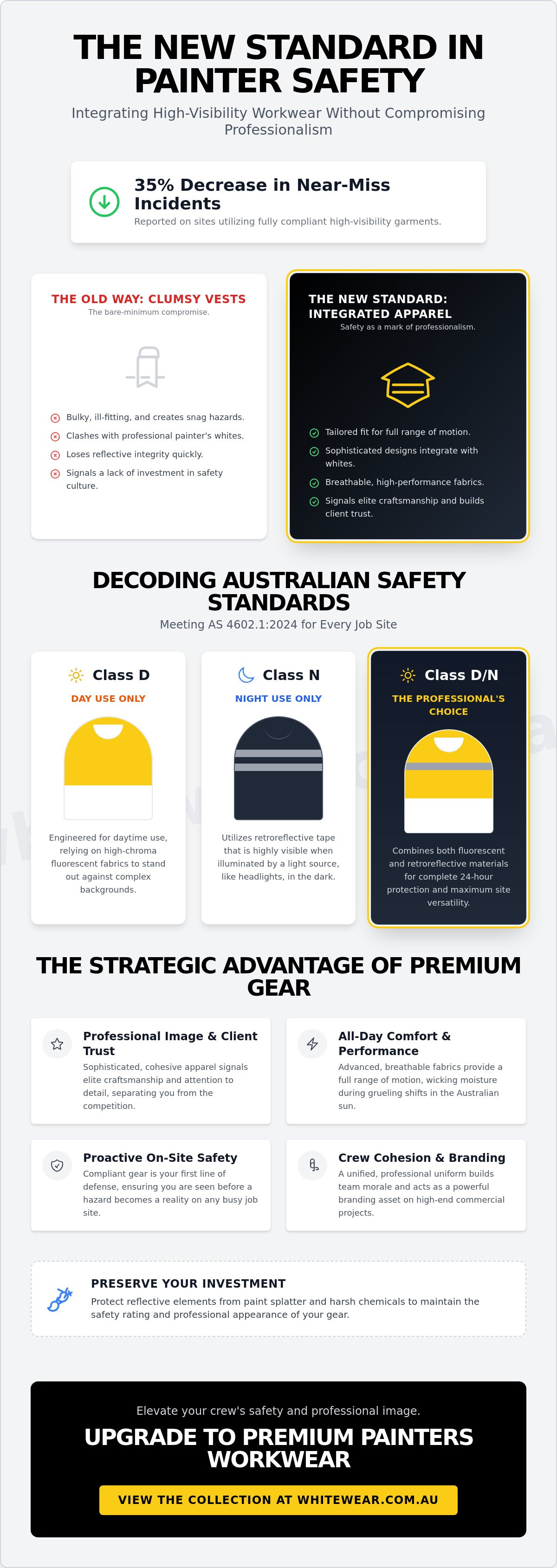
This guide explores how to integrate high visibility clothing for painters into your daily rotation without losing your professional edge. You'll learn to balance the rigorous AS 4602.1:2024 safety standards with the refined aesthetic of elite craftsmanship. It's a necessary evolution; industry data from 2025 indicates a 35% decrease in near-miss incidents on sites utilizing fully compliant garments. We'll break down the transition from generic vests to breathable, high-performance fabrics that signal authority on any job site. From understanding Class D/N requirements to the strategic placement of biomotion taping, we're defining a new standard for the modern artisan.
Key Takeaways
- Decode the 2024 Australian safety standards to ensure your gear meets the specific Class D, N, or D/N requirements for every site environment.
- Transition from generic safety vests to integrated high visibility clothing for painters that offers superior breathability and a tailored, professional fit.
- Resolve the aesthetic clash between safety neon and traditional whites by utilizing sophisticated two-toned designs that signal elite craftsmanship.
- Implement maintenance techniques that protect reflective elements from paint splatter, preserving both the safety rating and the visual appeal of your uniform.
- Leverage premium safety apparel as a strategic branding asset to build crew cohesion and project a high-end image to your most discerning clients.
Beyond the Vest: The Evolution of High Visibility Clothing for Painters
For decades, the painting trade has been defined by the crisp, authoritative look of traditional whites. Yet, as Australian worksites evolve, the requirement for safety has often clashed with this professional aesthetic. The era of the "throw-away vest"—that bulky, ill-fitting mesh garment draped haphazardly over a premium uniform—is ending. Elite professionals now recognize that High-visibility clothing is not a separate layer, but a fundamental component of a modern, high-performance kit. It's about moving past the bare minimum to embrace a uniform that reflects the precision of your craft.
Choosing high-quality high visibility clothing for painters does more than satisfy a site foreman. It transforms how your crew carries themselves. There's a documented psychological shift when a team arrives in cohesive, safety-compliant apparel. It signals a level of discipline and attention to detail that generic gear simply cannot match. To a client, a painter in integrated hi-vis isn't just a laborer. They are a specialist who values their own safety and the integrity of the project. This visual legitimacy is often the silent factor that separates the residential brush-hand from the commercial contractor.
The Shift from Utility to Refinement
Modern design has moved beyond the boxy, restrictive shapes of the past. We're seeing a decisive shift toward tailored silhouettes that allow for a full range of motion without the snag hazards of excess fabric. These refined garments use advanced fabric technology to ensure breathability in the punishing Australian sun, moisture-wicking away sweat during grueling shifts. Whether it's Class D for daytime or Class D/N for 24-hour site access, the focus is now on high visibility clothing for painters that feels like a second skin rather than a cumbersome requirement.
Why Safety is the New Professional Standard
In the competitive commercial landscape, your safety record and your presentation are your best marketing tools. High-end contracts are increasingly awarded to firms that demonstrate a "safety-first" culture through their choice of premium PPE. Investing in superior workwear is an investment in your company’s upward mobility and reputation. It's about showing that you're prepared for the complexities of the modern job site. In 2026, maintaining full hi-vis compliance is the absolute baseline for entry onto any professional Australian worksite.
Navigating Australian Safety Standards: What Painters Need to Know
Compliance isn't just a regulatory hurdle. It's a technical framework designed to ensure you return home safely after every shift. In Australia, the benchmark for safety apparel has recently shifted with the release of AS 4602.1:2024. This updated standard, paired with AS/NZS 1906.4:2023, dictates exactly how your high visibility clothing for painters must perform under various lighting conditions. Understanding these classifications is crucial for any contractor looking to secure commercial tenders or work on high-traffic sites where safety is a non-negotiable metric of professionalism.
While residential interiors often allow for traditional whites, commercial and industrial environments demand a higher level of visibility. The risk profile of a job site determines the required class of garment. Whether you're working on a roadside facade or a busy construction site, your apparel must act as a proactive safety tool. It's about being seen before a hazard becomes a reality. Investing in compliant gear isn't just about following the law; it's about respecting the physical demands and risks of your profession.
Class D vs. Class D/N: Choosing for Your Workday
Class D garments are engineered strictly for daytime use. They rely on high-chroma fluorescent fabrics, typically orange-red or yellow, to ensure you stand out against complex backgrounds. However, many professional painters find themselves in low-light environments, such as windowless commercial basements or early morning exterior setups. In these scenarios, Class D/N (Day/Night) is the professional choice. These garments combine fluorescent materials with retroreflective tape, providing 24-hour protection. It's about versatility. A single, high-performance shirt can take you from a bright exterior scaffold to a dimly lit interior stairwell without compromising your safety status.
Reflective Tape Technology
The placement of retroreflective tape is where science meets the physical reality of the trade. These materials are designed to return light directly to its source, such as vehicle headlights or site floodlights. For painters, the pattern of this tape, whether it's a standard "Hoop" or a more complex "X-back," can impact your comfort during repetitive overhead motions. Modern high visibility clothing for painters utilizes flexible, heat-applied tapes that stretch with the fabric, preventing the restrictive binding sensation common in cheaper gear. To remain compliant, these reflective elements must be properly clean and maintained; excessive paint splatter can dull the luminosity and eventually void the garment's safety rating.
If you're ready to align your crew with these updated standards, choosing specialized painters workwear ensures you remain compliant while maintaining a polished, elite appearance on every site.
Form Meets Function: Integrating Hi-Vis with Professional Whites
The visual identity of a master painter is historically rooted in the purity of white workwear. It’s a tradition that signals cleanliness, precision, and an intimate knowledge of the craft. However, the introduction of fluorescent safety requirements often creates a jarring aesthetic conflict. Balancing the "clinical authority" of traditional whites with the high-intensity yellows and oranges of site safety requires a thoughtful approach to design. High visibility clothing for painters shouldn't feel like a costume; it should feel like a refined extension of your professional kit.
The secret to maintaining a polished appearance lies in the strategic integration of these elements. Rather than fighting the contrast, elite professionals lean into designs that use safety colors to highlight the structure of the garment. When you layer high-performance hi-vis tops over specialised painters trousers, the goal is a seamless transition that looks intentional. This creates a uniform that commands respect from both high-end residential clients and commercial site managers alike.
The Aesthetic Advantage of Two-Toned Gear
Two-toned high-visibility garments are rapidly becoming the preferred choice for professional painting crews. By incorporating contrast panels in navy or charcoal at high-wear areas like the hem or sides, these garments effectively mask the inevitable dust and minor splatters of a long workday. This design choice maintains a sharp, clean silhouette even after hours of cutting-in. The presence of these darker "clean lines" provides a visual anchor, preventing the neon colors from overwhelming the traditional white base and ensuring your team looks as professional at 4:00 PM as they did at 7:00 AM.
Choosing the Right Base Colour
Selecting between safety yellow and safety orange often comes down to the specific contrast requirements of your work environment. Safety yellow typically offers a higher luminosity and provides a striking, modern contrast when paired with crisp white trousers. Safety orange, conversely, is often mandated on heavy industrial or roadside sites for its superior visibility against blue-sky backgrounds. White Wear designs meticulously balance these safety colours with refined aesthetic markers to ensure compliance never comes at the cost of your professional dignity. It’s a design philosophy that prioritizes the artisan’s desire for style while meeting every rigorous Australian safety standard.
Ultimately, the right high visibility clothing for painters serves as a bridge between tradition and the modern safety landscape. It allows you to maintain the heritage of the trade while demonstrating a commitment to the highest levels of site professionalism. By choosing gear that respects both form and function, you're not just wearing a uniform; you're projecting the values of an elite painting business.
Maintaining Performance: Longevity in High-Splatter Environments
Paint is the enemy of visibility. While your craft requires precision, the physical reality of high-pressure airless spraying or intensive overhead rolling often results in inevitable overspray. This creates the "Overspray Problem," where fine particles of paint settle on the retroreflective tape, essentially "blinding" the micro-prisms that bounce light back to the source. When the surface of the tape is compromised by acrylic or oil-based residue, your garment no longer meets the luminous requirements of Australian safety standards. It is a slow degradation that transforms a premium safety tool into a mere utility item.
Protecting your investment in high visibility clothing for painters requires a proactive approach to site management. For those utilizing premium painters overalls with integrated hi-vis, the stakes are higher. These garments represent a significant commitment to your professional image and physical protection. Maintaining their chromaticity and reflective power isn't just about looking sharp; it's about ensuring the garment performs its clinical function during those critical twilight hours on a busy commercial site.
Cleaning and Care for Reflective Materials
The chemicals that remove paint are often the same ones that destroy high-visibility properties. Avoid using harsh solvents, turpentine, or bleach, as these substances can dissolve the adhesive backing of reflective tapes or strip the fluorescent pigments from the fabric. Most professional-grade safety gear is designed with a "50-wash rule," meaning the garment is certified to maintain its safety rating for approximately 50 standard wash cycles. To maximize this lifecycle, wash your gear inside out in cold water using pH-neutral detergents. This gentle approach preserves the luminosity of the fabric and prevents the tape from cracking or peeling prematurely.
Managing Paint Splatter on Site
Tactical layering is the secret to longevity. Many elite crews choose to wear lightweight, compliant vests during the "messiest" phases of a project, such as broad-wall spraying or ceiling priming, to shield their primary high visibility clothing for painters. If splatter does occur, spot-clean the reflective tape immediately with a damp cloth rather than allowing the paint to cure. Abrasive scrubbing is discouraged; it scratches the reflective surface and permanently dulls its effectiveness. Finally, always maintain a "client-ready" set of hi-vis apparel. Arriving at a quote or a site meeting in clean, high-performance gear reinforces your status as a professional who respects the standards of the trade.
To ensure your team stays visible and compliant through every grueling shift, explore our collection of high-performance painters clothing designed for the modern artisan.
Elevating Your Crew: The Strategic Value of Professional Hi-Vis
A uniform is the silent language of your business. It communicates your standards before you ever open a paint tin. Transitioning to premium high visibility clothing for painters is a decisive move that signals your company’s upward mobility. It moves your brand away from the cluttered look of generic sub-contractor crews and toward the refined appearance of a Tier 1 painting firm. This isn't just about compliance. It’s about the strategic value of presentation in a competitive market.
There is a direct correlation between how a crew is equipped and the rates a business can command. When you arrive at a high-end residential project or a corporate site in cohesive company uniforms, you immediately justify a premium price point. Clients see the investment in safety and style as a proxy for the quality of the finish you'll provide. In an industry where trust is the primary currency, looking the part is half the battle. It establishes you as an insider expert who respects both the client's property and the safety of the workforce.
Creating a Cohesive Team Identity
A unified crew appearance does more than impress clients; it transforms internal culture. Providing your team with a high-performance kit reduces morning decision fatigue and ensures everyone starts their shift with a sense of purpose. This shared identity fosters a "zero-harm" environment where safety isn't a chore, but a badge of professional pride. When every member of the team wears the same high-quality high visibility clothing for painters, it reinforces the collective mission to maintain an elite standard of craftsmanship.
The Final Word on Safety and Style
The modern painter deserves better than the status quo. You shouldn't have to choose between the safety requirements of a busy site and the dignity of a well-tailored uniform. White Wear exists for the artisans who refuse to settle for generic, ill-fitting apparel. We understand that your workday is grueling and your standards are high. Our painters workwear is engineered to survive the splatter while maintaining the clinical authority of the trade. It’s time to equip your business for the next level of professional success and leave the era of the disposable vest behind.
Explore the White Wear range of elevated painters workwear and redefine your site presence today.
Command Respect on Every Modern Job Site
The journey from a generic, ill-fitting vest to a high-performance uniform is a defining step for any serious contractor. By mastering the technical requirements of AS/NZS 4602.1:2011 and adopting specialized maintenance routines, you ensure your gear remains a functional safety tool rather than a temporary fix. You've seen how integrating safety colors with traditional whites preserves the clinical authority of your trade while meeting the non-negotiable demands of commercial environments.
Investing in premium high visibility clothing for painters isn't just about meeting a site requirement; it’s about projecting the elite craftsmanship that defines your business. Our gear is designed by painters, for painters, ensuring every stitch supports your range of motion and professional dignity. With nationwide Australian shipping, your team can transition to a more refined aesthetic without delay.
Upgrade your on-site presence with White Wear’s sophisticated safety range and lead your crew with the confidence of a true industry professional. You deserve workwear that works as hard as you do.
Frequently Asked Questions
What are the Australian Standards for hi-vis clothing in 2026?
The current benchmark for safety apparel is AS 4602.1:2024, which dictates the design and construction of high-visibility garments. This standard is supported by AS/NZS 1906.4:2023, which specifies the performance requirements for fluorescent fabrics and retroreflective materials. These regulations ensure that your workwear provides sufficient luminosity and durability to keep you visible on high-risk commercial sites.
Can I wear a hi-vis vest over my white painters overalls?
You can wear a vest, but it's often a clumsy solution that compromises your professional silhouette. Modern high visibility clothing for painters offers an integrated alternative that eliminates the bulk and snag hazards of loose-fitting vests. Choosing apparel with built-in safety features ensures your gear moves with your body during intricate tasks like cutting-in or overhead rolling.
How do I get paint out of hi-vis clothing without ruining the reflective tape?
Treat paint splatters immediately with a damp cloth and mild, pH-neutral detergent. Avoid using harsh solvents, turpentine, or bleach, as these chemicals can dissolve the adhesive backing of the reflective tape and strip the fluorescent pigments from the fabric. Gentle, cold-water washing is the most effective way to preserve the garment's safety rating and aesthetic appeal over time.
What is the difference between Class D and Class D/N hi-vis?
Class D garments are engineered strictly for daytime use, utilizing fluorescent materials to provide high contrast against outdoor backgrounds. Class D/N (Day/Night) garments include both fluorescent fabric and retroreflective tape, making them compliant for 24-hour site access. For painters working in dimly lit interiors or starting shifts before sunrise, Class D/N is the essential professional choice.
Is yellow or orange hi-vis better for painters?
Both colors are fully compliant under Australian standards, so the choice often depends on site-specific regulations or personal branding. Yellow offers high luminosity and a sharp, modern contrast when paired with traditional white trousers. Orange is frequently preferred for roadside or heavy industrial projects because it provides superior visibility against blue-sky backgrounds and complex urban environments.
How often should I replace my high visibility workwear?
Most professional garments should be replaced after approximately 50 wash cycles or whenever the reflective tape loses its luminosity. For painters, the lifespan of high visibility clothing for painters can be shorter if the gear is heavily coated in overspray. Once the tape appears "dead" or the fluorescent fabric has significantly faded, the garment no longer meets Australian safety standards.
Do I need hi-vis for residential painting jobs in Australia?
While interior residential work rarely mandates safety colors, any task involving roadside access or large-scale construction sites will require compliant gear. A formal risk assessment usually determines the necessity of hi-vis on-site. Maintaining a professional set of safety-compliant apparel ensures your crew is ready to transition between residential and commercial projects without any compliance delays.
Are there specific hi-vis requirements for night shift painting?
Night shifts require Class N or Class D/N garments that feature retroreflective tape at least 50mm wide. These tapes must be arranged in specific patterns, such as a hoop or "X-back," to outline the human form clearly under artificial light. Standard white workwear does not meet these requirements; you must utilize certified reflective materials to remain compliant during low-light operations.


