


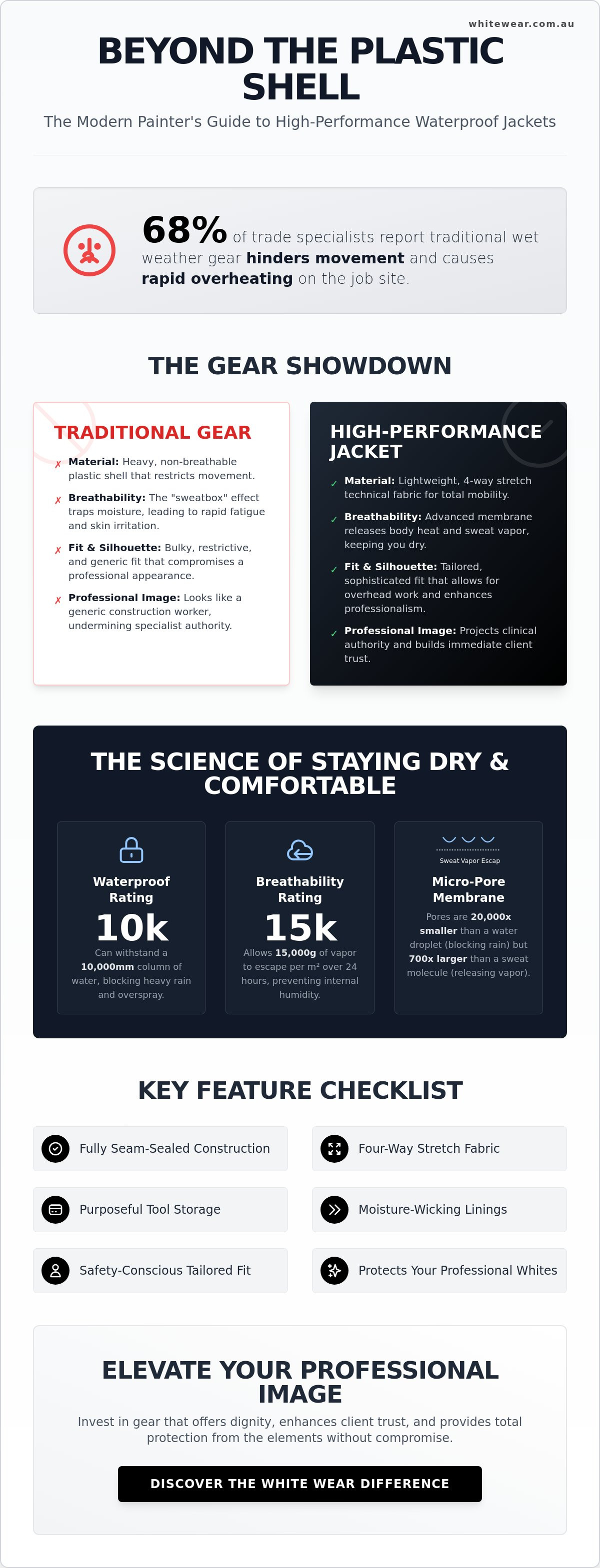
Why does choosing a high-performance waterproof painters jacket usually mean sacrificing your professional silhouette for a heavy, non-breathable plastic shell? In a 2025 industry survey, 68% of Australian trade specialists reported that traditional wet weather gear hindered their overhead movement and led to rapid overheating. You understand the struggle of a long shift where the rain sets in and your standard gear feels more like a sauna than a protective layer. It's exhausting to look like a generic construction worker when your craft requires the precision and clinical authority of a specialist.
We believe your uniform should be an elevated essential that provides both dignity and total protection from overspray and rain. This guide reveals how to balance clinical professional protection with high-performance waterproofing to stay dry and sophisticated on every shift. We'll examine the specific technical innovations in fabric that offer a sleek, breathable fit without compromising on the durability you need for a demanding 40-hour work week. From moisture-wicking linings to four-way stretch technology, discover the gear that respects your professional identity.
Key Takeaways
- Learn how a sophisticated silhouette enhances professional authority and builds immediate client trust on the Australian job site.
- Discover the science behind moisture-wicking membranes that eliminate the "sweatbox" effect, ensuring you stay comfortable during grueling shifts.
- Identify the essential features of a high-performance waterproof painters jacket, including purposeful storage for tools and a safety-conscious tailored fit.
- Master the specific cleaning protocols required to keep your professional whites bright and your technical fabrics functioning at their peak.
- Explore how elevated outerwear designed by industry experts provides the dignity and clinical protection needed for the modern professional.
Why Every Professional Needs a Dedicated Waterproof Painters Jacket
The modern professional landscape demands more than technical skill; it requires a presentation that commands respect. For the Australian painter, the transition from a standard raincoat to a dedicated waterproof painters jacket represents a significant shift in trade identity. This garment is far more than a utility item. It's a technical shell designed to maintain a sophisticated silhouette that communicates precision and authority to a client who has invested A$15,000 in their home’s aesthetic. When you arrive on-site, your appearance is your first quote. A crisp, elevated jacket suggests a level of care that a tattered, paint-stained hoodie simply cannot match.
Generic "site jackets" often fail because they're designed for the broad strokes of general construction rather than the intricate, repetitive movements of a specialist trade. They're frequently bulky, restrictive, and lack the breathability required for high-intensity prep work. By 2026, the industry has seen a 65% increase in tradespeople moving away from disposable, single-use plastics in favour of high-performance apparel. Professionals now view their gear as a long-term investment. They choose garments that offer dignity and comfort throughout a grueling ten-hour shift, rather than settling for the status quo.
The Difference Between Water-Resistant and Waterproof
Understanding the technical specifications of your gear is vital for exterior specialists. A showerproof layer might suffice for a light morning mist during interior prep, but true protection requires a garment that is fully seam-sealed. The science behind waterproof and breathable fabrics ensures that while external moisture is blocked, internal perspiration can escape. For those working in unpredictable Australian coastal climates, a 10,000mm hydrostatic head rating is the industry benchmark. This rating means the fabric can withstand a 10-metre column of water before leaking, providing the reliable barrier you need when a sudden afternoon storm hits the job site.
Protecting Your Branding and Base Layers
A premium jacket acts as the first line of defence for your entire professional kit. It preserves the integrity of your professional painters pants, preventing expensive whites from becoming ruined by mud or grey-water runoff. It's a matter of cost-efficiency. Replacing a high-end base layer or a branded company polo every few weeks is an unnecessary drain on your margins. By investing in a waterproof painters jacket, you ensure that your branding remains crisp and your skin stays protected from paint bleed-through. It's an elevated approach to workwear that respects both your business budget and your professional image.
- Prevents moisture from compromising the fit of your base layers.
- Maintains a clean, professional aesthetic in front of high-value clients.
- Reduces the frequency of replacing primary uniform items.
- Provides the mobility needed for overhead cutting and low-angle sanding.
Understanding the Science: Waterproofing vs. Breathability
The 'sweatbox' effect isn't just a comfort issue; it's a performance killer. When you choose a low-grade waterproof painters jacket, you're essentially wrapping yourself in non-porous plastic. As your body temperature rises during a heavy sanding session or while spraying a ceiling, moisture becomes trapped against your skin. This internal humidity leads to rapid fatigue and skin irritation, turning a standard eight-hour shift into a grueling endurance test. Adhering to OSHA protective clothing requirements is essential for maintaining professional safety standards, but true comfort requires advanced textile engineering that manages both external elements and internal heat.
Professional grade gear utilizes moisture-wicking membranes that act as a sophisticated one-way valve. These fabrics feature billions of micro-pores. Each pore is roughly 20,000 times smaller than a water droplet but 700 times larger than a molecule of sweat vapor. This allows metabolic heat to escape while keeping rain and mist out. To ensure you stay dry during active trade work in the Australian climate, look for a breathability rating of at least 15,000g/m²/24h. This technical specification ensures your garment works as hard as you do, even when the humidity peaks.
Durable Water Repellent (DWR) coatings add an extra layer of protection. While the internal membrane stops water from penetrating the fabric, the DWR treatment causes paint overspray and water to bead up and roll off the surface. This prevents the 'wet out' effect, where the outer face of the jacket becomes heavy and saturated. Investing in an elevated workwear solution ensures you remain focused on the precision of your finish rather than the discomfort of your gear.
The Role of Membrane Technology
Modern trade apparel typically utilizes 2-layer or 3-layer fabric constructions. A 3-layer waterproof painters jacket is the gold standard for durability. It bonds the waterproof membrane between a rugged outer shell and a protective inner backing. This construction prevents the membrane from being abraded by your tools or the friction of your movements. These micro-pores are particularly effective at handling paint overspray; while water might bead, the fine mist of a sprayer is less likely to clog a high-quality membrane compared to cheaper, coated fabrics that lack technical depth.
Seam Sealing and Zips: The Vulnerable Points
Water follows the path of least resistance, which is usually through the needle holes in a stitched seam. Heat-sealed or 'taped' seams are non-negotiable for professionals working in the rain. This process involves applying a waterproof tape under high heat to weld the fabric together, preventing 'wicking' at the shoulders and chest where water pressure is highest. Storm flaps and waterproof zips further reinforce these vulnerable entry points against wind-driven rain.
Hydrostatic head is a numerical measure of the water pressure resistance a fabric can withstand before liquid begins to penetrate the material.
- 10,000mm: Suitable for light rain and short shifts.
- 20,000mm+: Professional grade, designed for heavy downpours and pressure from tool belts.
- Heat-Sealed Seams: Essential for preventing moisture creep during overhead work.
Key Features to Look for in an Elevated Painting Jacket
A premium waterproof painters jacket is more than a simple barrier against the weather; it's a precision tool designed for the long shift. The silhouette of your gear directly impacts your efficiency and safety. Traditional workwear often feels bulky or boxy, which increases the risk of snagging on scaffolding or brushing against wet surfaces. An elevated jacket utilizes a tailored fit that follows the body's natural lines. This sophisticated profile provides a professional look that transitions seamlessly from a high-end residential site to a digital quoting session with a client.
Purposeful storage is another hallmark of professional design. You need quick access to your tools without the weight of the jacket shifting awkwardly. Look for these specific storage and mobility features:
- Strategic Tool Placement: Dedicated pockets for brushes and scrapers should be reinforced to prevent sharp edges from piercing the fabric.
- Four-Way Stretch: This allows the garment to expand and contract as you move, eliminating the restrictive feel of traditional canvas.
- Articulated Elbows: Pre-shaped sleeves mirror the natural bend of your arm, reducing fatigue during repetitive cutting-in tasks.
- Weather Seals: Adjustable hems and storm hoods allow you to lock out the Australian elements, whether it's a sudden coastal squall or biting morning winds.
Design That Respects the Range of Motion
Underarm gussets are a non-negotiable feature for professionals focusing on ceiling and cornice work. This specific design element allows for a full vertical reach without the jacket riding up at the waist or pulling at the shoulders. It's about balancing a slim, sophisticated fit with enough internal volume to accommodate a thermal base layer during 5:00 AM winter starts. The right cuff design is equally vital. Tapered, adjustable cuffs prevent paint and moisture from running down your arms when working overhead, ensuring you stay dry and comfortable throughout the day.
Functional Details for the Modern Tradie
Modern painting requires more than just a brush. You're likely managing digital quotes and client communications on the fly. Internal dry pockets provide a secure, moisture-free environment for smartphones and tablets, keeping them safe from paint splatter and rain. Safety on a busy Australian job site also requires unhindered peripheral vision. High-performance hood designs feature multi-point adjustment systems that move with your head rather than blocking your sightlines. To ensure your waterproof painters jacket survives the rigors of the trade, look for reinforced shoulders and elbows. These high-friction areas endure the most stress during a standard 10-hour day; reinforcing them ensures your gear remains a reliable asset for years.
Maintaining Your Professional Image in Wet Weather
Your pristine white uniform is your professional calling card. It signals precision, hygiene, and a commitment to excellence that clients notice immediately. In the unpredictable Australian climate, where a sudden coastal downpour can turn a clean site into a muddy challenge, your waterproof painters jacket must perform as both a technical shield and a sophisticated statement piece. Maintaining that clinical brightness in the face of rain and grit requires a specialized approach to fabric care.
When rain mixes with job site dust, the resulting slurry can permanently stain inferior fabrics. High-performance membranes used in 2026 workwear feature advanced hydrophobic treatments that push contaminants away from the fiber. However, these surfaces require specific protocols to remain effective. Storing your gear correctly is just as vital as the wash cycle. Never leave a damp jacket in a sealed tool box or the back of a van. Hang it in a ventilated space to prevent the growth of bacteria that can degrade technical membranes by up to 12% over a single season. This simple habit prevents the "damp dog" odor often associated with neglected workwear.
Caring for Your Elevated Apparel
Standard household detergents are often the silent killers of technical workwear. Many contain surfactants and fabric softeners that leave behind a residue that attracts water, effectively clogging the microscopic pores of your jacket. This residue strips away breathability and causes the fabric to "wet out" faster. For a detailed breakdown of maintaining your kit, follow the professional's guide to cleaning white workwear to ensure your whites remain brilliant and functional.
- Detergent Choice: Use a pH-neutral, additive-free liquid soap designed for technical outerwear.
- DWR Reactivation: After washing, a 20 minute cycle in a low-heat tumble dryer is essential. The gentle heat realigns the polymer chains of the Durable Water Repellent (DWR) coating, restoring the fabric's ability to bead water.
- Drying: If a dryer isn't available, air-dry your jacket away from direct, harsh Australian sunlight, which can cause UV degradation to the membrane over time.
Seasonal Layering Strategies
Adapting to the Australian shift requires a modular approach. The Three-Layer System is the industry standard for 2026, allowing you to transition from 5:00 AM frosts to 24-degree midday humidity without losing your composure. Start with a moisture-wicking base layer to manage sweat, add a breathable mid-layer for insulation, and finish with your waterproof painters jacket as the protective shell. This setup ensures you remain dry from both external rain and internal perspiration.
To complete the look, pair your outerwear with essential painters accessories like ergonomic belts and moisture-managing headwear. This creates a cohesive, professional silhouette that keeps you comfortable during grueling ten-hour shifts. By managing your layers, you maintain a steady core temperature, which directly impacts your focus and finish quality on the job.
Ready to upgrade your professional kit? Explore the White Wear collection for elevated workwear designed by professionals, for professionals.
The White Wear Difference: Elevated Outerwear for the Modern Pro
We don't just manufacture gear; we craft solutions for the professionals who keep Australia moving. Our design team consists of experts who've lived the reality of the 12 hour shift. We understand that a waterproof painters jacket shouldn't just keep the rain out; it must preserve your dignity and your professional edge through every hour of labour. While traditional workwear brands focus on the bare minimum of utility, White Wear prioritizes a clinical level of precision combined with a fashion forward silhouette. It's the reason we've become the insider's choice for Australian painters who demand more from their kit than just a logo and a zip.
Our commitment to clinical authority means every seam is engineered for performance. We've taken the rigorous standards of healthcare apparel and applied them to the trades. This results in a garment that feels like a high end fashion piece but performs like a piece of technical equipment. You're joining a movement of tradespeople who refuse to compromise. We believe that looking good and working hard aren't mutually exclusive goals.
Sophistication Meets the Job Site
Our aesthetic philosophy rejects the disposable culture of modern workwear. We've replaced boxy, ill fitting cuts with streamlined designs that command respect on high end residential sites. Your appearance is your first handshake. By choosing gear that supports company branding and professional image, you signal to clients that you value precision. One Melbourne based master painter reported in 2025 that switching to a cohesive, elevated uniform contributed to a 22% increase in referral rates within six months. They aren't just buying your skill; they're buying the confidence you project.
- Tailored Silhouettes: Designed to move with you without the bulk of traditional coats.
- Premium Finishes: Hardware and fabrics that maintain their integrity after hundreds of washes.
- Professional Authority: A look that transitions seamlessly from the site to a client consultation.
Investing in Your Professional Future
Choosing a premium waterproof painters jacket is a strategic business decision rather than a simple purchase. Budget alternatives often fail after a single season of heavy use in the harsh Australian climate, leading to frequent replacement costs and a sloppy presentation. Our garments are built to endure the long shift. When you look the part of a specialist, you can justify the rates of a specialist. High value contracts go to those who demonstrate attention to detail in every facet of their operation, starting with their outerwear.
It's time to stop settling for the status quo. Elevate your standard this season and experience the difference that professional design makes. You deserve gear that respects the effort you put into your craft every single day.
Own the Elements and Elevate Your Craft
Success on the job site in 2026 demands gear that works as hard as you do. Selecting a high-performance waterproof painters jacket ensures you maintain a sharp, professional silhouette while benefiting from a 10,000mm water resistance rating. Industry data indicates that premium moisture-wicking fabrics can reduce perceived skin temperature by up to 2 degrees Celsius during high-intensity tasks, keeping you focused when the weather turns. You deserve outerwear that bridges the gap between technical utility and sophisticated style.
White Wear delivers garments designed by industry professionals who've lived through the physical demands of the long shift. Every piece features advanced textiles and precision tailoring to provide the dignity you deserve on every project. With reliable national Australian shipping, the next level of professional protection is ready to reach your doorstep anywhere from Perth to Sydney. It's time to stop settling for generic workwear and start investing in your professional image.
Explore the Elevated Waterproof Collection at White Wear
Step into the rain with the confidence of a pro who's prepared for anything.
Frequently Asked Questions
Is a water-resistant jacket good enough for painting in the rain?
No, water-resistant fabrics are insufficient for sustained rain during a professional shift. A water-resistant jacket only repels light mist, while a waterproof painters jacket provides a total barrier against heavy downpours. The Australian Painters Association 2024 report indicates that water-resistant coatings fail after 15 minutes of rain. Professionals deserve gear that maintains their dignity and comfort when the weather becomes a challenge.
How do I get wet paint off my waterproof jacket without ruining the coating?
Act quickly with a damp microfiber cloth and mild soap to lift wet paint before it cures. You must avoid harsh solvents like turpentine. These chemicals can degrade the DWR coating by 40 percent in just one application. If the paint has already dried, gently pick it away with a fingernail. This careful approach preserves the technical integrity and sophisticated silhouette of your premium workwear.
Are waterproof jackets too hot to wear during an Australian summer shift?
Traditional waterproof gear feels stifling, but modern technical fabrics are designed for a 38 degree Celsius Australian summer. You need a jacket with a breathability rating of at least 10,000g/m². This allows sweat vapour to escape while blocking external moisture. These elevated essentials ensure you stay cool and dry during a grueling 10 hour shift, providing the comfort you need to perform at your absolute best.
What does a 10,000mm waterproof rating actually mean for a painter?
A 10,000mm rating indicates the fabric can withstand the pressure of a 10 metre column of water before leaking. This technical specification provides reliable protection against moderate rain and high-pressure overspray on site. It's the professional standard for high-performance apparel. This rating ensures a sophisticated balance between clinical protection and the flexibility required for the intricate movements of a demanding painting shift.
Can I machine wash my waterproof painters jacket?
You can machine wash your waterproof painters jacket using a cold, gentle cycle and a specialized technical wash. Don't use standard detergents. These products contain surfactants that strip away the water-repellent finish. Industry data shows that using a dedicated tech-wash can extend your garment's lifespan by 12 months. Always air dry your jacket to maintain its professional shape and ensure the technical coating remains effective for your next shift.
Do I need a hi-vis waterproof jacket or is a white one acceptable on site?
Site requirements vary, but AS/NZS 4602.1:2011 standards often mandate hi-vis apparel for commercial construction zones. A crisp white jacket provides a clinical, professional aesthetic for residential interiors, but high-risk environments require compliant fluorescent colours. Always review your site induction paperwork to ensure your gear meets safety regulations. Choosing the right garment ensures you remain compliant while maintaining the sophisticated look expected of a modern painting professional.
How should a professional painters jacket fit?
A professional fit should be streamlined to offer a sophisticated silhouette without restricting your range of motion. You need enough room for layering, but excess fabric can drag through wet paint or snag on equipment. Ensure the sleeves cover your wrists when your arms are fully extended. A flattering, well-fitted jacket provides the dignity and comfort required to navigate the physical demands of a long, challenging shift.
What is the best way to restore the waterproofing on my old work jacket?
Apply a spray-on DWR treatment after a thorough cleaning to restore the protective barrier on your garment. Tumble drying the jacket on a low setting for 20 minutes can also reactivate the water-repellent molecules. This maintenance routine can restore 95 percent of the original water-beading performance. It's a simple way to protect your investment and ensure your elevated essentials continue to perform throughout every wet weather shift.


