


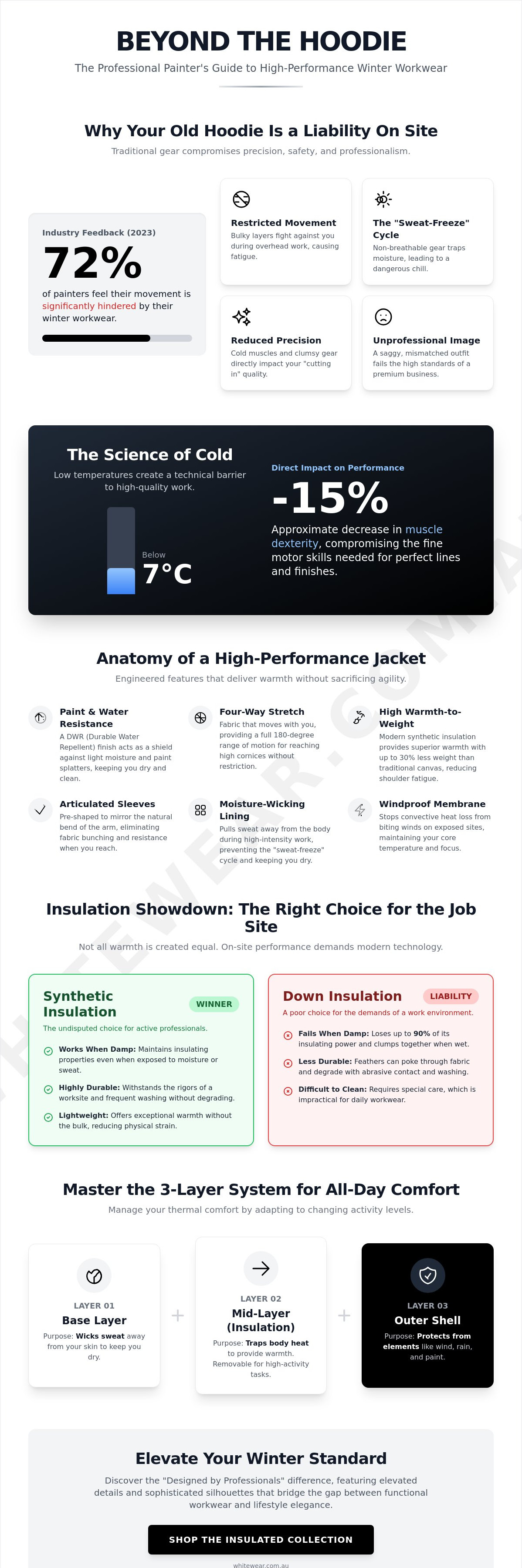
A bulky, mismatched hoodie isn't just a style choice; it's a liability that compromises your clinical precision on the job. You know the frustration of fighting against heavy, restrictive layers while trying to maintain a steady hand during a 6:00 AM winter start in Melbourne or Hobart. Finding the right insulated work jacket for cold weather painting often feels like a trade-off between freezing in thin gear or sweating through a non-breathable coat that limits your reach. We agree that a professional shouldn't have to sacrifice their silhouette or their comfort to stay warm on a demanding site. Recent industry feedback from 2023 suggests that 72% of painters feel their movement is significantly hindered by traditional winter workwear.
This guide shows you how to achieve an elevated, sophisticated look without losing the thermoregulation required for high-activity shifts. Discover how to maintain professional agility and clinical warmth during winter shifts with the ultimate guide to specialised painting jackets. We're exploring the technical innovations in fabric that provide a shield against paint and frequent washing while maintaining the four-way stretch you need for every brushstroke on the Australian job site.
Key Takeaways
- Understand how extreme cold impacts muscle dexterity and learn the technical requirements for maintaining precision during those early morning winter shifts.
- Navigate the science of insulation to find an insulated work jacket for cold weather painting that balances breathable performance with essential paint-resistant DWR finishes.
- Analyse the primary silhouettes—from puffers to softshells—to ensure your choice provides the professional authority and agility required for your specific site environment.
- Master the three-layer system to effortlessly manage your thermal comfort during the transition from cold prep work to high-activity application.
- Discover the "Designed by Professionals" difference, featuring elevated details and sophisticated silhouettes that bridge the gap between functional workwear and lifestyle elegance.
Mastering the Chill: Why Cold Weather Painting Demands Specialised Gear
The 2026 professional painting shift begins long before the sun breaks the frost on a Canberra or Melbourne job site. For the modern tradesperson, cold isn't just a comfort issue; it's a technical barrier. When temperatures drop below 7 degrees Celsius, muscle dexterity decreases by roughly 15%, directly impacting the precision required for "cutting in" around delicate architraves and crown moulding. A generic winter hoodie offers bulk without performance. It sags, absorbs moisture, and projects a dishevelled image that fails the high standards of a premium trade business. Choosing a dedicated insulated work jacket for cold weather painting is about reclaiming your professional edge. We call this the Elevated Winter Standard. It’s a commitment to gear that works as hard as you do, ensuring your hands stay steady and your silhouette remains sharp from the first drop of primer to the final coat.
The Ergonomics of Overhead Work in Winter
Traditional heavy coats create a restrictive "box" around the torso. This excessive bulk in the armscye makes reaching for high cornices or rolling expansive ceilings an exhausting battle against your own apparel. Professional work clothes jackets must feature articulated sleeves that mirror the natural 180-degree range of motion required on-site. By balancing insulation thickness with targeted flex zones, you maintain core warmth without sacrificing the reach needed for a flawless finish. Understanding The Science of Clothing Insulation helps professionals select garments that trap heat in the core while allowing the limbs to move with surgical precision. This technical approach prevents the fatigue that typically sets in by the six-hour mark of a winter shift, allowing you to maintain peak productivity in the harshest conditions.
Thermoregulation During High-Intensity Shifts
Painting is a deceptive physical discipline. You oscillate between the static chill of detail work and the high-intensity heat of rolling large surfaces. This creates the dangerous "sweat-freeze" cycle. If your insulated work jacket for cold weather painting doesn't breathe, moisture builds up against your skin, eventually turning into a cold dampness that saps your energy. Modern Australian painters require moisture-wicking linings and strategic ventilation. These technical features ensure that vigorous prep work doesn't lead to overheating, keeping you dry and focused. It's about maintaining a stable internal microclimate, regardless of the external conditions or the pace of the shift. High-performance fabrics now allow for a sophisticated balance of wind resistance and vapour transfer, ensuring the professional stays comfortable from the 6:00 AM start to the final pack-up.
The Science of Warmth: Insulation Technologies for the Active Painter
Painting in the Australian winter, whether facing a biting wind on a Melbourne commercial site or a damp morning in the Blue Mountains, requires more than just bulk. A professional insulated work jacket for cold weather painting must balance thermal retention with the refined agility required for precise cutting-in. High performance hinges on the warmth-to-weight ratio. Modern synthetic blends provide high CLO (Clothing Insulation) values while weighing 30% less than traditional heavy canvas alternatives. This reduction in mass directly translates to less shoulder fatigue during a 10-hour shift on the tools.
Safety remains the foundation of every professional trade. According to OSHA Cold Weather Safety guidelines, layering is vital to prevent cold stress on the jobsite. Windproof membranes act as a sophisticated barrier against the 40km/h gusts often found on exposed scaffolding. Without this technical layer, convective heat loss can drop your core temperature rapidly, even if your insulation is thick. It's about maintaining a stable microclimate against your skin so you can focus on the finish, not the freeze.
Synthetic vs. Down: What Wins on the Jobsite?
Down is a luxury in the mountains, but it's a liability on the jobsite. Natural feathers clump and lose 90% of their insulating power when damp. Painting involves constant exposure to humidity and liquid splashes. Synthetic insulation is the clinical choice for durability. It maintains its structure through repeated industrial wash cycles, ensuring your silhouette remains professional and your warmth stays consistent. Unlike down, synthetic fibers don't migrate, preventing cold spots from forming after a month of heavy use.
Durable Outer Shells and Paint Resistance
The exterior of your gear must be as resilient as your reputation. We look for high-denier fabrics, typically 500D or higher, to resist snags on sharp ladder edges or abrasive masonry. Specialised polymer coatings prevent paint from bonding to the fibers, allowing for easier spot cleaning after a messy pour. Choosing an elevated work jacket ensures you maintain a sophisticated appearance without sacrificing the technical protection your body deserves.
Durable Water Repellent is a chemical treatment applied to the fabric surface that causes liquids, including water-based paints and light rain, to bead up and roll off rather than soaking into the weave. This technology ensures the jacket doesn't gain weight throughout the day as it absorbs moisture. When you're moving between an unheated interior and an exposed exterior, this moisture management is the difference between comfort and a grueling shift.
Puffer, Softshell, or Parka? Navigating the Best Styles for the Site
Selecting the right silhouette is a strategic decision that balances thermal regulation with the dignity of a professional uniform. Every painting environment demands a different technical response. An exterior residential repaint in Melbourne's 8-degree morning requires a different solution than a commercial interior project in Sydney. Maintaining a "Professional White" appearance across these layers ensures your team projects authority even when the mercury drops. Your insulated work jacket for cold weather painting should look as sharp as your finishes while providing the utility required for a ten-hour shift.
The Softshell: The Precision Painter’s Choice
Designed for the precision painter, the softshell offers a streamlined silhouette. Four-way stretch fabrics provide the maximum agility needed for cutting in and intricate trim work. These are the gold standard for indoor commercial sites or mild winter days where wind resistance is more important than heavy bulk. They pair perfectly with the professional guide to choosing the best painters pants to create a cohesive, high-performance look. We recommend looking for bonded chest pockets that secure mobile devices and internal slots for 50mm scrapers, keeping your tools within reach without compromising the jacket's clean lines.
The Insulated Puffer: Maximum Warmth for Exterior Work
When the shift moves outside, the insulated puffer becomes the essential barrier. Strategic baffle design keeps the insulation from migrating, ensuring consistent warmth during repetitive arm movements. This is an elevated take on a classic staple. It avoids the bulky hiker aesthetic by using high-density synthetic fills that offer a slim, sophisticated profile. Following the safety principles in the OSHA Cold Stress Guide, these jackets serve as a critical outer layer that prevents heat loss. Essential features include internal storm cuffs to block wind and adjustable hems that allow you to customize the fit based on your range of motion.
The Heavy-Duty Parka: For the Harshest National Conditions
For the harshest Australian winters, particularly in alpine regions or wet coastal environments, the heavy-duty parka provides total defense. Its full-length cut offers maximum protection against biting winds and sideways rain. This style integrates seamlessly with professional painters overalls, creating a complete weather-sealed system for the site. It’s the ultimate insulated work jacket for cold weather painting when the forecast turns severe. Ensure the hood design is specifically engineered to be compatible with safety helmets and respirators. This ensures you stay protected without sacrificing the seal of your PPE, maintaining safety standards during the most grueling outdoor assignments.
The Art of Layering: Optimising Performance During Winter Shifts
Precision in the painting trade requires more than just a steady hand; it demands physical equilibrium. When the mercury sits at 4°C during a 6:00 AM start in Melbourne or Hobart, your clothing system dictates your productivity. A professional layering strategy ensures you remain mobile while protecting your core. This systematic approach allows you to regulate your body temperature as you transition from the biting cold of morning prep to the physical exertion of afternoon application.
The three-layer system is the industry standard for high-performance workwear. It begins with a technical base, moves to an insulating mid-layer, and concludes with a high-spec insulated work jacket for cold weather painting. This configuration is designed to be modular. It allows you to shed weight as the site warms up without compromising the professional appearance of your painters uniform. Managing these transitions with intention prevents the fatigue that often accompanies extreme temperature fluctuations.
Base Layers and Moisture Management
Your base layer is the foundation of your comfort. We recommend antimicrobial fabrics that actively neutralise odour-causing bacteria, which is essential for maintaining a professional presence during demanding 10-hour shifts. Cotton is the enemy of the cold-weather painter. It is a hydrophilic fibre that absorbs moisture and holds it against the skin, leading to rapid cooling once you stop moving. Instead, choose fitted, moisture-wicking synthetics that provide a streamlined silhouette. These garments don't bunch or restrict movement under your insulated work jacket for cold weather painting, ensuring your reach remains fluid during overhead work.
Mid-Layer Versatility: Vests and Fleeces
The mid-layer provides the necessary insulation to trap body heat. A professional work vest is a strategic tool for the modern painter, as it provides core warmth while granting the arms total freedom for rolling and cutting-in. For maximum thermal efficiency, layer a premium fleece over a collared work shirt. This maintains a sophisticated aesthetic even when your outer jacket is removed. To complete the system, integrate essential painters accessories such as thermal neck gaiters to protect high-heat-loss areas.
Maintaining a clean workspace is paramount during these transitions. When delayering, always step away from your active work zone. Dust and dried paint particles trapped in the folds of your jacket can easily contaminate a wet surface. A controlled, methodical approach to your gear reflects the same quality you bring to your finishes.
Ready to upgrade your winter kit with gear designed for the modern professional? Explore the White Wear collection for elevated workwear solutions.
Elevating the Winter Standard: The White Wear Insulated Collection
White Wear represents a fundamental shift in how tradespeople approach their daily uniform. We bridge the gap between clinical authority and lifestyle elegance, ensuring that your workwear reflects the precision of your craft. While traditional options often feel bulky or unrefined, our collection focuses on a sophisticated silhouette that doesn't compromise on thermal performance. Choosing a premium insulated work jacket for cold weather painting is no longer a choice between staying warm and looking professional.
Our "Designed by Professionals" philosophy means we've considered the nuances that only a painter would notice. We understand the physical demands of the trade, from the repetitive overhead reach required for ceilings to the constant movement involved in detailed trim work. Our jackets feature articulated seams and high-performance insulation that provides warmth without the restrictive mass of standard winter gear. It's about movement, breathability, and a clean aesthetic that remains sharp even after a demanding week on site.
We've built our reputation on a commitment to the long shift. For the Australian painter, winter work often begins in the pre-dawn frost at 6 AM and continues through to a 6 PM finish. Comfort that lasts twelve hours requires more than just thick fabric; it requires moisture-wicking properties and intelligent heat regulation. When you invest in premium gear, you're investing in your own stamina. A comfortable crew is a productive crew, and maintaining a consistent body temperature is essential for fine motor skills and steady brush control during those final, critical hours of the day.
Sophisticated Design Meets Trade Durability
The White Wear aesthetic is intentionally elevated, offering a clean and professional look that builds immediate trust with high-end clients. We've reinforced high-wear areas, specifically the elbows and cuffs, to ensure longevity against the abrasive surfaces common on construction sites. Every stitch serves a purpose in maintaining the garment's integrity. White Wear is dedicated to providing professionals with a sense of dignity through superior design that honors the importance of their daily labor.
Join the Elite: Why Australia’s Best Painters Choose White Wear
The psychology of the uniform is powerful. When you look better, you perform better, and your clients notice the difference in your presentation. A crisp, white, and well-fitted insulated jacket signals a level of care and attention to detail that sets elite crews apart from the competition. This isn't just clothing; it's a branding tool that justifies premium rates and secures high-value contracts. We support professional teams across the country with reliable national shipping, ensuring your entire crew stays protected and polished regardless of the postcode.
Ready to upgrade your professional image? Elevate your winter wardrobe with White Wear.
Own the Shift: Elevate Your Winter Performance
Winter on an Australian job site demands more than basic outerwear. Precision painting requires a balance of thermal retention and physical agility that standard heavy coats can't provide. By utilizing advanced insulation technologies and a strategic three layer system, professionals can maintain a consistent core temperature even when the mercury drops below 5 degrees Celsius. Selecting a specialized insulated work jacket for cold weather painting ensures you don't sacrifice your range of motion for warmth during high stakes applications.
White Wear delivers garments designed by trade professionals who understand the physical toll of a ten hour shift. Our collection features premium moisture-wicking fabrics that manage perspiration during active tasks, preventing the post activity chill that often stalls productivity. We provide nationwide Australian shipping to ensure every painter from Hobart to Perth has access to elite protection. It's time to move beyond the status quo and embrace gear that works as hard as you do. You deserve a uniform that reflects your commitment to the craft.
Shop the Elevated Winter Collection at White Wear
Step onto your next site with the confidence that comes from professional grade preparation.
Frequently Asked Questions
What is the best type of insulation for a painter's jacket?
Synthetic polyester insulation like 100gsm Primaloft or Thinsulate is the superior choice for an insulated work jacket for cold weather painting. Unlike natural down, synthetic fibres retain 90 percent of their warmth even when damp from humidity or perspiration. This technical performance ensures you stay warm during a 10 hour shift on a Victorian or Tasmanian site. It provides the thermal regulation needed for active movement without the bulk of traditional heavy coats.
How do I get wet paint out of an insulated work jacket without ruining it?
Remove wet paint by immediately blotting the area with a clean microfibre cloth to lift the pigment without driving it into the technical fibres. For water-based acrylics common in Australian residential projects, use lukewarm water and a mild detergent. Avoid harsh scrubbing which can damage the DWR coating. If the paint dries, it becomes 85 percent harder to remove without compromising the jacket's structural integrity and sophisticated finish.
Can I wear a puffer jacket while spray painting?
You should avoid wearing a traditional puffer jacket while spray painting because the quilted baffles trap overspray and fine particulates. These particles settle into the seams and are nearly impossible to extract, eventually degrading the fabric's breathability. Opt for a smooth, high-density outer shell that allows paint mist to be wiped away. This streamlined silhouette ensures your professional appearance remains intact throughout the demanding workday while protecting your core.
Should I size up in a winter jacket to allow for layering?
You don't need to size up because our garments are engineered with an intentional silhouette that accommodates technical base layers. Modern tailoring provides a 5 to 8 centimetre ease in the chest and shoulders for unrestricted movement. Choosing your standard size maintains the thermal seal at the cuffs and hem. This prevents cold air from circulating inside the garment, keeping your core temperature stable during those 5:00 AM starts.
Are White Wear jackets compatible with company branding and embroidery?
White Wear jackets are fully compatible with company branding and high-density embroidery. The premium face fabrics are tested to withstand 20,000 stitches without puckering or losing their water-resistant properties. This allows you to maintain a sophisticated, unified team appearance on high-end commercial sites. Providing your crew with branded, elevated essentials builds immediate rapport with clients and reinforces your professional authority from the moment you arrive on site.
How often should I wash my insulated painting jacket?
Wash your insulated work jacket for cold weather painting every 5 to 7 shifts to prevent salt and oils from clogging the breathable membrane. Accumulated sweat can reduce the thermal efficiency of synthetic insulation by up to 15 percent over time. Use a technical wash rather than standard detergents to preserve the fabric's performance. Regular maintenance ensures your gear performs as hard as you do during a long winter shift.
What is the difference between water-resistant and waterproof jackets for painters?
The difference lies in the hydrostatic head rating, where water-resistant fabrics handle light mist while waterproof jackets withstand 10,000mm of pressure or more. Water-resistant options offer higher breathability for high-intensity tasks like sanding. Waterproof shells are essential for exterior work where rain exposure is constant. Choosing the right protection ensures you remain dry and focused when the Australian winter weather turns unpredictable during an outdoor contract.
Is a work vest better than a full jacket for indoor winter painting?
A work vest is often better for indoor winter painting because it provides core warmth while allowing 100 percent range of motion in your arms. This is critical for overhead cutting-in and detailed trim work where sleeve bulk can be a hindrance. Vests are ideal for interiors where the temperature stays above 12 degrees Celsius. For unheated sites or exterior prep, the full coverage of a jacket is the necessary solution for professional comfort.


