


Yes, you can get sunburn through work clothes if ultraviolet radiation passes through the fabric. To understand how to avoid sunburn through your work clothes, look for garments rated UPF 50: they block 98% of the sun’s rays, while stretched or wet fabric can let more UV through. Clothing protects only the skin it covers.
It’s easy to assume that a shirt or pair of trousers is enough, especially when you’re focused on the job. But fabric, fit, colour and coverage all affect how much protection your clothing provides, and an ordinary garment isn’t necessarily designed to block UV.
This guide explains what to look for in work clothes for outdoor tasks, from a tight weave and a comfortable fit to sleeves and other coverage. You’ll also learn how Australia’s AS/NZS 4399:2017 standard helps identify sun-protective clothing, and why exposed skin still needs protection.
Key Takeaways
- Choose a dense, closely woven fabric; if you can see through it, it may offer limited UV protection.
- Prioritise a comfortable, non-tight fit so the fabric isn’t pulled across your skin during physical tasks.
- Compare colour alongside fabric construction, since a darker shade alone doesn’t determine a garment’s protection.
- Plan coverage around the work: sleeves, longer leg coverage and suitable headwear help shield more exposed skin.
Does Dark Clothing Protect You Better From the Sun?
Yes, UV radiation can pass through work clothes and reach your skin. Dark colours such as navy, black and dark red generally block more UV than white or light shades, but colour isn’t the deciding factor. A tightly woven light garment can offer better protection than a loosely woven dark one. For outdoor work, assess fabric, fit and condition together rather than relying on colour alone.
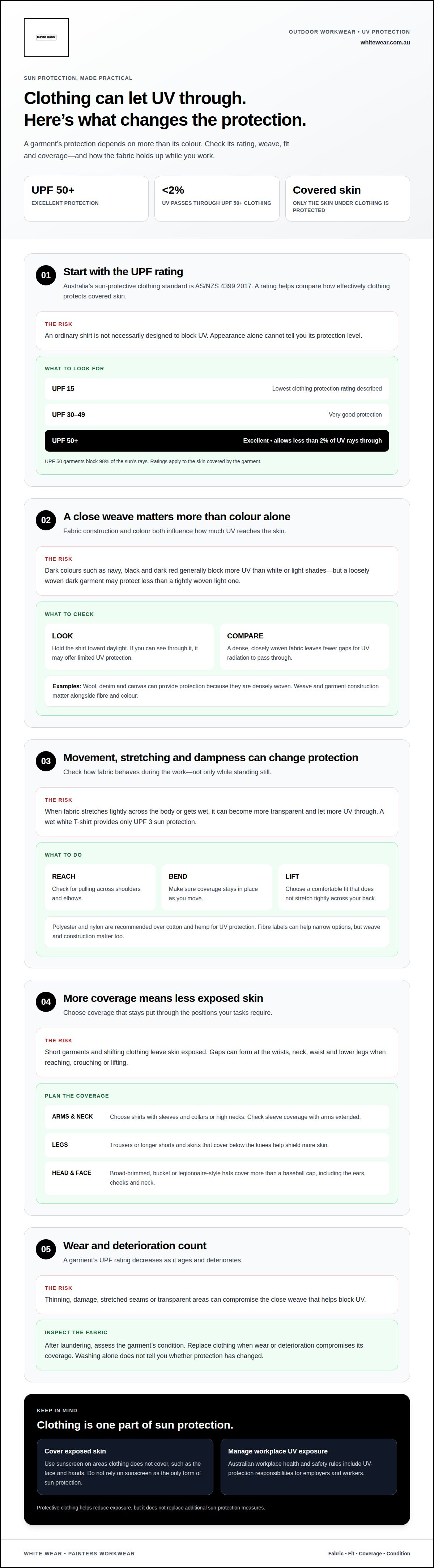
In Australia, the joint Australian and New Zealand standard for sun-protective clothing is AS/NZS 4399:2017. Check a garment’s UPF rating: UPF 15 is the lowest clothing protection rating described here, while UPF 30 to 49 is rated very good and UPF 50+ excellent. UPF 50+ garments allow less than 2% of UV rays through. That rating applies to covered skin, so sleeves and other coverage still matter during a full workday.
Fabric protection can change as you work. When clothing gets wet or stretches tightly across the body, it can become more transparent and let more UV radiation through. A wet white T-shirt provides only UPF 3 sun protection. If you can see through a fabric, it’s unlikely to offer much UV protection. Check how work clothes sit when you reach, bend or lift, and replace garments when wear or deterioration affects their coverage.
Australia’s workplace health and safety (WHS) rules include UV-protection responsibilities for workers. Employers should manage UV exposure as a workplace hazard, while workers also have a role in wearing protective clothing and following sun-protection measures. Covering skin is only part of a complete approach. SunSmart WA advises against relying on sunscreen as the only form of sun protection. Apply it to exposed skin, such as the face and hands, and wear suitable headwear during outdoor tasks. Protective clothing helps reduce exposure, but doesn’t replace these additional measures.
Fabric weave, composition and fit
A tightly woven fabric limits the gaps ultraviolet radiation can pass through. Cancer Council NSW recommends close weaves because less light passing through a garment signals better protection. Hold a work shirt towards daylight: if the weave looks open or you can see through it, expect less of a barrier. This quick check can help you compare fabrics, but it doesn’t replace a UPF rating when one is available.
Construction matters as much as fibre. Wool, denim and canvas can provide protection because they’re densely woven. Merino wool and denim are examples of fabrics with close construction. Polyester and nylon are recommended over cotton and hemp for UV protection. Shiny synthetics such as acrylic, polyester, nylon, Lycra and rayon can also protect, while viscose offers poor protection. Fibre labels help narrow your options, but weave and garment construction matter too.
Fit affects how the weave performs when you move. If a garment pulls across your shoulders, elbows or back, the fabric stretches and spaces open, letting more UV through. Choose a relaxed fit that stays comfortable while reaching, bending and lifting, and avoid tight panels across moving joints. Test sleeves and back through your full range of work movements, not just while standing still. Wet fabric also tends to have a lower UPF rating than dry fabric, so dampness matters outdoors.
Yes, wear and deterioration can reduce protection: a garment’s UPF rating decreases as it ages and deteriorates. Washing alone doesn’t tell you whether protection has changed, so assess the garment’s condition after laundering. Look for thinning, damage, stretched seams or areas that have become transparent. Replace clothing when deterioration compromises its close weave. Weakened fabric blocks less ultraviolet radiation, increasing the potential for skin damage during outdoor work.
Choosing clothing with coverage, comfort and activity-specific features
For outdoor tasks, coverage works alongside a garment’s UPF rating. Choose clothing that also allows the movement your work requires.
Coverage From Sleeves and Pants
Long sleeves and long pants cover more skin than short garments, reducing the area exposed to UV radiation. Cancer Council NSW recommends shirts with sleeves and collars or high necks, plus trousers or longer shorts and skirts that cover below the knees.
When painting overhead or reaching across a wall, sleeves help cover your arms as your position changes. Long pants protect your legs while bending, climbing or working near reflective surfaces. Sun-protective clothing with a suitable UPF rating adds protection for the skin beneath it. Choose coverage that stays in place through the movements your tasks demand.
Comfort matters during a long shift. Clothing that restricts movement may ride up or pull tight as you work, reducing the coverage you intended. A well-fitting shirt and trousers can keep more skin covered without limiting ordinary work movements.
Exposed Skin Around Clothing Gaps
Gaps form where clothing shifts or leaves skin uncovered, including at the wrists, neck, waist and lower legs. Reaching, crouching or lifting can expose these areas, even if you started the task fully dressed.
Check how sleeves sit when your arms are extended and whether trouser hems stay low while you bend. A collar or high neck helps cover the neck, while longer leg coverage shields skin below the knees. If cotton or another fabric pulls away from your body as you move, the gap can leave skin exposed.
Headwear matters too. SunSmart WA recommends broad-brimmed, bucket or legionnaire-style hats for outdoor work. A baseball cap doesn’t provide the same coverage for the ears, cheeks and neck. Sunscreen helps protect exposed skin, such as hands or areas clothing doesn’t cover, but shouldn’t be your only sun-protection measure. Combining coverage, suitable headwear and sunscreen helps reduce UV exposure and skin cancer risk.
Sunburn through clothing
Yes, ultraviolet rays can pass through a shirt and cause sunburn. Ordinary clothing isn’t automatically designed to block UV, so appearance alone can’t tell you how much protection it provides. The ultraviolet protection factor, or UPF rating, measures how effectively a garment blocks both UVA and UVB radiation. SPF, by comparison, measures protection against UVB radiation. That distinction matters when choosing work shirts for long periods outdoors.
The rating gives a practical measure of what passes through. UPF 30 clothing blocks 96.7% of UV radiation, allowing 3.33% through. UPF 50 blocks 98%, allowing approximately 1/50th of UV radiation to pass. UPF 50+ also blocks 98% of UV radiation. For anyone working outside, a higher UPF rating means less UV reaches covered skin, though the garment only protects the areas it covers.
Sunburn through clothes can happen if fabric is wet, stretched or worn thin. A damp shirt may become more transparent, while tight fabric can open up as it pulls across your shoulders or back. A garment that looks opaque when hanging may offer less protection during active work. Check how shirts fit when you reach overhead, and watch for areas that become thin or damaged with use.
For a clear way to reduce risk, choose clothing labelled with a UPF rating and keep it dry and comfortably fitted. How to avoid sunburn through your work clothes also depends on protecting exposed skin: sleeves and trousers can’t cover your face, hands or neck. Sunscreen helps protect those areas, but SunSmart WA advises against relying on it as the only form of sun protection. Pair protective clothing with sunscreen and suitable headwear during outdoor tasks.
Clothing is one way to reduce UV exposure, not a guarantee against skin cancer. A garment’s rating, condition, fit and coverage all affect how it protects against UV rays. Review those factors together before a long outdoor shift, especially if your work involves repeated reaching or bending.
White Wear: Painters workwear
White Wear offers painters workwear and painters clothing designed for the demands of the painting trade. If you’re choosing what to wear for outdoor painting, assess each garment’s fabric, fit, condition and coverage. Workwear made for painting can form part of your daily kit, but sun protection depends on the garment’s actual construction and coverage, not its category alone.
Consider how your clothing performs while reaching, bending and moving around a worksite. Sleeves and longer leg coverage can help shield your skin, while a suitable UPF rating indicates how much UV radiation passes through covered fabric. Pair clothing with other sun-protection measures for exposed skin.
Explore White Wear’s painters clothing and workwear to find garments designed for the demands of your workday.
Make Sun Protection Part of Your Workday
A practical next step in learning how to avoid sunburn through your work clothes is to make clothing selection part of your site preparation. Think about the tasks ahead, how much movement they involve and whether your outfit will stay comfortable throughout the shift. This pause helps you make deliberate choices before work begins, rather than noticing a gap or discomfort once you’re outdoors.
Your workwear should support the way you move and the standard you bring to every job. If you’re refining your kit for painting work, contact White Wear about workwear and explore options suited to your trade.
Each shift is a fresh opportunity to prepare thoughtfully. Choose carefully, work with confidence and make sun protection part of how you look after yourself on site.
Frequently Asked Questions
Can you get a sunburn through clothes?
Yes, UV radiation can reach skin beneath clothing, so wearing a shirt doesn’t automatically prevent sunburn. Protection depends on the garment’s fabric and construction, not simply whether it covers your skin. Two work shirts can look similar but provide different levels of UV protection. A UPF label gives you a clearer basis for choosing than appearance alone.
What makes clothing sun safe?
Sun-safe clothing combines a tested UPF rating with coverage that stays in place while you work. Look for a garment labelled with its UPF, then consider whether it covers the areas your tasks expose. A shirt that shifts when you reach overhead may leave skin uncovered, even if its fabric is protective. Comfortable movement and secure coverage matter on an active worksite.
Do You Still Need Sunscreen If You're Wearing UPF Clothing?
Yes. UPF clothing protects only the skin beneath the garment, so sunscreen is still useful on uncovered areas. During an outdoor shift, your hands and parts of your face may remain exposed while you paint or move materials. Apply sunscreen to those areas and follow its label directions. Clothing and sunscreen address different parts of your sun-protection routine.
How does UPF differ from SPF?
UPF describes how clothing protects against UVA and UVB radiation; SPF refers to sunscreen protection against UVB radiation. They’re different measures for different products, so don’t read an SPF number on sunscreen as a clothing rating. For outdoor work, use the UPF label to assess a garment and sunscreen directions to guide use on uncovered skin.
Is UPF 50+ Clothing Better Than Regular Clothing?
UPF 50+ clothing provides a stated level of UV protection, unlike regular clothing without a UPF label, whose protection can vary. That makes the rating useful when selecting garments for outdoor work. It still applies only to covered skin, so the fit and coverage need to suit the task. A rated shirt won’t protect areas left uncovered as you move.
What Is UPF?
UPF stands for ultraviolet protection factor. It rates how effectively a fabric limits UV radiation reaching the skin beneath it. Think of it as a measure attached to the garment, not a description of its colour or style. Use the UPF label to compare sun-protective clothing, then consider whether its coverage suits your work.


