


Your workwear is the most visible business card you'll ever carry. In the high-stakes world of Australian residential and commercial painting, a dingy, yellowed uniform doesn't just look tired; it signals a lack of precision to your most discerning clients. You've likely felt the frustration of watching premium high-GSM cotton drill lose its lustre to stubborn oil-based splatters and yellowing collars within a single season. It's a common struggle, but mastering how to keep painters whites white is actually a matter of clinical textile science rather than brute force scrubbing.
We understand that your gear is a refined essential designed to provide dignity during grueling hours on the ladder. You deserve a professional appearance that matches the quality of your finish. This article delivers a sophisticated, repeatable laundry protocol designed to extend the life of your garments and maintain that high-performance edge. We will break down the tactical maintenance strategies required to eliminate yellowing, protect fabric integrity, and ensure you arrive at every job site with a polished presence that commands higher respect and justifies your premium rates.
Key Takeaways
- Establish clinical authority on-site by understanding how a pristine uniform creates a "Halo Effect" that justifies premium Australian service rates.
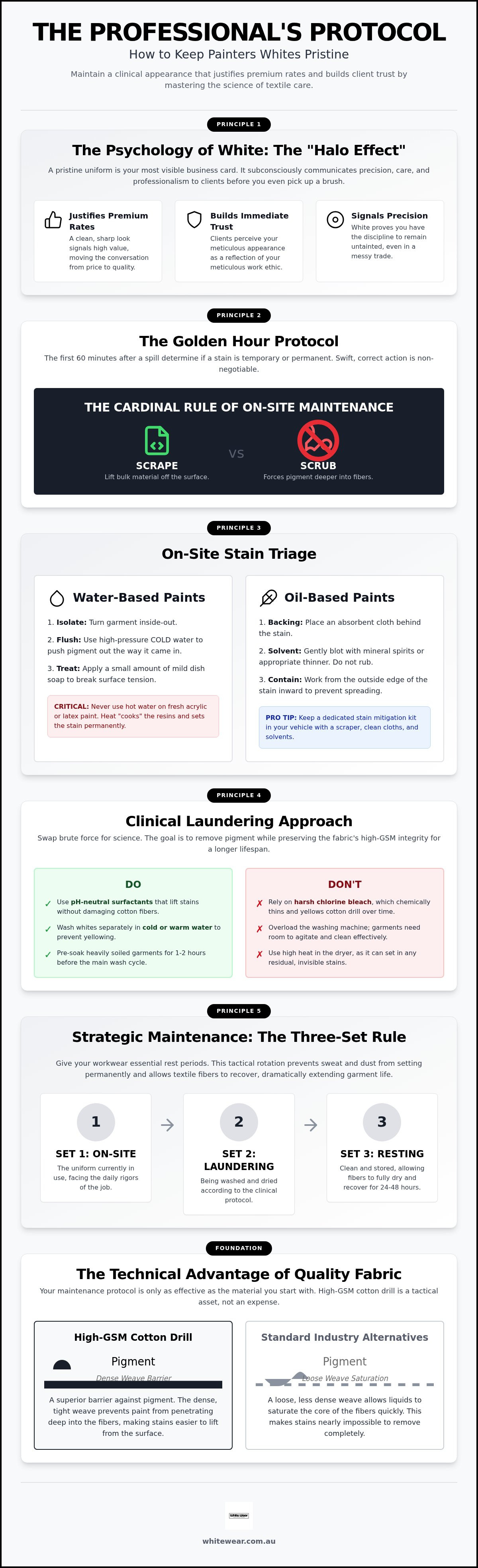
- Master the "Golden Hour Protocol" to treat pigment before it bonds, utilizing a "Scrape, Don't Scrub" rule to protect the garment's high-GSM weave.
- Adopt a clinical laundering approach that swaps harsh bleach for pH-neutral surfactants, a key strategy in how to keep painters whites white without thinning the fabric.
- Implement the "Three-Set Rule" for tactical wardrobe rotation to provide your textiles with essential rest periods, preventing dust and sweat from setting permanently.
- Understand the technical advantage of high-GSM cotton drill, which provides a superior barrier against pigment penetration compared to standard industry alternatives.
The Professional Significance of Pristine Painters Whites
In the Australian trade landscape, your uniform is a silent communicator. It tells a story before you even open your toolbox. While some view painters clothing as a disposable utility, the elite tier of the industry treats it as a refined essential. White remains the clinical standard in 2026 because it represents transparency. It proves that despite the mess inherent in the trade, you possess the discipline to remain untainted. This visual precision creates what psychologists call the "Halo Effect." When a client sees a pristine uniform, they subconsciously attribute that same level of care to your cutting-in and surface preparation. It justifies premium service rates. Clients aren't just paying for paint; they're paying for the peace of mind that comes with a master's touch.
Learning how to keep painters whites white isn't just about laundry. It's a shift from a disposable mindset to one of textile investment. High-GSM cotton drill isn't just a fabric choice; it's a tactical asset. Quality apparel resists pigment penetration better than cheap alternatives, making your maintenance protocol more effective and your professional image more durable. The psychological impact of cleanliness on client anxiety shouldn't be underestimated. Painting is invasive. You're in their personal space. A clean uniform reduces the perceived risk of accidental mess, building immediate trust. When you present as a professional, you are treated as one.
The Evolution of the Professional Aesthetic
Historically, white was chosen for its ability to be bleached and its reflection of heat. Today, the requirement is more sophisticated. Modern branding demands a look that separates the master tradesperson from the amateur. A polished appearance establishes immediate on-site expertise, signaling that you manage your business with the same rigor you apply to a high-gloss finish. It moves the conversation from price to value. It signals that you are an insider who understands that the details matter, providing dignity and comfort during grueling hours of labor while maintaining a high-end aesthetic.
Branding Through Textile Integrity
Consistency is a marker of project management quality. If you can't maintain your own gear, a client might wonder how you'll manage their property. Grubby, yellowed gear carries a hidden cost: missed referrals. High-end Australian homeowners share contacts based on the feeling of a contractor's professionalism. Integrating your uniform into your marketing strategy means ensuring every team member reflects the brand's mission. By prioritising textile longevity, you ensure your business card-the one you wear-remains as sharp as your reputation. This focus on form and high-quality construction is what distinguishes a leading business from the status quo.
Tactical Stain Management: The Golden Hour Protocol
The first sixty minutes determine the lifespan of your garment. Once pigment crosses the threshold from surface splatter to fibre-core saturation, the battle for a pristine appearance is largely lost. Understanding how to keep painters whites white requires a tactical response that begins the moment the drop hits the fabric. We call this the Golden Hour Protocol. It is a clinical approach to extraction that prioritises the integrity of the textile over the speed of the fix.
The cardinal rule of on-site maintenance is: scrape, don't scrub. The natural instinct to rub a fresh stain is a critical error. Scrubbing forces pigments deeper into the high-GSM cotton drill, effectively tattooing the textile. Instead, use a flat-edged tool like a putty knife to lift the bulk of the material from the surface. By scraping, you preserve the structural integrity of the weave and prevent the stain from expanding. A prepared professional always keeps a mitigation kit in the van, containing a blunt scraper, clean white cloths, and the correct surfactants for the day's specific coatings.
Water-Based Paint Response
Acrylic and latex paints are common on Australian residential sites. The priority here is high-pressure flushing. Turn the garment inside out and use cold water to push the pigment out the way it entered the fabric. Never use hot water on fresh acrylic; heat "cooks" the resins and sets the stain permanently. A small amount of mild dish soap can act as a temporary surfactant, breaking the surface tension and allowing the water to carry the pigment away without aggressive agitation.
Oil-Based and Enamel Emergencies
Oil-based coatings require more technical precision. Place an absorbent backing cloth behind the affected area to prevent the stain from transferring to the other side of the garment. Apply mineral spirits sparingly using a clean cloth, dabbing from the outside of the stain toward the centre. You're aiming to dissolve the binder, not soak the cotton. For those wearing high-performance painters clothing, the dense weave provides a vital window of resistance that makes this extraction more successful. Always pre-treat these areas with a specialised solvent before the workday ends to ensure the evening laundry cycle can fully lift the residue.
Advanced Laundering for Trade-Specific Fabrics
Maintaining your professional image requires more than a standard wash cycle. Generic supermarket detergents are often loaded with harsh fillers and high-pH agents that can actually trap pigment within the weave. To master how to keep painters whites white, you must understand the chemistry of the clean. Professional-grade laundering relies on pH-neutral surfactants. These molecules are engineered to lower the surface tension of water, allowing it to penetrate deep into the high-GSM cotton drill and lift particulates without stripping the fabric's natural resilience. It's a clinical approach that treats your gear as a refined essential rather than a disposable commodity.
Temperature control is the next tactical consideration. While hot water is effective for dissolving oils, excessive heat can cause high-quality cotton to shrink and lose its form. We recommend a consistent 40 to 60-degree cycle. This range is high enough to activate surfactants and break down binders but low enough to preserve the tailored fit of your workwear. By managing the thermal environment of your wash, you ensure your kit maintains its high-performance edge for the duration of its life.
Oxygen-Based Brighteners vs. Chlorine Bleach
Sodium percarbonate is the cornerstone of our "Anti-Bleach" manifesto. Unlike chlorine bleach, which aggressively oxidises and weakens cotton fibres, oxygen-based brighteners target organic stains with surgical precision. Over time, chlorine bleach reacts with proteins in sweat and minerals in Australian tap water, causing your whites to take on a dull, grey, or yellowed cast. A clinical soaking protocol is the solution. Submerge your gear in warm water with an oxygen-based agent for at least four hours before washing. This allows the active oxygen to break the molecular bonds of the grime without compromising the structural integrity of your kit.
The Role of Mechanical Action and Water Volume
Aggressive machine settings are a common pitfall. While "Heavy Duty" cycles seem appropriate for trade work, the excessive agitation can prematurely age your painters pants by fraying the tightly woven drill. Opt for a cycle with high water volume instead. Plenty of water is essential for keeping lifted pigments in suspension, ensuring they're flushed away rather than redeposited on the fabric. Finally, skip the tumble dryer. The heat can shrink high-GSM cotton and set any remaining micro-stains. The Australian sun is your greatest tactical ally. UV light acts as a natural, non-destructive bleaching agent, providing a crisp finish that keeps you looking sharp on-site.
Strategic Maintenance and Wardrobe Rotation
Professional longevity is rarely an accident. It's a tactical calculation. While the previous sections focused on the chemistry of pigment extraction, the true secret to how to keep painters whites white lies in your rotation strategy. We advocate for the "Three-Set Rule." This framework ensures your high-GSM cotton drill receives the essential recovery time needed to maintain its structural integrity. When fibres are under constant tension and saturated with daily perspiration, they become more porous. This allows site dust and pigments to anchor deeper into the core. A rest period allows the textile to reset. It makes your next laundry cycle significantly more effective.
Storage protocols are equally vital for long-term textile health. If you're storing gear during a break between major contracts, avoid airtight plastic tubs. Plastic can off-gas, leading to a phenomenon known as phenolic yellowing. Instead, use breathable cotton bags and store them in a cool, dry environment. This prevents the oxidation of any residual surfactants that might still be present in the fibres, ensuring your whites remain crisp rather than turning a dull cream while in the cupboard.
The Economics of the 3-Set Rotation
Investing in three complete sets of painters clothing might seem like a higher upfront cost, but the economics of cost-per-wear tell a different story. By rotating your gear, you reduce the frequency of aggressive laundering for each individual garment. This prevents the thinning and fraying associated with daily washing. Most importantly, it ensures you always have a "Client-Ready" set available. Arriving at a quote or a high-end project meeting in a pristine uniform immediately signals project management quality. It's about maintaining a high-performance image that justifies your premium Australian rates.
Managing Non-Paint Stains
Not every threat to your whites comes from a tin of paint. Site dust, joint compound, and caulk present unique challenges. For dust and dry compounds, a high-pressure air hose or a stiff brush should be used before the garment ever touches water. Once wet, these particulates can turn into a grey slurry that permanently dulls the fabric. For the dreaded "Yellow Collar" syndrome, we recommend enzyme-based pre-treatments. These clinical solutions break down the biological proteins in sweat that lead to yellowing over time. This level of detail is especially critical for maintaining the fit and finish of womens work wear, where fabric drape and silhouette are as important as durability. Don't forget to apply the same care to your painters accessories and layers to ensure a cohesive professional aesthetic.
Build your professional foundation with our peer-led painters workwear collections.
Elevating Your Kit: Why Quality Apparel Stays Whiter Longer
The success of any clinical protocol depends on the quality of the foundation. While mastering how to keep painters whites white involves chemistry and timing, the physical properties of your garment dictate the ultimate result. High-GSM cotton drill isn't merely a weight preference; it's a technical barrier. A denser weave creates a tighter physical lattice that prevents micro-pigments from reaching the core of the fibre. When you wear a garment engineered for the trade, paint sits on the surface longer, giving your Golden Hour Protocol a significantly higher success rate. Cheap, low-GSM alternatives act like a sponge, drawing stains into the heart of the textile where no amount of soaking can reach them.
Durability is the silent partner of aesthetics. Maintaining a pristine image in the Australian environment requires intensive laundry cycles, including long soaks and high-volume rinses. Fashion-grade whites will fray and lose their silhouette under this pressure. Our peer-led development focuses on reinforced stitching and heavy-duty construction that survives the rigours of both the job site and the washing machine. This commitment ensures that your kit provides dignity and comfort during grueling hours of labour without sacrificing its high-end finish. It's about building a wardrobe that works as hard as you do.
Identifying High-Performance Textiles
When selecting painters overalls or trousers, examine the light transmission through the fabric. Trade-grade white is opaque and substantial. It feels structured because it's designed to resist the penetration of modern high-solids coatings. Fashion-grade garments often use loose-spun yarns that offer no resistance to pigment bonding. Choosing the right textile is the first step in ensuring your professional appearance remains uncompromised by the daily realities of residential or commercial painting. It turns your workwear from a recurring expense into a business asset.
Investing in Clinical Excellence
The long-term ROI of premium painters workwear is measured in months of service rather than weeks. White Wear is designed to support the professional's mission, providing a refined essential that reflects your expertise to every client. To maintain your professional image in 2026, follow this final checklist:
- Inspect: Check for pigment splatters after every shift.
- Treat: Execute the Golden Hour Protocol immediately for wet paint.
- Soak: Use oxygen-based brighteners for deep-set grime and organic stains.
- Rotate: Adhere to the Three-Set Rule to prevent fibre fatigue and permanent setting.
By combining elite textiles with clinical maintenance, you ensure your whites remain a powerful tool for business growth and professional pride. You aren't just wearing a uniform; you're projecting a standard of excellence that defines the modern Australian master painter.
Mastering the Professional Standard
Maintaining a clinical on-site presence is a tactical business decision that pays dividends in client trust and premium rates. By implementing the Golden Hour Protocol and adhering to a strict three-set rotation, you transition from simply managing mess to mastering textile longevity. The true secret of how to keep painters whites white starts with the foundation of the fabric itself. High-GSM cotton drill provides the essential barrier needed to prevent pigment from anchoring, ensuring your laundry efforts yield professional results every time.
Your workwear should be a refined essential that provides dignity throughout the grueling hours of the workday. Our Australian peer-led design process ensures every garment is engineered for high-GSM durability and functional elegance, standing up to the most demanding environments. With national shipping across Australia, upgrading your kit to match your expertise has never been more seamless. Elevate your professional image with White Wear’s premium painters workwear.
Take pride in your appearance and let your uniform reflect the precision of your craft. You've already mastered the brush; now it's time to master the look that defines a true leader in the Australian trade.
Frequently Asked Questions
Can I use chlorine bleach on my painters whites?
Avoid chlorine bleach because it aggressively oxidises and weakens cotton drill fibres over time. While it provides a temporary whitening effect, it eventually reacts with minerals in Australian tap water to create a dull, yellowed cast. Use sodium percarbonate instead. It targets organic stains with clinical precision while preserving the structural integrity of your high-GSM gear, ensuring your uniform remains a refined essential rather than a thinning utility item.
How do I get dried oil-based paint out of my work trousers?
Removing dried oil-based paint requires a specialised solvent like mineral spirits or a dedicated paint stripper safe for cotton. Apply the solvent sparingly to the affected area and allow it to soften the binder before gently scraping with a blunt edge. Since the paint has already bonded, you'll need patience to lift the pigment without damaging the tight-weave textile. Always test a small area first to ensure the fabric's high-end finish remains uncompromised.
Why do painters wear white instead of a darker colour?
Painters wear white to signal clinical authority and transparency on the job site. Historically, white was chosen to reflect heat and allow for aggressive cleaning, but in 2026, it serves as a visual business card. It proves your precision; if you can stay clean in a messy environment, the client trusts your attention to detail. This "Halo Effect" justifies premium rates by distinguishing master tradespeople from amateurs who settle for stained, dark-coloured alternatives.
Is it better to wash painters clothes in hot or cold water?
A consistent temperature between 40 and 60 degrees Celsius is the ideal range for professional laundering. Cold water often fails to activate the surfactants needed to lift heavy pigments, while excessively hot water can shrink high-GSM cotton and set certain stains permanently. This balanced thermal approach ensures you maintain the tailored fit of your clothing while achieving the deep-clean required to keep your professional image sharp and consistent.
How can I remove yellow sweat stains from the collar of my work shirt?
Target yellowing collars with enzyme-based pre-treatments designed to break down biological proteins. Sweat and sebum naturally accumulate during grueling hours of labour, eventually bonding with the fabric to create stubborn discolouration. Apply the treatment directly to the collar and allow it to sit for at least thirty minutes before washing. This clinical approach is the most effective method for how to keep painters whites white and prevents the "Yellow Collar" syndrome from undermining your polished appearance.
What is the best detergent for professional painters workwear?
The best choice for trade-grade fabrics is a pH-neutral surfactant rather than a generic supermarket detergent. Many high-street brands contain harsh fillers that can actually trap site dust within the cotton weave. Professional-grade surfactants lower the surface tension of water more effectively, allowing pigments to be flushed away during the rinse cycle. Look for formulations designed for high-performance workwear to ensure your kit maintains its high-GSM resilience and premium aesthetic for the long term.
How do I stop my white workwear from turning grey over time?
Greying occurs when suspended pigments redeposit onto the fabric during the wash cycle. To prevent this, always use a high water volume setting to ensure grime is fully flushed away. Overloading the machine is a common error that traps dirt against the textile. Additionally, ensuring your machine is clean and using oxygen-based brighteners is a key strategy in how to keep painters whites white, maintaining the crisp finish that clients associate with premium Australian service providers.
Should I use a tumble dryer for my painters pants?
Skip the tumble dryer to protect the structural integrity of your painters pants. The intense mechanical heat can shrink high-quality cotton drill and permanently set any microscopic pigment residues that survived the wash. Instead, utilise the Australian sun. UV light acts as a natural, non-destructive bleaching agent that brightens the fabric while it air-dries. This finishing touch ensures your gear remains a refined essential that provides dignity and comfort without the risk of heat damage.


