


The traditional "white" is no longer just a uniform; it's a high-performance tool where the synergy of natural and synthetic fibres outperforms the status quo. When you're mid-way through a ten-hour shift in the Australian sun, the technical choice between cotton vs polyester painters clothing becomes a matter of professional dignity and thermal survival. You've likely felt the frustration of heritage cotton that becomes heavy and stiff once splattered with paint, or cheap synthetic gear that traps heat like a furnace. We believe that the modern professional deserves better than a choice between comfort and durability.
We understand that your workwear is a direct extension of your brand image. You need a silhouette that remains polished after fifty washes and fabric that resists heavy saturation without sacrificing breathability. This guide breaks down the technical performance of modern textiles, from the rising costs of raw cotton to the superior moisture-wicking properties of technical recycled polyester. We will explore how engineered blends meet AS/NZS 4399:2017 sun protection standards while providing the mechanical stretch required for a demanding workplace. It's time to move beyond sterile industry jargon and invest in refined essentials designed for the science of the task.
Key Takeaways
- Modern painters' whites are more than tradition; they're a vital tool for maintaining a polished brand image during grueling shifts.
- Understand the technical nuances of cotton vs polyester painters clothing to balance natural breathability with engineered moisture-wicking power.
- Learn why 100% cotton can become a heavy "sponge" when splattered and how synthetic polymers resist saturation to keep your gear lightweight.
- Discover how advanced micro-fibres prevent the "wet towel" effect, ensuring thermal comfort even in the peak of the Australian summer.
- Identify the "Golden Ratio" of fabric blends that provides the ultimate combination of skin-friendly comfort and long-term structural resilience.
The Evolution of Professional Whites: Why Fabric Choice Matters
The white uniform is a legacy of the painting trade, a symbol of precision that dates back centuries. Historically, these garments served as a blank canvas to showcase a master’s cleanliness and attention to detail. However, The Evolution of Professional Whites has shifted from simple protection to a sophisticated requirement for performance. In the modern Australian market, the debate regarding cotton vs polyester painters clothing is no longer just about tradition; it's a strategic decision that affects your physical stamina and your bottom line.
Modern clients have higher expectations than ever before. They don't just hire a laborer; they hire an artisan. When you arrive on-site, your appearance is the first indicator of the quality of work you'll provide. Wearing a generic, ill-fitting overall from a hardware store often signals a lack of professional investment. These budget options frequently fail the modern professional, using low-grade materials that trap heat and lose their structural integrity after a handful of washes. Choosing the wrong fabric carries hidden costs, including increased fatigue, heightened risk of heat stress, and the constant need for expensive replacements.
From Utility to Performance
We've moved beyond the era of basic protection. High-performance workwear is now an engineered essential designed to provide dignity during grueling shifts. The psychological impact of wearing refined materials cannot be understated. When your clothing moves with you rather than against you, it fosters a sense of confidence and focus. High-quality fabrics transform your daily attire from a mere utility item into a tool that supports your craft, ensuring you remain comfortable from the first drop of primer to the final coat of gloss.
The Role of Fabric in Professional Branding
Your choice in the cotton vs polyester painters clothing debate directly communicates your brand values. A crisp, white appearance maintained throughout a demanding workday tells the client that you value excellence in every facet of your business. This visual consistency is a cornerstone of Painters Uniforms for Company Branding. By investing in garments that resist the yellowing and sagging common in inferior textiles, you ensure that your team remains a walking advertisement for the premium service you provide. It's about maintaining that sharp, professional edge when the pressure is on and the deadline is looming.
Decoding the Fibre: Cotton vs Polyester Technical Breakdown
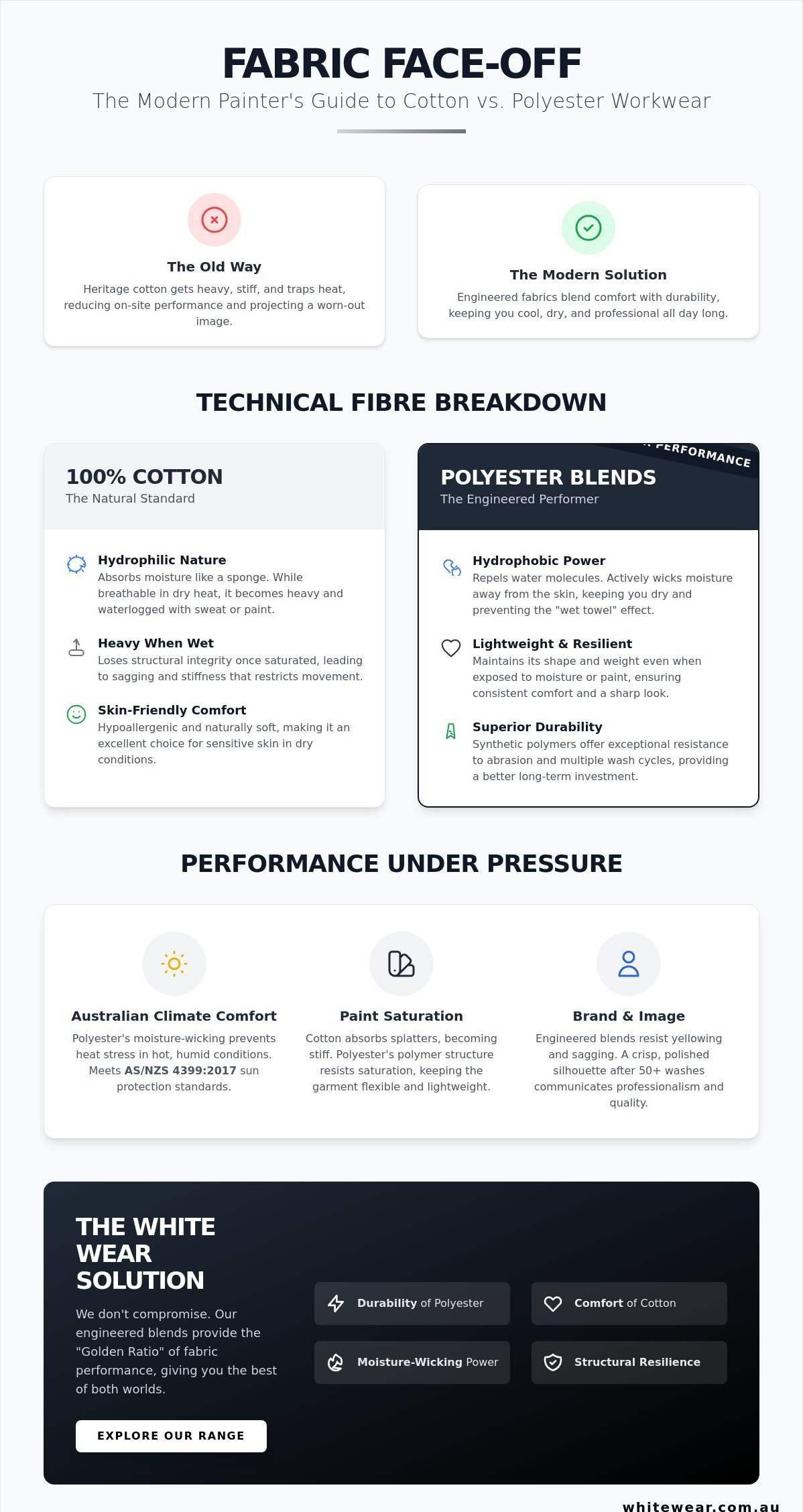
Understanding the molecular integrity of your workwear is the first step toward peak performance. The debate surrounding cotton vs polyester painters clothing often centres on comfort, but the true distinction lies in how these fibres interact with your environment. Cotton is a cellulose-based powerhouse, prized for its hydrophilic nature, meaning it naturally attracts and holds water molecules. In contrast, polyester is a petroleum-derived polymer engineered for hydrophobic resilience, repelling moisture to maintain its structural form even under extreme pressure.
Weight is another critical factor in this technical equation. We measure this through GSM, or Grams per Square Metre. A higher GSM indicates a denser, more durable weave, which is essential for resisting the abrasions common on a commercial job site. However, the modern artisan must balance this density with the need for consistent airflow. A garment that's too heavy becomes a physical burden during a ten-hour shift, while one that's too light offers insufficient protection against paint saturation. Finding that refined balance is what separates premium workwear from the generic alternatives found in discount aisles.
The Case for 100% Cotton
For professionals with sensitive skin or a preference for natural materials, 100% cotton remains a cornerstone of the trade. Its hypoallergenic properties ensure that even during the most grueling hours of labour, your skin remains free from the irritation often caused by low-grade synthetics. Cotton offers exceptional natural thermoregulation in dry heat, allowing your body to breathe through the organic gaps in the weave. There's also a unique "wear-in" factor to consider. Much like a high-end leather tool belt, quality cotton garments mould to your physical movements over time, providing a bespoke level of comfort that raw synthetic fibres struggle to replicate.
The Case for Polyester and Synthetics
When the priority is longevity and a sharp, consistent aesthetic, polyester takes the lead. This fibre boasts superior tensile strength, making it nearly impervious to the typical snags and tears found on busy sites. One of its greatest advantages for the modern professional is colour fastness. While natural fibres can yellow or grey over time, engineered synthetics ensure your whites stay vibrant and professional for significantly longer. The integration of quick-dry technology is also a game-changer for the Australian climate. By wicking sweat away from the skin, these materials prevent that heavy, damp sensation that often leads to mid-afternoon fatigue. If you're ready to upgrade your daily kit, exploring refined painters clothing built with these technical innovations is the logical next step for your career.
Performance Under Pressure: Paint Absorption and Durability
Every professional painter knows that the workday doesn't just leave a mark on the walls; it leaves a mark on the person. When evaluating cotton vs polyester painters clothing, the most immediate physical feedback comes from how the fabric handles a heavy day of cutting in and rolling. Splatter is inevitable. However, the way your clothing responds to that splatter determines whether you finish your shift feeling agile or weighed down by your own equipment. The physical burden of paint-saturated fabric is a silent contributor to mid-afternoon fatigue.
The "Sponge Effect" is a genuine technical challenge for those wearing 100% cotton. Because cotton is a natural, hollow fibre, it acts as a reservoir for liquids. When paint hits the surface, it doesn't just sit there; it's pulled into the core of the fibre. Over a ten-hour shift, these micro-deposits of paint add significant weight to the garment. Polyester, conversely, offers a high level of resistance to saturation. Its solid, synthetic structure prevents paint from deeply penetrating the weave, keeping the garment lightweight and flexible even after several heavy splatters.
Paint-Wicking vs. Paint-Holding
The chemical composition of your paint also dictates how your fabric performs. Acrylic, or water-based paint, is rapidly absorbed by the cellular structure of cotton, making it notoriously difficult to remove once it begins to cure. Oil-based paints pose a different threat, often bonding permanently to natural fibres. Technical synthetic blends are engineered with smoother filament surfaces that allow for easier stain release. This molecular advantage is a key component in how to get paint out of work clothes effectively, ensuring your whites remain crisp rather than becoming a permanent record of previous jobs.
Long-Term Structural Integrity
Durability on a commercial site is measured by how well a garment survives the inevitable snags on scaffolding and sharp corners. Cotton, while comfortable, lacks the tensile strength of its synthetic counterparts. A small snag in a 100% cotton weave can quickly transform into a catastrophic tear under tension. Polyester fibres are significantly more resilient, offering superior abrasion resistance in high-stress areas like knees and pockets. Furthermore, shape retention is where the synthetic edge becomes undeniable. While cotton often suffers from shrinkage and "bagging" after a day of repetitive movement, polyester blends maintain their tailored silhouette. This ensures you look as sharp and professional at 5:00 PM as you did when you first stepped onto the site at sunrise.
Thermal Comfort: Choosing for the Australian Climate
The Australian climate is a relentless testing ground for any garment. When deciding between cotton vs polyester painters clothing, you must account for more than just the temperature on the thermometer. It's about how the fabric manages the micro-climate against your skin during a ten-hour shift. Traditional views often label polyester as "sweaty," but modern technical micro-fibres have debunked this myth. These engineered polymers are designed to facilitate rapid cooling, whereas 100% cotton can become a liability in high humidity.
In regions experiencing tropical humidity or during cool, damp mornings, cotton absorbs moisture and holds it. This creates a "wet towel" effect, where the fabric clings to the skin, increasing friction and preventing the body’s natural evaporative cooling process. Polyester, being hydrophobic, refuses to hold that weight. This ensures the garment remains light and dry, even when the humidity levels are soaring.
UV protection is a non-negotiable requirement for the Australian sun. Under AS/NZS 4399:2017, the weave density of your clothing provides a critical barrier against ultraviolet radiation. Interestingly, polyester often provides a higher natural UPF rating than cotton because the synthetic fibres can be engineered to reflect more UV rays. However, cotton retains a slight edge in odour management. Its natural anti-microbial properties help neutralise bacteria, whereas untreated synthetics can sometimes retain scents after long hours of physical exertion. For the modern professional, the solution often lies in high-performance blends that capture the benefits of both.
Moisture Management Strategies
Effective cooling is a result of moisture wicking, not just absorption. Moving sweat from the skin to the outer surface of the fabric allows for rapid evaporation, a feature where synthetic blends excel. The weave density also plays a pivotal role in airflow. High-performance garments use a strategic balance to ensure you aren't sacrificing protection for breathability. For a deeper look at how these fabrics are integrated into ergonomic designs, see The Professional Guide to Choosing the Best Painters Pants.
Seasonal Versatility
A modern artisan's wardrobe must adapt. During the peak of summer, a lower GSM (Grams per Square Metre) is essential to prevent heat stress and mid-afternoon fatigue. As the season shifts, layering becomes the strategy for maintaining core temperature. Combining the skin-friendly comfort of a cotton base with the weather-resistant shell of a polyester blend offers the best of both worlds. If you are looking to upgrade your kit for the coming season, you can shop our latest range of professional painters workwear today and experience the difference of engineered apparel.
The White Wear Solution: Engineered Blends for the Modern Artisan
The choice between cotton vs polyester painters clothing is often presented as a binary struggle between comfort and durability. At White Wear, we reject this compromise. Our philosophy centres on the "Golden Ratio," a precise calibration of fibres designed to solve the unique challenges of the Australian painting professional. By integrating high-tensile synthetic filaments with long-staple organic cotton, we've created a textile that provides the structural dignity required for a premium brand image without sacrificing the skin-friendly breathability you need during a grueling shift.
We don't view our products as mere utility items. They're refined essentials. While generic 60/40 blends found in hardware stores often use low-grade recycled scraps that pill and lose shape, our engineered textiles focus on upward mobility and professional refinement. This balance ensures that the fabric doesn't become a "sponge" for paint, yet it maintains a soft, natural handle against the skin. It's a high-performance tool designed for the person behind the brush, ensuring you remain focused on your craft rather than your discomfort.
Peer-Led Design and Innovation
Our development process is rooted in the temporal reality of the workday. We rely on a peer-led innovation model, gathering direct feedback from professionals who spend ten hours a day on the tools. This insider perspective led us to reinforce high-stress zones and optimize pocket placement for modern safety equipment. We understand that your clothing is a reflection of your expertise. By choosing gear that maintains its crisp silhouette and resists heavy saturation, you communicate a level of attention to detail that sets you apart from the competition. Our aesthetic is a blend of clinical authority and modern elegance, tailored for the elite artisan.
Making the Investment
Choosing premium workwear is a strategic financial decision. While disposable alternatives may seem cost-effective initially, their rapid degradation leads to frequent, expensive replacements. High-performance gear offers a superior return on investment through extended longevity and maintained professional appearance. There is also a significant environmental benefit to this approach. By investing in durable, long-lasting garments, you reduce the volume of textile waste destined for Australian landfills. It's time to elevate your professional standards and move beyond the status quo. Explore the White Wear collection and discover workwear designed for the dignity of your labour.
Elevate Your Professional Standard
The modern artisan’s uniform is no longer a matter of tradition; it’s a matter of technical superiority. We’ve explored how the Golden Ratio of fibres prevents the heavy sponge effect of pure cotton while maintaining the skin-friendly breathability essential for ten-hour shifts. When you evaluate the merits of cotton vs polyester painters clothing, remember that the right choice protects your brand image as much as it protects your body. Investing in refined essentials ensures you remain cool under the Australian sun and polished in front of your most demanding clients.
Our peer-led development process guarantees that every stitch serves a specific purpose on the job site. We understand the temporal reality of your workday and have engineered our collection to provide the dignity and comfort you deserve. With nationwide shipping across Australia, access to the next generation of trade apparel is seamless. Upgrade your professional wardrobe with White Wear’s engineered painters apparel. You deserve gear that works as hard as you do. Step into the future of the trade today.
Frequently Asked Questions
Is 100% cotton better for painters than polyester blends?
While 100% cotton is a traditional choice, engineered blends represent the modern evolution of the trade. Cotton offers natural skin comfort, but it lacks the structural resilience and paint-repelling properties of a technical blend. A balanced mix provides the dignity of a sharp silhouette alongside the performance of a high-end tool. Most professionals find that pure cotton becomes a physical burden once it absorbs moisture and paint during a long shift.
Does polyester workwear make you sweat more in the heat?
Modern technical micro-fibres have redefined the debate over cotton vs polyester painters clothing regarding thermal comfort. Unlike heritage synthetics, technical polyester wicks sweat from your skin to the fabric surface for rapid evaporation. This prevents the "wet towel" effect common with natural fibres in high humidity. Staying dry is the key to maintaining focus and reducing fatigue during the peak of an Australian summer on the tools.
Which fabric is easier to get paint stains out of?
Synthetic polymers are engineered with a smoother filament surface that prevents paint from bonding deeply with the fibre. In contrast, the cellular structure of cotton acts like a microscopic reservoir, pulling acrylic and oil-based pigments into the core. This makes high-performance blends significantly more resilient against permanent staining. Using gear that releases stains effectively ensures your professional brand image remains untarnished, even after a heavy week of rolling.
Why do professional painters wear white instead of other colours?
The tradition of wearing white is a strategic choice for heat reflection and professional branding. In the harsh Australian sun, white fabric reflects solar radiation more effectively than darker tones, keeping your core temperature stable. Practically, it also serves as a testament to your precision. A clean white uniform tells your client that you possess the mastery to complete a project without leaving a mess, reinforcing your status as a refined artisan.
Will polyester-blend painters pants shrink in the wash?
High-quality polyester blends offer superior dimensional stability and won't shrink under standard laundry conditions. Natural cotton fibres are prone to contraction when exposed to heat, often leading to a restrictive fit after the first few washes. By choosing garments with a synthetic component, you ensure your workwear maintains its tailored silhouette and ergonomic range of motion. This consistency is vital for professionals who require reliable gear that fits perfectly every morning.
Is cotton or polyester more durable for heavy-duty site work?
Polyester is significantly more durable than cotton when subjected to the abrasive environment of a commercial job site. Its high tensile strength allows it to resist tearing when snagged on scaffolding or rough timber. While cotton is a comfortable natural fibre, its structural integrity degrades faster under the stress of repetitive movement and frequent heavy-duty washing. Investing in reinforced synthetic blends ensures your gear survives the grueling demands of the professional trade.
How does fabric weight (GSM) affect the comfort of painters clothing?
GSM, or Grams per Square Metre, is the technical measurement that determines whether your gear feels like a protective shield or a heavy burden. A higher GSM provides better resistance to paint saturation and physical abrasions, which is essential for heavy-duty site work. However, in the Australian climate, a moderate GSM is often preferred to facilitate airflow. Our peer-led design process ensures the weight is perfectly calibrated for both protection and thermal dignity.
Can I wear polyester workwear if I have sensitive skin?
You can certainly wear synthetic materials with sensitive skin if you opt for premium, refined essentials. The irritation often associated with polyester usually stems from low-grade, rough-spun fibres found in budget workwear. High-end technical fabrics use smooth, continuous filaments that reduce friction against the skin. These advanced materials provide a soft, luxurious feel that rivals natural cotton while offering the moisture-management benefits required for a demanding workday.


