


Why should the pursuit of a perfect finish be compromised by the weight of an oversized winter coat? Your professional reputation is built on precision, yet the biting chill of a January site often forces an unnecessary trade-off between thermal comfort and the dexterity required for flawless work. It's a common frustration to feel your performance dip simply because your cold weather painters workwear can't keep pace with the season. Most tradespeople feel trapped between shivering in standard whites or vanishing under a mountain of bulky, mismatched layers that snag on scaffolding and turn technical cutting-in into a clumsy chore.
You deserve a layering system that respects both your craft and your professional silhouette. This guide introduces a clinical approach to winter performance, designed to help you master the art of thermal regulation without sacrificing your dignity on-site. We'll show you how to maintain peak productivity through the coldest months of 2026 by utilizing technical fabrics that breathe and move with you. We are previewing a high-performance apparel system that integrates moisture-wicking technology with a polished, sophisticated aesthetic, ensuring you remain the most capable professional in the room, regardless of the forecast.
Key Takeaways
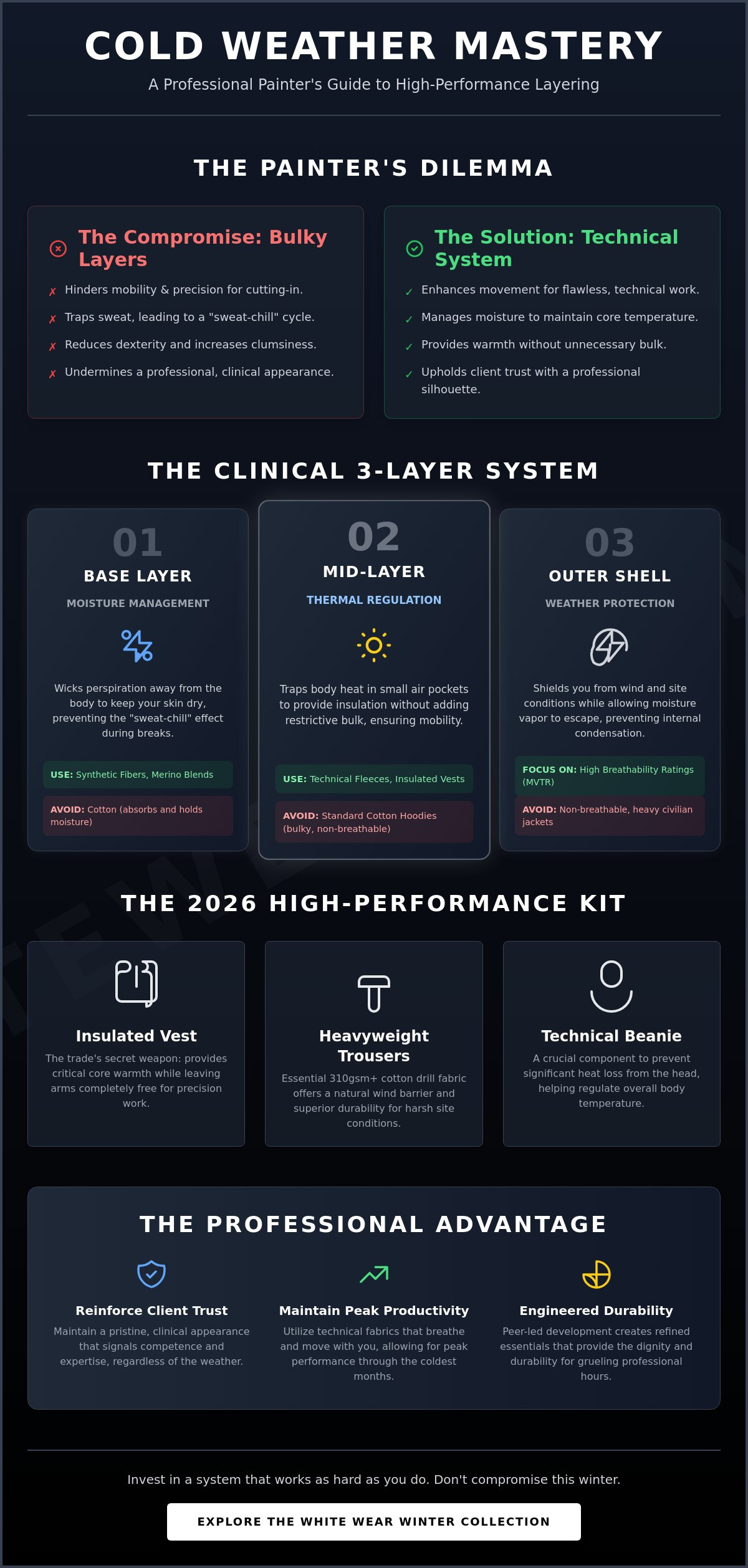
- Master the clinical three-layer system to effectively manage thermal retention and moisture as you transition from morning frost to active labor.
- Identify the 2026 essentials for cold weather painters workwear, featuring high-mobility insulated jackets and heavyweight 310gsm+ trousers designed specifically for the trade.
- Learn how to interpret breathability ratings (MVTR) to select apparel that prevents internal condensation during high-intensity physical exertion.
- Understand the professional advantage of maintaining a pristine, clinical appearance to reinforce client trust even in the harshest winter environments.
- Discover how peer-led development creates refined essentials that provide the dignity and durability required for grueling professional hours.
The Science of Winter Layering for Professional Painters
Staying warm on-site isn't about wearing the thickest coat you can find. It's an exercise in precision engineering. The science of layering dictates that peak performance comes from managing the micro-climate directly against your skin. For the professional painter, this presents a unique technical challenge. You often begin your day in the biting frost of an unheated residential shell, only to transition into high-intensity physical labor as the morning progresses. This creates the "Painter's Dilemma": protecting yourself from the early morning chill without overheating during the physical exertion of midday.
Generic heavy jackets fail the modern professional because they're designed for static warmth rather than active movement. They're often bulky and restrictive, hindering the fluid motion required for precise cutting-in or reaching high corners. More importantly, non-breathable heavy layers trap perspiration. This moisture eventually cools, leading to a "sweat-chill" cycle that can make the final hours of a shift feel grueling. Investing in dedicated cold weather painters workwear ensures that your apparel works as hard as you do, facilitating mobility while regulating your core temperature.
Professional dignity is also a factor. Clients perceive a painter in clean, clinical whites as more competent and trustworthy. Swapping your professional uniform for a mismatched, scruffy winter parka can undermine your brand's authority. Refined winter gear allows you to maintain that sharp, professional silhouette while staying protected from the elements. It's about looking like an expert while feeling comfortable in the most demanding environments.
Moisture Management: The Base Layer
Your base layer is your first line of defense. When temperatures drop below 10 degrees, cotton is a liability. It's a hydrophilic fiber, meaning it absorbs moisture and holds it against your skin. This leads to rapid heat loss once your activity level drops. Instead, opt for synthetic fibers or high-performance Merino blends. These materials act as a "second skin," wicking perspiration away from the body to keep you dry. This moisture management is what prevents the midday chill from setting in during breaks or site meetings.
Thermal Regulation: The Mid-Layer
The mid-layer focuses on trapping air to provide insulation without adding unnecessary bulk. Technical fleeces are the preferred choice for the elite tradesperson. Unlike a standard retail hoodie, a professional painters workwear mid-layer is engineered for the specific demands of the trade. It provides a refined fit that slides easily under an outer shell, ensuring you have the warmth you need without the restriction of traditional heavy clothing. This layer is essential for maintaining a consistent micro-climate throughout your grueling hours of labor.
Essential Cold Weather Painters Workwear: The 2026 Kit
The 2026 winter season demands a more sophisticated approach to on-site protection. We've moved past the era of 'making do' with oversized civilian coats that compromise your professional silhouette. High-performance cold weather painters workwear is now engineered with the specific ergonomics of the painting trade in mind. This means garments that support, rather than hinder, the repetitive reaching and climbing that defines your workday. Adhering to Official Cold Weather Work Safety standards is about more than just compliance. It's about preserving the physical longevity of the professional through technical heat management.
Your winter kit should function as a cohesive system. While many focus solely on the torso, a truly professional setup addresses the vulnerabilities of the extremities and the core. Consider these essential components for your 2026 rotation:
- The Insulated Vest: Often called the 'secret weapon' of the trade, a technical vest provides critical core warmth while leaving the arms completely free for cutting-in and rolling.
- Heavyweight 310gsm+ Cotton Drill: Standard trousers often fail when the mercury drops. A heavier weight fabric provides a natural wind barrier and increased durability.
- The Technical Beanie: Up to 10% of body heat can be lost through the head. A moisture-wicking knit ensures you stay warm without the 'itch' of cheap acrylic.
The Insulated Outer Shell
The modern painter's jacket is a masterclass in functional design. It must feature a paint-shedding outer texture that allows for easy cleaning while maintaining a crisp, clinical white appearance. Look for reinforced seams and water-resistant finishes that can withstand a light drizzle on exterior residential jobs. Internal pocket configurations are equally vital. These are not just for your phone; they're designed to keep caulking tubes and specialized tools warm, ensuring materials remain at a workable viscosity despite the external chill. Investing in refined painters clothing ensures your crew remains a cohesive, professional unit throughout the grueling winter months.
Engineered Legwear for Cold Climates
Transitioning from summer shorts to professional painters pants is the first step in winter preparation. The 2026 standard includes gusseted designs that allow for deep squats and ladder climbs without the fabric binding. Integrated knee pad pockets serve a dual purpose in winter. They provide the necessary cushioning for floor work and act as a thermal barrier between your joints and freezing concrete or tile surfaces. This protection is essential for maintaining mobility when working at heights, where stiff joints can become a significant safety hazard.
Comparing Insulation vs. Breathability in Trade Apparel
Technical trade apparel in 2026 is no longer a simple choice between warmth and mobility. It's about mastering the Moisture Vapor Transmission Rate (MVTR). For a professional painter working at heights, a high MVTR is essential. This metric measures how many grams of water vapor can pass through a square meter of fabric over 24 hours. Without sufficient breathability, your cold weather painters workwear effectively becomes a plastic bag, trapping perspiration and leading to a rapid drop in core temperature once your physical activity slows down.
The 2026 season has seen synthetic insulation surpass natural fibers for active professional use. While down or wool offers excellent static warmth, modern synthetics are engineered to retain their loft and insulating properties even when damp. This allows for a superior weight-to-warmth ratio. You can now wear a garment that is significantly thinner than traditional parkas but provides higher thermal retention. This refined profile is critical for navigating tight scaffolding or interior spaces where bulky clothing becomes a safety hazard. High-performance synthetics ensure you remain agile without the weight of legacy workwear.
External painting jobs introduce the added variable of wind-chill. A moderate breeze can make a 10-degree morning feel like zero. Blocking this requires a dense outer weave or a technical membrane that stops the wind while still allowing internal moisture to escape. Achieving this balance is the hallmark of elite trade apparel. It protects your micro-climate from the external environment while ensuring your body can regulate its own heat during the more grueling hours of your shift.
Managing Internal Humidity
If sweat is trapped against your skin, you'll feel an immediate, bone-deep chill the moment you stop for a site inspection or a quick break. High-end gear incorporates strategic venting features like underarm zips and mesh panels to dump excess heat quickly. The goal is the "Flash-Dry" effect. In a professional environment, your gear needs to dry as fast as the premium coatings you apply. This ensures you stay comfortable from the first coat until the final cleanup.
The Durability of Technical Fabrics
There's often a concern that "warm" gear is too fragile for a site filled with scrapers and sandpaper. The modern solution is a hybrid approach that balances soft-shell comfort with hard-shell protection in high-wear zones. Reinforced elbows are non-negotiable in winter jackets because these high-friction areas endure constant contact with ladders and abrasive surfaces throughout the workday. This targeted durability ensures your investment in professional cold weather painters workwear lasts for multiple seasons rather than a single winter.
Maintaining a Professional Image in Harsh Conditions
Your visual presentation is a silent contract with your client. In the height of summer, a clean set of whites signifies precision and hygiene. This expectation doesn't vanish when the temperature drops. Maintaining a clinical appearance through cold weather painters workwear is essential for sustaining the trust you've built. Clients associate the traditional white aesthetic with a level of care and discipline that darker, mismatched personal layers simply cannot convey. It's about projecting an image of mastery, even when the environment is chaotic.
When the cold sets in, there's a natural temptation to layer up with any available dark hoodie or old fleece. This "hobo look" immediately dilutes your professional authority on-site. A cohesive crew, dressed in unified winter whites, creates a powerful psychological impact. It suggests a team that is disciplined, organized, and adequately prepared for the conditions. This level of preparedness tells the client that you are focused on the finish, not just surviving the shift. It transforms your team from a group of laborers into a refined, elite unit.
Branding Your Winter Layers
Professional branding should never be a seasonal luxury. Your painters uniforms for company strategy must extend to your outermost layers, including jackets, vests, and beanies. High-quality embroidery is the superior choice for winter gear. It survives the rigorous, high-frequency wash cycles required to strip away winter mud and paint splatter far better than screen printing, which tends to crack or peel in extreme cold. Consistency across the entire crew ensures that apprentices and masters alike present a single, formidable brand identity to every project stakeholder.
The 'Clinical' Aesthetic in 2026
In 2026, white remains the ultimate symbol of trade precision. It's a bold choice when the weather is inclement, signaling that you possess the technical skill to work cleanly despite the mud and rain. Your choice of apparel directly reflects your project's price point. An "aspirational" painter understands that high-end residential clients expect a certain level of lifestyle elegance, even during grueling winter hours. To maintain this clinical edge, avoid harsh bleaches that can degrade the technical DWR (Durable Water Repellent) coatings on your fabrics. Instead, use specialized oxygen-based cleaners that lift stains while preserving the integrity of your technical apparel.
Elevate your team's winter presence and secure your professional reputation by investing in our range of high-performance painters clothing designed for the modern elite.
The White Wear Winter Collection: Engineered for the Trade
White Wear represents the definitive standard for Australia's elite painting crews. We recognize that your workday is a grueling marathon of physical precision, often performed in environments that challenge your resolve. Our cold weather painters workwear is the result of peer-led development, designed by those who have spent decades on the tools. This insider perspective allows us to move beyond the sterile, purely functional approach of generic competitors. We create refined essentials that provide the dignity and comfort you deserve during every hour of labor.
Our collection sits at the sophisticated intersection of luxury lifestyle elegance and clinical professional authority. We don't just sell utility items; we provide the gear that allows you to feel like the protagonist in your own professional story. This commitment to excellence is why the nation's most respected firms choose White Wear to outfit their teams. With nationwide shipping and dedicated support for the Australian painting industry, we ensure that high-performance apparel is accessible to every professional ready to leave the status quo behind.
Refined Essentials for the Modern Tradie
A complete winter system is a sophisticated blend of form and high-performance function. While a jacket provides the primary defense, a truly clinical approach requires attention to every detail. Integrating technical painters accessories like moisture-wicking beanies and thermal socks is critical for maintaining total body regulation. These items are not mere add-ons. They are engineered components of a high-performance layering system that keeps you focused on the task rather than the temperature. For crews ready to elevate their professional standing, this level of detail is the hallmark of a true master.
Investing in Long-Term Comfort
Choosing premium cold weather painters workwear is a declaration of pride in your craft. We view our garments as refined essentials rather than simple utility expenses. When you provide your team with the best tools for the job, you are investing in the dignity of their work. High-quality construction and technical innovations ensure that your investment lasts for multiple seasons, providing a reliable shield against the temporal realities of the winter workday. Don't settle for mismatched, low-performance layers that undermine your brand's authority. Elevate your winter wardrobe at White Wear today.
Elevate Your Professional Standard This Winter
Mastering the winter season of 2026 requires more than just adding bulk. It demands a clinical approach to thermal regulation that respects your mobility and your professional silhouette. By prioritizing high-performance layering and technical breathability, you ensure that your performance remains consistent from the first morning frost to the final cleanup. Maintaining a pristine aesthetic isn't just about appearance; it's about projecting the authority and precision that your high-end clients expect.
Choosing the right cold weather painters workwear is a decisive step toward protecting your physical longevity and your brand's reputation. Our collection is built on peer-led development, featuring premium technical fabrics designed specifically for the rigorous demands of the trade. We offer nationwide Australian shipping to ensure every crew has access to the refined essentials they deserve. Discover the Winter Collection at White Wear and experience the difference of gear designed by professional painters, for professional painters. Step into the cold with the confidence of a master craftsman who refuses to compromise on quality or comfort.
Frequently Asked Questions
What is the best material for cold weather painters workwear?
Synthetic blends and technical fleeces are the superior choice for active trade work in 2026. These materials manage moisture efficiently while retaining their insulating loft even when damp. Unlike traditional cotton, technical synthetics prevent the sweat-chill cycle during grueling hours on-site. Investing in high-performance cold weather painters workwear ensures you remain warm without the restrictive bulk of legacy fabrics, allowing for total focus on the finish.
Should I wear white or dark colours for winter painting?
Professional white remains the definitive industry standard for maintaining a clinical and trustworthy appearance. While dark colors might hide mud, they dilute your brand's authority and often appear scruffy to high-end residential clients. Premium white winter gear is engineered with paint-shedding textures that allow you to maintain a pristine silhouette despite the weather. It reinforces your precision and discipline during your most demanding winter projects.
How many layers do I actually need for an Australian winter on-site?
A technical three-layer system is the most effective approach for the Australian climate. This includes a moisture-wicking base layer, an insulating mid-layer like a technical fleece, and a weather-resistant outer shell. This configuration allows you to adapt as you transition from morning frost to midday physical exertion. It provides the necessary thermal regulation without compromising the fluid motion required for expert trade work throughout the day.
Can I wash my insulated painters jacket in a standard machine?
Most technical painters clothing can be washed in a standard machine using a gentle cycle and specialized detergents. You must avoid harsh bleaches or fabric softeners, as these chemicals degrade technical DWR coatings and moisture-wicking properties. Always check the specific care label to ensure the longevity of your investment. Proper maintenance ensures your refined essentials remain bright and functional for multiple winter seasons on the tools.
How do I stay warm without losing mobility for ladder work?
Focus on core warmth through specialized vests and high-performance synthetic insulation. Vests provide critical thermal protection while leaving your arms completely free for reaching and cutting-in at heights. Modern insulation offers a superior weight-to-warmth ratio, allowing for thinner garments that don't bind or restrict your movement. This refined fit is essential for safety and precision when you are navigating scaffolding or ladders in the cold.
Are specialised painters beanies better than standard ones?
Specialized beanies are superior because they utilize moisture-wicking knits designed specifically for active physical labor. Standard acrylic beanies often trap sweat and cause itching, which becomes a major distraction during long shifts. A professional knit ensures heat retention while allowing your scalp to breathe during exertion. It is a refined essential that integrates seamlessly with your overall uniform, maintaining a cohesive and polished appearance on-site.
How do I prevent paint from soaking through my winter trousers?
Opt for heavyweight 310gsm+ cotton drill or technical fabrics with a tight weave and water-resistant finish. These materials provide a natural barrier against both the wind and liquid penetration. High-performance cold weather painters workwear is often treated to shed paint splatters before they can bond with the underlying fibers. This ensures your legs stay dry and protected even during heavy exterior rolling or spraying tasks in inclement weather.
Is it worth investing in a professional winter uniform for a small crew?
Investing in a unified winter uniform is essential for building client trust and crew morale. A cohesive, branded appearance suggests a level of organization and mastery that mismatched personal gear simply cannot match. It transforms your small crew into an elite unit, reflecting the high price point of your professional projects. Providing your team with refined essentials is a powerful way to honor the dignity of their labor.


