


What if your workwear was engineered with the same clinical precision as high-performance athletic gear? Identifying the best material for painters clothing is no longer just about finding a white uniform; it's about the architecture of your workday. You know the frustration of cheap fabrics that tear at the seams or heavy materials that cause overheating during a long shift. It's a compromise that ignores the dignity of your craft and the physical demands of your labor.
We're here to bridge the gap between utility and elegance. This guide explores the technical science behind performance fabrics, from GSM weight to mechanical stretch. You'll learn how to choose materials that resist paint penetration while remaining breathable and comfortable for ten hours of movement. We'll also examine how 2026 safety standards for UV protection and the OSHA proper-fit rule are redefining what it means to be truly professional on the job site. By the end, you'll have the knowledge to select a uniform that justifies your investment and maintains its polished appearance wash after wash.
Key Takeaways
- Understand how identifying the best material for painters clothing serves as a critical barrier against chemical solvents while regulating your body temperature during high-intensity shifts.
- Learn why the classic cotton drill weave remains an industry staple for its superior tensile strength and natural ability to support skin health through moisture management.
- Explore the evolution of performance fabrics, including polycotton blends and mechanical stretch technology that provides an unrestricted range of motion without the sagging of inferior materials.
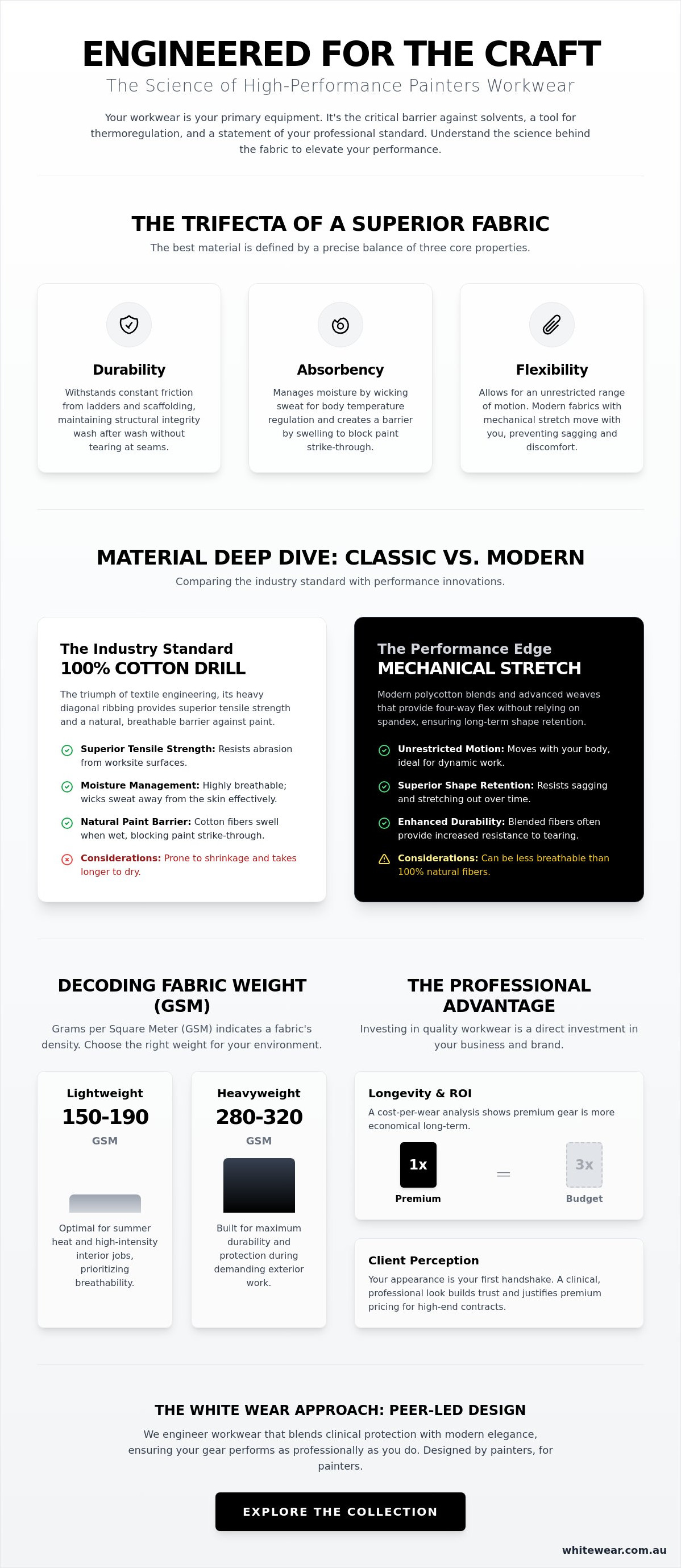
- Master the technical specifications of fabric weight, choosing between lightweight (150-190 GSM) for summer heat and heavyweight (280-320 GSM) for durable exterior protection.
- Discover how a peer-led design approach ensures your painters workwear provides a sophisticated blend of clinical protection and modern lifestyle elegance.
Why Material Choice is the Foundation of Professional Painting Apparel
Professional painting is a high-stakes endurance sport. Your clothing is your primary piece of equipment. The best material for painters clothing provides more than just a surface for splatters; it functions as a critical barrier between your skin and caustic chemical solvents. Without this protection, everyday exposure to thinners and oils can lead to long-term dermatological issues. Determining the best material for painters clothing requires an understanding of how fibers behave under stress. We define the "best" material through a specific trifecta: durability, absorbency, and flexibility. It must withstand the friction of ladders while absorbing excess moisture and allowing for an unrestricted range of motion.
There is a profound psychological shift when you step into refined, high-quality materials. Generic utility gear feels disposable. Professional-grade apparel feels essential. It provides a sense of dignity that carries through a grueling 10-hour shift. When you wear gear engineered for your specific movements, your focus shifts from physical discomfort to the precision of your craft.
The Environmental Demands of the Painting Trade
In the Australian sun, breathability is a safety requirement. High-intensity labor generates significant body heat, and the wrong fabric can lead to rapid exhaustion. Weave density is the technical secret to protection. A tight, purposeful weave prevents paint strike-through, ensuring that even heavy splatters don't reach your skin. This is particularly vital when dealing with modern oil-based finishes that interact aggressively with porous fibers. Your clothing must manage the chemistry of the job while facilitating the thermoregulation of your body.
Fabric Longevity and Professional Image
Choosing premium materials is a calculated business decision. A cost-per-wear analysis reveals that high-quality painters workwear often outlasts three pairs of budget alternatives. Cheap fabrics tear at the seams after a few washes, but engineered textiles maintain their structural integrity. Beyond the balance sheet, your appearance is your first handshake. Maintaining a clinical, professional look is often the deciding factor when bidding for high-end residential contracts. Clients trust a painter who looks as precise as their cutting-in. Investing in superior apparel reinforces your brand authority and signals to the market that you operate at a higher standard.
The Classic Cotton Drill: Why It Remains the Industry Standard
The diagonal architecture of the drill weave is a technical triumph in textile engineering. Unlike standard flat weaves, the drill structure uses a series of offsets to create a heavy diagonal ribbing. This specific construction provides superior tensile strength. It ensures your gear withstands the constant friction of ladders and scaffolding without failing at the stress points. While casual observers might claim any cotton will suffice, the drill weave is the definitive choice for those who view their clothing as a refined tool of the trade. It's built for the physical reality of the workday, offering a level of resilience that flimsy alternatives cannot match.
Choosing the best material for painters clothing involves looking beyond tradition to the actual science of skin health. Natural cotton is exceptionally effective at moisture management. It pulls sweat away from the body, allowing for natural evaporation that synthetic fibers often trap against the skin. White became the industry standard for a practical reason; it provides a clinical, clean backdrop that conceals the most common site pollutants, such as plaster dust and white primers. This allows you to maintain a polished appearance even after hours of high-intensity labor. However, pure cotton requires respect. Without proper treatment, it's prone to shrinkage and takes longer to dry than modern blends.
Absorbency vs. Protection
Cotton fibers possess a unique mechanical property: they swell when they encounter moisture. When paint splatters hit the fabric, the individual fibers expand to create a temporary, dense barrier. This swelling prevents the liquid from striking through to your skin, providing a natural layer of chemical protection. 100% cotton drill remains the preferred choice for heavy-duty painters overalls because it balances physical protection with the inherent skin health benefits of a natural fiber. You can explore our range of premium painters clothing to see how this material performs in professional settings.
Breathability in High-Heat Environments
In the demanding Australian climate, heat stress is a significant safety concern. High-grade cotton offers natural air permeability that low-grade polyesters simply can't replicate. It allows for consistent airflow, reducing the risk of heat-related illness during grueling shifts. To maintain a professional silhouette, we utilize pre-shrunk cotton. This ensures that your uniform retains its fit and structural integrity after repeated industrial laundering. It's a commitment to both your comfort and your professional image, ensuring you look as sharp at the end of the project as you did at the start.
Modern Innovations: Synthetic Blends and Mechanical Stretch
While traditional cotton drill provides a reliable foundation, the modern professional often requires a more sophisticated textile solution. The evolution of textile science has introduced a new contender for the best material for painters clothing: the advanced polycotton blend. By integrating high-tenacity polyester with natural cotton, manufacturers have created a fabric that resists the abrasions of a construction site while maintaining the breathability required for high-intensity labor. This isn't the stiff, plastic-feeling synthetic of the past. It's a refined essential that offers superior color retention and minimal shrinkage after industrial washing cycles.
Mechanical stretch represents a significant leap forward in ergonomic design. Unlike cheap elastane, which often loses its memory and leads to sagging after a few shifts, mechanical stretch is achieved through the weave itself. It provides the necessary range of motion for climbing ladders and crouching without compromising the garment's professional silhouette. This innovation ensures that your workwear moves with you, providing a sense of effortless mobility throughout the workday. It's an insider's secret to maintaining a sharp appearance without sacrificing the physical flexibility your craft demands.
Ripstop technology adds another layer of security to the best material for painters clothing. By weaving reinforced threads into a crosshatch pattern, the fabric becomes virtually immune to the "zipper effect" where a small puncture turns into a catastrophic tear. When paired with hydrophobic stain-release coatings, these materials repel water and oil-based splatters before they can bond with the fibers. This clinical level of protection ensures that your apparel remains a clean, professional canvas for longer, justifying the investment in premium gear.
The Evolution of Flexible Workwear
Modern painters pants must facilitate multi-directional movement. Traditional rigid drill, while durable, can feel restrictive during complex interior work or when navigating tight scaffolding. Flexible blends offer a solution that balances protection with agility. These materials also excel in aesthetic longevity; synthetic components prevent the premature fading common in 100% natural fibers. Your professional image remains intact, project after project.
Moisture-Wicking and Quick-Dry Features
Technical fabrics excel at capillary action, a process that moves sweat from the skin to the fabric's outer surface for rapid evaporation. This is a critical feature for painters in humid coastal regions where traditional cotton can become heavy and waterlogged. Quick-dry materials keep you light and focused. Additionally, many of these performance fabrics include antimicrobial treatments. These finishes inhibit the growth of odor-causing bacteria, providing a hygiene benefit that is essential for those working grueling 10-hour shifts in close proximity to clients.
Critical Specifications: Weight, GSM, and Weave Density
Grams per Square Metre (GSM) is the technical blueprint of a garment's performance. It measures the weight and density of the textile. For a professional, understanding this metric is the difference between a productive shift and physical exhaustion. The best material for painters clothing must be selected with the specific environmental context in mind. It's not just about durability. It's about the physical weight you carry on your body for ten consecutive hours of labor.
Lightweight fabrics, typically ranging from 150 to 190 GSM, are engineered for high-heat environments and intricate interior finishing. They offer a sense of weightless freedom that prevents heat fatigue. Conversely, heavyweight materials, sitting between 280 and 320 GSM, provide the structural armor required for exterior preparation and abrasive job sites. These denser weaves act as a sacrificial layer against grit, friction, and ladder rungs, ensuring your gear survives the most demanding conditions.
Weave density is the silent guardian of your skin. A high thread count creates a tighter lattice that resists paint penetration. This strike-through resistance ensures that chemical solvents remain on the fabric's surface rather than migrating to your skin. We place a particular emphasis on reinforcement zones. The knees and pockets are the highest stress points in any professional's day. Utilizing specialized high-density textiles in these specific areas ensures your apparel outlasts the most grueling project timelines.
Matching GSM to the Task
Interior work demands agility. Lightweight fabrics allow for rapid movement and precision during detailed cutting-in or ceiling work. Exterior work requires a more robust shield. Heavyweight drill provides the necessary barrier against the elements and rough surfaces. A higher GSM does not always mean lower breathability if the weave is engineered correctly to facilitate airflow. If you require gear that balances these technical specifications, select your ideal fabric weight from our professional collection.
The Impact of Weave on Pilling and Abrasion
The surface texture of your gear dictates its aesthetic longevity. Satin or twill weaves are technically superior because they are less likely to "pill" compared to traditional plain weaves. Pilling occurs when fibers break and tangle into small balls, which compromises the professional silhouette of the garment. A smoother surface also facilitates easier paint removal. If the splatter cannot grip the fiber, it is more likely to flake off once dry. When selecting the best material for painters clothing, the "hand feel" is a critical consideration. Our designs ensure our materials have a refined, soft finish to prevent skin irritation during the thousands of repetitive movements you perform each day.
The White Wear Approach: Peer-Led Material Selection
At White Wear, we view textile selection as a mission rather than a simple manufacturing process. We recognize that identifying the best material for painters clothing is a pursuit of professional dignity. Our philosophy bridges the gap between clinical protection and modern lifestyle elegance. It isn't enough for a garment to merely act as a barrier against splatters. It must provide sustained comfort during the grueling duration of a professional workday while maintaining an aspirational, refined aesthetic. We don't just sell utility items; we provide refined essentials designed for the protagonist of the job site.
Our development cycle is entirely peer-led. We subject our materials to the harsh reality of Australian painting conditions, from the relentless UV exposure on exterior sites to the stifling humidity of interior renovations. This insider perspective allows us to pinpoint fabric failure points that generic competitors simply miss. We've seen where traditional seams chafe and where inferior blends lose their structural memory. By grounding our design in the physical experience of a 10-hour shift, we ensure our materials support your movement rather than hindering it. This focus on performance allows you to transition seamlessly from a demanding morning on the tools to a high-stakes afternoon client meeting. Our fabrics are engineered to stay crisp, ensuring your professional silhouette remains sharp and your authority remains absolute.
Designed by Painters, for Painters
The value of peer-led development lies in the details. We understand the temporal reality of your workday. When you are eight hours into a shift, the "hand feel" of your clothing determines your remaining energy levels. Our material choices reflect this understanding, prioritizing fibers that breathe and move with the body. We've eliminated the sterile, purely functional language of the past to create workwear that feels like a high-end luxury label tailored for a demanding workplace. It's about providing the comfort you deserve while you perform the labor you take pride in.
Selecting Your Next Professional Wardrobe
Selecting your next professional wardrobe is a calculated investment in your career. We advocate for a seasonal rotation that leverages the technical specifications of different GSM weights and weave densities. The long-term ROI of premium fabric technology is undeniable. While cheap alternatives disintegrate after a few industrial washes, our high-quality construction ensures your gear remains a reliable asset for months of labor. Choosing the best material for painters clothing is about more than just immediate protection; it's about respecting the craft and the person performing it. Elevate your standard and justify the investment in yourself.
Explore our range of professionally engineered painters workwear at White Wear and experience the difference that peer-led design makes to your workday.
Master the Architecture of Your Workday
Your choice of apparel is the most consistent tool you'll use throughout your career. We've explored how technical specifications like GSM weight and weave density act as the silent architecture of a productive shift. By balancing the traditional strength of cotton drill with modern mechanical stretch, you ensure that your gear works as hard as you do. Selecting the best material for painters clothing isn't just about protection; it's a commitment to your professional dignity and physical well-being. It's about moving through a 10-hour shift with a sense of effortless precision.
White Wear is dedicated to this mission. Our peer-led designs are forged in the reality of the Australian trade, ensuring every garment provides clinical protection without sacrificing modern style. We don't settle for generic utility because we know you deserve better than the status quo. It's time to refine your presence on the job site and invest in gear that reflects your expertise. Upgrade your professional kit with White Wear’s premium painters clothing today. You've mastered the craft; now wear the standard that matches it.
Frequently Asked Questions
What is the best material for painters pants to prevent paint soak-through?
High-density cotton drill or advanced poly-blends with hydrophobic coatings are the most effective barriers against strike-through. These fabrics utilize a tight weave architecture that physically blocks liquid penetration. When cotton fibers encounter moisture, they swell to create a temporary seal, ensuring that caustic solvents and pigments remain on the surface rather than reaching your skin.
Is 100% cotton better than poly-blends for painting in Australia?
The choice depends on your specific environment, but modern poly-blends often provide superior durability and quicker drying times in humid coastal regions. While 100% cotton offers excellent skin health and natural breathability, poly-cotton integrates the strength of polyester to resist abrasions. It's often considered the best material for painters clothing when you need to balance long-term longevity with daily thermoregulation.
What does GSM mean in painters clothing and why does it matter?
GSM stands for Grams per Square Metre and serves as the technical measurement for fabric weight and density. It matters because it dictates the garment's suitability for different climates and tasks. Lightweight fabrics (150-190 GSM) are essential for preventing heat exhaustion during interior work, while heavyweight options (280-320 GSM) provide the structural integrity required for abrasive exterior preparation.
How do I get dried paint out of high-quality cotton drill workwear?
Dried paint is best removed by gently scraping excess residue before treating the area with a trade-specific solvent or warm, soapy water. High-quality cotton drill with a smooth twill weave is engineered to release dried splatters more easily than inferior plain weaves. You should avoid aggressive scrubbing to prevent damaging the fibers and compromising the garment's refined, professional silhouette.
Are stretch materials durable enough for professional painting work?
Mechanical stretch materials are exceptionally durable because the flexibility is engineered into the weave itself rather than relying on fragile elastic fibers. This innovation allows for a full range of motion without the sagging or loss of shape associated with cheap elastane. It ensures your gear maintains its professional fit even after months of repetitive crouching, climbing, and industrial laundering.
Why do professional painters almost always wear white clothing?
White clothing serves as a clinical indicator of professionalism while effectively concealing white plaster dust and primers. Historically, this allowed tradespeople to maintain a clean appearance despite working in dusty environments. Today, wearing white remains a symbol of clinical authority on the job site, signaling a commitment to safety, quality, and a polished aesthetic that builds immediate rapport with clients.
Does the material of my workwear affect how clients perceive my business?
The quality and condition of your apparel directly influence how clients perceive your business authority and attention to detail. Wearing refined, well-fitted materials rather than shabby, generic gear builds trust, especially in high-end residential markets. It positions you as an expert who values precision in every aspect of the craft, justifying your professional rates and reinforcing your brand identity.
Can modern painters clothing provide UV protection for outdoor jobs?
Modern performance fabrics are now frequently certified to EN 13758-2 standards to provide essential UV protection for outdoor labor. In 2026, moisture management and UV shielding are recognized as safety requirements rather than optional comfort features. Utilizing technical textiles is the best material for painters clothing to prevent long-term health damage during prolonged exposure to the intense Australian sun.


