


What if the most sophisticated tool in your kit isn't a high-end sprayer, but the very fabric on your back? For decades, the white bib and brace has stood as the definitive uniform of our trade, yet many professionals now wonder if the classic look can keep pace with modern demands. You've likely felt the stifling heat of heavy canvas or the disappointment of modern alternatives that sacrifice durability for a lower price point. As you stand before high-end clients, you may find yourself asking: are traditional white overalls still the best for the modern professional?
We believe you deserve more than just utility. You deserve dignity and comfort during grueling hours of labor. This article explores why the traditional white overall remains the gold standard when elevated by 2026 innovations in ergonomics and textile science. We'll examine how the OSHA 2025 PPE Fit Rule has redefined expectations for painters clothing, ensuring that your gear provides both a tailored silhouette and maximum protection. From superior pocket utility to the evolution of high-performance trousers, we'll help you decide which refined essentials belong in your professional rotation.
Key Takeaways
- Learn how the historical precision of white fabric has been updated with modern textiles to determine if are traditional white overalls still the best choice for your professional image.
- Explore the functional advantages of the bib and brace design, from eliminating protective gaps to distributing tool weight more effectively across the shoulders.
- Compare the breathability and mobility of classic one-piece garments against modern trousers to optimize your comfort during grueling hours of labor.
- Identify the critical 2026 construction standards, such as triple-stitched stress points and specific fabric weights, that ensure long-lasting durability and heat management.
- Discover how peer-led design innovations provide a sophisticated, tailored fit that meets the latest OSHA safety regulations without sacrificing a polished appearance.
The Enduring Legacy: Why White Overalls Define the Professional Painting Trade
White workwear is the visual signature of a meticulous craftsman. It serves as a blank canvas that ironically proves your mastery of the brush. If you can finish a day of spraying or rolling while maintaining a crisp, pale silhouette, you've communicated more about your skill than any portfolio could. This tradition isn't merely a habit. It is a standard of excellence. The history of bib overalls shows they were originally designed for rugged utility, but for the painter, the choice of white became a badge of clinical precision. It signals to the client that you respect their environment as much as your craft.
In an industry currently flooded with cheap, disposable alternatives, many specialists are pausing to ask: are traditional white overalls still the best for a high-end career? The answer lies in the psychological weight of the uniform. A painter in clean, white gear commands immediate trust. It suggests a level of organization and cleanliness that darker colors simply cannot convey. This visual authority allows you to command higher rates and fosters a sense of security for the homeowner. You aren't just a laborer; you're a specialist protecting their most valuable asset.
The Physics of White Fabric on the Job
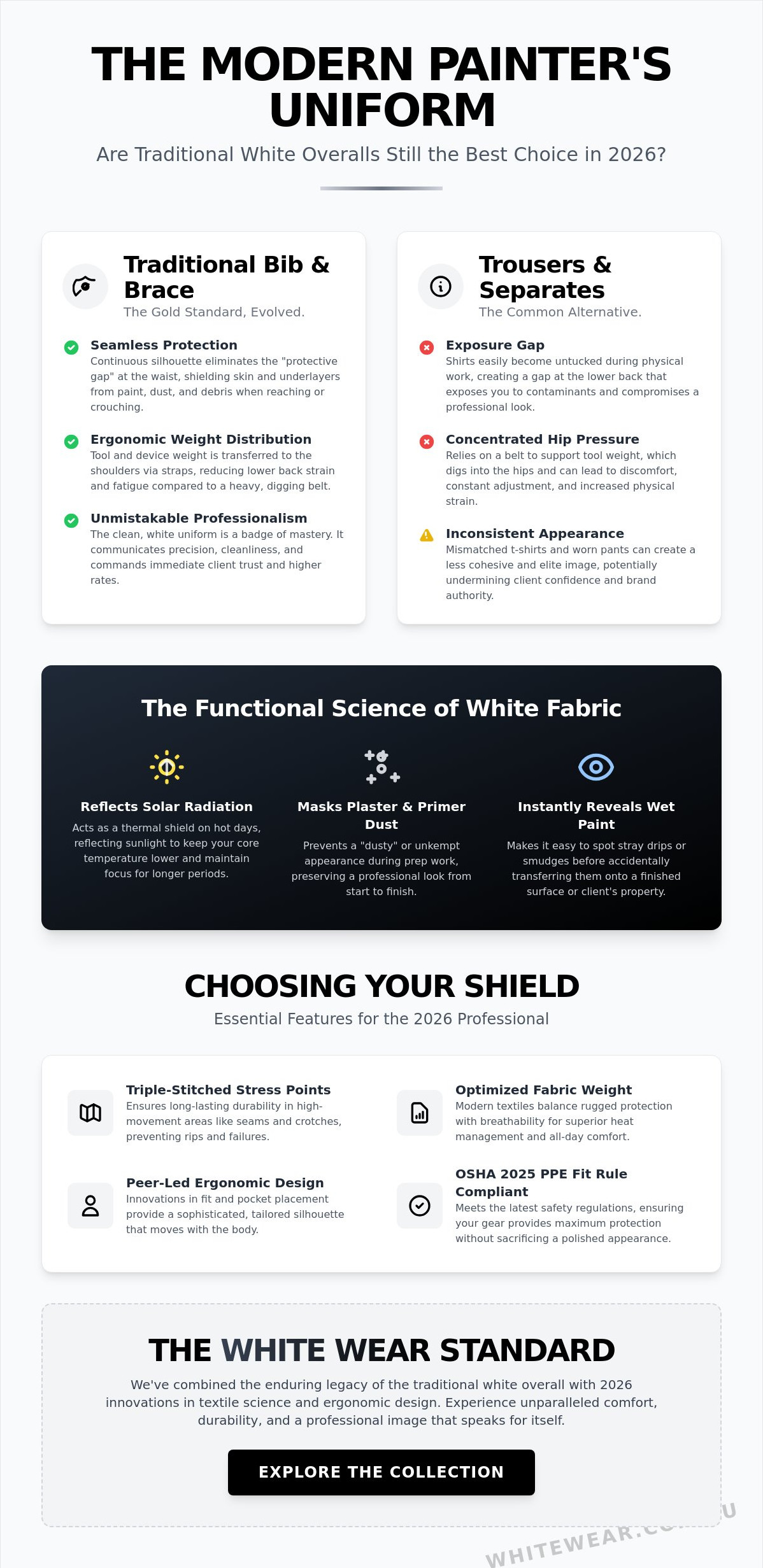
The choice of white is rooted in functional science. During long summer days on outdoor residential projects, white fabric acts as a thermal shield. It reflects solar radiation rather than absorbing it, keeping your core temperature lower during grueling hours of labor. This isn't just about comfort; it's about maintaining the mental focus required for sharp lines and perfect finishes. Additionally, white makes it easy to spot grit, dust, or wet paint before you accidentally lean against a finished wall or sit in a client's furniture.
White is the only shade that truly masks the persistent, chalky residue of plaster and primer, ensuring you look as professional at the end of the prep phase as you did at the start. This unique property prevents you from looking "dusty" or unkempt, preserving your professional dignity throughout the workday.
Professionalism and Branding
Modern workwear has shifted the narrative from the "tradesman" to the "specialist." By choosing a refined, traditional silhouette, you align yourself with a legacy of high-performance labor. This elevated appearance is a powerful tool for painters uniforms for company branding. It creates a cohesive, elite image for your team that stands out against competitors in mismatched t-shirts and worn-out jeans. When you invest in your appearance, you're telling the world that you've invested in your expertise. Peer-led development in 2026 has ensured that while the color remains traditional, the fit and function are anything but old-fashioned.
Functional Supremacy: Why Bib and Brace Overalls Outperform Separates
Style is a silent communicator, but functionality is the heartbeat of a productive workday. While some modern contractors experiment with cargo pants and t-shirts, the veteran knows that separates often fail under the physical demands of high-end residential work. When you reach for a ceiling or crouch to cut in a baseboard, a shirt untucks and a belt shifts. This creates a "gap" that exposes your skin and personal clothing to dust, wet paint, and debris. The continuous silhouette of the bib and brace eliminates this vulnerability entirely. It provides a seamless shield that moves with you, ensuring that your core remains protected regardless of your posture.
The mechanical design of the garment also addresses a common industry ailment: lower back strain. Standard trousers rely on a belt to stay in place, which can dig into the hips when pockets are weighed down by heavy scrapers, brushes, and mobile devices. By shifting this load to the shoulders through adjustable straps, the weight is distributed more evenly across the body's skeletal structure. This ergonomic shift reduces the constant need for adjustment and lessens the fatigue that sets in during the final hours of a long shift. When evaluating whether are traditional white overalls still the best choice, one must consider the long-term physical health of the professional. Proper weight distribution isn't just a luxury; it's a career-extending necessity.
The bib itself acts as a functional dashboard for the modern specialist. It keeps your most essential tools within a primary strike zone, allowing for blind retrieval of 5-in-1 tools or pencils without breaking your focus. This vertical storage system is far more efficient than side pockets, which can feel bulky and impede movement when you're working on a narrow ladder or scaffolding. If you're ready to upgrade your daily kit, explore our collection of painters clothing designed for the elite professional.
The Ergonomics of the Bib
Shoulder straps prevent the distracting "sag" that plagues traditional work pants, maintaining a consistent fit from the first hour to the tenth. The vertical orientation of the chest pocket creates a mechanical advantage by keeping high-frequency tools within easy reach, significantly reducing the repetitive reaching motions that contribute to shoulder fatigue over time. This design ensures that your tools work with your body's natural range of motion rather than against it.
Total Coverage and Safety
Safety is a non-negotiable pillar of our trade. According to OSHA protective clothing standards, cotton-based outer garments provide an essential barrier against flammable materials and chemical spills. Traditional overalls often feature integrated knee pad pockets, a critical detail that protects your joints during grueling hours of floor-level prep and finishing. For a deeper look at how the right gear preserves your body and your professional image, consult our painters overalls guide.
Tradition vs. Innovation: Comparing Overalls to Modern Painters Trousers
The dialogue between heritage and innovation has never been more relevant for the professional specialist. While previous generations relied solely on the bib and brace, the 2026 market offers modular alternatives that challenge the status quo. To determine if are traditional white overalls still the best option for your specific workflow, you must evaluate the technical trade-offs between integrated protection and modular flexibility. It isn't just about the look; it's about how the garment responds to the physical reality of a ten-hour shift.
Mobility is the primary point of contention. Traditionalists often cite the freedom of a gusseted crotch in high-quality overalls, which allows for deep lunges and ladder work without the risk of seam failure. In contrast, modern painters trousers often incorporate lightweight, four-way stretch panels. While these provide immediate comfort, they can lack the structural integrity of heavy-duty canvas. High-performance overalls now bridge this gap by integrating stretch zones into the traditional silhouette, offering a refined balance of movement and long-term durability. You shouldn't have to choose between a professional drape and the ability to move freely.
Breathability presents another nuanced choice for the demanding workplace. A one-piece system creates a natural "chimney effect," allowing heat to rise and escape through the open sides of the bib. A two-piece system, while seemingly lighter, requires a waistband that can trap heat and moisture at the core. For long shifts in fluctuating temperatures, the ability to layer a thermal base under overalls provides a level of versatility that trousers struggle to match. However, the durability of the fabric itself is what defines the investment. Lightweight "fashion" workwear often pills or tears when faced with the abrasive reality of sanding and chemical stripping. Traditional canvas remains a refined essential that ages with the wearer, softening over time without losing its protective qualities.
When to Choose Modern Trousers
There are moments when the full coverage of a bib is secondary to speed and ventilation. For quick touch-ups or interior finishing in non-climate-controlled environments, the reduced surface area of trousers is a logical choice. They offer a brisk, purposeful alternative for the specialist who prioritizes maximum airflow to manage heat. If your workday involves rapid transitions from the site to high-end client meetings, choosing the best painters pants can provide a more streamlined, modern aesthetic that still commands respect.
The Case for the Hybrid Approach
Elite professionals don't limit themselves to a single garment. They view their painters clothing as a tactical system. Many now utilize heavy-duty overalls for the grueling prep phase, where dust and chemicals are prevalent, and switch to tailored trousers for the final, high-precision finishing. This hybrid strategy ensures you're always equipped for the specific duration of the task. Modern stretch canvas has revolutionized the industry, allowing the traditional bib to feel as responsive as athletic gear. This peer-led evolution ensures that the "all-white" standard remains an elevated, aspirational choice for the modern luxury residential sector.
Choosing Your Shield: Essential Features for the 2026 Professional
High-performance gear isn't an accident of design; it's the result of rigorous, peer-led engineering. When deciding whether are traditional white overalls still the best for your career, the answer often lies in the specific technical features of the garment. In 2026, the "best" choice is no longer the generic, baggy canvas of the past. It is a refined essential that balances the heavy-duty protection required for prep work with the sophisticated silhouette demanded by high-end residential clients. Every stitch and pocket must serve a purpose during the grueling hours of a professional shift.
The Australian climate presents a unique challenge that many generic brands ignore. You need a "Goldilocks" zone for fabric weight: heavy enough to resist chemical penetration, yet light enough to prevent overheating under the harsh southern sun. Triple-stitching at stress points like the crotch and knees is non-negotiable for the specialist who moves decisively. We've also reimagined pocket architecture for the modern age. Your gear must now accommodate more than just a 2.5-inch sash brush; it needs dedicated, secure housing for smartphones and digital laser measures. If your current kit lacks these technical refinements, it's time to upgrade your painters workwear to meet the standards of the modern site.
Advanced Textile Technology
The latest innovations in premium apparel have introduced moisture-wicking linings that actively pull sweat away from the body, a critical feature for maintaining focus in non-climate-controlled environments. Stain-release treatments now allow your whites to maintain a clinical, professional appearance even after heavy contact with primers and oils. Utilizing a high-GSM cotton weave is critical, as it provides the necessary density to absorb paint spills before they reach your skin while remaining breathable enough for the Australian summer. This linguistic duality of form and function ensures you stay protected without sacrificing comfort.
The Importance of Tailored Design
A tailored silhouette does more than just look sharp; it eliminates the excess fabric that frequently snags on scaffolding and ladders, creating a safer environment for every specialist on the site. There is a profound psychological boost that comes from wearing gear that feels like a luxury label rather than a disposable utility item. This sense of pride translates into better work and higher client confidence. For women in the trade, this shift toward precision fit is even more impactful. You can explore the nuances of this evolution in our women’s elevated workwear guide, which details how gender-specific design provides the dignity and performance you deserve.
The White Wear Standard: Reimagining the Professional Uniform
The evolution of the trade demands a parallel evolution in what we wear. When asking if are traditional white overalls still the best choice, the answer depends entirely on whether the garment has been reimagined for the modern specialist. At White Wear, we've replaced the generic, uninspired utility gear of the past with a sophisticated blend of clinical authority and lifestyle elegance. We don't just sell painters clothing; we provide refined essentials that restore dignity to the grueling hours of professional labor. Our mission is to ensure that every specialist feels as polished as the finishes they produce. We believe your workwear should be an extension of your expertise, not a distraction from it.
Our commitment to peer-led development is what distinguishes us from generic apparel companies. We've stood on the same ladders and prepped the same high-end residential interiors as you. This firsthand experience informs every design choice, from the placement of a smartphone pocket to the specific GSM of our cotton weave. There is a palpable sense of pride in our work because we know that when you look your best, you perform your best. By treating the professional as the protagonist of their own career, we've created a brand persona that is both relatable and aspirational. We understand that the workday doesn't end when the brushes are washed; the impression you leave on a client lasts much longer than the paint takes to dry.
The Australian Advantage
The Australian painting industry faces unique environmental challenges that require a specialized response. From the intense UV exposure of Queensland to the fluctuating humidity of the southern states, our gear is engineered for the temporal reality of the Australian workday. We offer nationwide shipping to ensure that every specialist, regardless of their location, has access to premium painters workwear. This sophisticated approach isn't just a trend; it's the future of the trade. We've moved away from the "one-size-fits-most" mentality to provide a tailored, professional silhouette that respects your time and your expertise. Your clothing should work as hard as you do, regardless of the heat or the height of the job.
Elevate Your Professional Presence
Investing in high-performance gear offers a significant long-term ROI that far outweighs the initial cost of "cheap" alternatives. Durable, triple-stitched garments last longer, reducing the frequency of replacement while maintaining a consistent, elite image for your business. Transitioning your crew into a unified, professional brand is the fastest way to signal value to high-end clients. When your team arrives in clean, tailored whites, you've already won half the battle of trust. It's time to demand more from your gear and your professional identity. Whether you're a solo specialist or managing a large team, the standard you set with your appearance dictates the respect you receive on the site. Explore the White Wear collection of elevated painters workwear and discover the difference that peer-led design makes in your daily workflow.
Elevating the Modern Standard of Excellence
The professional painting trade is entering a new era of refinement. We've explored how the white bib and brace remains a powerful symbol of trust and clinical precision, while modern innovations in fabric and fit ensure you no longer have to compromise on comfort. By prioritizing weight distribution and ergonomic pocket architecture, you protect your body and your professional reputation simultaneously. These garments are no longer just utility items; they are refined essentials that provide the foundation for a successful, high-end career.
The landscape of the trade has shifted toward a more tailored, specialist image. When determining if are traditional white overalls still the best for your daily rotation, the decision comes down to the quality of the engineering. White Wear bridges this gap with peer-led development by industry veterans and sophisticated, modern silhouettes designed specifically for the unique challenges of the Australian climate. It is time to treat your workwear as a high-performance tool that offers the dignity you deserve during a long shift. Discover the future of professional painting with White Wear’s elevated collection and set a new standard for your business. You've mastered the craft; now wear the gear that reflects your expertise.
Frequently Asked Questions
Are traditional white overalls still required for professional painters in 2026?
While there's no universal legal mandate requiring white specifically, it remains the definitive industry standard for specialists who prioritize a professional image. The OSHA 2025 PPE Fit Rule now requires that all workwear, including painters clothing, must be properly fitted to the individual worker. Most elite contractors continue to wear white because it signals clinical authority and a commitment to cleanliness that clients deeply respect.
Do white overalls offer better protection than standard work trousers?
Yes, the bib and brace design provides superior protection by eliminating the "gap" that occurs when you bend or reach. This continuous coverage prevents dust, wet paint, and hazardous chemicals from reaching your skin or personal undergarments. The bib acts as an additional shield for your torso, providing a level of safety that standard trousers and shirts simply cannot match during a grueling shift.
How do I prevent my white overalls from looking like a farmer’s outfit?
The key is to move away from the "one-size-fits-most" baggy aesthetic in favor of a modern, tailored silhouette. Premium painters workwear is now designed with sophisticated patterns that offer a sharp, professional profile without sacrificing mobility. By choosing gear with a refined fit and tapered legs, you ensure your appearance reflects your status as a high-end specialist rather than a general laborer.
Is the bib and brace design too hot for the Australian summer?
Contrary to common belief, high-quality white overalls are excellent for heat management because they create a natural "chimney effect" that allows body heat to rise and escape. White fabric reflects solar radiation, keeping you significantly cooler than darker colors during outdoor residential projects. When crafted from breathable, high-GSM cotton, these garments provide a comfortable microclimate for your body even in the harsh Australian sun.
Why do painters specifically wear white instead of darker colours?
White is used because it effectively masks the white dust from plaster, filler, and primer, which are the most common contaminants on any job site. It also serves as a badge of skill; maintaining clean whites throughout a day of rolling or spraying proves your precision and control to the client. This tradition reinforces a brand image of meticulous care and professional dignity that darker colors tend to obscure.
Can I use modern stretch fabrics in traditional painter overalls?
Innovation has allowed modern stretch panels to be integrated directly into traditional designs to enhance your range of motion. Many professionals wonder if are traditional white overalls still the best choice for a fast-paced site, and the answer is a resounding yes when they feature these hybrid textiles. This peer-led development ensures you get the durability of heavy-duty canvas with the flexibility of high-performance athletic gear.
What is the best way to clean paint out of high-quality white workwear?
Treat wet paint spills immediately with the appropriate solvent before they have a chance to set into the fibers. Premium garments often include stain-release treatments that make laundering more effective at removing pigments and oils. For maintaining that clinical brightness, use a heavy-duty detergent and an oxygen-based soak, which cleans deeply without compromising the structural integrity of the reinforced cotton fabric.
How should professional painters overalls fit for maximum mobility?
Your gear should offer a tailored fit that sits close to the body to prevent snagging on scaffolding, yet provides enough room in the seat and knees for deep movement. Modern designs utilize articulated knees and gusseted crotches to ensure the fabric doesn't pull when you're climbing or crouching. Following the OSHA 2025 PPE Fit Rule ensures your workwear is an asset to your mobility rather than a physical hindrance.


