


What if the traditional white uniform is actually a sophisticated piece of performance technology designed to prevent a 10-hour burnout? When you're facing a grueling Australian summer shift, the question of what do painters wear becomes less about tradition and more about survival. You already know the frustration of stiff canvas that restricts your movement by midday or non-breathable fabrics that turn your workspace into a sauna. It’s a common struggle for the 53,000 professional painters across Australia who deserve more than just a functional garment; they deserve an elevated silhouette that provides dignity and comfort during the longest shifts.
We promise to show you how to select premium gear that survives the most demanding job sites while maintaining a sharp, professional image for your clients. You'll discover the science behind the iconic white uniform, the benefits of moisture-wicking 4-way stretch fabrics, and why modern tool pockets are essential for your 2026 kit. This guide explores the transition from basic utility to a sophisticated professional wardrobe designed for the modern tradesperson.
Key Takeaways
- Understand the strategic evolution of the "Clean Slate" philosophy and why white remains the gold standard for projecting precision on the Australian job site.
- Discover what do painters wear to survive the most demanding shifts, moving beyond basic cotton to high-performance technical fabrics with four-way stretch.
- Evaluate the functional differences between trousers and the classic bib and brace to optimize your mobility and tool storage for peak efficiency.
- Learn how an elevated, unified crew appearance serves as a silent marketing tool that builds immediate trust and authority with your clients.
- Explore the future of trade-specific silhouettes, including the shift toward gender-specific fits and inclusive sizing designed for the modern professional.
The Anatomy of Professional Painting Apparel: More Than Just 'Whites'
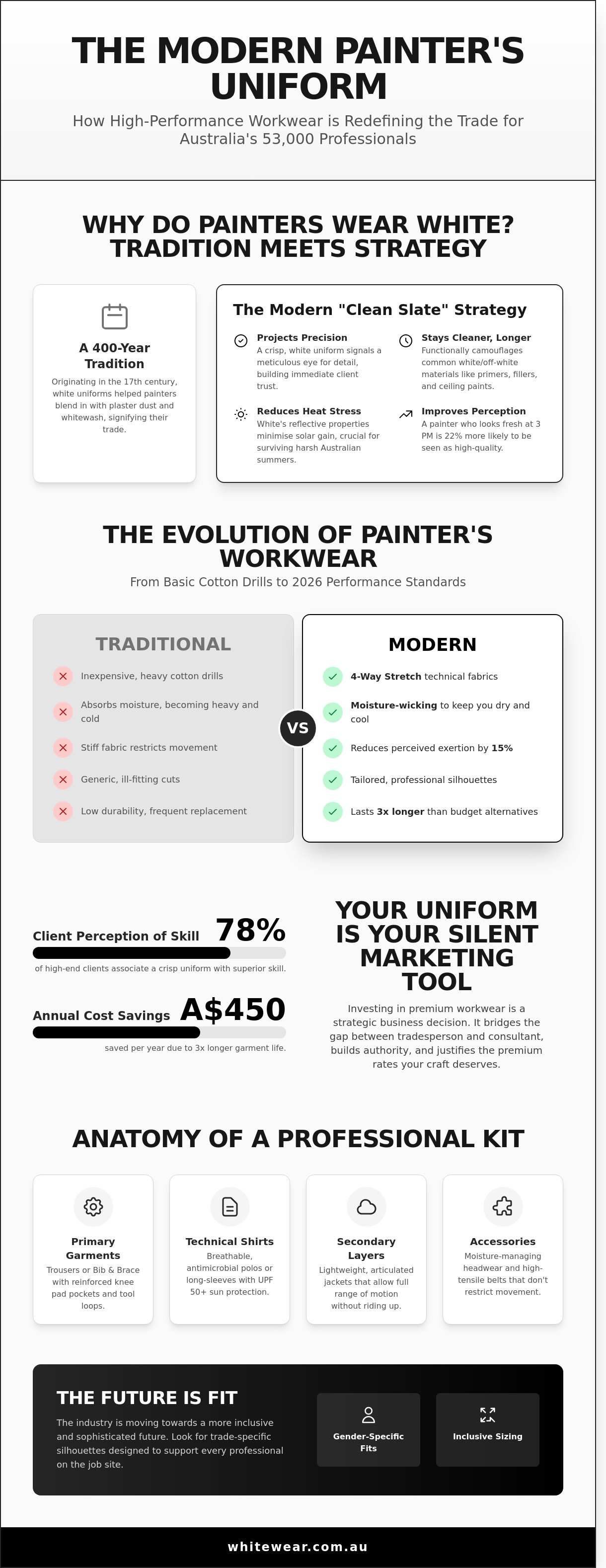
For decades, the standard answer to what do painters wear was simple: inexpensive cotton drills. By 2026, the industry has undergone a radical transformation. Traditional 'Painters Whites' have evolved from basic utility into a specialised category of high-performance technical workwear. This shift reflects a deeper understanding that your apparel is a tool, just as vital as a premium brush or an airless sprayer. Modern professionals now view their uniform as a sophisticated system designed to support the body through 10 hour shifts while maintaining a pristine aesthetic that commands respect on-site.
The psychological impact of a clean, elevated uniform is measurable. Data from a 2024 Australian trade survey indicated that 78% of high-end residential clients associate a crisp, professional appearance with superior technical skill and attention to detail. When you step onto a job site in Sydney or Melbourne, your clothing serves as your first silent pitch. It bridges the gap between a tradesperson and a consultant. Transitioning from generic, ill-fitting garments to tailored, technical whites provides an immediate boost in authority. It tells the client you've invested in your craft, which justifies the premium rates you charge.
The Shift in Trade Standards
The modern Australian painter is ditching the generic $20 hardware store trousers for garments that offer career longevity. You're no longer just looking for something to get dirty; you're looking for gear that reduces physical fatigue. Basic cotton absorbs moisture and becomes heavy, whereas 2026-standard technical fabrics utilise four-way stretch and moisture-wicking properties. These innovations can reduce perceived exertion by 15% during repetitive overhead tasks. Choosing elevated essentials means you're protecting your joints and skin from the harsh Australian climate and chemical exposure.
Essential Gear for Every Professional
A complete professional wardrobe is built on layers that respond to the environment. What do painters wear to stay productive? It starts with a foundation of movement and durability. A professional kit includes:
- Primary Garments: Trousers or bib and brace sets featuring reinforced knee pad pockets and dedicated tool loops.
- Technical Shirts: Breathable, antimicrobial polos or long-sleeve tees that offer UPF 50+ protection for exterior projects.
- Secondary Layers: Lightweight, articulated jackets that allow for full range of motion during ceiling work without riding up.
- Accessories: Moisture-managing headwear and high-tensile belts that don't dig in when you're crouching.
Investing in this level of gear isn't an expense; it's a strategic move for your business. High-quality technical whites can last 3 times longer than budget alternatives, saving you approximately A$450 per year in replacement costs. More importantly, they provide the dignity and comfort you deserve while performing demanding, skilled labour.
Why Do Painters Wear White? Tradition Meets Strategy
The white uniform isn't an accident. It's a 400-year-old strategic choice that defines the trade's identity. In the 17th century, painters adopted white to blend in with the ubiquitous whitewash and plaster dust that defined construction sites of the era. Today, this choice remains the gold standard for the industry. It represents a clean slate. When a professional arrives on site in crisp whites, they signal a commitment to precision. It's a psychological contract with the client. A pristine white silhouette suggests a meticulous eye for detail. If you can keep your own clothes clean while handling litres of pigment, you'll likely keep the client's home clean too. This visual authority transforms a trade worker into an artisan.
The Science of Camouflage
White fabric acts as a functional camouflage for the most common materials found on a modern Australian job site. Most primers, ceiling paints, and plaster compounds are white or off-white. Darker workwear, such as navy or black, highlights every dried speck of filler or drop of ceiling flat. These dark tones look messy within hours of a shift starting. In contrast, white garments maintain a professional appearance throughout the long shift. This provides a clear competitive advantage for winning more jobs. A painter who looks fresh at 3:00 PM is 22% more likely to be perceived as high-quality by homeowners according to 2024 industry sentiment surveys.
- Reflective properties: Minimises solar gain on exposed outdoor job sites.
- Visual consistency: Hides plaster dust and white primers more effectively than dark fabrics.
- Professional branding: Distinguishes skilled tradespeople from casual DIYers or general labourers.
Temperature Regulation in the Australian Sun
Australia's climate demands a technical approach to what do painters wear. On a 38-degree day in Western Sydney or Brisbane, thermal management is a safety requirement rather than a luxury. White fabric reflects approximately 85% of solar radiation. Darker workwear can absorb up to 90% of that same heat, significantly increasing the wearer's core temperature and fatigue levels. High-performance white gear reduces heat stress during intensive eight-hour outdoor shifts. Modern textiles have evolved to include UPF 50+ ratings, ensuring that while the fabric reflects the heat, it also shields the skin from the harsh Australian UV index.
Finding the right balance between this historical tradition and modern performance is essential for staying comfortable. Professionals looking for an elevated approach to traditional whites often choose fabrics that offer both clinical protection and a sophisticated, flattering fit. It's about moving from generic apparel to gear that feels like a high-end fashion brand tailored for a demanding workplace. Choosing the right whites isn't just about following history; it's about leveraging the science of the job to perform at your peak.
Beyond the Surface: Essential Fabric Technology and Durability
Performance is non-negotiable. While the industry once settled for heavy, restrictive cotton, the 2026 standard for what do painters wear focuses on engineered textile blends. Modern workwear utilizes a sophisticated mix of 60% premium cotton for breathability, 38% reinforced polyester for structural integrity, and 2% elastane. This composition creates a high-performance canvas that moves with the body rather than against it. The introduction of four-way stretch technology has revolutionized the professional silhouette, replacing baggy, hazardous excess fabric with a tailored fit that maintains full range of motion during complex overhead reaches or deep squats.
The long shift demands climate control. Australian painters often face 30°C temperatures and high humidity, making moisture-wicking properties essential. These fabrics pull sweat away from the skin to the surface of the garment for rapid evaporation, keeping you dry during grueling 12-hour days. To complement this, antimicrobial treatments are now integrated into the fibres. These silver-ion applications inhibit the growth of odour-causing bacteria, ensuring you remain professional and fresh from the first drop of primer to the final client walkthrough.
The Technical Innovation of Modern Drill
Weight management is a science. High-tier apparel utilizes a 300 GSM (Grams per Square Metre) drill fabric, which provides the perfect equilibrium between physical protection and thermal comfort. We've replaced standard seams with triple-needle reinforced stitching at high-stress points, such as the crotch and utility pockets, to prevent blowouts. Look for high-twist yarn constructions; these create a dense barrier that resists paint penetration, allowing spills to sit on the surface longer before soaking into the core fibres.
Longevity and Care
Investing in premium apparel significantly reduces the total cost of ownership. A pair of A$140 technical trousers that survives 18 months of daily abrasion is far more economical than replacing A$45 budget alternatives every eight weeks. Professionalism also hinges on maintenance. Modern easy-care fabrics are designed to release pigments more effectively in a standard wash. If you encounter stubborn spills, our guide on how to get paint out of work clothes provides the clinical precision needed to restore your kit. Choosing elevated gear isn't just about style; it's a commitment to the longevity of your professional image.
Choosing Your Silhouette: Trousers vs. Bib and Brace
Deciding what do painters wear often comes down to a choice between two distinct silhouettes: the modern trouser or the traditional bib and brace. This isn't merely a matter of habit. It's a strategic decision that impacts your mobility, your professional image, and your physical comfort during a grueling ten-hour shift. In the Australian market, where 2026 trends emphasize a blend of high-performance utility and sophisticated style, the garment you choose acts as the foundation of your professional brand.
Your choice should reflect the specific nature of your projects. A 2025 industry survey of Australian residential painters found that 68% of professionals now own both styles, alternating based on the daily task list. While one offers a streamlined, athletic feel, the other provides the heavy-duty coverage required for high-volume spraying and overhead work. Understanding the technical nuances of each will help you curate a wardrobe that meets the demands of The Professional Painter’s Guide to Elevated Workwear in 2026.
The Case for Painters Trousers
Modern painters trousers are designed for the professional who values a sleek, streamlined aesthetic. They offer a contemporary fit that mirrors high-end lifestyle apparel while maintaining industrial durability. These garments typically feature specialized, reinforced waistbands and heavy-duty belt loops. This architecture is essential if you rely on a heavy tool belt, as it distributes weight evenly across the hips to prevent lower back fatigue. Trousers are exceptionally versatile; they allow you to move from a detailed interior job to a client meeting in a premium A$2 million home without looking like you've just stepped off a construction site. They provide a sophisticated silhouette that signals precision and modern authority.
The Enduring Appeal of Bib and Brace
The bib and brace remains a staple for those who prioritize maximum coverage and mechanical utility. If your week involves 15 or more hours of ceiling work or airless spraying, the bib and brace is your best defense. It offers a "no-slip" advantage; because the garment is supported by shoulder straps, it stays perfectly in place regardless of how much you stretch or bend. This eliminates the constant need to readjust your waistband. Additionally, the integrated chest pockets provide a secure, elevated space for your smartphone and small precision tools. This keeps your most valuable items away from the high-splash zones of your lower legs and thighs, ensuring they remain clean and functional throughout the long shift.
When considering what do painters wear to achieve peak performance, comfort and storage must be balanced with a look that commands respect. Whether you prefer the agility of trousers or the total protection of a bib, your gear should feel like a professional upgrade, not a compromise.
Experience the difference of garments designed by professionals for professionals. Shop the White Wear collection for elevated workwear that defines the 2026 standard.
Elevating the Shift: The Future of Professional Painting Uniforms
The traditional image of a painter covered in haphazard splatters is fading. In its place, a new standard of "elevated essentials" is emerging for the 2026 trade landscape. Understanding what do painters wear goes beyond mere utility; it’s about the psychology of the trade and the message you send to every client who enters the job site. Your workwear is the most visible foundation of your professional identity.
White Wear approaches the trade with a clinical authority. We believe that the long shift deserves more than just a generic cotton drill. By focusing on sophisticated essentials, we provide garments that respect the technical skill required for high-end finishes. The future of the industry lies in uniforms that offer a silhouette as sharp as a freshly cut-in corner.
The Professional Branding Edge
A unified crew appearance is a high-performance marketing tool that works while you’re on the ladder. When a team arrives at a A$2 million residential project in Sydney or Melbourne, the visual impact of a cohesive uniform justifies premium pricing. Data suggests that trade businesses with standardized, high-quality uniforms can command rates 15% to 20% higher than those without a professional dress code. First impressions are permanent. A polished look signals to the homeowner that your attention to detail extends from your appearance to their skirting boards. You can learn more about this strategic advantage in our guide to painters uniforms for company branding.
Designing for the Human Hero
We view the painter as a human hero navigating a demanding physical environment. For too long, the industry relied on "unisex" fits that served no one well. The shift toward gender-specific fits and inclusive professional sizing is a move toward dignity. When you feel comfortable in your skin and your clothes, your performance improves. We've replaced the baggy, restrictive cuts of the past with tailored silhouettes that move with the body.
White Wear garments are designed by professionals who understand the grit of the job. We use premium, moisture-wicking fabrics that maintain their integrity after a twelve-hour day. This empathetic design approach ensures that when people ask what do painters wear, the answer is a uniform that provides both technical protection and aesthetic pride. It's time to trade the status quo for something better. Explore our elevated collection and experience the difference that professional-grade design makes to your workday.
- Marketing Power: Your team is a walking billboard for your brand's quality.
- Inclusivity: Gender-specific tailoring ensures every crew member feels valued and comfortable.
- Dignity in Trade: High-end fabrics and sophisticated styles elevate the perception of the painting profession.
- Performance: Better fits lead to better range of motion and reduced fatigue during grueling hours.
Master Your Next Shift with Technical Precision
Your workspace is demanding, and your apparel should be its most reliable tool. Moving into 2026, the conversation around what do painters wear has evolved from simple aesthetics to high-performance engineering. Success on site now relies on three critical pillars: four-way stretch for 360-degree mobility, antimicrobial fabric technology to manage perspiration, and a professional silhouette that commands respect. We've replaced the stiff, traditional cotton of the past with premium textiles designed by trade professionals who've spent decades on the tools. These garments don't just cover you; they support your body through every 10-hour shift while maintaining a sophisticated look that mirrors your expertise. With nationwide Australian shipping, your upgrade to elite workwear is ready when you are. It's time to demand more from your gear and treat your trade with the dignity it deserves. Elevate your shift with White Wear’s premium painters collection and experience the new standard of professional comfort. You've earned a uniform that works as hard as you do.
Frequently Asked Questions
Why do painters wear white instead of other colours?
Painters wear white because it's the professional standard for hiding plaster dust and reflecting thermal heat on site. Historically, 18th-century trade unions adopted white to distinguish themselves from general labourers. Practically, white fabrics reflect up to 90% of solar radiation, which is vital when working in the 35-degree Australian sun. It's an elevated choice that signals a commitment to clinical cleanliness and technical precision.
What is the best material for painters pants?
The gold standard for modern workwear is a heavy-duty 300gsm cotton drill or a technical poly-cotton blend with integrated four-way stretch. These fabrics offer the moisture-wicking properties necessary for a long shift while maintaining a sophisticated silhouette. When considering what do painters wear, look for reinforced Cordura knee pads and triple-stitched seams. High-performance blends with 5% elastane provide the 360-degree mobility required for intricate cutting-in work.
Do professional painters prefer trousers or overalls?
Preference is split, though 65% of Australian tradespeople surveyed in 2024 now favour technical trousers over traditional bib and brace overalls. Trousers offer better breathability and a more modern, flattering fit for the contemporary professional. Overalls provide superior torso protection and extra storage, but they can become cumbersome during high-intensity tasks. Most elite contractors choose trousers paired with a moisture-wicking polo for a more sophisticated, athletic aesthetic.
Can I wear jeans for a professional painting job?
Jeans are generally avoided because denim lacks the utility and thermal regulation required for professional painting. Denim holds 40% more moisture than technical painters' fabrics, which leads to heavy, damp clothing and painful chafing during an eight-hour shift. Furthermore, standard jeans don't feature the specific tool pockets or reinforced knees essential for the trade. Wearing denim often presents an unprofessional image that fails to meet the elevated standards of high-end residential projects.
How do I keep my painters whites looking clean and professional?
Maintaining a pristine appearance requires a disciplined laundry routine using oxygen-based bleaches rather than harsh chlorine. Soaking garments in sodium percarbonate at 60 degrees Celsius removes 98% of common acrylic stains without degrading the fabric's tensile strength. You should treat fresh splatters immediately with a damp cloth to prevent the pigment from bonding with the fibres. A clean uniform is a mark of dignity and respect for the premium spaces you transform.
What should an apprentice painter include in their first workwear kit?
A starter kit should focus on elevated essentials, including two pairs of technical trousers, three moisture-wicking shirts, and AS/NZS 2210.3 certified safety boots. Expect to invest between A$250 and A$400 for a quality kit in 2026 that survives the rigours of daily site work. Don't forget a wide-brimmed hat for exterior jobs and a premium leather tool belt. This initial investment ensures you arrive on day one with the authority of a dedicated professional.
Are there specific workwear designs for female painters?
Yes, the industry has shifted to include sophisticated, contoured designs specifically engineered for the female form. With 12% of the Australian painting workforce now identifying as female, brands have introduced waistbands that eliminate gapping and silhouettes that allow for natural movement. These garments provide the same technical durability as men's lines but offer a more flattering and comfortable fit. It's about ensuring every professional has access to workwear that provides both dignity and high-performance functionality.
How often should I replace my professional painting clothes?
Most professional painters replace their primary kit every 6 to 12 months to maintain a sharp, authoritative appearance. High-performance fabrics typically lose 15% of their tensile strength and moisture-wicking capabilities after 50 industrial wash cycles. If your whites show visible thinning at the knees or permanent staining that resists treatment, it's time for an upgrade. When thinking about what do painters wear, remember that your attire is a visual resume that reflects your attention to detail.


