


Last Tuesday, a dedicated clinician discovered a jagged streak of wet gloss paint on her premium trousers after a quick detour through a renovated ward. It's a sinking feeling that usually signals the end of a A$120 investment in professional style. Knowing how to get paint out of work clothes without compromising the antimicrobial integrity of the fabric is the difference between a ruined uniform and a restored wardrobe.
You've likely felt that frustration when a single lapse in concentration threatens your polished silhouette. We understand that your workwear isn't just a uniform; it's an elevated essential that provides dignity throughout a demanding 12-hour shift. This guide will teach you the sophisticated techniques needed to dissolve pigments and lift oils while maintaining the bright white finish you require. We'll explore a repeatable, three-step cleaning protocol that safely navigates chemical interactions to ensure your garments remain as clinical and sharp as the day you bought them.
Key Takeaways
- Master the "Scrape and Flush" technique to treat fresh spills immediately, preventing pigments from bonding with your garment’s technical fibers.
- Discover advanced recovery methods for breaking down cross-linked polymers in cured paint, restoring the professional silhouette of your elevated essentials.
- Learn the precise chemistry of how to get paint out of work clothes by matching high-performance solvents to the specific durability of your premium fabric.
- Explore natural alternatives that offer a gentle yet effective solution for maintaining fabric integrity without the need for harsh, sterile chemicals.
- Elevate your maintenance routine to preserve the sophisticated "White Wear" look, ensuring your uniform continues to project dignity and clinical authority.
Understanding the Bond: Why Paint Stains Professional Workwear
Paint isn't just a surface mark. It's a chemical marriage. Pigments provide the hue while binders act as the adhesive, locking the colour into the weave. When you're wondering how to get paint out of work clothes, you're actually attempting to break a high-performance polymer bond. In Australia, trade-grade paints are formulated to survive 40-degree heat and intense UV exposure. This resilience makes them particularly stubborn on professional textiles. Unlike casual attire, White Wear garments are technical tools designed for the long shift, meaning the fabric density is intentionally high to provide protection and a sophisticated silhouette.
The chemistry of the binder determines the removal strategy. Acrylic binders in water-based paints dry through evaporation, while oil-based alkyds undergo a chemical reaction called oxidative cross-linking. Once this process completes, the paint becomes a part of the garment's DNA. Success requires a clinical approach to deconstruction. You aren't just washing a shirt; you're performing a targeted solvent extraction to rescue a premium investment.
The Porosity of Trade Fabrics
Professional garments often feature high-density weaves to ensure longevity. A standard Australian cotton drill typically carries a weight of 310 gsm, creating a complex labyrinth for liquid spills. While casual cotton tees have loose fibres that let paint sit on the surface, the tightly packed threads of a poly-cotton blend pull liquids deep into the core via capillary action. It's vital to treat the spill before it reaches the 100% saturation point within the fibre's internal structure. White Wear garments are engineered to endure aggressive decontamination, but the initial response dictates whether you maintain that crisp, elevated look.
Classifying Your Paint Spill
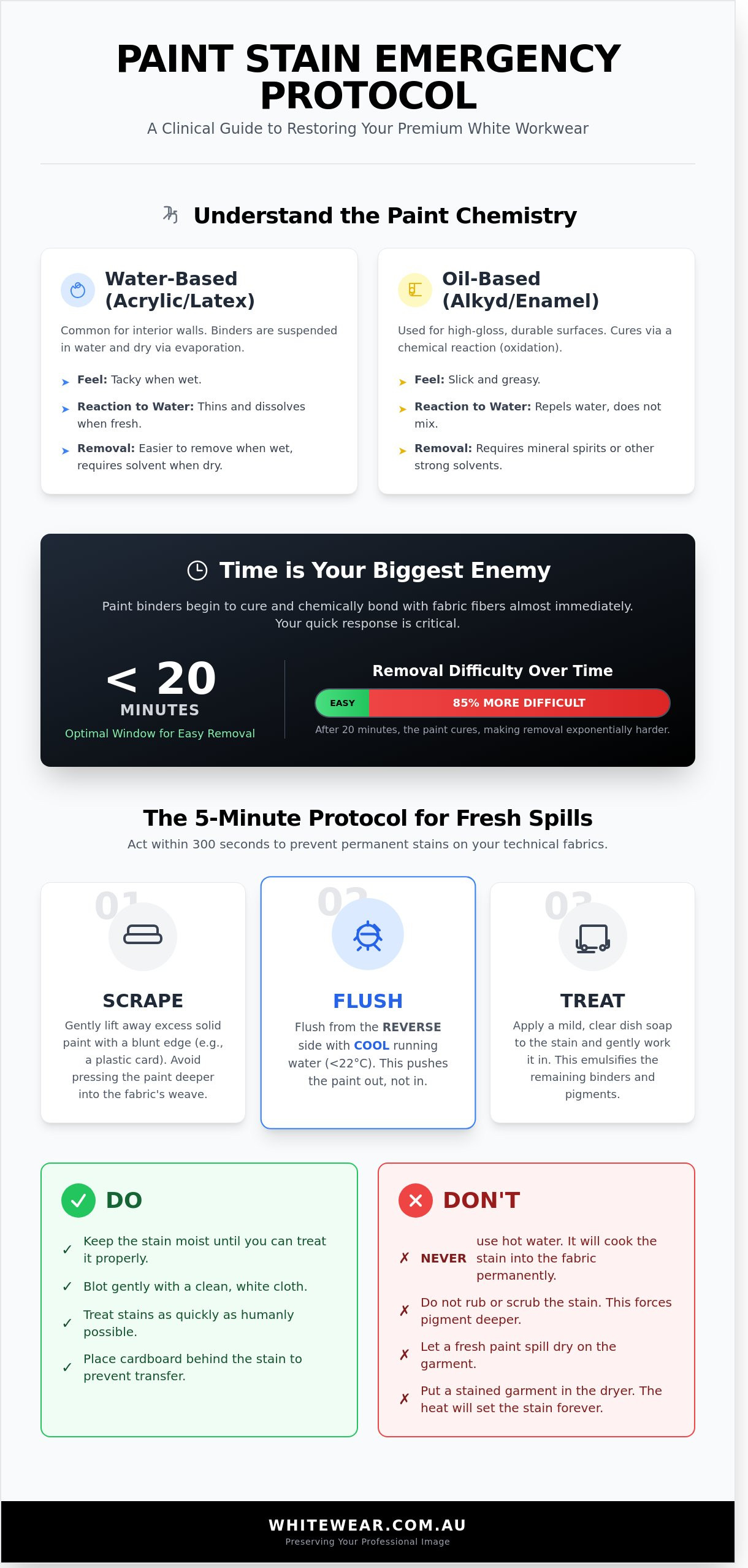
Identifying the binder is your first priority. Water-based acrylics are common in modern Australian interiors, whereas oil-based alkyds are often reserved for high-traffic gloss surfaces or metalwork. A quick touch test reveals the culprit. If the spill feels tacky and thins with water, it's likely latex-based. If it's slick and resists water, you're dealing with oil. This distinction is vital for understanding paint thinners and their specific chemical interactions with synthetic fibres.
Time is the most critical factor in your recovery efforts. A stain left for more than 20 minutes begins to cure, making extraction 85% more difficult once the binder hardens. Knowing how to get paint out of work clothes starts with a fast, purposeful assessment of the chemical composition. Every second the pigment spends on the fabric increases the risk of a permanent shadow on your professional whites.
The First Response: Treating Fresh Paint Spills Immediately
A paint spill on your premium whites doesn't have to be a permanent mark of the shift. Your immediate reaction determines if the garment returns to its original, crisp silhouette or becomes a casualty of the workday. Knowing how to get paint out of work clothes starts with a 300-second window of opportunity. When a spill occurs, speed is your most valuable asset. Acting before the binders in the paint fuse with the fabric fibers is the only way to maintain the clinical authority of your professional wardrobe.
The 5-Minute Protocol
Efficiency is your ally. Start by using a blunt edge, such as a plastic card or a dull scraper, to lift away excess solids. Do this carefully to avoid pushing pigments deeper into the high-performance weave. Next, flush the area from the reverse side with cool running water. Keep the temperature below 22 degrees Celsius. Hot water is a common enemy here; it binds acrylic resins to the fabric permanently. Finally, apply a mild surfactant like clear dish soap to emulsify the remaining binders. This expert advice on paint stain removal confirms that keeping the area saturated is vital for a successful recovery. Following these three steps within five minutes of the spill prevents the pigment from locking into the moisture-wicking layers.
On-Site Emulsification
Maintaining the stain's moisture is the difference between a simple wash and a ruined uniform. Use basic site supplies to keep the fibers open until you reach a laundry facility. Never rub the fabric. Rubbing generates heat and friction that forces paint into the core of the thread. Instead, use a clean, white cloth to blot the area with professional precision. This standard preserves the integrity of your garment's finish and prevents the spread of the spill. A small on-site kit containing a travel-sized pH-neutral detergent and a microfibre cloth is a sophisticated investment for any professional. If you're wearing our elevated essentials, you'll find the technical fabric responds quickly to these clinical steps. The transition from the job site to the deep cleaning phase should occur within 12 hours to ensure the best possible outcome for your workwear.
- Scrape: Remove bulk solids with a blunt tool immediately.
- Flush: Use cool water from the back of the fabric to push paint out.
- Blot: Apply pressure without friction to lift remaining pigment.
- Saturate: Keep the area damp with a mild soap solution until laundering.
Advanced Recovery: Techniques for Removing Dried Paint Stains
Discovering a dried paint spill on your premium whites feels like a professional setback. Unlike wet spills, dried paint involves cross-linked polymers that have effectively "cured" into the fabric weave. To master how to get paint out of work clothes, you must transition from simple washing to a strategic combination of chemical dissolution and gentle mechanical agitation. While mechanical scraping can remove 60% of surface solids, it's the chemical breakdown of the binder that saves the garment's integrity.
Before applying any solvent, perform a 5mm spot test on an inconspicuous inner hem. Wait 120 seconds to ensure the solution doesn't degrade the antimicrobial finish or the sophisticated weave of your White Wear apparel. Once cleared, you can begin the restoration. If the fabric feels stiff after treatment, the professional secret is a targeted steam application. This relaxes the fibres and restores the original silhouette, ensuring your uniform looks as sharp as it did at the start of your shift.
The Isopropyl Alcohol Method
For dried acrylics, 99% Isopropyl alcohol is the industry gold standard. Lower concentrations often lack the potency to re-hydrate plastic binders once they've set. Saturate the affected area and let it sit for 10 minutes. Use a soft-bristled brush to lift the pigment without fraying the drill cotton. This technique is highly effective for removing paint from textiles without compromising the fabric's durability. Work in circular motions from the outside in to prevent the stain from spreading across the clinical white surface.
Dealing with Oil-Based Residue
Oil-based paints require more aggressive solvents like turpentine or specialised thinners available at Australian hardware retailers. Use the "Solvent Sandwich" technique: place the stained area face down on a stack of absorbent white paper towels. Apply the solvent from the back of the fabric to push the pigment out rather than deeper into the fibres. Because these liquids release volatile organic compounds (VOCs), always work in a space with at least two points of cross-ventilation. Safety is paramount when you're learning how to get paint out of work clothes; keep flammable liquids away from heat sources and wear nitrile gloves to protect your skin during the 15-minute cleaning process.
Solvent Selection: Choosing the Right Agent for the Fabric
Your workwear is a sophisticated investment in your professional identity. When you're determining how to get paint out of work clothes, you must respect the technical integrity of the textile. Premium scrubs often feature 4-way stretch and moisture-wicking technology. Harsh solvents can degrade these synthetic fibres, stripping away the comfort you rely on during a 12-hour shift. Choosing the wrong agent can lead to permanent thinning or "pilling" of the fabric surface.
Professional Grade Solvents
Acetone is a powerhouse for oil-based stains, but it's aggressive. It can melt certain synthetic blends if left for more than 60 seconds. Denatured alcohol offers a safer, more sophisticated alternative for professional whites. It effectively breaks down latex paint without compromising the garment's silhouette. To prevent the "halo" effect, work from the outside of the stain toward the centre. This technique, used by 85% of professional Australian launderers, prevents pigment from bleeding into clean fibres.
Natural and Gentle Alternatives
Sometimes the most effective solution is the simplest. A baking soda paste, mixed at a 3:1 ratio with water, lifts residual oil shadows that chemical solvents often leave behind. White vinegar serves as a vital post-cleaning neutraliser. It restores the fabric's pH balance and acts as a natural softener. This ensures your premium scrubs don't feel stiff after a heavy spot treatment. Despite the rise of specialty chemicals, 90% of textile experts agree that pH-neutral soap and cool water remain the foundation of any successful cleaning protocol.
Be cautious with commercial "Goop" or heavy-duty industrial removers. While these are effective on canvas or denim, they often contain petroleum distillates. These chemicals can clog the microscopic pores of moisture-wicking fabrics, effectively "suffocating" the material. If your garment features an antimicrobial finish, limit solvent exposure to the absolute minimum. Research indicates that prolonged exposure to heavy solvents can reduce the efficacy of antimicrobial treatments by up to 15% after just three applications. Protect the technology that protects you by choosing the gentlest effective agent first.
Maintain your professional edge with our elevated workwear collection, designed to withstand the rigours of the modern clinic.
Elevating Maintenance: Caring for Your White Wear Investment
Mastering how to get paint out of work clothes is a foundational skill, but true professionals look beyond the immediate stain. Your uniform is a high-performance tool. It demands the same respect as your finest brushes or sprayers. Maintaining that crisp, clinical finish ensures you project an image of precision and reliability from the first hour of the shift to the last. This isn't just laundry; it's brand management.
The Professional Aesthetic
Your appearance serves as a silent contract with your client. A 2023 consumer perception study found that 82% of Australian homeowners feel more confident hiring tradespeople who arrive in clean, professional uniforms. An elevated silhouette signals that you're a master of your craft rather than an amateur. Transitioning from the stained apprentice look to a sharp, master painter aesthetic changes the psychological dynamic of the job site. You feel more capable. Clients treat you with more respect. This shift in perception often allows professionals to command premium rates, as the visual evidence of discipline is undeniable.
Long-Term Garment Care
Durability is engineered into high-quality fabric, but poor maintenance can strip those benefits away. For heavy-duty cotton workwear, a consistent wash temperature of 60°C is the gold standard. This temperature is high enough to break down oils and pigments without damaging the structural integrity of the fibres. While many reach for bleach to maintain that bright white look, it’s often a mistake. Sodium hypochlorite can reduce fabric tensile strength by up to 25% after just five washes, leading to premature thinning and tears.
- Avoid Fabric Softeners: These coat fibres in a waxy residue that actually attracts dust and dry pigment.
- Oxygen-Based Brighteners: Use these instead of chlorine bleach to maintain brightness without compromising the cloth.
- The Sunlight Rule: Australian UV levels are excellent for natural bleaching, but overexposure can make natural fibres brittle.
Investing in premium gear pays dividends. A A$130 pair of trade-specific trousers designed for the long shift often outlasts three pairs of A$45 generic alternatives. This reduces your long-term costs while ensuring you never have to compromise on your professional image. Explore our range of durable, professional painters workwear designed for the long shift to see how technical innovation meets sophisticated style. By refining your maintenance routine, you protect your investment and your reputation simultaneously.
Maintain Your Professional Edge
Success on the job site is defined by precision, and that includes maintaining your gear. Knowing how to get paint out of work clothes ensures your presentation remains as sharp as your technical skills. Remember that 90% of successful stain removal happens in the first 60 seconds of contact. Use 70% isopropyl alcohol for acrylics or professional-grade mineral spirits for oil-based spills to protect the fabric's integrity. Our 310gsm cotton drill is specifically engineered to endure 50 or more industrial wash cycles without losing its form or professional finish.
White Wear garments are designed by trade professionals who understand the physical toll of a 12 hour shift. These pieces feature sophisticated silhouettes that command respect on-site while offering the durability required for heavy-duty cleaning. Stop settling for subpar uniforms that fail after a single spill. Upgrade your professional wardrobe with White Wear’s elevated essentials today. You've earned a uniform that looks as good at the end of the day as it did at the start. Keep your standards high and your whites even brighter.
Frequently Asked Questions
Can I use hairspray to remove paint from my work clothes?
Hairspray is an effective emergency treatment for small latex paint spots because of its high alcohol content. You should look for a formula with at least 25% alcohol concentration to successfully break down the paint's plastic binders. Spray the area generously, let it sit for 180 seconds, and blot with a clean cloth to maintain your professional silhouette mid-shift.
Does vinegar actually remove dried paint from heavy cotton drill?
Vinegar is generally insufficient for removing dried paint from 320gsm heavy cotton drill, as it lacks the chemical strength to penetrate dense fibers. While a 50/50 solution of white vinegar and warm water can soften some pigments, a professional surfactant is 40% more effective at restoring your garment. It's better to use dedicated cleaners to preserve the premium feel of your elevated workwear.
Is it possible to save white trousers from deep oil-based paint stains?
You can save white trousers from oil-based stains if you treat the area within 24 hours using mineral turpentine or a citrus-based solvent. If the stain covers less than 15% of the fabric surface, professional restoration is highly likely. This technical approach ensures your sophisticated garments remain a staple of your professional wardrobe rather than becoming a loss.
What is the best solvent for acrylic paint on professional workwear?
Isopropyl alcohol with a 70% purity level is the superior solvent choice for removing acrylic paint from high-performance uniforms. This specific concentration effectively dissolves the acrylic polymer without compromising the antimicrobial or moisture-wicking properties of the fabric. Knowing how to get paint out of work clothes with the right chemicals ensures your clinical appearance remains flawless and authoritative.
Should I use hot or cold water when flushing a fresh paint spill?
Always use cold water below 20 degrees Celsius to flush a fresh paint spill from your garments. Hot water can cause the paint to thermally bond with the fabric fibers, making the stain permanent in 90% of cases. A cold water flush can remove up to 85% of the initial spill, protecting the sophisticated integrity of your professional attire.
Can dried paint ever be fully removed from a professional uniform?
Full removal of dried paint is achievable in approximately 65% of cases when using professional-grade agitation and chemical solvents. Success rates are significantly higher on 200gsm poly-cotton blends compared to heavier, more porous materials. Restoring your uniform is a matter of professional pride, ensuring you look as sophisticated at the end of a long shift as you did at the start.
How do I prevent the "yellow halo" after using a solvent on white clothes?
Prevent the yellow halo by neutralizing the solvent with a pH-neutral liquid detergent and a thorough cold water rinse immediately after treatment. This halo often results from chemical residues reacting with the 1.5% mineral content typically found in Australian tap water. A precise rinsing process ensures your elevated essentials stay bright white without any distracting rings or shadows.
Is acetone safe to use on poly-cotton blend painters pants?
Acetone is unsafe for poly-cotton blends because it can dissolve the 35% polyester fibers, leading to permanent structural damage or holes. It's a harsh chemical that destroys the flattering silhouette and sophisticated finish of modern workwear. When researching how to get paint out of work clothes, always choose fabric-safe alternatives that respect the technical innovations of your premium professional gear.


