


Professionalism shouldn't be measured by the weight of your drill cotton. In the peak of an Australian summer, heavy fabric isn't a badge of honor; it's a liability that drains your energy and restricts your reach. You've likely felt the exhaustion that comes from gear that fights your movement, or the disappointment of lightweight alternatives that feel flimsy and unprofessional. It's a common trade struggle to find that elusive balance between breathability and the clinical durability required for grueling industrial environments.
This guide demonstrates how modern lightweight painters pants have evolved into a sophisticated essential for the serious professional. You'll discover how technical performance fabrics provide a second-skin feel while meeting the 2026 standards for proper fit and protection. We will break down the science of breathable construction, ensuring your workwear survives repeated industrial washing while maintaining an authoritative, polished aesthetic that commands respect on every job site. It is time to move beyond the status quo and embrace gear that supports your mission with dignity and comfort.
Key Takeaways
- Understand why technical fabric blends are replacing heavy cotton drill to reduce physical fatigue during demanding eight-hour shifts.
- Learn how ripstop weaves provide clinical durability, ensuring your gear survives the site without the restrictive bulk of traditional workwear.
- Identify the functional design elements, such as trade-specific pockets, that make lightweight painters pants a precision tool for professional performance.
- Master the maintenance protocols and washing temperatures required to remove latex and oil-based paints while preserving fabric integrity.
- Discover how a refined, tailored appearance enhances your professional authority and builds immediate rapport with discerning clients.
Why Lightweight Painters Pants are the Modern Trade Standard
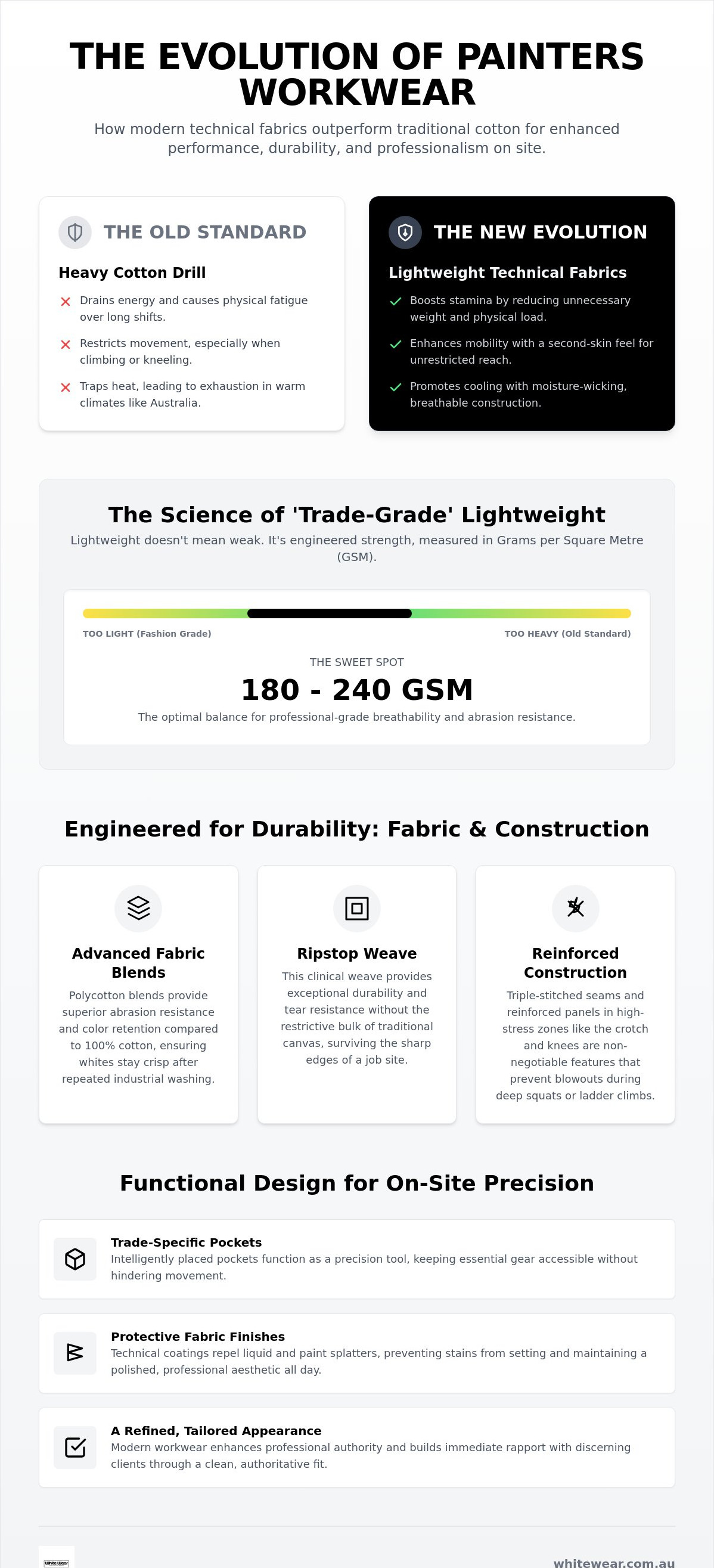
The tradition of the heavy cotton drill trouser is fading. For decades, the painting industry equated weight with durability, assuming that a thicker fabric was the only way to withstand the rigors of a construction site. However, modern textile engineering has debunked this myth. Today, lightweight painters pants represent a shift toward technical precision, prioritizing the wearer's physical longevity without compromising the garment's lifespan. This evolution reflects a deeper understanding of the trade's physical demands.
Carrying unnecessary bulk for an eight-hour shift isn't just uncomfortable; it's physically draining. Every extra gram of fabric becomes a burden during repetitive climbing, kneeling, and reaching. By reducing this weight, professionals maintain a higher level of precision and energy from the first coat to the final touch-up. High-performance apparel now functions as a tool in its own right, enhancing productivity by reducing the metabolic cost of movement. The functional design of work pants has always focused on utility, but the modern standard adds physiological support to that list.
Choosing refined, lighter materials doesn't mean settling for "cheap" gear. In 2026, lightweight signifies high-strength engineering. It's about using advanced synthetic and cotton blends that offer higher tensile strength than their bulkier predecessors. These garments are designed by peers who understand that dignity in the workplace comes from gear that performs as hard as the person wearing it.
Combating the Australian Heat
Australian conditions demand more than just a white uniform. Breathable fabrics are critical for managing heat-related fatigue, a primary cause of onsite exhaustion. When the mercury rises, traditional heavy whites trap heat against the skin, creating a microclimate that accelerates dehydration. Modern apparel utilizes moisture-wicking technology to move perspiration away from the body, allowing for rapid evaporation. This makes heavy, non-breathable gear obsolete for summer projects.
Beyond personal gear, managing the ambient temperature of a project site can make a significant difference; for those interested in how premium shading solutions can mitigate the Australian heat in outdoor areas, check out Best Outdoor Blinds.
Defining 'Trade-Grade' Lightweight
It's vital to distinguish between fashion-grade materials and trade-grade performance. A lightweight garment isn't simply a thinner version of a cheap fabric; it's a sophisticated weave of high-tenacity fibers. The key metric to observe is GSM (Grams per Square Metre). A GSM between 180 and 240 offers the perfect equilibrium of breathability and abrasion resistance. Staying within this specific range ensures the fabric is light enough to facilitate movement while remaining dense enough to protect against the sharp edges and rough surfaces of a professional site.
The Science of Durability: Fabrics That Survive the Site
Durability in workwear isn't a result of sheer mass. It's a result of deliberate textile architecture. For a professional, the integrity of their gear is a direct reflection of their standards. Traditional heavy cotton often fails because it lacks the structural resilience to handle the dynamic movements of a modern job site. In contrast, high-performance lightweight painters pants utilize advanced fiber blends that outperform traditional canvas in every measurable category. This engineering ensures that comfort doesn't come at the expense of protection.
When evaluating longevity, the debate between pure cotton and polycotton blends is central. While 100% cotton offers natural breathability, it often lacks the dimensional stability required for repeated industrial washing. Polycotton blends, specifically those engineered for the trade, provide superior abrasion resistance and color retention. These blends ensure your whites stay crisp and functional long after standard cotton has frayed. Beyond the base material, the longevity of a garment depends on its construction. Triple-stitched seams and reinforced panels in high-stress zones like the crotch and knees are non-negotiable. These features prevent the blowouts that often plague inferior gear during deep squats or ladder climbs.
Modern finishes also play a vital role in extending the life of your apparel. Technical coatings now allow fabrics to repel liquids and paint splatters, preventing stains from setting into the fibers. This keeps you looking polished throughout the workday. When selecting gear, it's helpful to reference established fabric safety and durability standards to ensure the materials meet professional requirements. For those seeking this level of engineered performance, exploring the latest painters workwear is the next logical step toward a more refined kit.
Ripstop Technology for Painters
Ripstop technology is the cornerstone of modern trade apparel. This specialized weave incorporates thicker reinforcement yarns at regular intervals in a cross-hatch pattern. If a sharp edge snags the fabric, the tear is isolated within a single small square, preventing a minor nick from becoming a catastrophic failure. For painters navigating the tight spaces of scaffolding or the jagged edges of a renovation site, this protection is essential. It provides a weight-to-strength ratio that makes these the premier choice for lightweight painters pants in high-stakes environments.
Stretch and Mobility
True mobility requires more than just a loose fit. It requires active fabric. By integrating small percentages of elastane, modern workwear achieves a four-way stretch that moves with the body. This ergonomic approach ensures that your range of motion is never restricted, whether you're reaching for a high corner or prepping baseboards. Flexible workwear reduces the mechanical stress on the fabric itself, significantly lowering the likelihood of failure during explosive or repetitive movements. It turns your clothing into a high-performance tool that supports your mission on-site.
Functional Design: Essential Features for High-Performance Pants
A painter's productivity is inextricably linked to the accessibility of their tools. High-performance lightweight painters pants are more than mere apparel; they are a mobile workstation. To achieve this, design must be intentional. Pockets should be positioned where the hand naturally falls when reaching for a scraper or a brush, minimizing wasted movement during a long shift. This level of utility ensures that every action on the site is fluid and purposeful.
Durability is anchored in the details. Triple-stitched seams serve as the non-negotiable standard for professional longevity, providing the structural integrity required to withstand the constant tension of climbing ladders. While the exterior must be rugged, the interior must remain breathable. Integrated mesh ventilation zones in high-heat areas, such as the back of the knees and the lower back, facilitate airflow where it is needed most. This thermal management is a hallmark of peer-led development, addressing the specific reality of the Australian workday.
Protection is equally paramount. Knee pad pockets are a necessity for floor-level prep and finishing, saving the joints from the cumulative impact of hard surfaces. By housing the padding internally, the garment maintains a clean exterior while providing clinical-grade protection. This approach aligns with broader professional workwear safety standards, emphasizing that safety and performance are two sides of the same coin.
Storage Solutions That Work
Efficiency on-site requires storage that adapts to modern technology. Secure, dust-proof pockets for smartphones are now a baseline requirement, protecting expensive devices from fine sanding debris. Similarly, tool loop placement must be evaluated for both safety and speed; a loop that is too loose can catch on scaffolding, while one that is too tight hinders access. Quality is also found in the hardware. Premium zippers and fasteners are essential to ensure they won't jam when exposed to the inevitable dust of a renovation site.
The Professional Silhouette
Maintaining an authoritative appearance is vital when dealing with high-end clients. The professional silhouette balances a slim, modern look with the practical needs of the job. A tailored fit is not just about aesthetics; it's a safety feature. Excess fabric is a hazard that can catch on equipment or trip a worker on a ladder. Under the 2026 OSHA PPE fit rule, 29 CFR 1926.95(c), providing properly fitting gear is now a regulatory requirement to ensure worker safety. For a deeper look at selecting the right gear, consult The Professional Guide to Choosing the Best Painters Pants in 2026. Wearing gear designed by peers ensures you look polished while performing at your peak.
Maintaining Your Whites: Care and Longevity
A professional’s whites are more than just a uniform; they're a visual testament to their precision and standards. Maintaining lightweight painters pants requires a specific care protocol to ensure that technical performance doesn't degrade over time. Unlike heavy canvas, modern poly-cotton blends are engineered with specific wicking channels that can be compromised by improper laundering. Preserving that clinical, crisp appearance is essential for building trust with high-end clients who expect a polished presence on-site.
The chemistry of the paint determines the cleaning method. For latex-based spills, immediate flushing with warm water is the most effective defense. Oil-based stains require a more tactical approach, utilizing specialized solvents applied sparingly to avoid weakening the fabric's refined structure. When it's time for the machine, washing temperatures between 40°C and 60°C provide the necessary hygiene to remove trade grime without causing the fibers to become brittle. Avoid fabric softeners entirely. These agents coat the technical fibers in a waxy residue; this effectively suffocates the fabric and destroys the breathability you rely on during grueling Australian shifts.
Drying techniques are equally critical for longevity. While the temptation to use a high-heat dryer is strong, air-drying in a shaded area is the superior choice. This prevents the micro-shrinkage that can distort a tailored fit and preserves the elasticity of the active zones. If you must use a dryer, a low-heat setting is the only professional option to maintain the garment's dimensional stability.
The Pre-Wash Routine
Success in the laundry room begins on the job site. If a spill occurs, scrape away excess paint with a clean putty knife immediately. Don't rub it in, as this pushes pigments deeper into the weave. For those curious about how different materials react to these cleaning agents, our guide on What Fabric is Best for Painters Trousers? offers deeper technical insights. Utilizing safe stain removal agents early ensures the lightweight structure remains intact for the long haul.
Maximising Garment Life
Longevity is often a matter of rotation. We recommend a minimum of three pairs in your weekly kit. This prevents any single pair from enduring excessive wear and allows fibers to rest and recover their shape between washes. You'll know a pair has reached its professional expiration date when the whites take on a permanent grey cast or when fraying at the hems begins to undermine your authoritative image. Between projects, store your gear in a cool, dry environment away from direct sunlight to prevent the oxidative yellowing that can plague inferior textiles. To ensure your kit always reflects your high standards, browse our latest collection of premium painters clothing.
Elevating Your Professional Image with White Wear
In the high-end residential and commercial sectors, your appearance serves as a silent prologue to your work. It's the visual handshake that occurs before a single drop of paint is mixed. While technical skills are the foundation of your trade, your aesthetic presentation communicates your level of discipline and attention to detail. Choosing lightweight painters pants that offer a tailored, modern fit instead of a baggy, traditional silhouette signals to discerning clients that you operate with a higher standard of professionalism. This isn't merely about vanity; it's about establishing immediate trust through a refined presence.
There is a profound psychological impact in wearing gear designed by peers who understand the physical reality of the workday. When your workwear provides both dignity and comfort, it changes how you carry yourself on-site. You're no longer fighting against stiff, ill-fitting fabrics; instead, you're supported by essentials designed for movement and endurance. This shift in mindset translates to greater confidence during client meetings and more focused execution during labor. For the Australian painter, this refined approach provides a distinct competitive edge in a crowded market.
Investing in premium apparel should be viewed as a strategic business expense rather than a simple cost of doing business. High-quality workwear is an investment in your brand's reputation and your own physical longevity. Gear that maintains its clinical white finish and structural integrity through repeated industrial washing reduces the frequency of replacement, providing better long-term value. By prioritizing your image, you position yourself as a premium service provider worthy of premium rates, a philosophy mirrored by high-end industry leaders like crandallpainting.com.
The White Wear Difference
White Wear represents the intersection of clinical authority and modern lifestyle elegance. Our apparel is the result of peer-led development, ensuring every pocket, seam, and fabric choice is optimized for the trade's specific demands. We've bridged the gap between the rugged requirements of the site and the polished look needed for high-stakes client consultations. With national shipping across Australia, we ensure that whether you're a solo operator or managing a large crew, your team can maintain a unified, sharp appearance regardless of your location.
Next Steps for Your Wardrobe
Transitioning your team to a lightweight uniform system is a decisive move toward modernizing your brand. A unified look builds internal pride and external credibility. For companies looking to unify their branding, we facilitate bulk ordering processes that streamline the procurement of high-performance gear. It's time to move beyond the status quo of generic, heavy workwear and embrace a system designed for the modern professional. Experience the elevation of White Wear’s lightweight range today and redefine what it means to look the part on an Australian job site.
Redefining the Standard of Professional Performance
The evolution of trade apparel is no longer a matter of debate; it's a requirement for the modern professional. By prioritizing technical fabrics over traditional bulk, you ensure that your energy is reserved for the precision of your craft rather than the weight of your gear. We've explored how lightweight painters pants provide a second-skin feel that balances clinical durability with the breathability required for grueling Australian shifts. From ripstop technology to ergonomic silhouettes, every feature serves a specific purpose in your daily mission.
True professionalism is found in the intersection of high-performance technical fabrics and a polished presentation. Our gear is designed by painters, for painters, ensuring that every detail meets the physical reality of the site. With nationwide Australian shipping, your entire crew can maintain an authoritative image that commands respect from the most discerning clients. It's time to invest in refined essentials that reflect your expertise and provide the dignity you deserve. Upgrade to professional lightweight painters pants at White Wear and step into the future of the trade today. You've earned the right to work in comfort.
Frequently Asked Questions
Are lightweight painters pants as durable as heavy cotton drill?
Yes, modern textiles provide superior durability through engineering rather than sheer bulk. Technical lightweight painters pants utilizing ripstop technology isolate snags and prevent tearing far more effectively than traditional, heavy cotton drill. This shift toward high-tenacity fibers ensures your gear survives the site while significantly reducing the physical toll of your workday. It's about clinical strength, not just weight.
What is the best GSM for a pair of professional painters pants?
The optimal range for trade-grade trousers is between 180 and 240 GSM (Grams per Square Metre). This specific density provides the necessary structural integrity for industrial environments while facilitating maximum airflow. Falling below this range risks fabric failure, while exceeding it introduces unnecessary heat retention. Precision in GSM is what distinguishes refined workwear from generic apparel.
Do lightweight pants provide enough protection against paint soak-through?
Advanced poly-cotton blends offer exceptional resistance to soak-through. Unlike traditional 100% cotton, which is highly porous and absorbs liquids quickly, technical fibers feature a tighter weave that keeps paint on the surface. Many modern designs also incorporate technical coatings that cause liquids to bead, giving you time to wipe away spills before they can penetrate the fabric.
Can I use knee pads with lightweight painters trousers?
Professional-grade trousers are designed with internal knee pad pockets as a baseline requirement. These pockets allow you to insert padding for floor-level prep and finishing without compromising the garment's clean silhouette. This integration ensures protection remains invisible yet effective, supporting your long-term joint health during grueling shifts without adding unnecessary external bulk.
How do I get dried paint out of lightweight workwear without damaging the fabric?
Dried paint should be treated with care to avoid compromising the technical fibers. For latex-based spills, a gentle scrape followed by a warm wash is usually sufficient. Oil-based stains require trade-specific solvents applied sparingly to the affected area. Always avoid high-heat drying, as this can permanently bake the pigment into the weave and damage the fabric's refined structure.
Are these pants suitable for both interior and exterior painting jobs?
They are exceptionally versatile for both environments. In exterior Australian conditions, the breathability prevents heat exhaustion during peak summer hours. For interior work, the tailored fit and clinical white finish provide the polished, authoritative image required for high-end residential projects. They function as a high-performance tool in any professional setting.
Why do professional painters wear white instead of other colours?
White remains the industry standard for its heat-reflective properties and professional symbolism. It reflects sunlight, keeping the wearer cooler than darker colors would during outdoor projects. Additionally, the ability to see wet paint on white fabric prevents accidental transfer to a client's furniture or flooring. It's a color that signals transparency and a high standard of cleanliness.
How should I choose my size for the best mobility on the job?
Choose a size that offers an "active" or tailored fit based on your specific body measurements. Under the 2026 OSHA PPE fit rule, 29 CFR 1926.95(c), providing gear that properly fits each worker is now a safety mandate. A well-fitted pair of lightweight painters pants prevents excess fabric from catching on equipment while ensuring your full range of motion is never restricted.


