


What if your uniform didn't just protect you from overspray but actually commanded the room during a high-end client walkthrough? For too long, the industry has accepted disposable work white pants that tear at the seams and turn translucent the moment you break a sweat. With the global workwear market projected to hit $24.05 billion in 2026, the era of the ill-fitting, low-performance painter's pant is officially over. You deserve a garment that mirrors your expertise and provides the dignity you've earned through years of craftsmanship.
We know the struggle of finding gear that survives the physical demands of the trade while maintaining a polished look. It's frustrating when standard whites fail to provide the professional silhouette your work deserves. This guide shows you how to select high-performance apparel that balances rugged durability with a sophisticated aesthetic. You'll learn about technical fabric innovations, the implications of the 2025 OSHA PPE fit rule, and how to invest in pieces that offer both all-day mobility and an elevated professional presence that lasts well beyond the final coat.
Key Takeaways
- Understand why a clean, white silhouette is more than just tradition; it’s a visual cue of precision that builds immediate trust with high-end clients.
- Learn why modern work white pants require premium high-performance blends and four-way stretch to endure the constant movement of a demanding trade.
- Discover why the price-per-wear of technical trousers justifies the investment over generic, ill-fitting alternatives that fail under pressure.
- Master the proactive care techniques and the "Golden Rule" of paint removal to keep your professional gear looking pristine for years.
- Explore how White Wear’s design philosophy brings dignity and clinical-grade comfort to the modern painter’s daily shift.
The Professional Standard: Why White Pants Define the Painting Trade
A crisp pair of work white pants is more than a tradition; it's a badge of technical proficiency. Historically, the adoption of white garments in the trade served a dual purpose. It distinguished the skilled artisan from the general laborer and provided a canvas that showcased the painter's ability to work with surgical precision. When you step onto a job site in pristine whites, you're referencing a deep history of workwear that prioritizes specialized utility over generic coveralls. This isn't just about looking the part. It's about the psychological shift that occurs when you move from "good enough" gear to an elevated essential that respects your craft. You aren't just a worker; you're a specialist.
The Authority of a Professional Uniform
A clean, white silhouette signals precision to high-end clients before you even open a tin of paint. It differentiates the career professional from the casual handyman who arrives in stained denim or mismatched cargos. In a market where first impressions dictate whether you can command premium rates, your attire acts as a mobile billboard for your business. Clients associate a sharp uniform with attention to detail. If you care this much about your own presentation, they trust you'll apply that same level of care to their cornices and bespoke finishes. It creates an immediate sense of clinical authority. This visual reliability is what allows top-tier contractors to justify their position as industry leaders while the global workwear market grows at a CAGR of 7.4% toward 2026.
White as a Functional Choice, Not Just Tradition
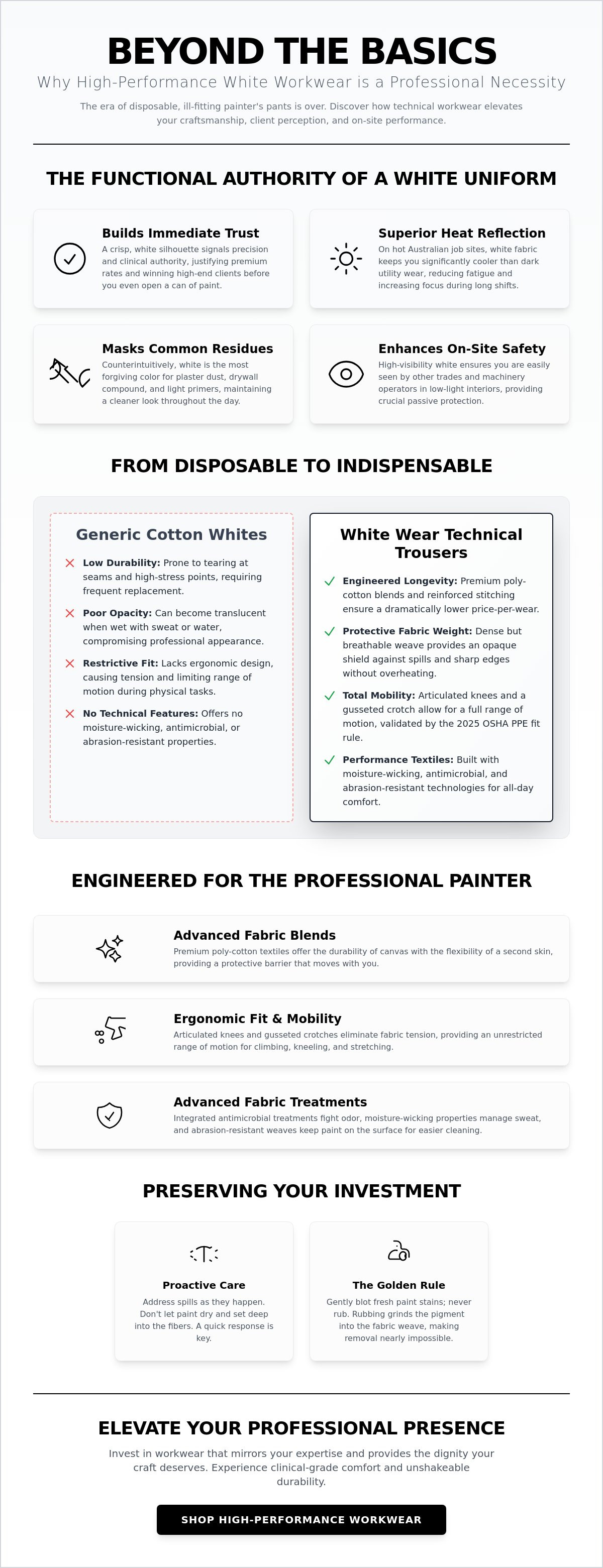
Beyond the branding, white remains the most functional choice for the modern trade. On Australian job sites, where temperatures frequently soar, white fabrics provide essential heat reflection. This keeps you significantly cooler during grueling outdoor shifts compared to darker utility fabrics. There's also the practical matter of masking the mess. While it seems counterintuitive, white is the most forgiving color for common trade residues. Plaster dust, drywall compound, and light-colored primers are the most frequent contaminants on any site. On dark trousers, these marks scream for attention; on work white pants, they blend into the fabric's natural hue. The high visibility of white also improves safety in low-light interior environments. It ensures you're visible to other trades and machinery operators, providing a layer of passive protection that darker colors simply can't offer. This combination of visibility and cleanliness is why white has survived as the industry standard for over a century.
Engineering the Perfect Pair: Fabric, Durability, and Movement
Standard cotton drill has reached its limit. While it served the industry for decades, the modern professional requires more than just a heavy barrier against paint. High-performance work white pants now leverage textile engineering once reserved for elite athletic gear. We've moved beyond basic weaves into premium poly-cotton blends that offer the durability of canvas with the fluidity of a second skin. This evolution is necessary as the market for safety workwear expands at a rate of 6% annually, reflecting a global shift toward garments that prioritize both protection and performance.
Technical Fabric Innovations
Antimicrobial treatments are no longer an optional luxury; they are a functional necessity for the long shift. These treatments prevent the bacterial buildup that leads to odors and fabric degradation during grueling hours on site. In the Australian climate, moisture-wicking properties are the deciding factor between focused precision and heat-induced fatigue. Abrasion resistance is equally critical. Specialized weaves ensure that paint droplets remain on the surface rather than penetrating deep into the fibers, which preserves the clean aesthetic of your uniform. Finding the "Goldilocks" zone involves selecting a fabric weight that is light enough for a 35-degree day but dense enough to provide a protective shield against sharp edges and rough surfaces.
Ergonomic Design for the Professional
In the professional painter work environment, your body is your most valuable tool. The 2025 OSHA PPE fit rule mandates that protective clothing must properly fit each worker, moving away from the outdated "one-size-fits-most" approach. This regulation validates the importance of articulated knees and gusseted crotches. These design elements allow for a full range of motion without the tension that causes common seam blowouts. Four-way stretch technology ensures that whether you are kneeling to cut in a baseboard or reaching for a high cornice, your work white pants move with you rather than against you.
Pocket architecture is the final piece of the ergonomic puzzle. Modern professionals carry more than just a scraper; they carry smartphones, laser measurers, and specialized brushes. Strategic pocket placement ensures these tools are accessible without creating bulk or compromising the sophisticated silhouette of the garment. It's about balancing a flattering fit with the rugged utility required for a 12-hour day. If you are ready to upgrade your daily kit to something that respects your movement, you can explore our collection of high-performance workwear designed specifically for the modern artisan. This elevated approach to design ensures you remain comfortable, compliant, and consistently professional from the first drop of primer to the final walkthrough.
Beyond Generic: Comparing High-Performance Trousers to Standard Apparel
The fashion versus function trap is a common pitfall for professionals seeking a more polished silhouette. High-street whites might look sophisticated in a fitting room, but they fail the moment you step onto a job site. One of the most frequent failures of generic apparel is the transparency test. Standard fashion fabrics often become translucent when you're kneeling or when the fabric gets damp from sweat or washing. Professional work white pants are engineered with high-opacity, premium fibers that ensure you remain covered and professional under any conditions. It's about maintaining a dignified presence while executing the grueling physical demands of the trade.
Trade-Grade vs. High-Street Fashion
High-street "Oyster" or "Cream" trousers don't stand up to the industrial cleaning agents necessary for removing heavy primers, oils, or stubborn spills. These fashion pieces lack the reinforced stitching essential for longevity. While high-street brands prioritize drape and trend, trade-grade gear draws from the history of duck canvas to create fabrics that resist intense abrasion. Triple-needle seams replace flimsy fashion finishes, ensuring the garment holds its shape through hundreds of wash cycles. For those who have struggled with generic sizing, the professional woman’s guide to elevated workwear provides a blueprint for finding a fit that respects the female form while offering full trade functionality.
The ROI of Premium Workwear
Calculating the return on investment for your gear requires looking beyond the initial price tag. A $40 pair of basic pants that tears, shrinks, or loses its shape within weeks is an expensive liability. In contrast, a $120 premium pair is a strategic asset. Over a full year of service, the premium pair offers a significantly lower price-per-wear and a more consistent professional appearance. Better ergonomics also mean reduced physical fatigue. When your waistband doesn't pinch and your fabric doesn't restrict your reach, you conserve energy for the task at hand. This leads to higher productivity and a more consistent finish on every project. Ultimately, the confidence boost of wearing superior gear is an intangible but vital component of your professional toolkit. It changes how you carry yourself and how clients perceive your authority on the job.
Preserving the Pristine: Care and Longevity for Your Workwear
Maintaining the clinical brilliance of your work white pants is a commitment to your professional identity. It isn't just about cleanliness; it's about preserving the structural integrity and technical performance of the fabric. The process begins before you even step onto the job site. Applying a professional-grade fabric protector creates a molecular barrier that prevents pigments from bonding with the fibers. This proactive step ensures that when a spill does occur, the paint remains on the surface, making removal significantly more effective. Treating your gear with this level of care reflects the same precision you bring to a high-end residential project.
The "Golden Rule" of paint management is simple: speed is your greatest ally. Once a pigment sets and cures within the weave, the removal process becomes an uphill battle that can compromise the fabric's finish. For water-based spills, lukewarm water and a mild enzymatic cleaner are usually sufficient if addressed immediately. Blot the area gently; never rub, as this pushes the particles deeper into the premium fibers. If you're working with oil-based products, a targeted solvent is necessary, but use it sparingly to avoid thinning the material. For more insights on selecting the right foundation for your kit, consult the professional guide to choosing the best painters pants.
Stain Management for Professionals
Laundering for longevity requires a departure from harsh industrial habits. While it's tempting to use heavy bleach to maintain that "elevated" white, excessive chlorine can actually yellow synthetic blends and degrade the elastic polymers responsible for your four-way stretch. Instead, opt for oxygen-based whiteners and specialized soaking agents. These products break down organic matter and trade residues without stripping the fabric's protective coatings. Wash your whites separately in cool to lukewarm water to prevent color transfer and heat damage. This disciplined approach ensures your silhouette remains crisp and your mobility stays uncompromised shift after shift.
Storage and Daily Maintenance
How you store your trousers between shifts impacts their long-term professional appearance. Hanging your pants by the waistband preserves the tailored drape and prevents the deep-set wrinkles that can make even premium gear look neglected. Regularly inspect your garments for minor snags or loose threads. Addressing these small issues immediately prevents them from evolving into structural failures during a demanding 12-hour day. Eventually, every pair reaches its limit. When the fabric loses its opacity or the knees become permanently discolored, it's a signal to retire the pair. Professionalism means knowing when "distressed" has crossed the line into "unprofessional." If your current kit is showing signs of fatigue, it's time to invest in high-performance replacements that restore your professional edge.
Elevating Your Professional Presence with White Wear
Choosing the right gear is a decisive act of self-respect. At White Wear, we believe that your uniform should reflect the high standards you bring to every project. We've seen how the wrong equipment can hinder performance and diminish confidence during a grueling 12-hour shift. That’s why we’ve dedicated ourselves to creating work white pants that provide the protection of a shield and the silhouette of a premium garment. Our mission is rooted in providing dignity, comfort, and clinical authority to the modern artisan who refuses to settle for the status quo. We understand the grind because we design for it.
The White Wear Difference
Our approach to design is fundamentally different from traditional workwear manufacturers. We don't just add pockets to a basic template; we engineer garments from the fiber up. The "Clinical Authority" aesthetic is our signature. It combines a sophisticated, flattering fit with the technical innovations required for industrial use. This means our whites remain crisp and opaque while offering the four-way stretch necessary for constant movement. We are proud to support the Australian painting community with gear that works as hard as they do. By focusing on premium silhouettes that don’t sacrifice utility, we ensure you look as precise as the lines you paint.
Building Your Professional Kit
A unified professional presence is a powerful branding tool for your business. When your entire crew arrives in a cohesive, elevated look, it signals a level of organization and quality that sets you apart from the competition. For the 2026 season, curating your kit involves more than just selecting a single pair of trousers. It’s about pairing your work white pants with breathable, moisture-wicking shirts and accessories that maintain that clean, professional silhouette throughout the day. This consistency builds immediate trust with high-end clients and reinforces your position as a trade specialist. It transforms a group of individuals into a focused, authoritative team.
Investing in your professional image is the final step in mastering your craft. You've spent years honing your technique; now it's time to wear gear that reflects that expertise. Whether you're preparing for a major commercial contract or a bespoke residential renovation, your attire should be your most reliable tool. It’s time to move beyond generic apparel and embrace a standard that respects your ambition. Explore our collection of elevated work white pants and discover how the right fit can transform your daily shift into a showcase of professional excellence.
Step Into the Future of Professional Trade Wear
Mastering your craft requires tools that match your level of expertise. You’ve learned how the right work white pants act as a silent partner in your business; they provide the clinical authority needed for client meetings and the ergonomic freedom required for a 12-hour shift. By prioritizing premium fabric blends and proactive care, you ensure that your professional silhouette remains as sharp as your finish. The shift from generic, disposable gear to elevated essentials is more than a purchase. It's a commitment to the dignity of your trade.
Your gear shouldn't be the bottleneck in your performance. Our products are designed by trade insiders who understand the physical demands of the long shift. We utilize premium four-way stretch fabrics that move with you, ensuring you stay focused on the precision of your work. With national Australian shipping on all elevated workwear, the upgrade your kit deserves is easily accessible. Upgrade your professional silhouette with White Wear’s premium work white pants.
Step onto your next job site with the confidence of a professional who knows their worth. You’ve put in the hours to become an expert; now it’s time to look like one.
Frequently Asked Questions
Are white work pants hard to keep clean on a painting job?
Keeping them clean is manageable if you use a professional-grade fabric protector before the first shift. These treatments create a molecular barrier that stops pigment from sinking into the fibers. Most common trade residues like plaster dust or drywall compound are light-colored and blend into white fabrics better than dark ones. Prompt blotting of spills prevents permanent staining. This disciplined approach keeps your silhouette looking sharp for the duration of the project.
What is the best fabric for painters white trousers in the Australian climate?
A premium poly-cotton blend with moisture-wicking properties is the gold standard for Australian job sites. This combination provides the durability of traditional canvas while managing heat during a 35-degree day. Look for fabrics that include four-way stretch to ensure mobility isn't restricted by sweat-soaked material during a long shift. These technical innovations provide the necessary functional credibility while ensuring you look and feel good throughout the grind.
Do white work pants become see-through when you sweat or if it rains?
High-performance work white pants are engineered with high-opacity fibers to prevent transparency. Unlike high-street fashion brands that use thin fabrics, professional trade gear uses a denser weave that maintains its silhouette even when wet. This ensures you maintain a dignified, professional appearance regardless of the weather or the intensity of your physical labor. It’s an essential feature for maintaining clinical authority when meeting with high-end residential clients.
How should white work trousers fit for maximum comfort during a long shift?
Your trousers should offer a tailored but non-restrictive fit that accommodates a full range of motion. Features like articulated knees and gusseted crotches are essential for the constant kneeling and reaching required in the trade. A secure, comfortable waistband prevents the garment from slipping during the 12-hour grind. This ensures your focus remains on the finish rather than your gear, providing the comfort you deserve during grueling hours.
Can I use bleach to keep my work white pants looking bright?
You should avoid using chlorine bleach as it can yellow synthetic blends and weaken the elastic fibers responsible for stretch. Instead, use oxygen-based whiteners and specialized enzymatic soaking agents. These products break down organic stains and paint residues without compromising the structural integrity of your premium workwear. This careful maintenance routine extends the lifespan of your investment and keeps your professional whites looking bright and sophisticated for every shift.
Why do professional painters wear white instead of darker colours?
White is the industry standard because it reflects heat and effectively masks the most common trade residues like plaster and primer. Darker colors highlight white dust and compound marks; this makes you look untidy within minutes of starting a shift. Additionally, white provides higher visibility in low-light interior environments. This acts as a passive safety feature on busy job sites, ensuring you're seen by other trades and machinery operators.
What features should I look for in a premium pair of white work pants?
Prioritize four-way stretch, antimicrobial treatments, and specialized pocket architecture. You need dedicated space for smartphones and scrapers that won't compromise your silhouette or cause discomfort. Premium gear should also feature triple-needle stitching at high-stress points to prevent blowouts. These technical innovations justify the investment by providing comfort and durability that generic apparel lacks. Look for a brand that understands the science of the job and the human desire for style.
How often should I replace my professional painting trousers?
Most professional painters replace their gear every 6 to 12 months depending on the intensity of their project schedule. You should retire a pair once the fabric loses its opacity or when permanent stains make the garment look unprofessional. Maintaining a crisp, clean appearance is vital for commanding premium rates and building trust with high-end clients. It’s a small investment that reinforces your status as a hero who deserves better than the status quo.


